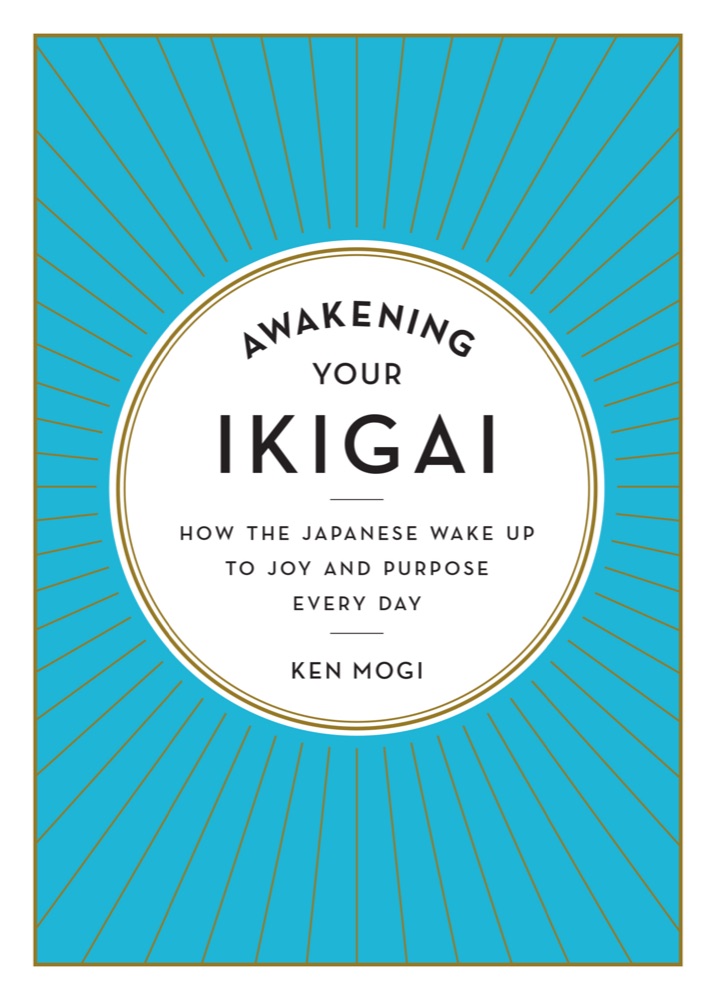
 Wabi Sabi: Japanese Wisdom for a Perfectly Imperfect Life
Quotes from the Book
Precisely because an encounter is ephemeral, it must be taken seriously. Life, after all, is filled with things that happen only once. The realization of the ‘onceness’ of life’s encounters and pleasures provides the foundations for the Japanese conceptualization of ikigai, and is central to the Japanese philosophy of life. When you take notice of the small details of life, nothing is repeated. Every opportunity is special.
7
A man is like a forest; individual and yet connected and dependent on others for growth.
7
There is no absolute formula for happiness—each unique condition of life can serve as the foundation for happiness in its own unique way. You can be happy when married with children, or when married without children. You can be happy when you are single, without a college degree, or with one. You can be happy when you are slim, you can be happy when you are overweight. You can be happy when living in a warm climate as in California, you can be happy when living in Montana, where you have severe winter conditions. As a sumo wrestler, you can be happy when you make it to yokozuna, or you can be happy while remaining one of the underdogs all your career, doing small chores, never giving up.
6
If you can make the process of making the effort your primary source of happiness, then you have succeeded in the most important challenge of your life.
4
Ikigai resides in the realm of small things. The morning air, the cup of coffee, the ray of sunshine, the massaging of octopus meat and the American president’s praise are on equal footing. Only those who can recognize the richness of this whole spectrum really appreciate and enjoy it.
4
Just possibly, ikigai makes a Peter Pan of all of us. And that is not necessarily a bad thing. Let us all be twelve years old! Youthfulness of mind is important in ikigai, but so is commitment and passion, however seemingly insignificant your goal.
3
At a certain point, a casual observer might feel that these pursuers of perfection are going over the top, and that the effort is too much. Just at that moment, something miraculous happens. You realize that there is actually further depth to the quality you are pursuing. There is a breakthrough, or the production of something completely different. With the creation of a new genre of products, a brand new market emerges, in which people are prepared to pay premium prices for qualities previously unimagined.
3
The Japanese do not need grandiose motivational frameworks to keep going, but rely more on the little rituals in their daily routines.
2
Isn’t it interesting how an element , which might not be appreciated by itself, turns out to contribute to the overall quality when blended with elements of different characters? It is like the essence of life itself. The complex interaction between various elements in an organic system makes life robust and sustainable.
2
Ikigai reside no reino das pequenas coisas. O ar matinal, a xícara de café, o raio de sol, o massagear da carne de polvo e o elogio do presidente norte-americano estão em pé de igualdade. Só aqueles capazes de reconhecer a riqueza desse espectro podem realmente apreciá-la e senti-la. Essa é uma lição importante do ikigai.
1
Kodawari é um padrão pessoal, ao qual o indivíduo adere de forma decidida. Costuma ser visto, embora nem sempre usado, em referência a um nível de qualidade ou ao profissionalismo que o indivíduo segue. É uma atitude, muitas vezes mantida pela vida da pessoa, que constitui um elemento central do ikigai. Kodawari é pessoal por natureza, e é uma manifestação de orgulho pelo que se faz. Em resumo, kodawari é uma abordagem pela qual se toma cuidado extraordinário com detalhes bem pequenos.
A crença no efêmero do ikigai, estar no aqui e agora (o quinto pilar), é possivelmente o mais profundo dos cinco pilares do ikigai.
Faça a alegria das pequenas coisas funcionar para você, e assim você também pode começar seu ikigai de manhã.
Watch on YouTube
About Ken Mogi
We have collected 13 quotes from 1 book by Ken Mogi on BookQuoters.
More about the author →About the book
Introducing IKIGAI: find your passions and live with joy
Ikigai is a Japanese phenomenon commonly understood as “your reason to get up in the morning.” Ikigai can be small moments: the morning air, a cup of coffee, a compliment. It can also be deep convictions: a fulfilling job, lasting friendships, balanced health. Whether big or small, your ikigai is the path to success and happiness in your own life.
Author Ken Mogi introduces five pillars of ikigai to help you make the most of each day and become your most authentic self: 1. starting small → focus on the details 2. releasing yourself → accept who you are 3. harmony and sustainability → rely on others 4. the joy of little things → appreciate sensory pleasure 5. being in the here and now → find your flow.
Weaving together insights from Japanese history, philosophy, and modern culture, plus stories from renowned sushi chef Jiro
Book details
- First published
- 2017
- Author
- Ken Mogi
- Genre
- Nonfiction
- Goodreads rating
- 3.56 (18k ratings)
Keep reading
Wabi Sabi: Japanese Wisdom for a Perfectly Imperfect Life
 Finding Your Element: How to Discover Your Talents and Passions and Transform Your Life
 A Joseph Campbell Companion: Reflections on the Art of Living
 Awareness: Conversations with the Masters
 Hello, Habits: A Minimalist's Guide to a Better Life
 Conversations with God: An Uncommon Dialogue, Book 1
 Shibumi
 Marigold Mind Laundry
 A Book of Simple Living
 The Philosopher and the Wolf
 Geisha, a Life
 The Book of Secrets: Unlocking the Hidden Dimensions of Your Life
 Be Water, My Friend: The Teachings of Bruce Lee
 The Magic
 Happiness Becomes You: A Guide to Changing Your Life for Good
 365 Tao: A Study of Taoist Wisdom for Daily Life
 Silence: The Power of Quiet in a World Full of Noise
 Gift from the Sea
 Power vs. Force
 Breathe: A Life in Flow – A New York Times Bestselling Memoir of Martial Arts and Personal Growth
 Creativity: Flow and the Psychology of Discovery and Invention
 Sacred Journey of the Peaceful Warrior
 The I Ching or Book of Changes
 Hagakure: The Book of the Samurai
 The Happiness Equation: Want Nothing + Do Anything = Have Everything
 The Happiness Project
 Peace Is Every Step: The Path of Mindfulness in Everyday Life
 Welcome to the Hyunam-Dong Bookshop
 The Miracle of Mindfulness: An Introduction to the Practice of Meditation
 Follow Your Heart
 Like Water for Chocolate
 The Book of Chameleons
 Spring Snow
 Intimacy: Trusting Oneself and the Other
 Striking Thoughts: Bruce Lee's Wisdom for Daily Living
 Awakening the Buddha Within
 Happiness: A Guide to Developing Life's Most Important Skill
 Build the Life You Want: The Art and Science of Getting Happier
 The Yoga Sutras of Pantanjali
 Jitterbug Perfume
 Finding Flow: The Psychology of Engagement with Everyday Life
 Tsugumi
 Shōgun
 Necessary Losses: The Loves, Illusions, Dependencies, and Impossible Expectations That All of Us Have to Give Up in Order to Grow
 The Lady and the Monk: Four Seasons in Kyoto
 Rules for a Knight
 Soul Mountain
 The Scent of Time: A Philosophical Essay on the Art of Lingering
 The Zahir
 Running from Safety: An Adventure of the Spirit
 Living Beautifully with Uncertainty and Change
 The Dude and the Zen Master
 Creativity: Unleashing the Forces Within
 The Seven Spiritual Laws of Success: A Practical Guide to the Fulfillment of Your Dreams
 Journal of a Solitude
 Delivering Happiness: A Path to Profits, Passion, and Purpose
 The Promise of a Pencil: How an Ordinary Person Can Create Extraordinary Change
 The Socrates Express: In Search of Life Lessons from Dead Philosophers
 Lizard