
 A Joseph Campbell Companion: Reflections on the Art of Living
Quotes from the Book
Put simply, wabi sabi gives you permission to be yourself. It encourages you to do your best but not make yourself ill in pursuit of an unattainable goal of perfection. It gently motions you to relax, slow down and enjoy your life. And it shows you that beauty can be found in the most unlikely of places, making every day a doorway to delight.
13
Wabi is about finding beauty in simplicity, and a spiritual richness and serenity in detaching from the material world. Sabi is more concerned with the passage of time, with the way that all things grow and decay and how ageing alters the visual nature of those things. It’s less about what we see, and more about how we see.
12
Wabi sabi teaches us to be content with less in a way that feels like more. Less stuff, more soul. Less hustle, more ease. Less chaos, more calm. Less mass consumption and more unique creation. Less complexity, more clarity. Less judgment, more forgiveness. Less resistence, more resilience. Less bravado, more truth. Less control, more surrender. Less head, more heart.
8
Wabi sabi is an intuitive response to beauty that reflects the true nature of life. Wabi sabi is an acceptance and appreciation of the impermanent, imperfect, and incomplete nature of everything.
6
Try to go a whole seven days without having to control everything, without stressing when things don't work out as you thought they would or should. As you do this, any time you feel the need to take charge, try to relax out of it, just to see what happens. Look for the good that happened precisely because things didn't work out the way you thought they would or should. And take your time. There really is no desperate hurry. When we constantly pursue perfection, our life speeds up. We make hasty decisions and snap judgments. Wabi sabi offers an opportunity to pause, reflect, check in with yourself and move from there. You'll likely feel relived, and make better choices.
6
We have to stop telling ourselves that everyone is watching, waiting for us to fail. They really aren’t.
4
Incense fills the air. It smells like the color purple, in a way I cannot explain.
4
We are living in a time of brain-hacking algorithms, pop-up propaganda and information everywhere. From the moment we wake up, to the time we stumble into bed, we are fed messages about what we should look like, wear, eat and buy, how much we should be earning, who we should love and how we should parent.
4
You can see change happening right there. The bamboo is growing all the time, and is also sensitive to its dynamic environment. It’s firmly rooted but flexible. When the wind blows, the bamboo doesn’t resist; it lets go and moves with it. And still the forest grows. Think of the buildings in this earthquake-prone country. The ones that survive the shaking are those that can move when the trembling begins.
3
A wabi sabi inspired world view opens up a space for love. Just as we're not perfect, neither is anyone else. What difference would it make if you saw others with your heart instead of seeing and judging with your eyes and mind? If you let go of the judgement and frustration and accepted who they are, without trying to change them, if you don't like what you find, that's useful information and you can choose what to do next. But just maybe that acceptance will give you a perspective and remind you of what really matters.
3
I decided to visit people instead of places.
2
The flowers keep on blooming, wheter or not you make mistakes.
2
Should we look at the spring blossoms only in full flower or the moon when cloudless and clear? Beauty is not only evident in the joyous, the loud, or the obvious. Wabi implies a stillness with an air of rising above the mundane. It's an acceptance of reality and an insight that comes with that. It allows us to realize that whatever our situation, there is beauty hiding somewhere... The feeling generated by recognizing the beauty found in simplicity... A sense of quiet contentment found away from the trappings of a materialistic world.
2
It bears repeating: there is no single way to live your life; there is no single career path; there is no perfect way to build your career. There is only evolving it, and it’s up to you if you choose to do that in a way that brings you delight.
2
Should we look at the spring blossoms only in full flower, or the moon only when cloudless and clear?
2
The forest does not care what your hair looks like. The mountains don’t move for any job title. The rivers keep running regardless of your social media following, your salary or your popularity. The flowers keep on blooming, whether or not you make mistakes. Nature just is, and welcomes you, just as you are.
1
Resistance to the possibility of failure In my work helping people transition between careers, between lifestyles, and between life stages, I constantly come across resistance to being a beginner, due to an overwhelming fear of failure. If you start something new, it’s highly likely you will get things wrong along the way. There’s no doubt this is hard on the spirit as well as on the ego. It’s easy to see why so many people spend years on a track that is making them miserable now, to avoid the possibility of a mistake making them miserable in the future. This is particularly the case with people wanting to shift into a more creative way of living or earning their income from a creative profession. The risk is too high, the fear of failure too great, the ghosts of art teachers and other critics from the past too loud in their ears. But there is something they don’t realize: failing your way forward is progress. Each time you do it, you build up your store of inner wisdom, to draw on next time you need it. The “failure” does not have to be the end of the story. It can be the beginning of the next chapter, but only if you accept the imperfection, show yourself compassion, and choose to move forward.
1
On the surface of Japanese beauty there is taste (the visual); beneath it is flavor (the experience).
1
And therein lies a crucial observation: Japanese beauty is discovered in the experiencing, not just the seeing.
1
taking inspiration from other cultures and interpreting it in the context of our own lives that we excavate the wisdom we most need.
1
I carried with me the question “What is culture?” Food culture, fashion culture, Japanese culture . . . I wanted to understand this idea more. When people use the term “culture” they refer to a certain lifestyle followed by a number of people over a period of time—something we create by the way we live. So I decided to visit people instead of places.
1
The fact is, there is no universal definition of wabi sabi in the Japanese language. Any attempt to express it will only ever be from the perspective of the person explaining it.
1
The Japanese see the seasons as signposts, visible reminders of our own natural rhytms. In modern life, these often get disrupted, as we extend our days with strong artificial light, interrupt our sensitive biorhytms with blue lights from our electronic devices and push ourselves to be highly productive just because it's another weekday. We push on, regardless of whether our body is trying to tell us it's time to hibernate, or get outside for some summer sunshine - and then we wonder why we get sick.
1
This book is an invitation to relax into the beauty of your life in any given moment, and to strip away all that is unnecessary, to discover what lies within.
1
Wabi sabi is naturalness, it’s about things in their natural, most authentic state.
Imperfection is a snapshot of our journeys of growth and living at a particular moment in time.
There is beauty in every emotion. The more we allow ourselves to feel, the closer we get to that ravishing sense of aliveness and awe, even in the midst of challenging experiences.
The moment this morning when I exchanged an unspoken word with a sparrow looking in on me at my writing desk, was perfect. In a world constantly in flux, moments like this can feel as if time itself is winking at us. For an instant we find ourselves completely immersed in the experience, not bothered about the past or future while simultaneously being aware that the moment itself will not last. In literature this is sometimes called a ‘haiku moment’, a description which captures the poetic beauty of beholding such a delicious sliver of experience. These kinds of treasures are to be found in the smallest details of daily life, if we can slow down, be present and pay attention long enough to notice. In that single heartbeat before the bird flew away, wabi sabi was present, as I experienced a natural beauty even more exquisite for its imminent vanishing.
Wabi sabi is a state of the heart. It is a deep in-breath and a slow exhale. It is felt in a moment of real appreciation—a perfect moment in an imperfect world.
Watch on YouTube
About Beth Kempton
We have collected 29 quotes from 1 book by Beth Kempton on BookQuoters.
More about the author →About the book
'A truly transformative read' Sunday Times STYLE
'More than ever, we need books like this' Jessica Seaton, Co-Founder of Toast and author of Gather, Cook, Feast
A whole new way of looking at the world - and your life - inspired by centuries-old Japanese wisdom.
Wabi sabi ( "wah-bi sah-bi" ) is a captivating concept from Japanese aesthetics, which helps us to see beauty in imperfection, appreciate simplicity and accept the transient nature of all things. With roots in zen and the way of tea, the timeless wisdom of wabi sabi is more relevant than ever for modern life, as we search for new ways to approach life's challenges and seek meaning beyond materialism.
Wabi sabi is a refreshing antidote to our fast-paced, consumption-driven world, which will encourage you to slow down, reconnect with nature, and be gentler on yourself. It will help you simplify everything, and concentrat
Book details
- First published
- 2018
- Author
- Beth Kempton
- Genre
- Nonfiction
- Goodreads rating
- 3.90 (8k ratings)
Keep reading
A Joseph Campbell Companion: Reflections on the Art of Living
 Phosphorescence: On Awe, Wonder and Things That Sustain You When the World Goes Dark
 Becoming Wise: An Inquiry into the Mystery and Art of Living
 Awakening the Buddha Within
 Peace Is Every Step: The Path of Mindfulness in Everyday Life
 I Guess I Haven't Learned That Yet: Discovering New Ways of Living When the Old Ways Stop Working
 The Things You Can See Only When You Slow Down: How to Be Calm in a Busy World
 The Miracle of Mindfulness: An Introduction to the Practice of Meditation
 The Book of Awakening: Having the Life You Want by Being Present to the Life You Have
 Zen and the Art of Saving the Planet
 Love for Imperfect Things: How to Accept Yourself in a World Striving for Perfection
 A Book of Simple Living
 North of Beautiful
 Present Over Perfect: Leaving Behind Frantic for a Simpler, More Soulful Way of Living
 The Book of Secrets: Unlocking the Hidden Dimensions of Your Life
 What If This Were Enough?: Essays
 Embers: One Ojibway's Meditations
 The Book of Tea
 Simple Abundance: A Daybook of Comfort of Joy
 The Zahir
 Happiness Becomes You: A Guide to Changing Your Life for Good
 My Inner Sky: On Embracing Day, Night, and All the Times in Between
 Everyday Zen: Love & Work
 The Buddha Walks into a Bar . . .: A Guide to Life for a New Generation
 Carry On, Warrior: Thoughts on Life Unarmed
 The Places That Scare You: A Guide to Fearlessness in Difficult Times
 A Room Called Earth
 The Wisdom of No Escape: How to Love Yourself and Your World
 Jitterbug Perfume
 Sacred Journey of the Peaceful Warrior
 Living Beautifully with Uncertainty and Change
 The Stories We Tell: Every Piece of Your Story Matters
 Gift from the Sea
 Welcome to the Hyunam-Dong Bookshop
 Buddhism Plain & Simple: The Practice of Being Aware, Right Now, Every Day
 Nothing Special: A Zen Buddhist Guide to Awakening Through Daily Life's Feelings, Relationships, and Work
 Women Who Run With the Wolves
 The Elegance of the Hedgehog
 The Air You Breathe
 Four Treasures of the Sky
 Real Happiness: A 28-Day Program to Realize the Power of Meditation
 Like Streams to the Ocean: Notes on Ego, Love, and the Things That Make Us Who We Are
 Journal of a Solitude
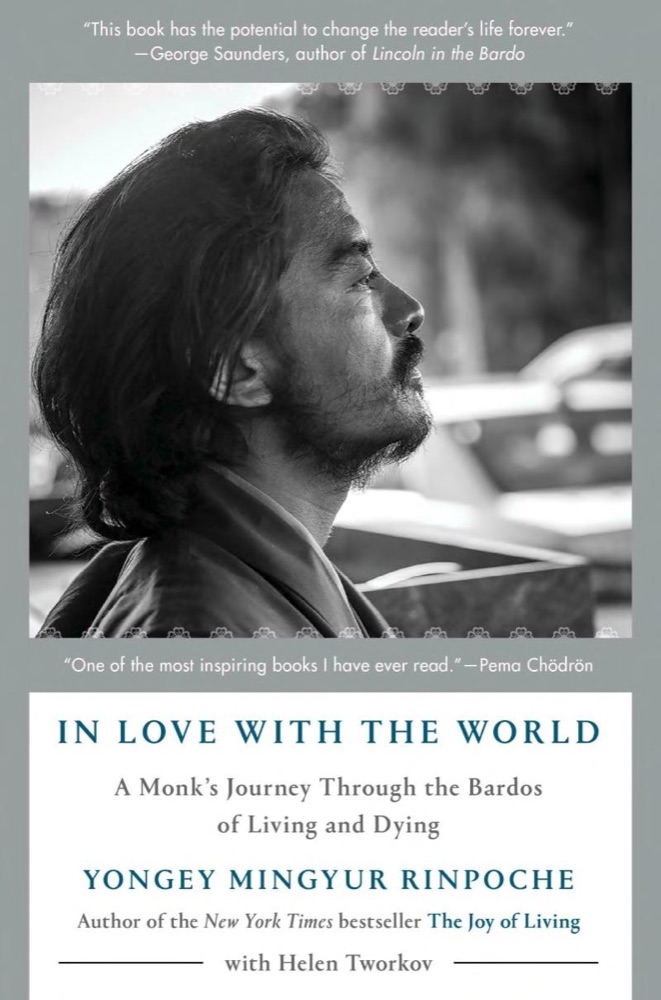 In Love with the World: A Monk's Journey Through the Bardos of Living and Dying
 Heart Talk: Poetic Wisdom for a Better Life
 101 Essays That Will Change The Way You Think
 One Italian Summer
 Running from Safety: An Adventure of the Spirit
 The Book of Wisdom
 A Work in Progress
 How To Catch A Mole
 To Shake the Sleeping Self: A Journey from Oregon to Patagonia, and a Quest for a Life with No Regret
 The Book of Delights: Essays
 365 Tao: A Study of Taoist Wisdom for Daily Life
 The Witch of Portobello
 The Lady and the Monk: Four Seasons in Kyoto
 Gathering Moss: A Natural and Cultural History of Mosses
 The Nesting Place: It Doesn't Have to Be Perfect to Be Beautiful