
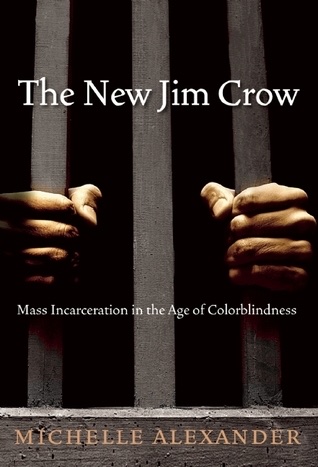
 The New Jim Crow: Mass Incarceration in the Age of Colorblindness
Quotes from the Book
[Prison] relieves us of the responsibility of seriously engaging with the problems of our society, especially those produced by racism and, increasingly, global capitalism.
261
The prison therefore functions ideologically as an abstract site into which undesirables are deposited, relieving us of the responsibility of thinking about the real issues afflicting those communities from which prisoners are drawn in such disproportionate numbers. This is the ideological work that the prison performs—it relieves us of the responsibility of seriously engaging with the problems of our society, especially those produced by racism and, increasingly, global capitalism.
91
Deviant men have been constructed as criminal, while deviant women have been constructed as insane.
38
The prison has become a black hole into which the detritus of contemporary capitalism is deposited. Mass imprisonment generates profits as it devours social wealth, and thus it tends to reproduce the very conditions that lead people to prison. There are thus real and often quite complicated connections between the deindustrialization of the economy—a process that reached its peak during the 1980s—and the rise of mass imprisonment, which also began to spiral during the Reagan-Bush era. However, the demand for more prisons was represented to the public in simplistic terms. More prisons were needed because there was more crime. Yet many scholars have demonstrated that by the time the prison construction boom began, official crime statistics were already falling.
33
The lawbreaker is thus no longer an evil-minded man or woman, but simply a debtor, a liable person whose duty is to take responsibility for his or her acts, and to assume the duty of repair.
16
Mass imprisonment generates profits as it devours social wealth, and thus it tends to reproduce the very conditions that lead people to prison. There are thus real and often quite complicated connections between the deindustrialization of the economy—a process that reached its peak during the 1980s—and the rise of mass imprisonment, which also began to spiral during the Reagan-Bush era.
15
An attempt to create a new conceptual terrain for imagining alternatives to imprisonment involves the ideological work of questioning why "criminals" have been constituted as a class and, indeed, a class of human beings undeserving of the civil and human rights accorded to others. Radical criminologists have long pointed out that the category "lawbreakers" is far greater than the category of individuals who are deemed criminals since, many point out, almost all of us have broken the law at one time or another.
12
Despite the important of antiracist social movements over the last half century, racism hides from view within institutional structures, and its most reliable refuge is the prison system.
9
We thus think about imprisonment as a fate reserved for others, a fate reserved for the "evildoers," to use a term recently popularized by George W. Bush. Because of the persistent power of racism, "criminals" and "evildoers" are, in the collective imagination, fantasized as people of color. The prison therefore functions ideologically as an abstract site into which undesirables are deposited, relieving us of the responsibility of thinking about the real issues afflicting those communities from which prisoners are drawn in such disproportionate numbers.
9
For example, women have been incarcerated in psychiatric institutions in greater proportions than in prisons. Studies indicating that women have been even more likely to end up in mental facilities than men suggest that while jails and prisons have been dominant institutions for the control of men, mental institutions have served a similar purpose for women. That is, deviant men have been constructed as criminal, while deviant women have been constructed as insane.
8
To reiterate, rather than try to imagine one single alternative to the existing system of incarceration, we might envision an array of alternatives that will require radical transformations of many aspects of our society. Alternatives that fail to address racism, male dominance, homophobia, class bias, and other structures of domination will not, in the final analysis, lead to decarceration and will not advance the goal of abolition.
7
According to a recent study, there may be twice as many people suffering from mental illness who are in jails and prisons than there are in all psychiatric hospitals in the United States combined.
6
What, then, would it mean to imagine a system in which punishment is not allowed to become the source of corporate profit? How can we imagine a society in which race and class are not primary determinants of punishment? Or one in which punishment itself is no longer the central concern in the making of justice? An abolitionist approach that seeks to answer questions such as these would require us to imagine a constellation of alternative strategies and institutions, with the ultimate aim of removing the prison from the social and ideological landscapes of our society. In other words, we would not be looking for prisonlike substitutes for the prison, such as house arrest safeguarded by electronic surveillance bracelets. Rather, positing decarceration as our overarching strategy, we would try to envision a continuum of alternatives to imprisonment—demilitarization of schools, revitalization of education at all levels, a health system that provides free physical and mental care to all, and a justice system based on reparation and reconciliation rather than retribution and vengeance. The creation of new institutions that lay claim to the space now occupied by the prison can eventually start to crowd out the prison so that it would inhabit increasingly smaller areas of our social and psychic landscape. Schools can therefore be seen as the most powerful alternative to jails and prisons. Unless the current structures of violence are eliminated from schools in impoverished communities of color—including the presence of armed security guards and police—and unless schools become places that encourage the joy of learning, these schools will remain the major conduits to prisons. The alternative would be to transform schools into vehicles for decarceration.
4
Thus, critiques of the prison industrial complex undertaken by abolitionist activists and scholars are very much linked to critiques of the global persistence of racism. Antiracist and other social justice movements are incomplete with attention to the politics of imprisonment.
3
The massive prison-building project that began in the 1980s created the means of concentrating and managing what the capitalist system had implicitly declared to be a human surplus. In the meantime, elected officials and the dominant media justified the new draconian sentencing practices, sending more and more people to prison in the frenzied drive to build more and more prisons by arguing that this was the only way to make our communities safe from murderers, rapists, and robbers.
3
In Victoria, prison and police officers are vested with the power and responsibility to do acts which, if done outside of work hours, would be crimes of sexual assault.
2
And there is even more compelling evidence about the damage wrought by the expansion of the prison system in the schools located in poor communities of color that replicate the structures and regimes of the prison. When children attend schools that place a greater value on discipline and security than on knowledge and intellectual development, they are attending prep schools for prison.
2
Moreover, the prison sentence, which is always computed in terms of time, is related to abstract quantification, evoking the rise of science and what is often referred to as the Age of Reason. We should keep in mind that this was precisely the historical period when the value of labor began to be calculated in terms of time and therefore compensated in another quantifiable way, by money. The computability of state punishment in terms of time—days, months, years—resonates with the role of labor-time as the basis for computing the value of capitalist commodities. Marxist theorists of punishment have noted that precisely the historical period during which the commodity form arose is the era during which penitentiary sentences emerged as the primary form of punishment.
2
If we expand our definition of punishment under slavery, we can say that the coerced sexual relations between slave and master constituted a penalty exacted on women, if only for the sole reason that they were slaves. In other words, the deviance of the slave master was transferred to the slave woman, whom he victimized. Likewise, sexual abuse by prison guards is translated into hypersexuality of women prisoners.
1
Despite the important gains of antiracist social movements over the last half century, racism hides from view within institutional structures, and its most reliable refuge is the prison system.
1
To think about this simultaneous presence and absence is to begin to acknowledge the part played by ideology in shaping the way we interact with our social surroundings. We take prisons for granted but are often afraid to face the realities they produce.
1
Il ne s’agirait pas de rechercher des substituts similaires à la prison, comme par exemple l’assignation à résidence avec bracelet électronique, mais plutôt de réfléchir à un continuum de solutions permettant d’éviter l’incarcération : démilitarisation des écoles, revitalisation de l’éducation à tous les niveaux, mise en place d’un système de santé dispensant des soins médicaux et psychiatriques gratuits et instauration d’un système judiciaire basé sur la réparation et la réconciliation plutôt que sur la rétribution et la vengeance.
1
Studies indicating that women have been even more likely to end up in mental facilities than men suggest that while jails and prisons have been dominant institutions for the control of men, mental institutions have served a similar purpose for women. That is, deviant men have been constructed as criminal, while deviant women have been constructed as insane.
1
Why were people so quick to assume that locking away an increasingly large proportion of the U.S. population would help those who live in the free world feel safer and more secure? This question can be formulated in more general terms. Why do prisons tend to make people think that their own rights and liberties are more secure than they would be if prisons did not exist?
1
White antislavery abolitionists such as John Brown and William Lloyd Garrison were represented in the dominant media of the period as extremists and fanatics. When Frederick Douglass embarked on his career as an antislavery orator, white people—even those who were passionate abolitionists—refused to believe that a black slave could display such intelligence.
The most immediate question today is how to prevent the further expansion of prison populations and how to bring as many imprisoned women and men as possible back into what prisoners call “the free world.
The turn toward increased repression in a prison system, distinguished from the beginning of its history by its repressive regimes, caused some journalists, public intellectuals, and progressive agencies to oppose the growing reliance on prisons to solve social problems that are actually exacerbated by mass incarceration.
Watch on YouTube
About Angela Y. Davis
We have collected 27 quotes from 1 book by Angela Y. Davis on BookQuoters.
More about the author →About the book
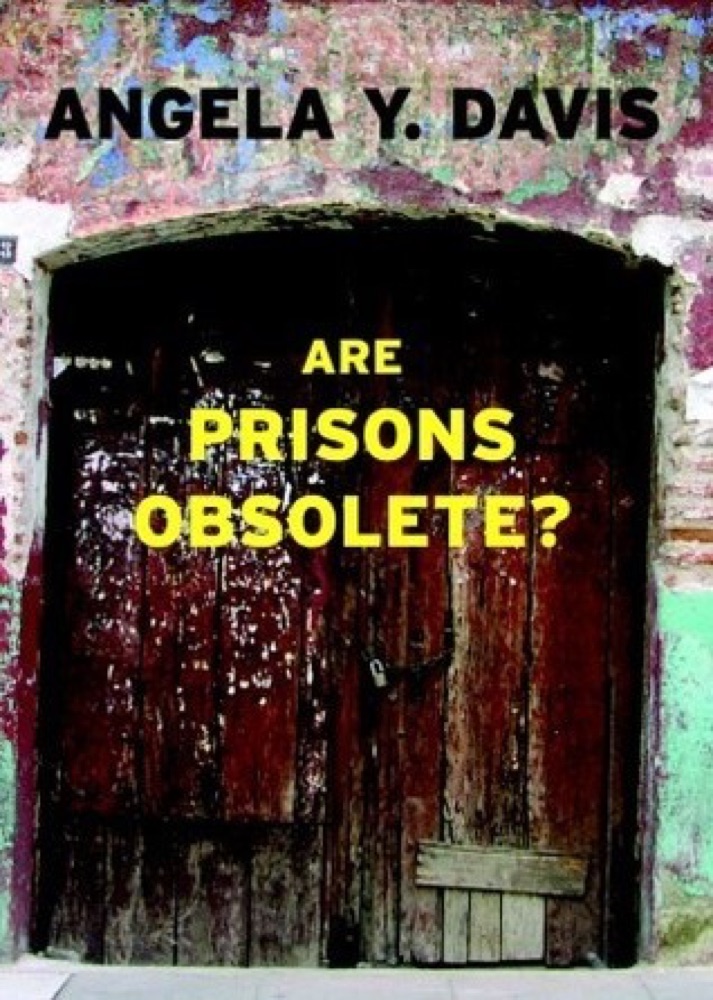
With her characteristic brilliance, grace and radical audacity, Angela Y. Davis has put the case for the latest abolition movement in American life: the abolition of the prison. As she quite correctly notes, American life is replete with abolition movements, and when they were engaged in these struggles, their chances of success seemed almost unthinkable. For generations of Americans, the abolition of slavery was sheerest illusion. Similarly,the entrenched system of racial segregation seemed to last forever, and generations lived in the midst of the practice, with few predicting its passage from custom. The brutal, exploitative (dare one say lucrative?) convict-lease system that succeeded formal slavery reaped millions to southern jurisdictions (and untold miseries for tens of thousands of men, and women). Few predicted its passing from the American penal landscape. Davis expertly argues
Book details
- First published
- 2003
- Author
- Angela Y. Davis
- Genre
- Nonfiction
- Goodreads rating
- 4.51 (31k ratings)
Keep reading
The New Jim Crow: Mass Incarceration in the Age of Colorblindness
 We Do This 'til We Free Us: Abolitionist Organizing and Transforming Justice
 Becoming Abolitionists: Police, Protests, and the Pursuit of Freedom
 A Colony in a Nation
 Solitary: Unbroken by Four Decades in Solitary Confinement
 Discipline and Punish: The Birth of the Prison
 Orange Is the New Black
 America: The Farewell Tour
 Pathologies of Power: Health, Human Rights, and the New War on the Poor
 Assata: An Autobiography
 The Gulag Archipelago 1918-1956
 Just Mercy
 Letter from the Birmingham Jail
 Elite Capture: How the Powerful Took Over Identity Politics
 On Freedom
 The Utopia of Rules: On Technology, Stupidity, and the Secret Joys of Bureaucracy
 A People's History of the United States
 When They Call You a Terrorist: A Black Lives Matter Memoir
 Black Rednecks and White Liberals
 Life at the Bottom: The Worldview That Makes the Underclass
 What White People Can Do Next: From Allyship to Coalition – An Empowering Guide to Interrogating Whiteness and Creating Justice
 You Can't Be Neutral on a Moving Train: A Personal History of Our Times
 Why We Can't Wait
 What Kind of Creatures Are We?
 Pushout: The Criminalization of Black Girls in Schools
 No Name in the Street
 A Knock at Midnight: A Story of Hope, Justice, and Freedom
 The View From Flyover Country: Essays by Sarah Kendzior
 Wealth, Poverty and Politics: An International Perspective
 Behold a Pale Horse
 Chomsky On Anarchism
 Chasing the Scream: The First and Last Days of the War on Drugs
 The Identity Trap: A Story of Ideas and Power in Our Time
 White Rage: The Unspoken Truth of Our Racial Divide
 Where Do We Go from Here: Chaos or Community?
 Conflict Is Not Abuse: Overstating Harm, Community Responsibility, and the Duty of Repair
 Ghettoside: A True Story of Murder in America
 Between the World and Me
 Pedagogy of the Oppressed
 One-Dimensional Man: Studies in the Ideology of Advanced Industrial Society
 The Road to Serfdom
 The Lucifer Effect: Understanding How Good People Turn Evil
 Let This Radicalize You: Organizing and the Revolution of Reciprocal Care
 Twilight of the Elites: America After Meritocracy
 Four Hundred Souls: A Community History of African America, 1619-2019
 Evicted: Poverty and Profit in the American City
 Stamped from the Beginning: The Definitive History of Racist Ideas in America
 Conspirators' Hierarchy: The Story of the Committee of 300
 First As Tragedy, Then As Farce
 The Madness of Crowds: Gender, Race and Identity
 Obedience to Authority
 The Better Angels of Our Nature: Why Violence Has Declined
 Stony the Road: Reconstruction, White Supremacy, and the Rise of Jim Crow
 Automating Inequality: How High-Tech Tools Profile, Police, and Punish the Poor
 The House of the Dead
 The Message
 My Bondage and My Freedom
 Revolution
 Humankind: A Hopeful History
 The Shock Doctrine: The Rise of Disaster Capitalism