 The Dosadi Experiment
Quotes from the Book
Ordinary people, simply doing their jobs, and without any particular hostility on their part, can become agents in a terrible destructive process. Moreover, even when the destructive effects of their work become patently clear, and they are asked to carry out actions incompatible with fundamental standards of morality, relatively few people have the resources needed to resist authority.
92
It is not so much the kind of person a man is as the kind of situation in which he finds himself that determines how he will act.
51
The essence in obedience consists in the fact that a person comes to view himself as an instrument for carrying out another person's wishes and he therefore no longer regards himself as responsible for his actions.
43
Control the manner in which a man interprets his world, and you have gone a long way toward controlling his behavior. That is why ideology, an attempt to interpret the condition of man, is always a prominent feature of revolutions, wars, and other circumstances in which individuals are called upon to perform extraordinary action.
30
But the culture has failed, almost entirely, in inculcating internal controls on actions that have their origin in authority. For this reason, the latter constitutes a far greater danger to human survival.
23
It has been reliably established that from 1933 to 1945 millions of innocent people were systematically slaughtered on command. Gas chambers were built, death camps were guarded, daily quotas of corpses were produced with the same efficiency as the manufacture of appliances. These inhumane policies may have originated in the mind of a single person, but they could only have been carried out on a massive scale if a very large number of people obeyed orders.
20
Tyrannies are perpetuated by diffident men who do not possess the courage to act out their beliefs.
16
The importation and enslavement of millions of lack people, the destruction of the American Indian population, the internment of Japanese American, the use of napalm against civilians in Vietnam, all are harsh policies that originated in the authority of a democratic nation, and were responded to with the expected obedience.
14
There is a propensity for people to accept definitions of action provided by legitimate authority
11
Authority systems must be based on people arranged in a hierarchy. Thus the critical question in determining control is, Who is over whom? How much over is far less important than the visible presence of a ranked ordering.
9
The first twenty years of the young person’s life are spent functioning as a subordinate element in an authority system, and upon leaving school, the male usually moves into either a civilian job or military service. On the job, he learns that although some discreetly expressed dissent is allowable, an underlying posture of submission is required for harmonious functioning with superiors. However much freedom of detail is allowed the individual, the situation is defined as one in which he is to do a job prescribed by someone else. While structures of authority are of necessity present in all societies, advanced or primitive, modern society has the added characteristic of teaching individuals to respond to impersonal authorities. Whereas submission to authority is probably no less for an Ashanti than for an American factory worker, the range of persons who constitute authorities for the native are all personally known to him, while the modern industrial world forces individuals to submit to impersonal authorities, so that responses are made to abstract rank, indicated by an insignia, uniform or title.
8
Freud (1921), without referring to the general systems implications of his assertion, spelled out this mechanism clearly: “. . . the individual gives up his ego ideal and substitutes for it the group ideal embodied in the leader” (page 78, Group Psychology).
7
There is a certain discomfort in not knowing who the boss is, and subjects sometimes frantically sought to determine this.
7
we sometimes have a choice among authorities, and we ought to look at this phenomenon within the experiment. It is possible that when different authorities simultaneously call for opposing lines of action, a person’s own values will prevail and determine which authority he follows. Or
5
is not what subjects do but for whom they are doing it that counts.
5
Some people treat systems of human origin [and maintenance] as if they existed above and beyond any human agent, beyond the control of whim or human feeling. The human element behind agencies and institutions is denied. Thus, when the experimenter says, "This experiment requires that you continue," the subject feels this to be an imperative that goes beyond any merely human command. He does not ask the seemingly obvious question, "Whose experiment? Why should the designer be served while the victim suffers?
4
It is clear that the disagreement between the authorities completely paralyzed action. Not
3
Subjective feelings are largely irrelevant to the moral issue at hand so long as they are not transformed into action.
2
Conservative philosophers argue that the very fabric of society is threatened by disobedience, and even when the act prescribed by an authority is an evil one, it is better to carry out the act than to wrench at the structure of authority.
Milgram greeted me joyfully, saying that now I would take some of the ethics heat off his shoulders by doing an even more unethical study!
Stanley Milgram’s series of experiments on obedience to authority, so clearly and fully presented in this new edition of his work, represents some of the most significant investigations in all the social sciences of the central dynamics of this aspect of human nature.
Watch on YouTube
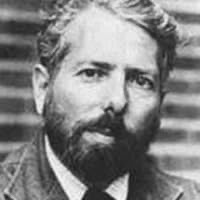
About Stanley Milgram
We have collected 21 quotes from 1 book by Stanley Milgram on BookQuoters.
More about the author →About the book
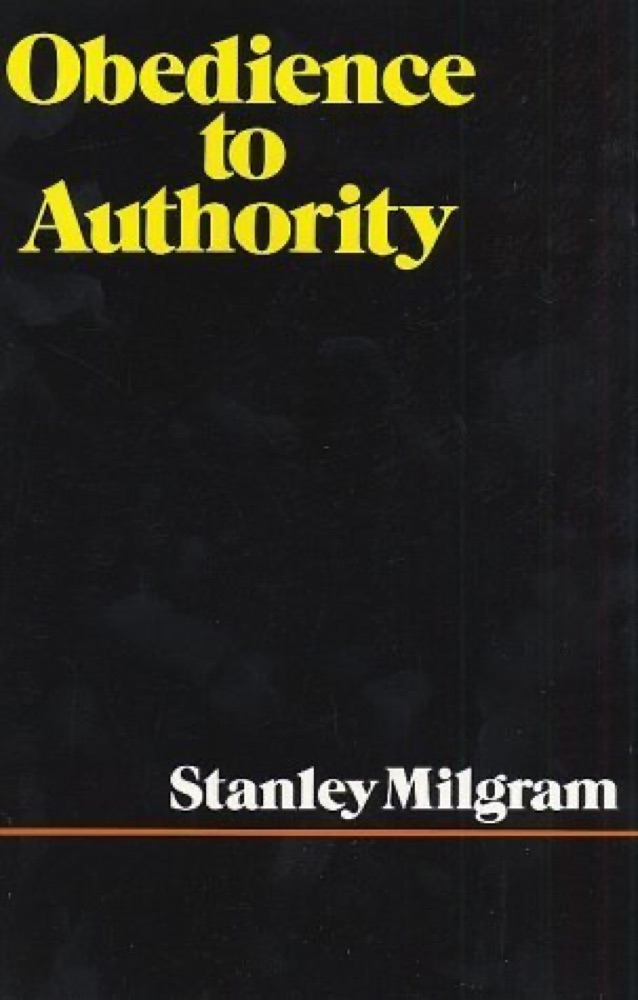
Obedience is as basic an element in the structure of social life as one can point to. Some system of authority is a requirement of all communal living, and it is only the man dwelling in isolation who is not forced to respond, through defiance or submission, to the commands of others. Obedience, as a determinant of behavior is of particular relevance to our time. It has been reliably established that from 1933 to 1945 millions of innocent people were systematically slaughtered on command. Gas chambers were built, death camps were guarded, daily quotas of corpses were produced with the same efficiency as the manufacture of appliances. These inhumane policies may have originated in the mind of a single person, but they could only have been carried out on a massive scale if a very large number of people obeyed orders.
Obedience is the psychological mechanism that links individual action
Book details
- First published
- 1974
- Author
- Stanley Milgram
- Genre
- Nonfiction
- Goodreads rating
- 4.19 (5k ratings)
Keep reading
The Dosadi Experiment
 The Lucifer Effect: Understanding How Good People Turn Evil
 The Road to Serfdom
 People of the Lie: The Hope for Healing Human Evil
 On Liberty
 The Utopia of Rules: On Technology, Stupidity, and the Secret Joys of Bureaucracy
 The Origins of Totalitarianism
 Walden Two
 Escape from Freedom
 Behold a Pale Horse
 Rules for Radicals: A Pragmatic Primer for Realistic Radicals
 Civil Disobedience
 Democracy in America
 The Virtue of Selfishness: A New Concept of Egoism
 The Subjection of Women
 The Sane Society
 Civil Disobedience and Other Essays
 The Essential Chomsky
 Eichmann in Jerusalem: A Report on the Banality of Evil
 Pedagogy of the Oppressed
 The Chomsky-Foucault Debate: On Human Nature
 Brave New World Revisited
 Crowds and Power
 Alien Clay
 Independent Study
 The Moon is a Harsh Mistress
 Beyond Freedom and Dignity
 You Can't Be Neutral on a Moving Train: A Personal History of Our Times
 Doing Justice: A Prosecutor's Thoughts on Crime, Punishment, and the Rule of Law
 The Undiscovered Self
 Reflections on the Revolution in France
 Discipline and Punish: The Birth of the Prison
 Chomsky On Anarchism
 Children of Dune
 Freedom
 The Power of the Powerless
 One-Dimensional Man: Studies in the Ideology of Advanced Industrial Society
 The Blank Slate: The Modern Denial of Human Nature
 Empire
 God Emperor of Dune
 On Tyranny: Twenty Lessons from the Twentieth Century
 Anarchy, State, and Utopia
 Naked Empire
 A People's History of the United States
 Rights of Man
 Human Action: A Treatise on Economics
 The Secret Agent
 Lila: An Inquiry Into Morals
 Politics
 The Constitution of Liberty
 Conspirators' Hierarchy: The Story of the Committee of 300
 The True Believer: Thoughts on the Nature of Mass Movements
 Endgame, Vol. 1: The Problem of Civilization
 Defying Hitler
 Theological-Political Treatise
 The Social Contract
 The Abolition of Man
 De la Démocratie en Amérique, tome II
 Executive Orders
 Justice: What's the Right Thing to Do?