 Orange Is the New Black
Quotes from the Book
In my forties, I chose to take my pain and turn it into compassion, and not hate. Whenever I experienced pain of any origin I always made a promise to myself never to do anything that would cause someone else to suffer the pain I was feeling in that moment. I still had moments of bitterness and anger. But by then I had the wisdom to know that bitterness and anger are destructive. I was dedicated to building things, not tearing them down.
10
Reading was my salvation. Libraries and universities and schools from all over Louisiana donated books to Angola and for once, the willful ignorance of the prison administration paid off for us, because there were a lot of radical books in the prison library: Books we wouldn’t have been allowed to get through the mail. Books we never could have afforded to buy. Books we had never heard of. Herman, King, and I first gravitated to books and authors that dealt with politics and race—George Jackson, Frantz Fanon, Malcolm X, Marcus Garvey, Steve Biko, Eldridge Cleaver’s Soul on Ice, J. A. Rogers’s From “Superman” to Man. We read anything we could find on slavery, communism, socialism, Marxism, anti-imperialism, the African independence movements, and independence movements from around the world. I would check off these books on the library order form and never expect to get them until they came. Leaning against my wall in the cell, sitting on the floor, on my bed, or at my table, I read.
6
Prison is designed to break one’s spirit and destroy one’s resolve. To do this, the authorities attempt to exploit every weakness, demolish every initiative, negate all signs of individuality—all with the idea of stamping out that spark that makes each of us human and each of us who we are. Our survival depended on understanding what the authorities were attempting to do to us, and sharing that understanding with each other. —Nelson Mandela
6
I forced myself to learn how not to give in to fear. That was one of my greatest achievements in those years. I didn’t let fear rule me.
4
Frantz Fanon wrote, “Superiority? Inferiority? Why not simply try to touch the other, feel the other, discover each other?” Can we shift the focus of our insecurities, fears, and anger from other races and work together to deal with the unfair distribution of wealth on this planet? Back in the seventies Huey Newton wrote, “Youths are passed through schools that don’t teach, then forced to search for jobs that don’t exist and finally left stranded in the street to stare at the glamorous lives advertised around them.” This is happening right now in this country, in 2018, for all children of all races.
3
I used to tell myself, “If you can breathe you can get through anything.
2
The legal definition of “slavery” is “the state of one person being forced to work under the control of another.” The U.S. prisons are contracted by a range of government entities and private corporations to make their products. In most prisons, wages are well below poverty level. In some states prisoners aren’t paid. These working prisoners aren’t allowed to get benefits, they aren’t allowed to form unions, they aren’t allowed to negotiate the terms of their work conditions. It’s legal slavery to exploit prisoners in this way. Under the 13th Amendment prisoners are slaves of the state and are treated as such.
2
Private prisons--prisons run by corporations in order to make a profit, are dangerous. When the goal of a prison is to make a profit, human beings suffer. Corners are cut; rules are devised to keep people in prison longer; there is no incentive to rehabilitate prisoners.
1
Whenever you don’t think you can take another step, the human spirit keeps going, even when you don’t want to.
1
You want me to believe that I’m OK when you know I’m not OK.
1
They tried to bury us. They didn’t know we were seeds. —Mexican proverb
1
Ninety-nine percent of your success was because you really wanted to read,” I said. Within a year he was reading at a high school level.
1
I thought it was sad that I had to come to prison to find out there were great African Americans in this country and in this world, and to find role models that I should have had available to me in school.
1
I have witnessed the horrors of man's cruelty to man. I did not lose my humanity. I bear the scars of beatings, loneliness, isolation and persecution. I am also marked by every kindness.
I put the pain of it in the back of my mind to a place where it didn’t affect me.
Instead of showing you how to build courage," I wrote in response to someone asking me how to be brave, "I write to you to pay tribute to and salute your courage. I embrace your courage. I lie down every night loving your courage. When I am in need of purpose of focus I thank your courage. Courage is not an ongoing thing that you walk around feeling ever day. Like anything in life, it comes and goes with the challenges we meet every day of our lives!
If you don’t know where to start, follow Solitary Watch and Prison Legal News on social media to find out what’s going on. There are organizations that are trying to change prisons as we know them, such as Critical Resistance and the Malcolm X Grassroots Movement. As human beings, we need to insist on the humane treatment of prisoners and the rehabilitation and education of prisoners. Prisoners who are mentally ill need treatment, not paralyzing drugs and 23 hours a day in a cell. Prisoners who are uneducated need education.
We need to admit to, confront, and change the racism in the American justice system that decides who is stopped by police, who is arrested, who is searched, who is charged, who is prosecuted, and who isn’t, as well as look at who receives longer sentences and why and demand a fair and equal system. Racism in police departments and in courtrooms is not a secret. It’s been proved. Racism occurs at every level of the judicial process, from people of color being disproportionately stopped by police (racial profiling) to their being sentenced.
There are still more than 80,000 men, women, and children in solitary confinement in prisons across the United States, according to the Bureau of Justice Statistics. That figure doesn’t include county jails, juvenile facilities, or immigrant detention centers.
Still, the integrity and courage that Deidre Howard displayed in coming forward to speak out about her experience, even early on, before she knew if I was innocent or guilty, were so noble and rare. I am grateful to this day. Later, Deidre would say it took months for her to process everything that happened. “As a citizen, I was taught to respect those in authority,” she said. “I was not prepared to second-guess them. A citizen coming from [her] own job doesn’t walk into the courthouse with the mind-set that the prosecutors are not going to be honest, or that they would knowingly leave out facts that would change the whole story. I felt completely disillusioned, because the rules that I, and most citizens, try to live by were not the ones that I found the officials lived by.
If we can’t allow diversity, if we can’t accept our differences, if we can’t see one another as equal, if every race can’t begin to function on an equal footing with every other race in this world, we will never be able to unite, which means we will never be able to demand economic justice for all. We won’t be able to advance as a species.
When you see organizations like Black Lives Matter under attack for being “racist,” you are seeing the agenda of an unjust economic system at play—a system that seeks to separate groups of people within the majority to benefit the top 1 percent.
To us this was clearly prosecutorial misconduct. But Julie Cullen got away with it the same way all prosecutors do. There is no oversight of prosecutorial conduct in this country, even though reckless and irresponsible actions by prosecutors, who are out not for justice or truth but only for their own careers and to win, have enormous lifelong consequences on people’s lives that can never be undone.
People asked us if they should try to protect us. “No,” we said. “Don’t worry what will happen to us,” I told them. “That is a nonissue.
a man who chooses not to seek knowledge is the same as a boy who choose not to become a man.
I tried to make the routine different.
What helped me was that I knew I wasn’t a criminal anymore. I considered myself to be a political prisoner. Not in the sense that I was incarcerated for a political crime, but because of a political system that had failed me terribly as an individual and a citizen in this country.
The security guards and all of the ranking officers at Angola were white, and we called them “freemen.” Freemen came from generations of white families born and raised in Angola prison.
Watch on YouTube
About Albert Woodfox
About the book
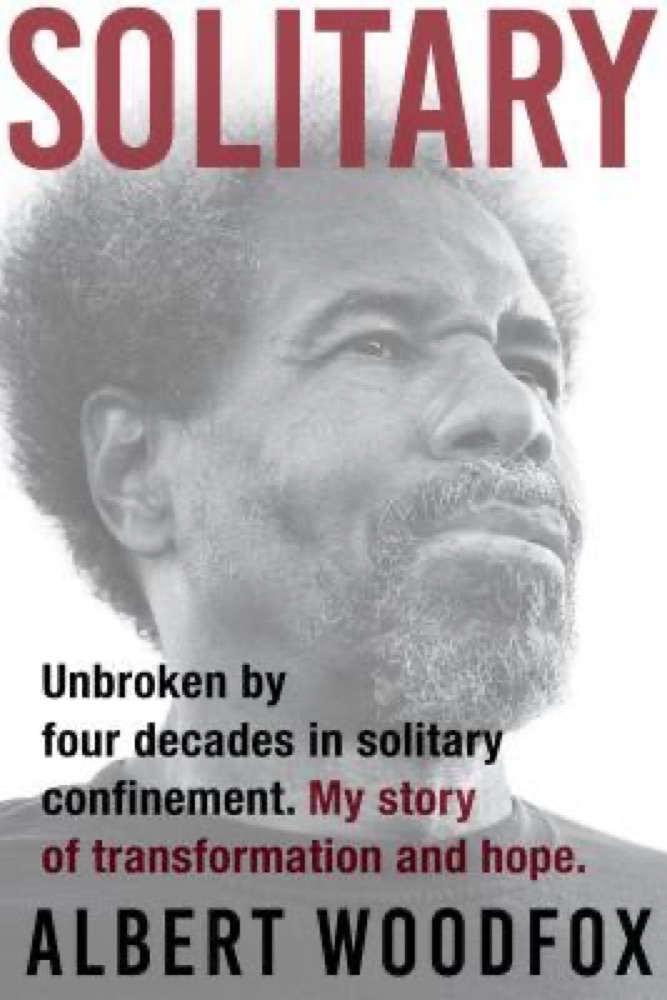
Solitary is the unforgettable life story of a man who served more than four decades in solitary confinement—in a 6-foot by 9-foot cell, 23 hours a day, in notorious Angola prison in Louisiana—all for a crime he did not commit.
That Albert Woodfox survived was, in itself, a feat of extraordinary endurance against the violence and deprivation he faced daily. That he was able to emerge whole from his odyssey within America’s prison and judicial systems is a triumph of the human spirit, and makes his book a clarion call to reform the inhumanity of solitary confinement in the U.S. and around the world.
Book details
- First published
- 2019
- Author
- Albert Woodfox
- Genre
- Nonfiction
- Goodreads rating
- 4.42 (4k ratings)
Keep reading
Orange Is the New Black
 When They Call You a Terrorist: A Black Lives Matter Memoir
 A Knock at Midnight: A Story of Hope, Justice, and Freedom
 Long Walk to Freedom
 Between the World and Me
 Assata: An Autobiography
 The Sun Does Shine: How I Found Life and Freedom on Death Row
 Scenes from My Life: A Memoir
 Writing My Wrongs
 Just Mercy
 My Government Means to Kill Me
 Know My Name
 The Girl Who Smiled Beads: A Story of War and What Comes After
 The Nickel Boys
 James
James
 The Autobiography of Malcolm X
 Notes from No Man's Land
 How to Slowly Kill Yourself and Others in America
 The Truths We Hold: An American Journey
 The Heart of a Woman
 Born a Crime: Stories From a South African Childhood
 You Can't Be Neutral on a Moving Train: A Personal History of Our Times
 How Dare the Sun Rise: Memoirs of a War Child
 Heavy
Heavy
 The Gulag Archipelago 1918-1956
 On the Other Side of Freedom: The Case for Hope
 Homegoing
 My Beloved World
 It's Trevor Noah: Born a Crime: Stories from a South African Childhood
 Black Like Me
 United: Thoughts on Finding Common Ground and Advancing the Common Good
 Uncultured: A Memoir
 A Promised Land
 A Song Flung Up to Heaven
 No Name in the Street
 All American Boys
 Riding the Elephant: A Memoir of Altercations, Humiliations, Hallucinations, and Observations
 Native Son
 Letter from the Birmingham Jail
 The Autobiography of Martin Luther King, Jr.
 Dreams from My Father: A Story of Race and Inheritance
 Aftershocks
 Underground Airlines
 All God's Children Need Traveling Shoes
 A Naked Singularity
 Coming Home
 Internment
 Tears of the Silenced: A True Crime and an American Tragedy; Severe Child Abuse and Leaving the Amish
 Never Stop Walking: A Memoir of Finding Home Across the World
 The 57 Bus
 Gifted Hands: The Ben Carson Story
 My Story
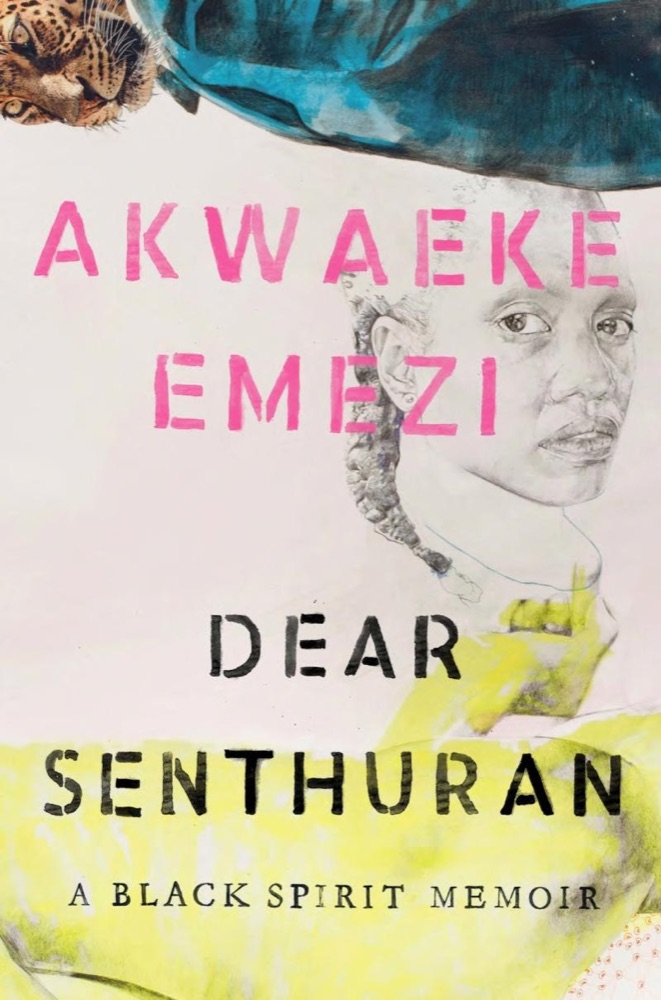 Dear Senthuran: A Black Spirit Memoir
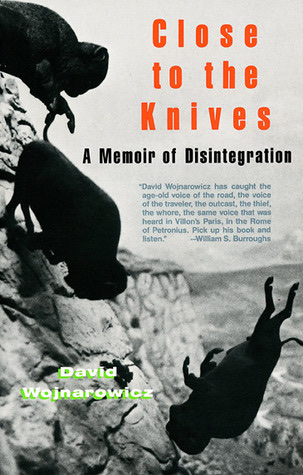 Close to the Knives: A Memoir of Disintegration
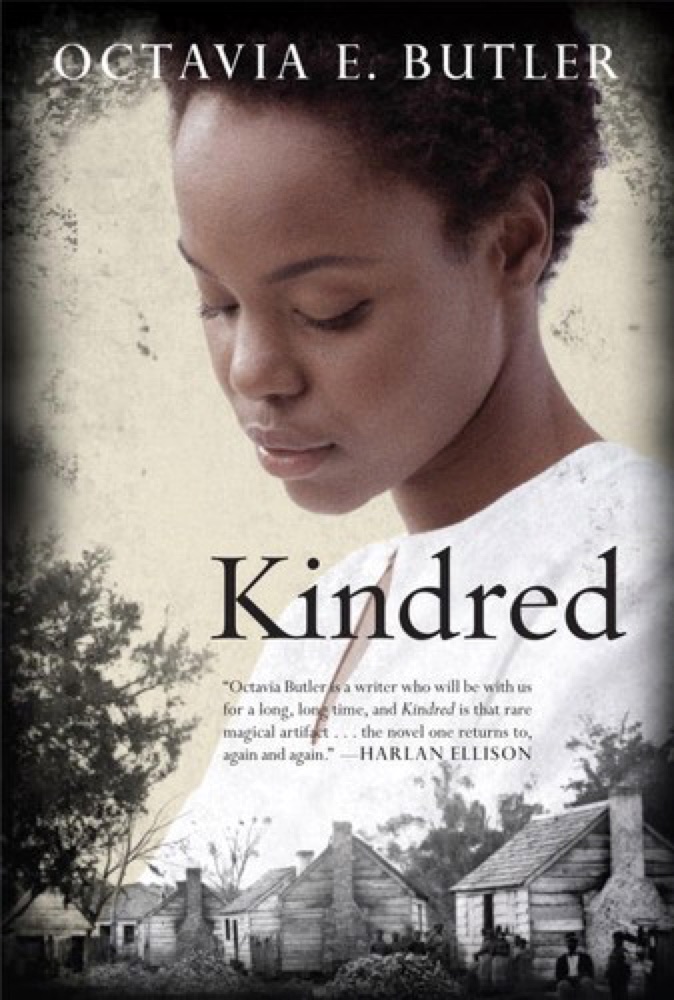 Kindred
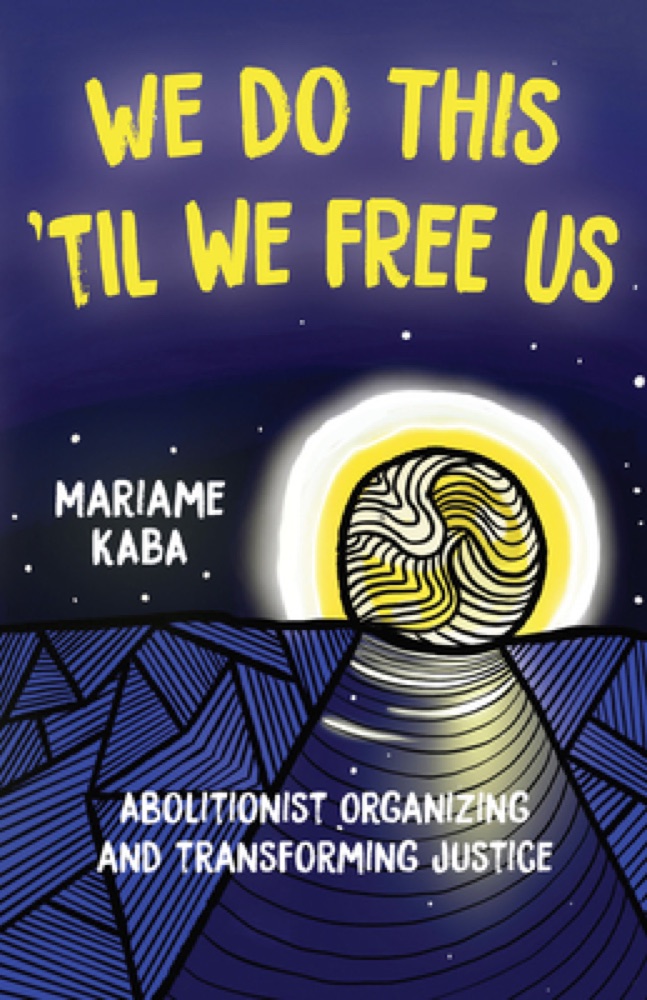 We Do This 'til We Free Us: Abolitionist Organizing and Transforming Justice
 Edge of Eternity
 The Office of Historical Corrections
 The Book of Negroes
 The First Circle