
 The Way of All Flesh
Quotes from the Book
Exploring is delightful to look forward to and back upon, but it is not comfortable at the time, unless it be of such an easy nature as not to deserve the name.
13
Property, marriage, the law; as the bed to the river, so rule and convention to the instinct; and woe to him who tampers with the banks while the flood is flowing.
11
It has been said that the love of money is the root of all evil. The want of money is so quite as truly.
8
As there can be no translation from one language into another which shall not scant the meaning somewhat, or enlarge upon it, so there is no language which can render thought without a jarring and a harshness somewhere.
7
Mention but the word "divinity," and our sense of the divine is clouded.
6
I know not why, but all the noblest arts hold in perfection but for a very little moment. They soon reach a height from which they begin to decline, and when they have begun to decline it is a pity that they cannot be knocked on the head; for an art is like a living organism—better dead than dying.
6
There is no security against the ultimate development of mechanical consciousness, in the fact of machines possessing little consciousness now should provide small comfort. ...what will they not in the end become?
4
I firmly believe that the same thing would happen in nine families out of ten if the parents were merely to remember how they felt when they were young, and actually to behave towards their children as they would have had their own parents behave towards themselves. But this, which would appear to be so simple and obvious, seems also to be a thing which not one in a hundred thousand is able to put in practice.
4
It stands to reason that he who would cure a moral ailment must be practically acquainted with it in all its bearings.
4
I remember one incident which bears upon this part of the treatise. The gentleman who gave it to me had asked to see my tobacco-pipe; he examined it carefully, and when he came to the little protuberance at the bottom of the bowl he seemed much delighted, and exclaimed that it must be rudimentary. I asked him what he meant. "Sir," he answered, "this organ is identical with the rim at the bottom of a cup; it is but another form of the same function. Its purposes must have been to keep the heat of the pipe from marking the table upon which it rested. You would find, if you were to look up the history of tobacco-pipes, that in early specimens this protuberance was of a different shape to what it is now. It will have been broad at the bottom, and flat, so that while the pipe was being smoked the bowl might rest upon the table without marking it. Use and disuse must have come into play and reduced the function its present rudimentary condition. I should not be surprised, sir," he continued, "if, in the course of time, it were to become modified still farther, and to assume the form of an ornamental leaf or scroll, or even a butterfly, while in some cases, it will become extinct.
4
How many men at this hour are living in a state of bondage to the machines? How many spend their whole lives, from the cradle to the grave, in tending them by night and day? It is not plain that the machines are gaining ground upon us, when we reflect on the increasing number of those who are bound down to them as slaves, and of those who devote their whole souls to the advancement of the mechanical kingdom? -Erewhon
3
common sense, though she is by nature the gentlest creature living, when she feels the knife at her throat, is apt to develop unexpected powers of resistance, and to send doctrinaires flying, even when they have bound her down and think they have her at their mercy.
3
So engrained in the human heart is the desire to believe that some people really do know what they say they know, and can thus save them from the trouble of thinking for themselves, that in a short time would-be philosophers and faddists became more powerful than ever, and gradually led their countrymen to accept all those absurd views of life, some account of which I have given in my earlier chapters. Indeed I can see no hope for the Erewhonians till they have got to understand that reason uncorrected by instinct is as bad as instinct uncorrected by reason.
3
Besides so long as a man has not been actually killed he is our fellow-creature, though perhaps a very unpleasant one.
2
all people with any pretence to respectability to send their children to some one or other of these schools, mulcting them of years of money. It astonished me to see what sacrifices the parents would make in order to render their children as nearly useless as possible; and it was hard to say whether the old suffered most from the expense which they were thus put to, or the young from being deliberately swindled in some of the most important branches of human inquiry, and directed into false channels or left to drift in the great majority of cases.
2
For property is robbery, but then, we are all robbers or would-be robbers together, and have found it essential to organise our thieving, as we have found it necessary to organise our lust and revenge. Property, marriage, the law; as the bed to the river, so rule and convention to the instinct; and woe to him who tampers with the banks while the flood is flowing.
2
So it is with most of us: that which we observe to be taken as a matter of course by those around us, we take as a matter of course ourselves.
2
There is no security (...) against the ultimate development of mechanical consciousness, in the fact of machines possessing little consciousness now. A mollusc has not much consciousness. Reflect upon the extraordinary advance which machines have made during the last few hundred years, and note how slowly the animal and vegetable kingdoms are advancing.
1
It will be seen ... that the Erewhonians are a meek and long-suffering people easily led by the nose, and quick to offer up common sense at the shrine of logic, when a philosopher arises among them who carries them away ... by convincing them that their existing institutions are not based on the strictest principles of morality.
1
I call it to mind and delight in it now, but I did not notice it at the time. We next to never know when we are well off: but this cuts two ways,--for if we did, we should perhaps know better when we are ill off also; and I have sometimes thought that there are as many ignorant of the one as of the other.
1
Possibly they would be consigned to the Hospital for Incurable Bores, and made to work at being bored for so many hours a day by the Erewhonian inhabitants of the hospital, who are extremely impatient of one another's boredom, but would soon die if they had no one whom they might bore--in fact, that they would be kept as professional borees.
1
Among those who came to visit me were some who had received a liberal education at the Colleges of Unreason, and taken the highest degrees in hypothetics, which are their principal study.
1
lit a fire, and was grateful for its warmth and company.
1
We next to never know when we are well off: but this cuts two ways,--for if we did, we should perhaps know better when we are ill off also; and I have sometimes thought that there are as many ignorant of the one as of the other.
1
Each moment I felt increasing upon me that dreadful doubt as to my own identity—as to the continuity of my past and present existence—which is the first sign of that distraction which comes on those who have lost themselves in the bush. I had fought against this feeling hitherto, and had conquered it; but the intense silence and gloom of this rocky wilderness were too much for me, and I felt that my power of collecting myself was beginning to be impaired.
1
reason uncorrected by instinct is as bad as instinct uncorrected by reason.
Some people may say that man’s moral influence will suffice to rule them; but I cannot think it will ever be safe to repose much trust in the moral sense of any machine.
Watch on YouTube
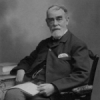
About Samuel Butler
We have collected 56 quotes from 2 books by Samuel Butler on BookQuoters.
More about the author →More by Samuel Butler
The Way of All Flesh
About the book
In this novel, Butler satirically describes a utopian society, using the civilization of 'Erewhon' ('nowhere,' scrambled) to satirize beliefs popular in the England of his day. Butler wrote a sequel to the novel, Erewhon Revisited.
Book details
- First published
- 1872
- Author
- Samuel Butler
- Genre
- Fiction
- Goodreads rating
- 3.28 (5k ratings)
Keep reading
 The Midwich Cuckoos
 The Republic
 Too Like the Lightning
 The Shockwave Rider
 Daniel Deronda
 Human, All Too Human
 That Hideous Strength
 The Fall of Babel
 The Accursed
 Walden and other writings
 Mason & Dixon
 What's Wrong with the World
 Persian Letters
 The State of the Art
 Heretics
 Foundation and Empire
 Antic Hay
 The Gay Science
 The Magic Mountain
 Daybreak: Thoughts on the Prejudices of Morality
 The Rise of Silas Lapham
 Emile or On Education
 Bleak House
 An Essay Concerning Human Understanding
 The Blithedale Romance
 Villa Incognito
 Utopia
 The Rebel Angels
 A Treatise of Human Nature
 Walden & Civil Disobedience
 The World-Ending Fire: The Essential Wendell Berry
 An Instance of the Fingerpost
 The World's Last Night: And Other Essays
 Anthills of the Savannah
 When I Was a Child I Read Books
 Point Counter Point
 The Razor's Edge
 The Story of My Experiments With Truth
 Children of Dune
 Gaudy Night
 The Ides of March
 A Connecticut Yankee in King Arthur's Court
 Life at the Bottom: The Worldview That Makes the Underclass
 The History of Tom Jones, a Foundling
 Gnomon
 An Enquiry Concerning Human Understanding
The Way of All Flesh
An Enquiry Concerning Human Understanding
The Way of All Flesh
 Genesis
 The Secret Agent
 Philosophical Dictionary
 The Man in the High Castle
 Wampeters, Foma and Granfalloons
 The Kraken Wakes
 Walden Two
 Civilization and Its Discontents
 God Emperor of Dune
 Prelude to Foundation
 The Screwtape Letters
 Middlemarch
 The Empusium