
 The Wild Edge of Sorrow: Rituals of Renewal and the Sacred Work of Grief
Quotes from the Book
Our longing for community and purpose is so powerful that it can drive us to join groups, relationships, or systems of belief that, to our diminished or divided self, give the false impression of belonging. But places of false belonging grant us conditional membership, requiring us to cut parts of ourselves off in order to fit in. While false belonging can be useful and instructive for a time, the soul becomes restless when it reaches a glass ceiling, a restriction that prevents us from advancing. We may shrink back from this limitation for a time, but as we grow into our truth, the invisible boundary closes in on us and our devotion to the groupmind weakens. Your rebellion is a sign of health. It is the way of nature to shatter and reconstitute. Anything or anyone who denies your impulse to grow must either be revolutionised or relinquished.
27
There is a wild woman under our skin who wants nothing more than to dance until her feet are sore, sing her beautiful grief into the rafters, and offer the bottomless cup of her creativity as a way of life. And if you are able to sing from the very wound that you’ve worked so hard to hide, not only will it give meaning to your own story, but it becomes a corroborative voice for others with a similar wounding.
18
The only antidote to perfectionism is to turn away from every whiff of plastic and gloss and follow our grief, pursue our imperfections, and exaggerate our eccentricities until the things we once sought to hide reveal themselves as our majesty.
12
The keeper of silence has tremendous control. What she keeps sealed away can never be harmed so long as it remains hidden. Silence is a power, yes, but when does silence turn upon its keeper and become the captor? When does it inhibit the natural impulse to speak, the urge to sing, the longing to contribute? So many wait for the express invitation to speak, for some permission to be granted, to be coaxed into contributing. But what if this invitation never comes? When does silence stop us from fulfilling our purpose, or making connections with others? When does silence stop a healthy disagreement, like the one that names an injustice and invokes change? When is silence being complicit, when it should be calling on a revolution waiting to happen?
12
The willingness to rebel from the expected norms, rules, and silent contracts of establishment comes out of knowing that one cannot afford to build resentment. Resentment, which comes from the decision to go against one's truth, embitters the self. It somaticizes in the body and takes on the burden of pain as if it were ours alone. The whistleblower, on the other hand, reveals a shared complicity. It says, "I expect more from myself and from you." And in that stance, the pain becomes, in a sense, communal.
12
Human beings have a natural urge to worship that “something greater” which coheres us, but we, in modernity, are living in a kind of spiritual cul-de-sac where our gifts only serve the human community. Unlike the many shamanic cultures that practice dreamwork, ritual, and thanksgiving, Westerners have forgotten what indigenous people understand to be cardinal: that this world owes its life to the unseen. Every hunt and every harvest, every death, and every birth is distinguished by ceremony for that which we cannot see, feeding back that which feeds us. I believe our epidemic alienation is, in good part, the felt negligence of that reciprocity.
12
There is really only one way to restore a world that is dying and in disrepair: to make beauty where ugliness has set in. By beauty, I don’t mean a superficial attractiveness, though the word is commonly used in this way. Beauty is a loveliness admired in its entirety, not just at face value. The beauty I’m referring to is metabolized grief. It includes brokenness and fallibility, and in so doing, conveys for us something deliciously real. Like kintsukuroi, the Japanese art of repairing broken pottery with powdered gold, what is normally seen as a fatal flaw is distinguished with value. When we come into contact with this kind of beauty, it serves as a medicine for the brokenness in ourselves, which then gives us the courage to live in greater intimacy with the world’s wounds.
12
As we apprentice ourselves to the way of nature, we begin to understand that all of life is in a continuous cycle of giving and receiving. It is the honouring of this cycle that makes us feel at home in ourselves and in relation to the rest of nature. In order to experience true belonging, we must not only acknowledge the gifts we are receiving, but also give our beauty away, no matter how it may be received by others.
10
as the Persian poet Hafiz warns, “Don’t surrender your loneliness so quickly. Let it cut you more deep. Let it ferment and season you as few human and even divine ingredients can.
8
Whatever the particulars of your first estrangement, you will have felt the rift being torn between who you really are, and who you had to be to survive. And so begins the work of moulding our qualities into this more acceptable version of ourselves. Over time, these efforts at ‘passing’as normal become all-too-successful, until even we begin to forget our true nature.
8
Grief is the honour we pay to that which is dear to us.
5
Occasionally you meet someone with whom you can dive right in, but in general it’s better to move slowly into closeness with others, because it is a worse thing to call someone home and leave them, than to not call them home at all.
5
The real marriage must first take place within. The Inner Marriage is a slow process of first attempting to understand the true qualities of masculine and feminine, how they manifest in our lives and dreams, and then undertaking a courtship of the inner opposite, activating those latent qualities in our repertoire.
5
The practice above all practices is to relinquish the immature desire to be taken care of in false belonging and to parent our own originality. Again and again, our dreams demand leadership from us, calling our life’s vision forward into the world, step by tenderbrave step.
5
There is a special quality of stillness in a person who encounters their shadow wholeheartedly. Your body may relax in their company because it understands, in the subtle communications of their presence, that nothing is excluded in themselves, or you, from belonging. Such a person, who has given up guarding against the shadow, who has come to wear their scars with dignity, no longer squirms from discomfort or bristles at suffering. They no longer brace in avoidance of conflict. They carry a deep willingness to dance with the inconstancy of life. They’ve given up distancing as a strategy, and made vulnerability their ally.
4
Especially in times of exile, when our anchors are pulled up and we’re no longer taking cues from the outside world, we have a chance to find that inner well and reinstate our connection to the sacred. We may find it overgrown, or hard to reach through the brambles, but each of us faces a time when the well within needs tending: when we’re no longer able to bestow blessings on others because we’ve over-given, or when something precious has been taken from us, or life’s demands have been too taxing on our fragile system. When the moisture goes out of our lives, and we’re no longer able to see beauty or converse with magic, we must ask ourselves how we can replenish our well-ness.
4
Revitalizing these Lost Zones within our psyche is about looking directly at the damage, as we do with dreamwork, and stitch by stitch, bringing what has been torn from us back into belonging.
4
Pain and injury and illness ask us to consider that our lives are worthy without justification.
2
that modern culture is suffering an epidemic of alienation, yet so many of us feel alone in our unbelonging, as if everyone else was inside of the thing that we alone are outside of. And keeping silent about our experience of estrangement is, in large part, what allows it to perpetuate.
2
In order to heal the scarcity wound—created by the lack of nurturing both in our families and in our culture—we must learn to become the loving mother to ourselves that we never had. This ‘remothering’ is the ongoing practice, tremendously helped by a mentor, of learning to care for your body’s needs, validating and expressing your feelings (even if they’re unpopular), holding healthy boundaries, supporting your life choices, and most of all—being welcoming towards all that is yet unsolved in your heart.
2
Enthusiasm is the vitality of spirit, expressing itself through us, and its grace in our voice should be welcomed and cherished.
1
Naturally, the antidote to shame is to risk showing up as fully as we’re able. The discipline needed for shame is to practice revealing yourself. It is bringing into the open the full brightness of your spirit, despite your fear of failure. It is to brave your secret gifts into the open. It is revealing your fears to trusted others, allowing them to be assuaged. It is reaching out when you’d rather hide. It’s asking for help when you feel abandoned.
1
We must find the place within where things have been muted and give that a voice. Until those things are spoken, no truth can find its way forward. The world needs your unbelonging. It needs your disagreements, your exclusion, your ache to tear the false constructions down, to find the world behind this one.
But the black sheep are the artists, visionaries and healers of our culture, because they are the ones willing to call into question those places which feel stale, obsolete, or without integrity.
One of the big reasons that so many of us cling to false belonging is that braving into a more genuine life requires a terrifying initial descent.
Every hunt and every harvest, every death and every birth is distinguished by beauty-making and ceremony for that which we cannot see, feeding back that which feeds us. I believe our alienation is the felt negligence of that reciprocity.
The Holy Grail is the part-historical, part-mythical vessel found in the Arthurian legend of Perceval. Perceval sets out on a quest to retrieve the Grail, said to have life-restoring powers, to save his dying King. Though his journey is long and rife with failure, there is a pivotal moment when Perceval must ask the question, “Whom does the Grail serve?” This is the moment when Perceval must confront the value of his quest. To what or whom is my life in service? The story is symbolic of our individuation process. We are each a holy vessel in which the dying, materialistic worldview can be redeemed with meaning and divine purpose.
At the very heart of ‘belonging’ is the word ‘long.’ To be-long to something is to stay with it for the long haul. It is an active choice we make to a relationship, to a place, to our body, to a life because we value it. Even knowing that it may not be all that we hope it to be, we are keeping the long view of what is possible, and our life becomes an offering to making it so.
Watch on YouTube
About Toko-pa Turner
We have collected 28 quotes from 1 book by Toko-pa Turner on BookQuoters.
More about the author →About the book
2017 Nautilus Award Gold Winner for Personal Growth
The world has never been more connected, yet people are lonelier than ever. Whether we feel unworthy, alienated, or anxious about our place in the world the absence of belonging is the great silent wound of our times.
Most people think of belonging as a mythical place, and they spend a lifetime searching for it in vain. But what if belonging isn't a place at all? What if it's a skill that has been lost or forgotten?
With her signature depth and eloquence, Toko-pa maps a path to Belonging from the inside out. Drawing on myth, stories and dreams, she takes us into the origins of our estrangement, reframing exile as a necessary initiation into authenticity. Then she shares the competencies of belonging: a set of ancestral practices to heal our wounds and restore true belonging to our lives and to the world.
Book details
- First published
- 2017
- Author
- Toko-pa Turner
- Genre
- Nonfiction
- Goodreads rating
- 4.36 (2k ratings)
Keep reading
The Wild Edge of Sorrow: Rituals of Renewal and the Sacred Work of Grief
 This Here Flesh: Spirituality, Liberation, and the Stories That Make Us
 A Hidden Wholeness: The Journey Toward an Undivided Life : Welcoming the soul and weaving community in a wounded world
 The Book of Awakening: Having the Life You Want by Being Present to the Life You Have
 Kitchen Table Wisdom: Stories that Heal
 Consolations: The Solace, Nourishment and Underlying Meaning of Everyday Words
 What It Takes to Heal: How Transforming Ourselves Can Change the World
 True Refuge: Finding Peace and Freedom in Your Own Awakened Heart
 Like Streams to the Ocean: Notes on Ego, Love, and the Things That Make Us Who We Are
 Letting Go of the Person You Used to Be: Lessons on Change, Loss, and Spiritual Transformation
 Wild Mercy: Living the Fierce and Tender Wisdom of the Women Mystics
 On Connection
 Braving the Wilderness
 See No Stranger: A Memoir and Manifesto of Revolutionary Love
 Let Your Life Speak: Listening for the Voice of Vocation
 Anam Cara: A Book of Celtic Wisdom
 Finding Meaning in the Second Half of Life: How to Finally, Really Grow Up
 Becoming Wise: An Inquiry into the Mystery and Art of Living
 The Source of Self-Regard: Selected Essays, Speeches, and Meditations
 The Invitation
 Bittersweet: How Sorrow and Longing Make Us Whole
 Becoming Human
 The Places That Scare You: A Guide to Fearlessness in Difficult Times
 Stitches: A Handbook on Meaning, Hope, and Repair
 When Things Fall Apart: Heart Advice for Difficult Times
 Dusk, Night, Dawn: On Revival and Courage
 Make It Scream, Make It Burn
 Inciting Joy: Essays
 Untamed
 A Joseph Campbell Companion: Reflections on the Art of Living
 The Gifts of Imperfection
 Just as I Am
 Living Beautifully with Uncertainty and Change
 The Stories We Tell: Every Piece of Your Story Matters
 A Return to Love: Reflections on the Principles of "A Course in Miracles"
 Women Who Run With the Wolves
 Of Mess and Moxie: Wrangling Delight Out of This Wild and Glorious Life
 The Light We Carry: Overcoming in Uncertain Times
 The Wise Heart: A Guide to the Universal Teachings of Buddhist Psychology
 Journal of a Solitude
 How to Stay Sane in an Age of Division
 Radical Acceptance: Embracing Your Life With the Heart of a Buddha
 Now Is the Time to Open Your Heart
 Welcome Home: A Guide to Building a Home for Your Soul
 Be Not Afraid of Love: Lessons on Fear, Intimacy, and Connection
 The Wisdom of Your Body: Finding Healing, Wholeness, and Connection through Embodied Living
 The Mountain Shadow
 If the Buddha Dated: A Handbook for Finding Love on a Spiritual Path
 The Deeply Formed Life: Five Transformative Values to Root Us in the Way of Jesus
 Faith, Hope and Carnage
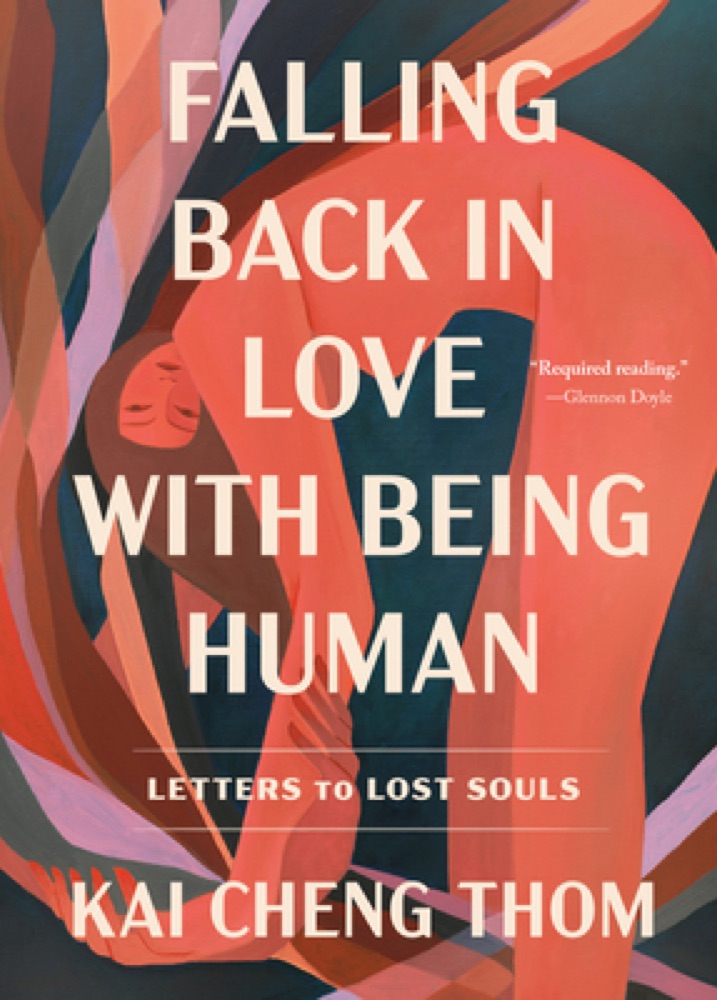 Falling Back in Love with Being Human: Letters to Lost Souls
 What If This Were Enough?: Essays
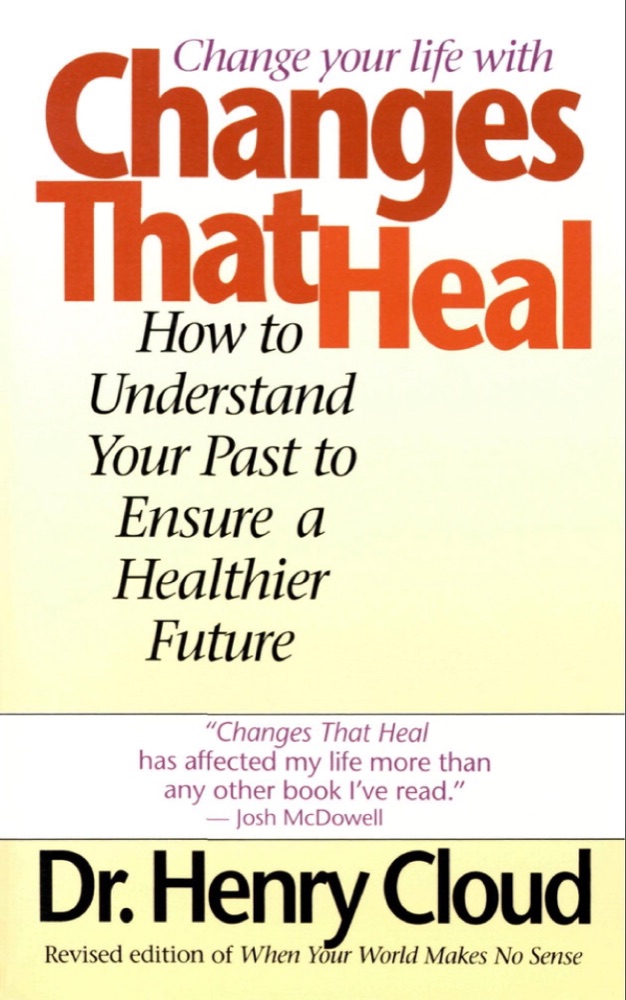 Changes That Heal: How to Understand the Past to Ensure a Healthier Future
 Carry On, Warrior: Thoughts on Life Unarmed
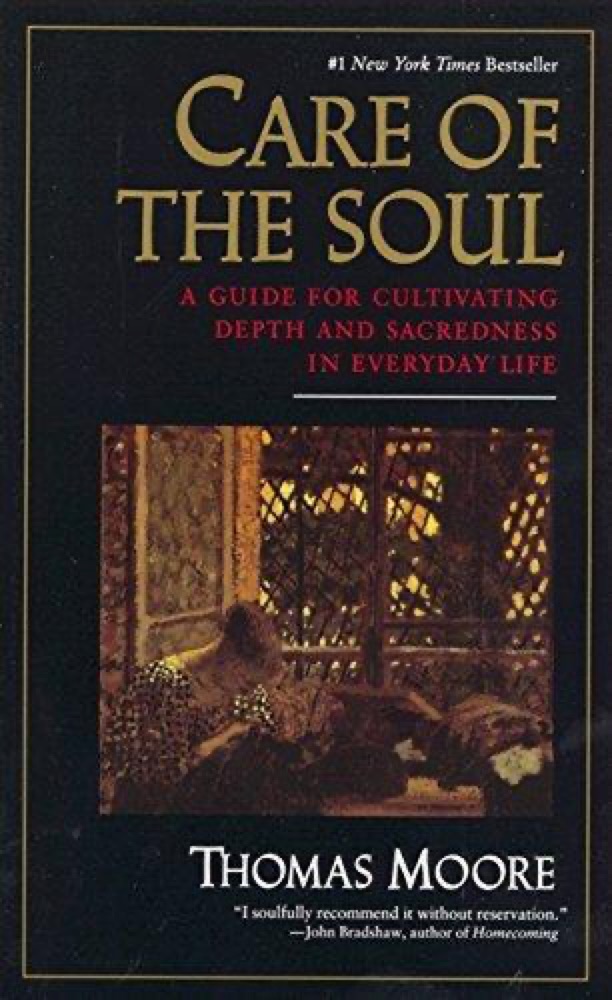 Care of the Soul: A Guide for Cultivating Depth and Sacredness in Everyday Life
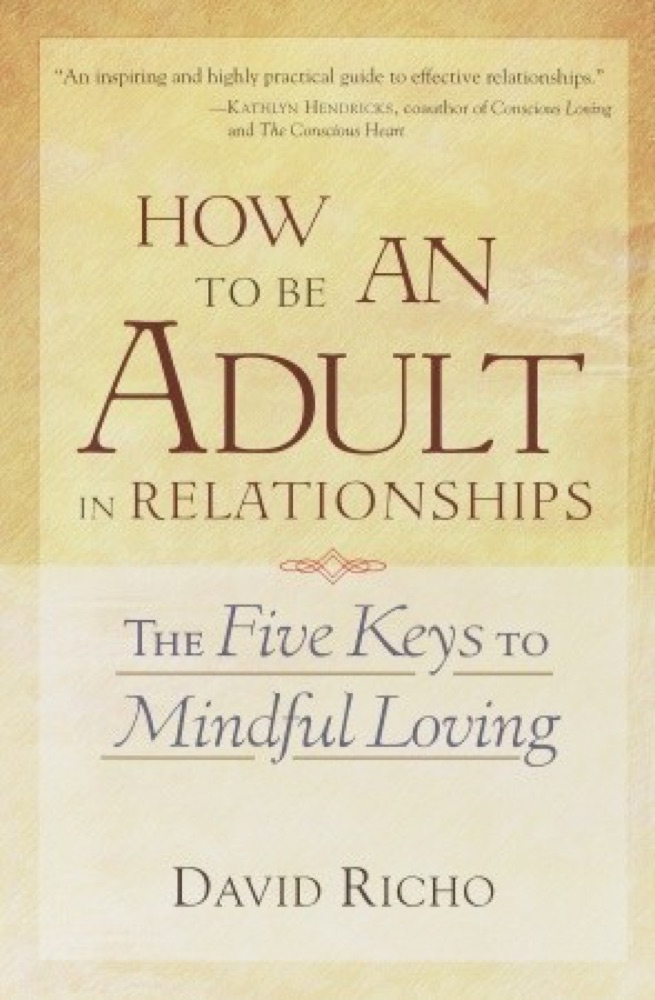 How to Be an Adult in Relationships: The Five Keys to Mindful Loving
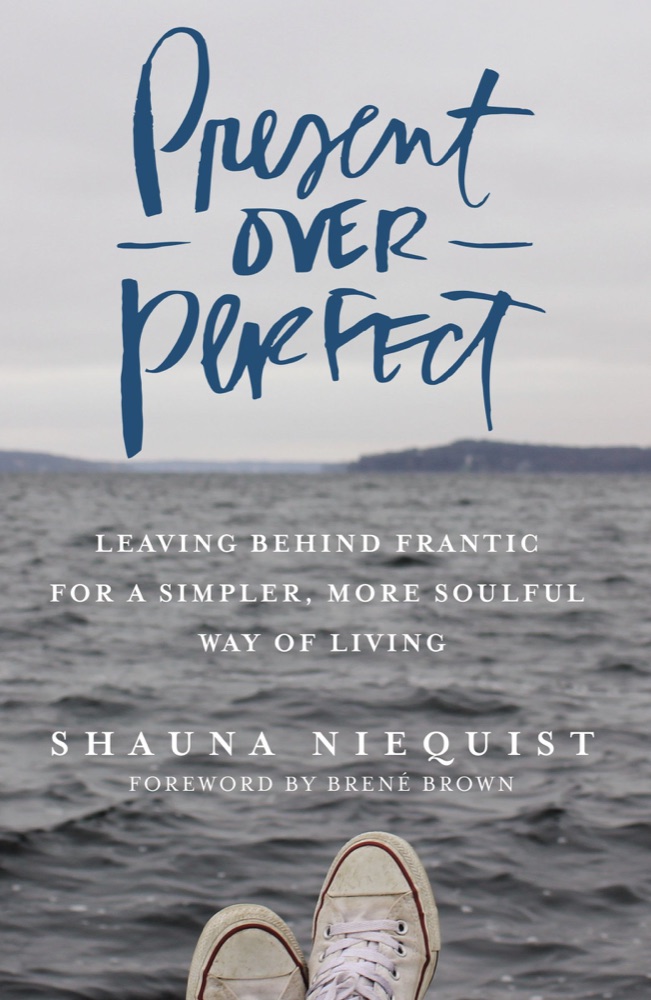 Present Over Perfect: Leaving Behind Frantic for a Simpler, More Soulful Way of Living
 Never Broken: Songs Are Only Half the Story