 Life of Christ
Quotes from the Book
Envy! Envy is the reverse side of a coin called vanity. Nobody is ever envious of others who is not first proud of himself.
12
What dominated his mind was not the living but the giving of his life.
8
A guilty conscience is a great blessing, but only if it drives us to come home.
8
Octavius Winslow summed it up in a neat statement: ‘Who delivered up Jesus to die? Not Judas, for money; not Pilate, for fear; not the Jews, for envy; – but the Father, for love!’29
8
Self-denial is not denying to ourselves luxuries such as chocolates, cakes, cigarettes and cocktails (although it might include this); it is actually denying or disowning ourselves, renouncing our supposed right to go our own way.
7
All Christian preachers have to face this issue. Either we preach that human beings are rebels against God, under his just judgment and (if left to themselves) lost, and that Christ crucified who bore their sin and curse is the only available Saviour. Or we emphasize human potential and human ability, with Christ brought in only to boost them, and with no necessity for the cross except to exhibit God’s love and so inspire us to greater endeavour. The former is the way to be faithful, the latter the way to be popular. It is not possible to be faithful and popular simultaneously.
7
The New Testament uses five main Greek words for sin, which together portray its various aspects, both passive and active. The commonest is hamartia, which depicts sin as a missing of the target, the failure to attain a goal. Adikia is ‘unrighteousness’ or ‘iniquity’, and ponēria is evil of a vicious or degenerate kind. Both these terms seem to speak of an inward corruption or perversion of character. The more active words are parabasis (with which we may associate the similar paraptōma), a ‘trespass’ or ‘transgression’, the stepping over a known boundary, and anomia, ‘lawlessness’, the disregard or violation of a known law. In each case an objective criterion is implied, either a standard we fail to reach or a line we deliberately cross.
5
At the cross in holy love God through Christ paid the full penalty of our disobedience himself.
5
Insistence on security is incompatible with the way of the cross. What daring adventures the incarnation and the atonement were! What a breach of convention and decorum that Almighty God should renounce his privileges in order to take human flesh and bear human sin! Jesus had no security except in his Father. So to follow Jesus is always to accept at least a measure of uncertainty, danger and rejection for his sake.
4
We may wish, indeed,’ wrote C. S. Lewis, ‘that we were of so little account to God that he left us alone to follow our natural impulses – that he would give over trying to train us into something so unlike our natural selves: but once again, we are asking not for more love, but for less....To ask that God’s love should be content with us as we are is to ask that God should cease to be God....
4
Even the excruciating pain could not silence his repeated entreaties: ‘Father, forgive them, for they do not know what they are doing.’ The soldiers gambled for his clothes. Some women stood afar off. The crowd remained a while to watch. Jesus commended his mother to John’s care and John to hers. He spoke words of kingly assurance to the penitent criminal crucified at his side. Meanwhile, the rulers sneered at him, shouting: ‘He saved others, but he can’t save himself!’ Their words, spoken as an insult, were the literal truth. He could not save himself and others simultaneously. He chose to sacrifice himself in order to save the world.
4
It was by his death that he wished above all else to be remembered. There is then, it is safe to say, no Christianity without the cross. If the cross is not central to our religion, ours is not the religion of Jesus.
4
There is much shallowness and levity among us. Prophets and psalmists would probably say of us that ‘there is no fear of God before their eyes’. In public worship our habit is to slouch or squat; we do not kneel nowadays, let alone prostrate ourselves in humility before God. It is more characteristic of us to clap our hands with joy than to blush with shame or tears. We saunter up to God to claim his patronage and friendship; it does not occur to us that he might send us away. We need to hear again the apostle Peter’s sobering words: ‘Since you call on a Father who judges each man’s work impartially, live your lives...in reverent fear.’39 In other words, if we dare to call our Judge our Father, we must beware of presuming on him. It must even be said that our evangelical emphasis on the atonement is dangerous if we come to it too quickly. We learn to appreciate the access to God which Christ has won for us only after we have first seen God’s inaccessibility to sinners. We can cry ‘Hallelujah’ with authenticity only after we have first cried ‘Woe is me, for I am lost’. In Dale’s words, ‘it is partly because sin does not provoke our own wrath, that we do not believe that sin provokes the wrath of God’.
3
Perhaps it is a deep-seated reluctance to face up to the gravity of sin which has led to its omission from the vocabulary of many of our contemporaries. One acute observer of the human condition, who has noticed the disappearance of the word, is the American psychiatrist Karl Menninger. He has written about it in his book, Whatever Became of Sin? Describing the malaise of western society, its general mood of gloom and doom, he adds that ‘one misses any mention of “sin”’. ‘It was a word once in everyone’s mind, but is now rarely if ever heard. Does that mean’, he asks, ‘that no sin is involved in all our troubles...? Has no-one committed any sins? Where, indeed, did sin go? What became of it?’ (p.13). Enquiring into the causes of sin’s disappearance, Dr Menninger notes first that ‘many former sins have become crimes’, so that responsibility for dealing with them has passed from church to state, from priest to policeman (p.50), while others have dissipated into sicknesses, or at least into symptoms of sickness, so that in their case punishment has been replaced by treatment (pp.74ff.). A third convenient device called ‘collective irresponsibility’ has enabled us to transfer the blame for some of our deviant behaviour from ourselves as individuals to society as a whole or to one of its many groupings (pp.94ff.).
3
We may succeed in preserving a modicum of rectitude in the performance of our public duty, but behind this facade lurk violent and sinful emotions, which are always threatening to erupt.
3
To be disrespectful of tradition and of historical theology is to be disrespectful of the Holy Spirit who has been actively enlightening the church in every century.
3
Thirdly, Christ’s salvation must be a free gift. He ‘purchased’ it for us at the high price of his own life-blood. So what is there left for us to pay? Nothing! Since he claimed that all was now ‘finished’, there is nothing for us to contribute.
3
If the Cross of Christ is anything to the mind, it is surely everything – the most profound reality and the sublimest mystery.
2
The first thing that has to be said about the biblical gospel of reconciliation, however, is that it begins with reconciliation to God, and continues with a reconciled community in Christ. Reconciliation is not a term the Bible uses to describe ‘coming to terms with oneself’, although it does insist that it is only through losing ourselves in love for God and neighbour that we truly find ourselves.
2
To say that somebody ‘is not responsible for his actions’ is to demean him or her as a human being. It is part of the glory of being human that we are held responsible for our actions. Then, when we also acknowledge our sin and guilt, we receive God’s forgiveness, enter into the joy of his salvation, and so become yet more completely human and healthy. What is unhealthy is every wallowing in guilt which does not lead to confession, repentance, faith in Jesus Christ and so forgiveness.
2
We have rejected the position of dependence which our createdness inevitably involves, and made a bid for independence. Worse still, we have dared to proclaim our self-dependence, our autonomy, which is to claim the position occupied by God alone.
2
If we are looking for a definition of love, we should look not in a dictionary, but at Calvary.
1
Thomas Cranmer in his ‘Homily of Salvation’ explained that three things had to go together in our justification: on God’s part ‘his great mercy and grace’, on Christ’s part ‘the satisfaction of God’s justice’, and on our part ‘true and lively faith’. He concluded the first part of the homily: ‘It pleased our heavenly Father, of his infinite mercy, without any our desert or deserving, to prepare for us the most precious jewels of Christ’s body and blood, whereby our ransom might be fully paid, the law fulfilled, and his justice fully satisfied.’15
1
And the Holy Spirit came to ‘convict the world of guilt’, but only in order that he might more effectively bear witness to Christ as the Saviour
1
Our responsibility before God is an inalienable aspect of our human dignity. Its final expression will be on the day of judgment. Nobody will be sentenced without trial.
1
On the contrary, Scripture invariably treats us as morally responsible agents. It lays upon us the necessity of choice between ‘life and good, death and evil’, between the living God and idols.
1
Forgiveness is the very opposite of anything which can be taken for granted.
1
For whenever we turn away from Christ, we ‘are crucifying the Son of God all over again and subjecting him to public disgrace’ (Heb. 6:6).
1
Nobody is ever envious of others who is not first proud of himself.
Watch on YouTube
About John R.W. Stott
We have collected 29 quotes from 1 book by John R.W. Stott on BookQuoters.
More about the author →About the book
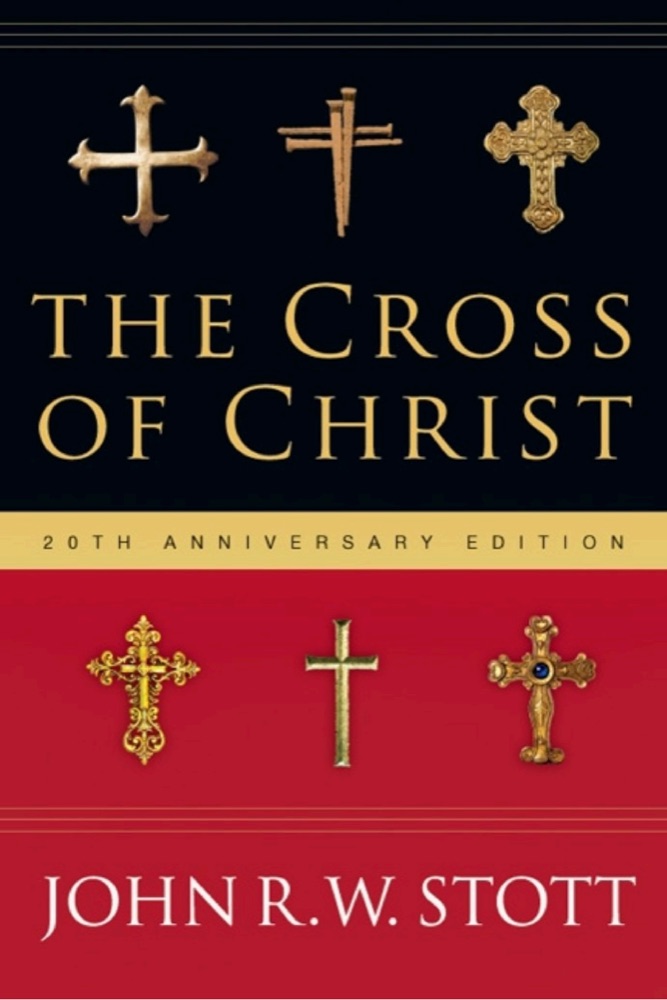
The work of a lifetime, from one of the world's most influential thinkers, about the heart of the Christian faith. "I could never myself believe in God, if it were not for the cross. . . . In the real world of pain, how could one worship a God who was immune to it?" With compelling honesty John Stott confronts this generation with the centrality of the cross in God's redemption of the world -- a world now haunted by the memories of Auschwitz, the pain of oppression and the specter of nuclear war. Can we see triumph in tragedy, victory in shame? Why should an object of Roman distaste and Jewish disgust be the emblem of our worship and the axiom of our faith? And what does it mean for us today? Now from one of the foremost preachers and Christian leaders of our day comes theology at its readable best, a contemporary restatement of the meaning of the cross. At the cross Stott finds the maje
Book details
- First published
- 1986
- Author
- John R.W. Stott
- Genre
- Nonfiction
- Goodreads rating
- 4.29 (13k ratings)
Keep reading
Life of Christ
 The Prodigal God: Recovering the Heart of the Christian Faith
 King's Cross: The Story of the World in the Life of Jesus
 Life Together: The Classic Exploration of Christian Community
 Studies in the Sermon on the Mount
 The Cost of Discipleship
 The Holiness of God
 A Little Book on the Christian Life
 The Name of God is Mercy
 The Crucible of Doubt: Reflections On the Quest for Faith
 Encounters with Jesus: Unexpected Answers to Life's Biggest Questions
 Sinners in the Hands of a Loving God: The Scandalous Truth of the Very Good News
 The Case for Faith: A Journalist Investigates the Toughest Objections to Christianity
 The Infinite Atonement
 Jesus of Nazareth: The Infancy Narratives
 The Jesus I Never Knew
 The Normal Christian Life
 Gentle and Lowly: The Heart of Christ for Sinners and Sufferers
 Ethics
 The Explicit Gospel
 The Ragamuffin Gospel
 Seeking Allah, Finding Jesus: A Devout Muslim Encounters Christianity
 To Live Is Christ: Joining Paul's Journey of Faith
 All of Grace
 Discipline: The Glad Surrender
 Pastrix: The Cranky, Beautiful Faith of a Sinner & Saint
 Institutes of the Christian Religion, 2 Vols
 Jesus Among Other Gods: The Absolute Claims of the Christian Message
 Radical: Taking Back Your Faith from the American Dream
 What's So Amazing About Grace?
 My Utmost for His Highest
 Instruments in the Redeemer's Hands: People in Need of Change Helping People in Need of Change
 The Divine Conspiracy: Rediscovering Our Hidden Life in God
 The Bruised Reed
 In His Image: 10 Ways God Calls Us to Reflect His Character
 On the Incarnation
 Bonhoeffer: Pastor, Martyr, Prophet, Spy
 The Orthodox Way
 The Secret Thoughts of an Unlikely Convert: An English Professor's Journey Into Christian Faith
 The Seven Sayings of the Saviour on the Cross
 Celebration of Discipline: The Path to Spiritual Growth
 40 Days of Decrease: A Different Kind of Hunger. A Different Kind of Fast.
 Seeing and Savoring Jesus Christ
 That All Shall Be Saved: Heaven, Hell, and Universal Salvation
 Simply Christian
 Because He Loves Me: How Christ Transforms Our Daily Life
 Desiring God: Meditations of a Christian Hedonist
 Searching for God Knows What
 The Pursuit of Holiness
 The Doctrine of Repentance
 Jesus Over Everything: Uncomplicating the Daily Struggle to Put Jesus First
 The Holy Longing: The Search for a Christian Spirituality
 He Chose the Nails: What God Did to Win Your Heart
 Jesus Is: Find a New Way to Be Human
 The Kingdom of God Is Within You
 Jesus and the Disinherited
 The Bible Jesus Read
 Living the Cross Centered Life: Keeping the Gospel the Main Thing
 The Imitation of Christ
 No Man Is an Island