 The Attributes of God
Quotes from the Book
I believe that many who find that "nothing happens" when they sit down, or kneel down, to a book of devotion, would find that the heart sings unbidden while they are working their way through a tough bit of theology with a pipe in their teeth and a pencil in their hand.
83
He, the Life of all, our Lord and Saviour, did not arrange the manner of his own death lest He should seem to be afraid of some other kind. No. He accepted and bore upon the cross a death inflicted by others, and those other His special enemies, a death which to them was supremely terrible and by no means to be faced; and He did this in order that, by destroying even this death, He might Himself be believed to be the Life, and the power of death be recognised as finally annulled. A marvellous and mighty paradox has thus occurred, for the death which they thought to inflict on Him as dishonour and disgrace has become the glorious monument to death's defeat.
66
Even on the cross He did not hide Himself from sight; rather, He made all creation witness to the presence of its Maker.
56
We may be sure that the characteristic blindness of the twentieth century - the blindness about which posterity will ask, "But how could they have thought that?" - lies where we have never suspected it... None of us can fully escape this blindness, but we shall certainly increase it, and weaken our guard against it, if we read only modern books. Where they are true they will give us truths which we half knew already. Where they are false they will aggravate the error with which we are already dangerously ill. The only palliative is to keep the clean sea breeze of the centuries blowing through our minds, and this can be done only by reading old books.
55
Christ was made man that we might be made God.
38
The Self-revealing of the Word is in every dimension - above, in creation; below, in the Incarnation; in the depth, in Hades; in the breadth, throughout the world. All things have been filled with the knowledge of God.
34
The Lord did not come to make a display. He came to heal and to teach suffering men. For one who wanted to make a display the thing would have been just to appear and dazzle the beholders. But for Him Who came to heal and to teach the way was not merely to dwell here, but to put Himself at the disposal of those who needed Him, and to be manifested according as they could bear it, not vitiating the value of the Divine appearing by exceeding their capacity to receive it.
33
Dead men cannot take effective action; their power of influence on others lasts only till the grave. Deeds and actions that energise others belong only to the living. Well, then, look at the facts in this case. The Saviour is working mightily among men, every day He is invisibly persuading numbers of people all over the world, both within and beyond the Greek-speaking world, to accept His faith and be obedient to His teaching. Can anyone, in face of this, still doubt that He has risen and lives, or rather that He is Himself the Life? Does a dead man prick the consciences of men...?
29
For God is good - or rather, of all goodness He is the Fountainhead.
25
The body of the Word, then, being a real human body, in spite of its having been uniquely formed from a virgin, was of itself mortal and, like other bodies, liable to death. But the indwelling of the Word loosed it from this natural liability, so that corruption could not touch it. Thus is happened that two opposite marvels took place at once: the death of all was consummated in the Lord's body; yet, because the Word was in it, death and corruption were in the same act utterly abolished.
25
It is a good rule, after reading a new book, never to allow yourself another new one till you have read an old one in between. If that is too much for you, you should at least read one old one to every three new ones.
23
For the Lord touched all parts of creation, and freed and undeceived them all from every deceit.
17
For, indeed, everything about is marvelous, and wherever a man turns his gaze he sees the Godhead of the Word and is smitten with awe.
13
In ancient times before the divine sojourn of the Savior took place, even to the saints death was terrible; all wept for the dead as though they perished. But now that the Savior has raised his body, death is no longer terrible; for all who believe in Christ trample on it as it were nothing and choose rather to die than deny their faith in Christ. And that devil that once maliciously exulted in death, now that its pains were loosed, remained the only one truly dead.
13
You know how it is when some great king enters a large city and dwells in one of its houses; because of his dwelling in that single house, the whole city is honored, and enemies and robbers cease to molest it. Even so is it with the King of all; He has come into our country and dwelt in one body amidst the many, and in consequence the designs of the enemy against mankind have been foiled and the corruption of death, which formerly held them in its power, has simply ceased to be. For the human race would have perished utterly had not the Lord and Savior of all the Son of God, come among us to put an end to death.
12
Death has become like a tyrant who has been completely conquered by the legitimate monarch; bound hand and foot the passers-by sneer at him, hitting him and abusing him, no longer afraid of his cruelty and rage, because of the king who has conquered him. So has death been conquered and branded for what it is by the Savior on the cross. It is bound hand and foot, all who are in Christ trample it as they pass and as witnesses to Him deride it, scoffing and saying, "O Death, where is thy victory? O Grave, where is thy sting?"35
10
You cannot put straight in others what is warped in yourself.
8
For the Word, realizing that in no other way would the corruption of human beings be undone except, simply, by dying, yet being immortal and the Son of the Father of the Word was not able to die, for this reason he takes to himself a body capable of death, in order that it, participating in the Word who is above all, might be sufficient for death on behalf of all, and through the indwelling Word would remain incorruptible, and so corruption might henceforth cease from all by the grace of the resurrection.
8
The answer is this. The Lord did not come to make a display. He came to heal and to teach suffering men. For one who wanted to make a display the thing would have been just to appear and dazzle the beholders. But for Him Who came to heal and to teach the way was not merely to dwell here, but to put Himself at the disposal of those who needed Him, and to be manifested according as they could bear it, not vitiating the value of the Divine appearing by exceeding their capacity to receive it.
7
For of what use is existence to the creature if it cannot know its Maker? How could men be reasonable beings if they had no knowledge of the Word and Reason of the Father, through Whom they had received their being? They would be no better than the beasts, had they no knowledge save of earthly things; and why should God have made them at all, if He had not intended them to know Him? But, in fact, the good God has given them a share in His own Image, that is, in our Lord Jesus Christ, and has made even themselves after the same Image and Likeness. Why? Simply in order that through this gift of Godlikeness in themselves they may be able to perceive the Image Absolute, that is the Word Himself, and through Him to apprehend the Father; which knowledge of their Maker is for men the only really happy and blessed life.
6
It is, indeed, in accordance with the nature of the invisible God that He should be thus known through His works; and those who doubt the Lord's resurrection because they do not now behold Him with their eyes, might as well deny the very laws of nature. They have ground for disbelief when works are lacking; but when the works cry out and prove the fact so clearly, why do they deliberately deny the risen life so manifestly shown? Even if their mental faculties are defective, surely their eyes can give them irrefragable proof of the power and Godhead of Christ. A blind man cannot see the sun, but he knows that it is above the earth from the warmth which it affords; similarly, let those who are still in the blindness of unbelief recognize the Godhead of Christ and the resurrection which He has brought about through His manifested power in others.
5
For we were the purpose of his embodiment, and for our salvation he so loved human beings as to come to be and appear in a human body.
5
This distinctness of things argues not a spontaneous generation but a prevenient Cause; and from that Cause we can apprehend
5
The Savior is working mightily among men, every day He is invisibly persuading numbers of people all over the world, both within and beyond the Greek-speaking world, to accept His faith and be obedient to His teaching. Can anyone, in face of this, still doubt that He has risen and lives, or rather that He is Himself the Life? Does a dead man prick the consciences of men, so that they throw all the traditions of their fathers to the winds and bow down before the teaching of Christ?
5
For my own part I tend to find the doctrinal books often more helpful in devotion than the devotional books, and I rather suspect that the same experience may await many others. I believe that many who find that “nothing happens” when they sit down, or kneel down, to a book of devotion, would find that the heart sings unbidden while they are working their way through a tough bit of theology with a pipe in their teeth and a pencil in their hand.
4
Heracles is worshipped as a god by the Greeks because he fought with humans equal to himself and killed wild beasts by guile. But what was that compared to what was done by the Word, who banished sicknesses and demons and death itself from human beings?
4
For God has not only created us from nothing, but also granted us by the grace of the Word to live a life according to God.
4
repentance recall men from what is according to their nature; all that it does is to make them cease from sinning. Had it been a case of a trespass only, and not of a subsequent corruption, repentance would have been well enough; but when once transgression had begun men came under the power of the corruption proper to their nature and were bereft of the grace which belonged to them as creatures in the Image of God.
4
Watch on YouTube
About Athanasius of Alexandria
We have collected 28 quotes from 1 book by Athanasius of Alexandria on BookQuoters.
More about the author →About the book
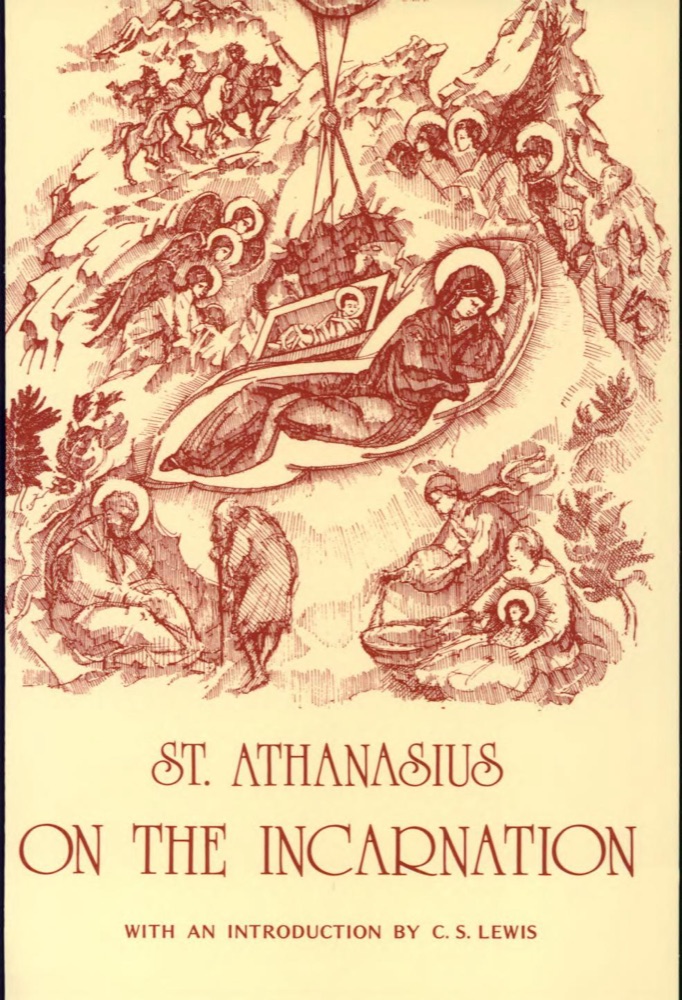
"This is a good translation of a very great book. "St Athanasius stood contra mundum for the Trinitarian doctrine 'whole and undefiled,' when it looked as if all the civilized world was slipping back from Christianity into the religion of Arius, into one of those 'sensible' synthetic religions which are so strongly recommended today and which then, as now, included among their devotees many highly cultivated clergymen. The glory of St Athanasius is that he did not move with the times; it is his reward that he now remains when those times, like all others, have passed away. "When I first opened De Incarnatione I soon discovered by a very simple test that I was reading a masterpiece, for only a mastermind could have written so deeply on such a subject with such classical simplicity" - C. S. Lewis, from the Introduction
On the Incarnation is part of the POPULAR PATRISTIC SERIES.
Book details
- First published
- 318
- Author
- Athanasius of Alexandria
- Genre
- Nonfiction
- Goodreads rating
- 4.38 (16k ratings)
Keep reading
The Attributes of God
 Systematic Theology: An Introduction to Biblical Doctrine
 Jesus of Nazareth: The Infancy Narratives
 The Orthodox Way
 The Knowledge of the Holy
 Studies in the Sermon on the Mount
 That All Shall Be Saved: Heaven, Hell, and Universal Salvation
 The Attributes of God: A Journey Into the Father's Heart
 Life of Christ
 Jesus Among Other Gods: The Absolute Claims of the Christian Message
 The Cross of Christ
 The Sovereignty of God
 Simply Christian
 All of Grace
 The Divine Conspiracy: Rediscovering Our Hidden Life in God
 A Little Book on the Christian Life
 The Holiness of God
 Surprised by Hope: A Study of Christian Hope and Resurrection
 On Christian Doctrine
 Institutes of the Christian Religion, 2 Vols
 The Reason for God: Belief in an Age of Skepticism
 The Infinite Atonement
 The Case for Faith: A Journalist Investigates the Toughest Objections to Christianity
 Encounters with Jesus: Unexpected Answers to Life's Biggest Questions
 Summa Theologica
 The Kingdom of God Is Within You
 None Like Him: 10 Ways God Is Different from Us
 Knowing God
 The Pursuit of God: The Human Thirst for the Divine
 The Normal Christian Life
 The History of the Church: From Christ to Constantine
 The Age of Reason
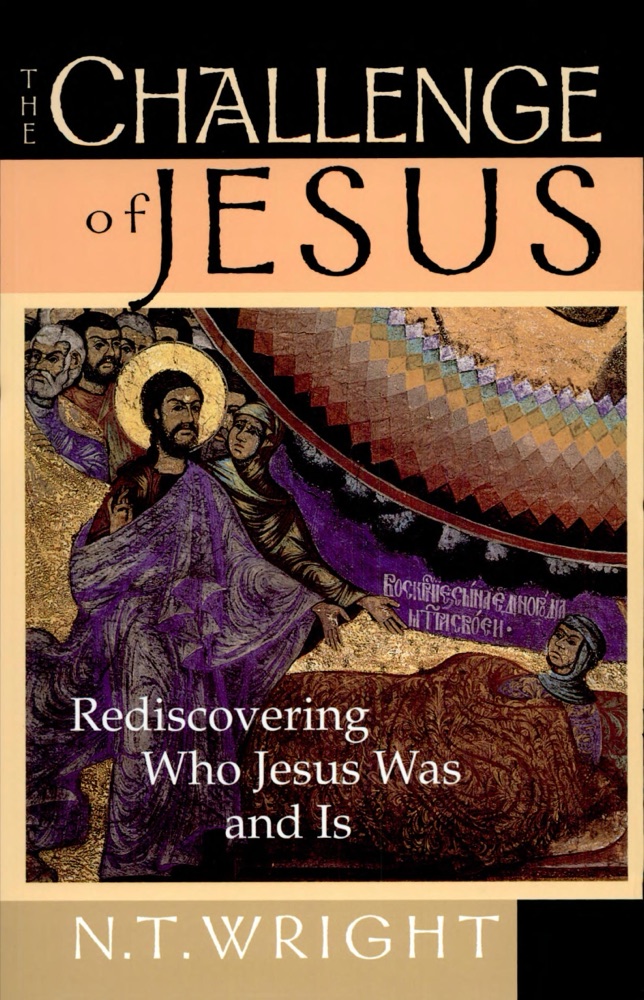 The Challenge of Jesus: Rediscovering Who Jesus Was & Is
 Lord of the World
 King's Cross: The Story of the World in the Life of Jesus
 The Passion of Jesus Christ
 The Bible Jesus Read
 The Crucible of Doubt: Reflections On the Quest for Faith
 He Chose the Nails: What God Did to Win Your Heart
 A Church in the House: Restoring Daily Worship to the Christian Household
 The Reed of God
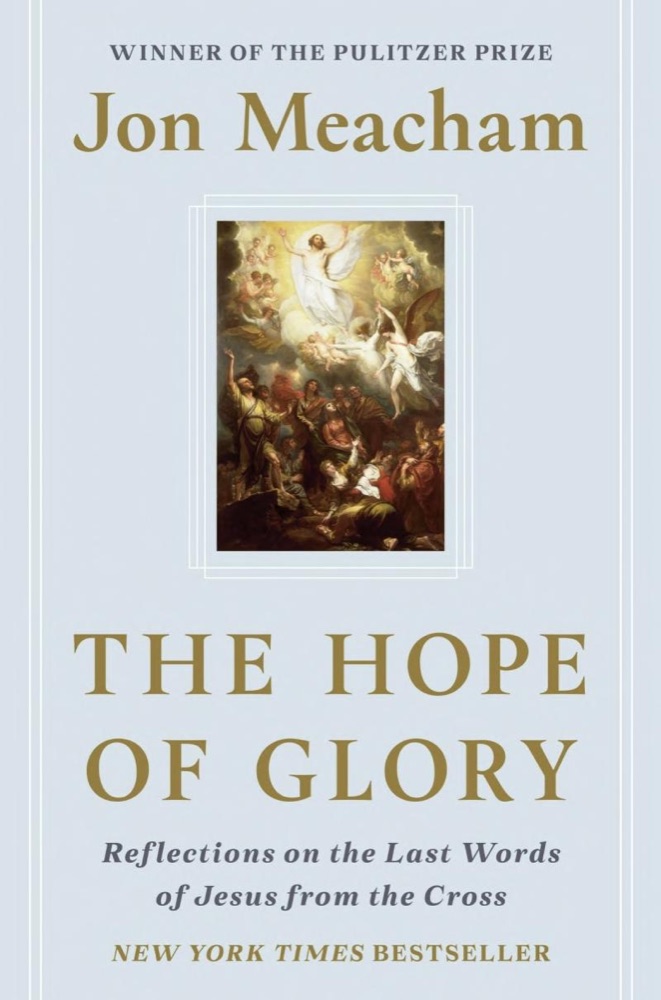 The Hope of Glory: Reflections on the Last Words of Jesus from the Cross
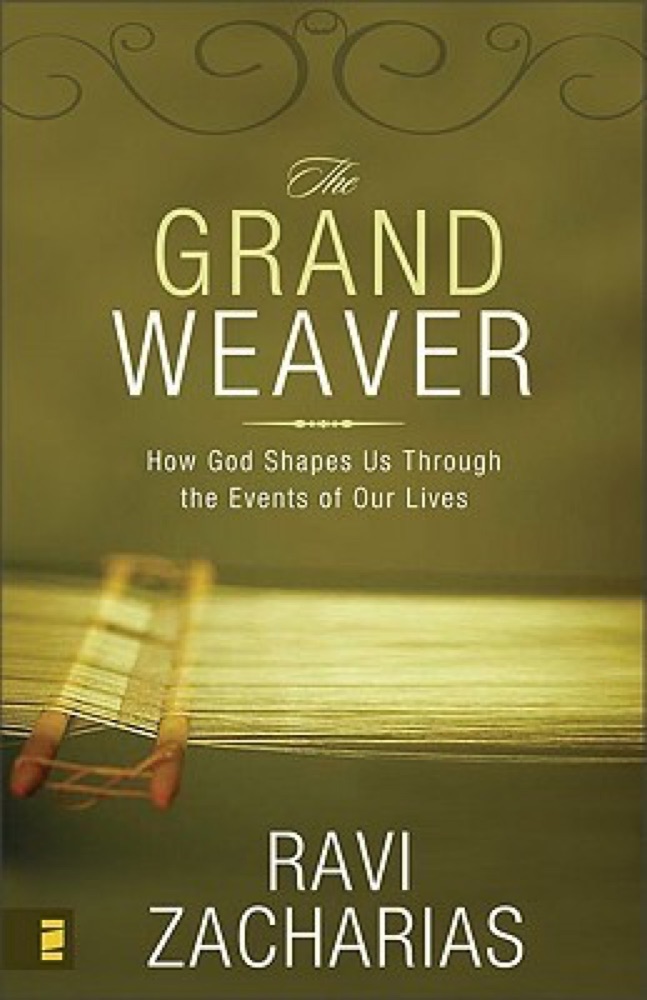 The Grand Weaver: How God Shapes Us through the Events in Our Lives
 The Sermon on the Mount: The Key to Success in Life
 Velvet Elvis: Repainting the Christian Faith
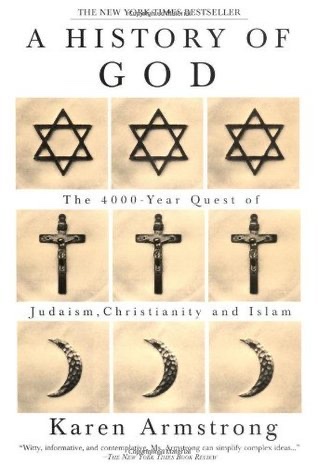 A History of God: The 4,000-Year Quest of Judaism, Christianity, and Islam
 The Bruised Reed
 Seeking Allah, Finding Jesus: A Devout Muslim Encounters Christianity
 The Everlasting Man
 The Orthodox Study Bible
 Sinners in the Hands of a Loving God: The Scandalous Truth of the Very Good News
 The Explicit Gospel
 Ethics
 The New Oxford Annotated Bible: New Revised Standard Version
 Believing God
 My Utmost for His Highest
 City of God
 The Mystery of Providence
 The Jesus I Never Knew