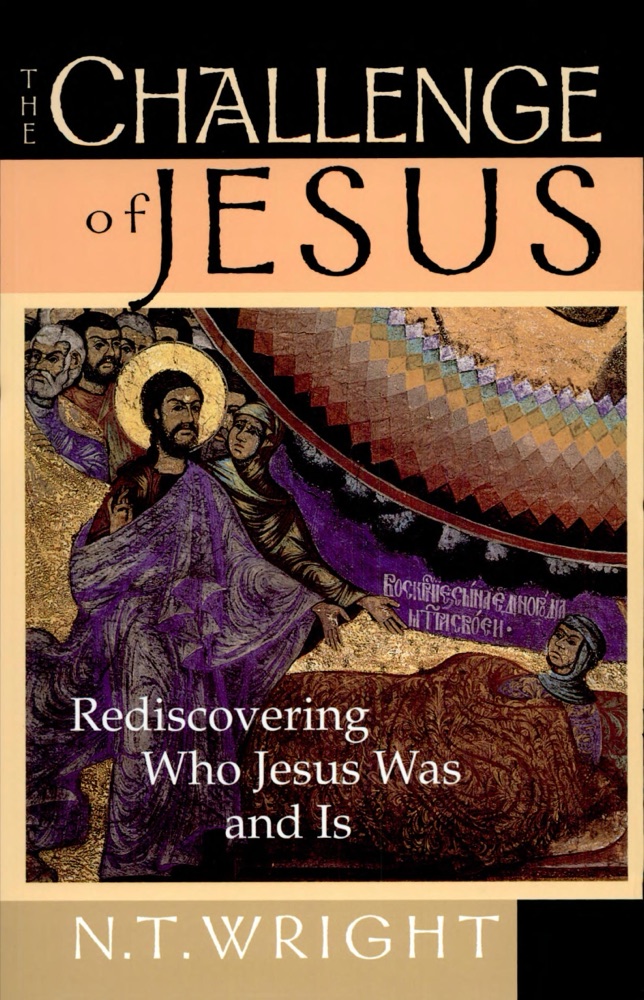
 The Challenge of Jesus: Rediscovering Who Jesus Was & Is
Quotes from the Book
Purity of heart is what enables us to see.
The great question that will be with us throughout this entire book: What did Jesus actually bring, if not world peace, universal prosperity, and a better world? What has he brought? The answer is very simple: God.... He has brought God, and now we know his face, now we can call upon him. Now we know the path that we human beings have to take in this world. Jesus has brought God and with God the truth about our origin and destiny: faith, hope and love. It is only because of our hardness of heart that we think this is too little. Yes indeed, God's power works quietly in this world, but it is the true and the lasting power. Again and again, God's cause seems to be in its death throes. Yet over and over again it proves to be the thing that truly endures and saves.
Praying actualizes and deepens our communion with God. Our prayer can and should arise above all from our heart, from our needs, our hopes, our joys, our sufferings, from our shame over sin, and from our gratitude from the good. It can and should be a wholly personal prayer.
The book is intended to help believing Christians “who today have been made insecure by scientific research and critical discussion, so that they may hold fast to faith in the person of Jesus Christ as the bringer of salvation and Savior of the world
Jesus’ teaching is not the product of human learning, of whatever kind. It originates from immediate contact with the Father, from “face-to-face” dialogue—from the vision of the one who rests close to the Father’s heart. It is the Son’s word. Without this inner grounding, his teaching would be pure presumption.
Silently evolving here was the attitude before God that Paul explored in his theology of justification: These are people who do not flaunt their achievements before God. They do not stride into God’s presence as if they were partners able to engage with him on an equal footing; they do not lay claim to a reward for what they have done. These are people who know that their poverty also has an interior dimension; they are lovers who simply want to let God bestow his gifts upon them and thereby to live in inner harmony with God’s nature and word. The saying of Saint Thérèse of Lisieux about one day standing before God with empty hands, and holding them open to him, describes the spirit of these poor ones of God: They come with empty hands; not with hands that grasp and clutch, but with hands that open and give and thus are ready to receive from God’s bountiful goodness. Because this is the case, there is no opposition between Matthew, who speaks of the poor in spirit, and Luke, in whose Gospel the Lord addresses the “poor” without further qualification.
La interpretación de la Biblia puede convertirse, de hecho, en un instrumento del Anticristo. No lo dice solamente Soloviev, es lo que afirma implícitamente el relato mismo de la tentación. A partir de resultados aparentes de la exegesis científica se han escrito los peores y más destructivos libros de la figura de Jesús, que desmantelan la fe.
Jesus was praying while he received Baptism (cf. Lk 3:21). Looking at the events in light of the Cross and Resurrection, the Christian people realized what happened: Jesus loaded the burden of all mankind’s guilt upon his shoulders; he bore it down into the depths of the Jordan. He inaugurated his public activity by stepping into the place of sinners. His inaugural gesture is an anticipation of the Cross.
When God is regarded as a secondary matter that can be set aside temporarily or permanently on account of more important things, it is precisely these supposedly more important things that come to nothing.
la tierra se concede para que ésta sea un lugar de obediencia, un espacio abierto a Dios y para que el país se libere de la abominación de la idolatría. Un contenido esencial del concepto de libertad y de tierra es la idea de la obediencia a Dios y del modo correcto de tratar el mundo.
así, como personas que han abierto su corazón a Dios y a los demás en reciprocidad, pueden recibir el pan del modo adecuado.
Puesto que este bautismo comporta un reconocimiento de la culpa y una petición de perdón para poder empezar de nuevo, este sí a la plena voluntad de Dios encierra también, en un mundo marcado por el pecado, una expresión de solidaridad con los hombres, que se han hecho culpables, pero que tienden a la justicia. Sólo a partir de la cruz y la resurrección se clarifica todo el significado de este acontecimiento.
But, in order to be the community of Jesus’ poor, the Church has constant need of the great ascetics. She needs the communities that follow them, living out poverty and simplicity so as to display to us the truth of the Beatitudes. She needs them to wake everyone up to the fact that possession is all about service, to contrast the culture of affluence with the culture of inner freedom, and thereby to create the conditions for social justice as well.
Testament in order to repel the tempter:
The Samaritan, the foreigner, makes himself the neighbor and shows me that I have to learn to be a neighbor deep within and that I already have the answer in myself. I have to become like someone in love, someone whose heart is open to being shaken up by another’s need. Then I find my neighbor, or—better—then I am found by him.
By creating the Third Order, though, Francis did accept the distinction between radical commitment and the necessity of living in the world. The point of the Third Order is to accept with humility the task of one’s secular profession and its requirements, wherever one happens to be, while directing one’s whole life to that deep interior communion with Christ that Francis showed us. “To own goods as if you owned nothing” (cf. 1 Cor 7:29ff.)—to master this inner tension, which is perhaps the more difficult challenge, and, sustained by those pledged to follow Christ radically, truly to live it out ever anew—that is what the third orders are for. And they open up for us what this Beatitude can mean for all.
The process of continually rereading and drawing out new meanings from words would not have been possible unless the words themselves were already open to it from within.
The Law has become a person. When we encounter Jesus, we feed on the living God himself, so to speak; we truly eat “bread from heaven.
Moral posturing is part and parcel of temptation. It does not invite us directly to do evil - no, that would be far too blatant. It pretends to show us a better way, where we finally abandon our illusions and throw ourselves into the work of actually making the world a better place. It claims, moreover, to speak for true realism: What's real us what us right there in front of us - power and bread. By comparison, the things of God fade into unreality, into a secondary world that no one really needs. God is the issue: Is he real, reality itself, or isn't he? Is he good or do we have to invent the good ourselves?
oímos cada vez con mayor claridad la promesa de que la salvación de Dios llegará a todos los pueblos. Oímos cada vez más claramente que el Dios de Israel, que es el mismo único Dios, el verdadero Dios, el creador del cielo y de la tierra, el Dios de todos los pueblos y de todos los hombres, en cuyas manos está su destino, en definitiva que ese Dios no quiere abandonar a los pueblos a su suerte.
In every age, man’s questioning has focused not only on his ultimate origin; almost more than the obscurity of his beginnings, what preoccupies him is the hiddenness of the future that awaits him. Man wants to tear aside the curtain; he wants to know what is going to happen, so that he can avoid perdition and set out toward salvation.
Those who do not harden their hearts to the pain and need of others, who do not give evil entry to their souls, but suffer under its power and so acknowledge the truth of God—they are the ones who open the windows of the world to let the light in. It is to those who mourn in this sense that great consolation is promised. The second Beatitude is thus intimately connected with the eighth: “Blessed are those who are persecuted for righteousness’ sake, for theirs is the kingdom of heaven” (Mt 5:10). The mourning of which the Lord speaks is nonconformity with evil; it is a way of resisting models of behavior that the individual is pressured to accept because “everyone does it.” The world cannot tolerate this kind of resistance; it demands conformity. It considers this mourning to be an accusation directed against the numbing of consciences. And so it is. That is why those who mourn suffer persecution for the sake of righteousness. Those who mourn are promised comfort; those who are persecuted are promised the Kingdom of God—the same promise that is made to the poor in spirit.
At the heart of all temptations, as we see here, is the act of pushing God aside because we perceive him as secondary, if not actually superfluous and annoying, in comparison with all the apparently far more urgent matters that fill our lives. Constructing a world by our own lights, without reference to God, building on our own foundation; refusing to acknowledge the reality of anything beyond the political and material, while setting God aside as an illusion—that is the temptation that threatens us in many varied forms. Moral
Moral posturing is part and parcel of temptation. It does not invite us directly to do evil—no, that would be far too blatant. It pretends to show us a better way, where we finally abandon our illusions and throw ourselves into the work of actually making the world a better place. It claims, moreover, to speak for true realism: What’s real is what is right there in front of us—power and bread. By comparison, the things of God fade into unreality, into a secondary world that no one really needs. God
To the extent that it remains true to itself, the historical method not only has to investigate the biblical word as a thing of the past, but also has to let it remain in the past.
The life of this Kingdom is Christ’s continuing life in those who are his own. In the heart that is no longer nourished by the vital power of Christ, the Kingdom ends; in the heart that is touched and transformed by it, the Kingdom begins….
It is a precisely datable historical event having the full weight that real historical happenings have; like them, too, it happens once only; it is contemporary with all times, but not in the way that a timeless myth would be.
we must not forget that people came to Christ from every kind of background and that the early Christian community included more than a few priests and former Pharisees.
Man is a relational being. And if his first, fundamental relationship is disturbed—his relationship with God—then nothing else can be truly in order.
8
The sign of the new Covenant is humility, hiddenness—the sign of the mustard-seed. The Son of God comes in lowliness. Both these elements belong together: the profound continuity in the history of God’s action and the radical newness of the hidden mustard-seed.
4
Admittedly, Jesus’ words to Pilate also remain perennially true: “My kingship is not of this world” (Jn 18:36). In the course of history, the mighty of this world have sometimes tried to align it with their own, and that is when it is put at risk: they seek to link their power with Jesus’ power, and in the process they disfigure his kingdom and endanger it.
3
So one aspect of becoming a Christian is having to leave behind what everyone else thinks and wants, the prevailing standards, in order to enter the light of the truth of our being, and aided by that light to find the right path. Mary
2
Jesus takes upon himself the whole of humanity, the whole history of man, and he gives it a decisive re-orientation toward a new manner of human existence.
2
Jesus’ freedom is not the freedom of the liberal. It is the freedom of the Son, and thus the freedom of the truly devout person. As Son, Jesus brings a new freedom: not the freedom of someone with no obligations, but the freedom of someone totally united with the Father’s will, someone who helps mankind to attain the freedom of inner oneness with God.
2
Just as the genealogies break off at the end, because Jesus was not begotten by St. Joseph, but was truly born of the Holy Spirit from the Virgin Mary, so it now can be said of us that our true "genealogy" is faith in Jesus, who gives us a new origin, who brings us to birth "from God.
1
With the flight into Egypt and the return to the promised land, Jesus grants the definitive Exodus. He is truly the Son. He is not going to run away from the Father. He returns home, and he leads others home. He is always on the path toward God and thus he leads the way back from exile to the homeland, back to all that is authentic and true.
1
But Christianity has always understood that the speech of angels is actually song, in which all the glory of the great joy that they proclaim becomes tangibly present. And so, from that moment, the angels’ song of praise has never gone silent. It continues down the centuries in constantly new forms and it resounds ever anew at the celebration of Jesus’ birth. It is only natural that simple believers would then hear the shepherds singing too, and to this day they join in their caroling on the Holy Night, proclaiming in song the great joy that, from then until the end of time, is bestowed on all people.
1
The manger is the place where animals find their food. But now, lying in the manger, is he who called himself the true bread come down from heaven, the true nourishment that we need in order to be fully ourselves. This is the food that gives us true life, eternal life. Thus the manger becomes a reference to the table of God, to which we are invited so as to receive the bread of God. From the poverty of Jesus’ birth emerges the miracle in which man’s redemption is mysteriously accomplished.
1
This should cause us to reflect- it points toward the reversal of values found in the figure of Jesus Christ and his message. From the moment of his birth, he belongs outside the realm of what is important and powerful in worldly terms. Yet it is this unimportant and powerless child that proves to be the truly powerful one, the one on whom ultimately everything depends. So one aspect of becoming a Christian is having to leave behind what everyone else thinks and wants, the prevailing standards, in order to enter the light of the truth of our being, and aided by that light to find the right path.
1
fully come, God sent forth his Son, born of woman, born under the law, to redeem those who were under the law, so that we might receive adoption as sons
1
From the moment of his birth, he belongs outside the realm of what is important and powerful in worldly terms. Yet it is this unimportant and powerless child that proves to be the truly powerful one, the one on whom ultimately everything depends.
1
To prove this, Luke shows that the genealogy of our Lord, which extends to Adam, contains seventy-two generations,
1
In that sense these two moments—the virgin birth and the real resurrection from the tomb—are the cornerstones of faith. If
1
Mary had said: “Your father and I have been looking for you anxiously.” Jesus corrects her: I am with my father. My father is not Joseph, but another—God himself. It is to him that I belong, and here I am with him. Could Jesus’ divine sonship be presented any more clearly?
1
God is love. But love can also be hated when it challenges us to transcend ourselves. It is not a romantic “good feeling.” Redemption is not “wellness,” it is not about basking in self-indulgence; on the contrary it is a liberation from imprisonment in self-absorption. This liberation comes at a price: the anguish of the Cross. The prophecy of light and that of the Cross belong together.
1
So the manger has in some sense become the Ark of the Covenant, in which God is mysteriously hidden among men, and before which the time has come for “ox and ass”—humanity made up of Jews and Gentiles—to acknowledge God.
1
Iconographic tradition has theologically interpreted the manger and the swaddling cloths in terms of the theology of the Fathers. The child stiffly wrapped in bandages is seen as prefiguring the hour of his death: from the outset, he is the sacrificial victim, as we shall see more closely when we examine the reference to the first-born. The manger, then, was seen as a kind of altar.
1
Whereas the angel “came” to Mary (Lk 1:28), he merely appears to Joseph in a dream—admittedly a dream that is real and reveals what is real. Once again this shows us an essential quality of the figure of Saint Joseph: his capacity to perceive the divine and his ability to discern. Only a man who is inwardly watchful for the divine, only someone with a real sensitivity for God and his ways, can receive God’s message in this way.
1
The two chapters of Matthew’s Gospel devoted to the infancy narratives are not a meditation presented under the guise of stories, but the converse: Matthew is recounting real history, theologically thought through and interpreted, and thus he helps us to understand the mystery of Jesus more deeply.
1
La Torá prescribía que todo israelita debía presentarse en el templo para las tres grandes fiestas: Pascua, la fiesta de las Semanas y la fiesta de las Tiendas
According to the evangelist, the angels “said” this. But Christianity has always understood that the speech of angels is actually song, in which all the glory of the great joy that they proclaim becomes tangibly present.
men who felt oppressed not so much by their sins as by their sufferings,
How shall man pass into God, unless God has first passed into man? How was mankind to escape this birth into death, unless he were born again through faith, by that new birth from the Virgin, the sign of salvation that is God’s wonderful and unmistakable gift?
It is the joy of one whose heart has received a ray of God’s light and who can now see that his hope has been realized- the joy of one who has found what he sought, and has himself been found.
Greatness emerges from what seems in earthly terms small and insignificant, while worldly greatness collapses and falls. So it is, for example, in the account of the call of David. The youngest of Jesse’s sons, who was busy looking after the sheep, has to be summoned and is anointed king: it is not outward appearance or height of stature that counts, but the heart.
Watch on YouTube
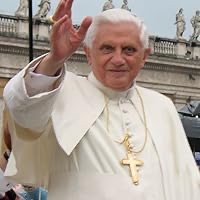
About Pope Benedict XVI
We have collected 55 quotes from 1 book by Pope Benedict XVI on BookQuoters.
More about the author →About the book
The momentous third and final volume in the Pope’s international bestselling Jesus of Nazareth series, detailing how the stories of Jesus’ infancy and childhood are as relevant today as they were two thousand years ago. In 2007, Joseph Ratzinger published his first book as Pope Benedict XVI in order “to make known the figure and message of Jesus.” Now, the Pope focuses exclusively on the Gospel accounts of Jesus’ life as a child. The root of these stories is the experience of hope found in the birth of Jesus and the affirmations of surrender and service embodied in his parents, Joseph and Mary. This is a story of longing and seeking, as demonstrated by the Magi searching for the redemption offered by the birth of a new king. It is a story of sacrifice and trusting completely in the wisdom of God as seen in the faith of Simeon, the just and devout man of Jerusalem, when he is in the prese
Book details
- First published
- 2004
- Author
- Pope Benedict XVI
- Genre
- Nonfiction
- Goodreads rating
- 4.51 (4k ratings)
Keep reading
The Challenge of Jesus: Rediscovering Who Jesus Was & Is
 The Reed of God
 Systematic Theology: An Introduction to Biblical Doctrine
 Simply Christian
 The Divine Conspiracy: Rediscovering Our Hidden Life in God
 Life of Christ
 King's Cross: The Story of the World in the Life of Jesus
 Jesus Among Other Gods: The Absolute Claims of the Christian Message
 Encounters with Jesus: Unexpected Answers to Life's Biggest Questions
 How God Became King: The Forgotten Story of the Gospels
 The Cross of Christ
 Studies in the Sermon on the Mount
 On the Incarnation
 The Attributes of God: A Journey Into the Father's Heart
 The Prodigal God: Recovering the Heart of the Christian Faith
 Seeking Allah, Finding Jesus: A Devout Muslim Encounters Christianity
 The Orthodox Way
 The Jesus I Never Knew
 Sinners in the Hands of a Loving God: The Scandalous Truth of the Very Good News
 The Normal Christian Life
 The Great Omission: Reclaiming Jesus's Essential Teachings on Discipleship
 For the Life of the World: Sacraments and Orthodoxy
 The Hope of Glory: Reflections on the Last Words of Jesus from the Cross
 The Grand Weaver: How God Shapes Us through the Events in Our Lives
 Gentle and Lowly: The Heart of Christ for Sinners and Sufferers
 He Chose the Nails: What God Did to Win Your Heart
 The Sermon on the Mount: The Key to Success in Life
 All of Grace
 No God but One: Allah or Jesus?: A Former Muslim Investigates the Evidence for Islam and Christianity
 The Spirit of the Liturgy
 The Holiness of God
 Jesus for President: Politics for Ordinary Radicals
 Sitting at the Feet of Rabbi Jesus: How the Jewishness of Jesus Can Transform Your Faith
 The Crucible of Doubt: Reflections On the Quest for Faith
 To Live Is Christ: Joining Paul's Journey of Faith
 Jesus the Christ
 The Infinite Atonement
 Girl Meets God
 Beautiful Outlaw: Experiencing the Playful, Disruptive, Extravagant Personality of Jesus
 Catechism of the Catholic Church
 In His Image: 10 Ways God Calls Us to Reflect His Character
 Ethics
 Life Together: The Classic Exploration of Christian Community
 Amazing Grace: A Vocabulary of Faith
 The History of the Church: From Christ to Constantine
 The Cost of Discipleship
 Because He Loves Me: How Christ Transforms Our Daily Life
 The Ragamuffin Gospel
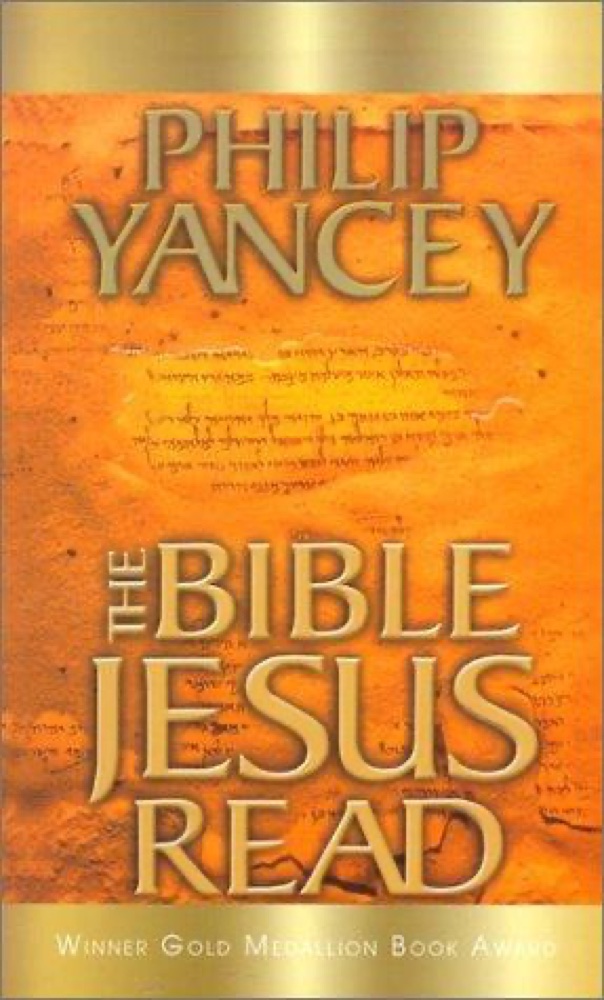 The Bible Jesus Read
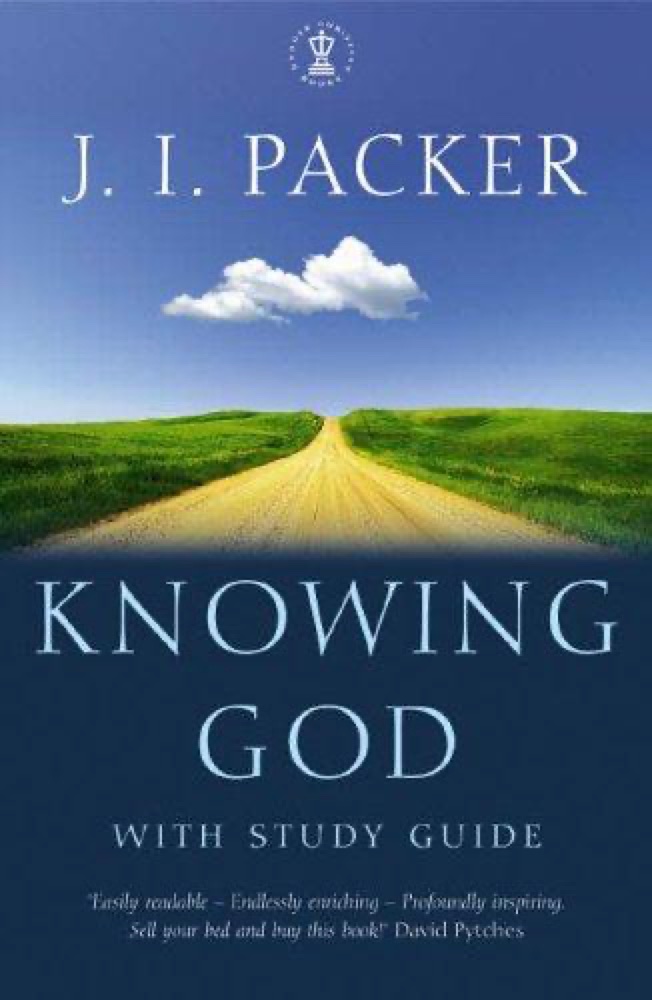 Knowing God
 Velvet Elvis: Repainting the Christian Faith
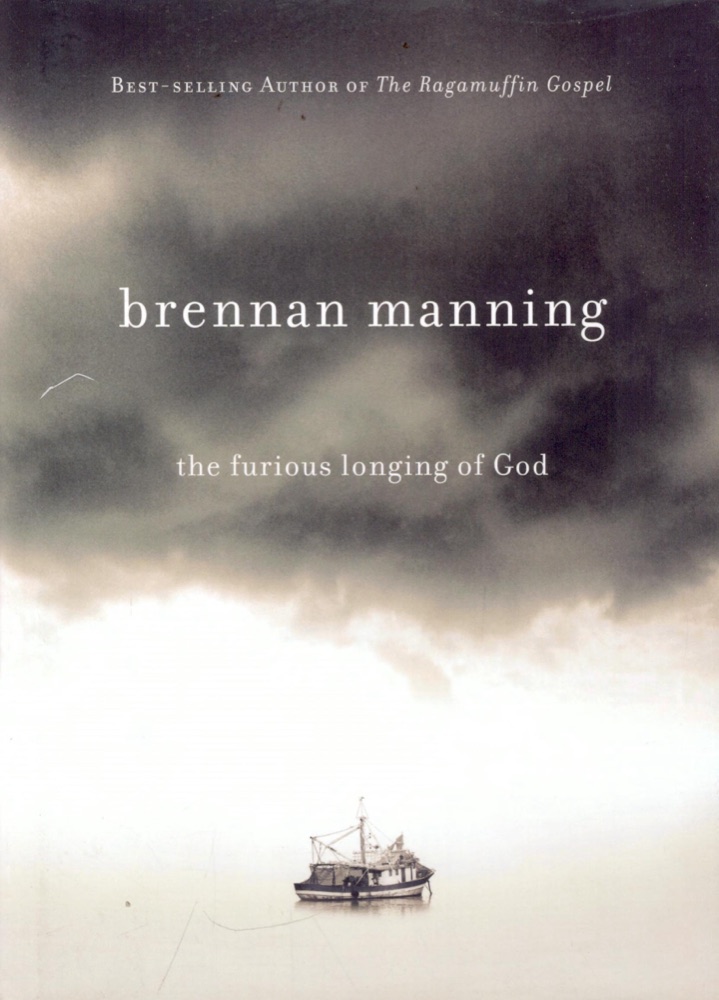 The Furious Longing of God
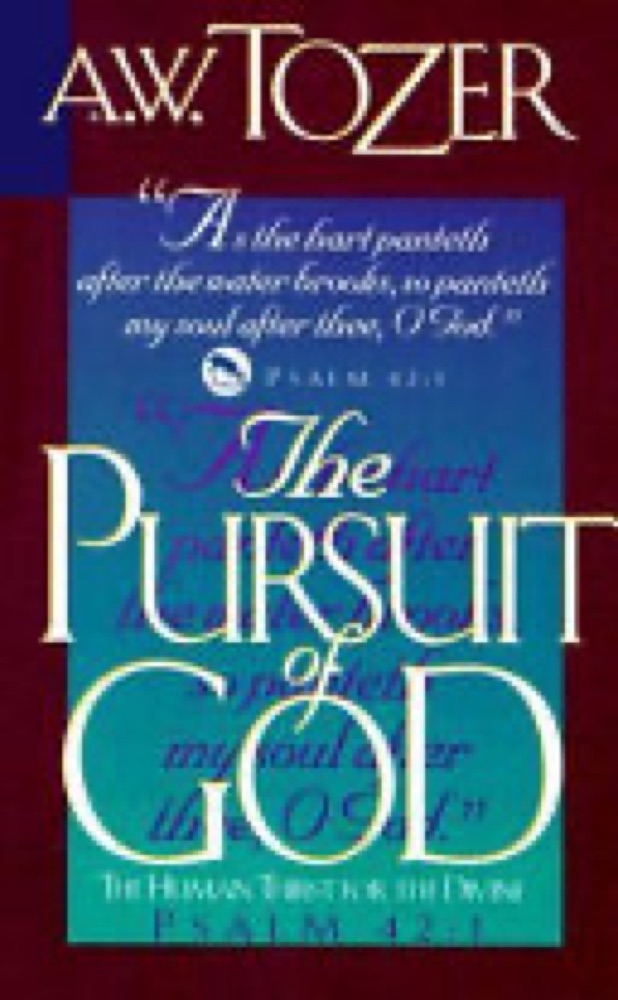 The Pursuit of God: The Human Thirst for the Divine
 The Name of God is Mercy
 What We Talk about When We Talk about God
 The Politics of Jesus
 Jesus and the Disinherited
 Instruments in the Redeemer's Hands: People in Need of Change Helping People in Need of Change