
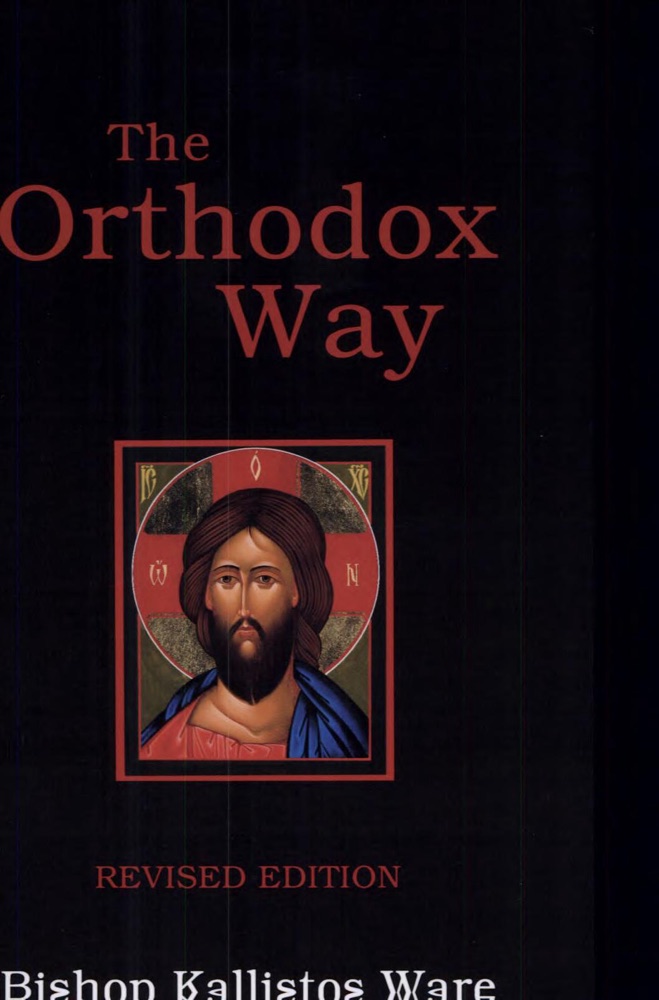
 The Orthodox Way
Quotes from the Book
As far as I am concerned, anyone who hopes for the universal reconciliation of all creatures with God must already believe that this would be the best possible ending to the Christian story; and such a person has then no excuse for imagining that God could bring any but the best possible ending to pass without thereby being in some sense a failed creator.
9
Really, on the whole, Christians rarely pay particularly close attention to what the Bible actually says, for the simple reason that the texts defy synthesis in a canon of exact doctrines, and yet most Christians rely on doctrinal canons. Theologians are often the most cavalier in their treatment of texts, chiefly because their first loyalty is usually to the grand systems of belief they have devised or adopted; but the Bible is not a system. A very great deal of theological tradition consists therefore in explaining away those aspects of scripture that contradict the finely wrought structure of this or that orthodoxy.
8
Hell appears in the shadow of the cross as what has always already been conquered, as what Easter leaves in ruins, to which we may flee from the transfiguring light of God if we so wish, but where we can never finally come to rest—for, being only a shadow, it provides nothing to cling to (as Gregory of Nyssa so acutely observes). Hell exists, so long as it exists, only as the last terrible residue of a fallen creation’s enmity to God, the lingering effects of a condition of slavery that God has conquered universally in Christ and will ultimately conquer individually in every soul. This age has passed away already, however long it lingers on in its own aftermath, and thus in the Age to come, and beyond all ages, all shall come home to the Kingdom prepared for them from before the foundation of the world.
5
For the earliest Christians, the story of salvation was entirely one of rescue, all the way through: the epic of God descending into the depths of human estrangement to release his creatures from bondage to death, penetrating even into the heart of hades to set the captives free and recall his prodigal children and restore a broken creation. The sacrifice of Christ was not a “ransom” paid to the Father, but rather the “manumission fee” (λύτρον, lytron) given to purchase the release of slaves held in bondage in death’s household.
4
Nevertheless, to me the God of Calvinism at its worst (as in those notorious lines in Book III of the Institutes) is simply Domitian made omnipotent. If that were Christianity, it would be too psychologically diseased a creed to take seriously at all, and its adherents would deserve only a somewhat acerbic pity, not respect. If this is one’s religion, then one is simply a diabolist who has gotten the names in the story confused. It is a vision of the faith whose scriptural and philosophical flaws are numerous and crucial, undoubtedly; but those pale in comparison to its far more disturbing moral hideousness. This aspect of orthodox Calvinism is for me unsurpassable evidence for my earlier claim that a mind conditioned to believe that it must believe something incredible is capable of convincing itself to accept just about anything, no matter how repellant to reason (or even good taste). And yet I still insist that, judging from the way Christians actually behave, no one with the exception of a few religious sociopaths really believes any of it as deeply as he or she imagines.
4
To say that, on the one hand, God is infinitely good, perfectly just, and inexhaustibly loving, and that, on the other, he has created a world under such terms as oblige him either to impose, or to permit the imposition of, eternal misery on finite rational beings, is simply to embrace a complete contradiction.
3
I am not I in myself alone, but only in all others. If, then, anyone is in hell, I too am partly in hell. Happily, however, if the Christian story is true, that love cannot now end in failure or tragedy. The descent into those depths--where we seek out and find those who are lost, and find our own salvation in so doing--is not a lonely act of spiritual heroism, or a futile rebellion of our finite wills against a merciless eternity. For the whole substance of Christian faith is the conviction that another has already an decisively gone down into that abyss for us, to set all the prisoners free, even from the chains of their own hatred and despair; and hence the love that has made all of us who we are, and that will continue throughout eternity to do so, cannot ultimately be rejected by anyone. Thus all shall have their share in--as Gregory [of Nyssa] says in his great mystical commentary On the Song of Songs--"the redeemed unity of all, united one with another by their convergence upon the One Good." Only thus will humanity "according the the devine image" come into being, and only thus will God be truly all in all.
3
The most effective technique for subduing the moral imagination is to teach it to mistake the contradictory for the paradoxical, and thereby to accept incoherence as profundity, or moral idiocy as spiritual subtlety. If this can be accomplished with sufficient nuance and delicacy, it can sustain even a very powerful intellect for an entire lifetime.
3
A belief does not merit unconditional reverence just because it is old or because its proponents claim a divine authority for it that they cannot prove; neither should it be immune to being challenged in terms commensurate to the scandal it poses.
2
For God, as scripture says, is a consuming fire, and he must finally consume everything.
2
If God is the good creator of all, he must also be the savior of all, without fail, who brings to himself all he has made, including all rational wills, and only thus returns to himself in all that goes forth from him. If he is not the savior of all, the Kingdom is only a dream, and creation something considerably worse than a nightmare. But, again, it is not so. According to scripture, God saw that what he created was good. If so, then all creatures must, in the ages, see it as well.
2
mere three score and ten years to get it right if we are fortunate, and then an eternity of agony in which to rue the consequences if we get it wrong—he would never dare to bring a child into this world, let alone five children; nor would he be able to rest even for a moment, because he would be driven ceaselessly around the world in a desperate frenzy of evangelism, seeking to save as many souls from the eternal fire as possible. I think of
1
Surely this is the profoundest truth in the doctrine of resurrection. That we must rise from the dead to be saved is a claim not simply about resumed corporeality, whatever that might turn out to be, but more crucially about the fully restored existence of the person as socially, communally, corporately constituted.
1
Christians have been trained at a very deep level of their thinking to believe that the idea of an eternal hell is a clear and unambiguous element of their faith, and that therefore the idea must make perfect moral sense.
1
you cannot reject God except defectively, by having failed to recognize him as the primordial object of all your deepest longings, the very source of their activity
1
In its dawn, the gospel was a proclamation principally of a divine victory that had been won over death and sin, and over the spiritual powers of rebellion against God that dwell on high, and here below, and under the earth. It announced itself truly as the “good tidings” of a campaign of divine rescue on the part of a loving God, who by the sending of his Son into the world, and even into the kingdom of death, had liberated his creatures from slavery to a false and merciless master, and had opened a way into the Kingdom of Heaven, in which all of creation would be glorified by the direct presence of God.
1
each person, as God elects him or her from before the ages, is indispensable, for the humanity God eternally wills could never come to fruition in the absence of any member of that body, any facet of that beauty. Apart from the one who is lost, humanity as God wills it could never be complete,
1
But God is not a god, and his final victory, as described in scripture, will consist not merely in his assumption of perfect supremacy “over all,” but also in his ultimately being “all in all.
1
Having no proper substance, evil cannot constitute the final cause or transcendental horizon of the natural will of any rational being; to suggest otherwise is to embrace an ultimate ontological, moral, and epistemological nihilism; it is to suggest that God himself is not the one Good of all beings, the one rational end of desire.
oriented. To be fully free is to be joined to that end for which our natures were originally framed, and for which, in the deepest reaches of our souls, we ceaselessly yearn.
The freedom of an oak seed is its uninterrupted growth into an oak tree. The freedom of a rational spirit is its consummation in union with God. Freedom is never then the mere “negative liberty” of indeterminate openness to everything; if rational liberty consisted in simple indeterminacy of the will, then no fruitful distinction could be made between personal agency and pure impersonal impulse or pure chance.
For the whole substance of Christian faith is the conviction that another has already and decisively gone down into that abyss for us, to set all the prisoners free, even from the chains of their own hatred and despair; and hence the love that has made all of us who we are, and that will continue throughout eternity to do so, cannot ultimately be rejected by anyone.
I recently read an Evangelical apologist for the infernalist orthodoxies argue that it is morally correct for the saved to cease from pity for the damned simply because such pity is fruitless, just as it is forgivable to avert one’s eyes from a frightful accident on the roads from which one cannot rescue the victims, and to cease to think about it entirely. This, it should be needless to say, is nothing more than a counsel of moral imbecility. Neither can my pity for a little girl dying of cancer cure her, for what that is worth; but what an atrocity of a man I would be if I ceased pitying her for that reason.
For Gregory, of course, good classical Christian metaphysician that he was, evil and sin are always accidental conditions of human nature, never intrinsic qualities; all evil is a privation of an original goodness, and so the sinfulness that separates rational creatures from God is only a disease corrupting and disabling the will, robbing it of its true rational freedom, and thus is a disorder that must ultimately be purged from human nature in its entirety, even if needs be by hell.
Only by insisting upon the universality of God’s mercy could Paul liberate himself from the fear that the particularity of that mercy would prove to be an ultimate injustice, and that in judging his creatures God would reveal himself not as the good God of faithfulness and love, but as an inconstant god who can shatter his own covenants at will. (To this I shall return in my Third Meditation.)
All comes from God, and so evil cannot be a “thing” that comes from anywhere. Evil is, in every case, merely the defect whereby a substantial good is lost, belied, or resisted. For in every sense being is act, and God, in his simplicity and infinite freedom, is what he does. He could not be the creator of anything substantially evil without evil also being part of the definition of who he essentially is; for he alone is the wellspring of all that exists.
One way or another, after all, all causes are logically reducible to their first cause. This is no more than a logical truism.
Practically all of us go through life as prisoners of our own egos, which are no more than the shadows cast by our souls, but which are nonetheless quite impossible for us to defeat without assistance and without grace.
In part, this is because I know it to be based on a notoriously confused reading of scripture, one whose history goes all the way back to the late Augustine—a towering genius whose inability to read Greek and consequent reliance on defective Latin translations turned out to be the single most tragically consequential case of linguistic incompetence in Christian history.
Watch on YouTube
About David Bentley Hart
We have collected 29 quotes from 1 book by David Bentley Hart on BookQuoters.
More about the author →About the book
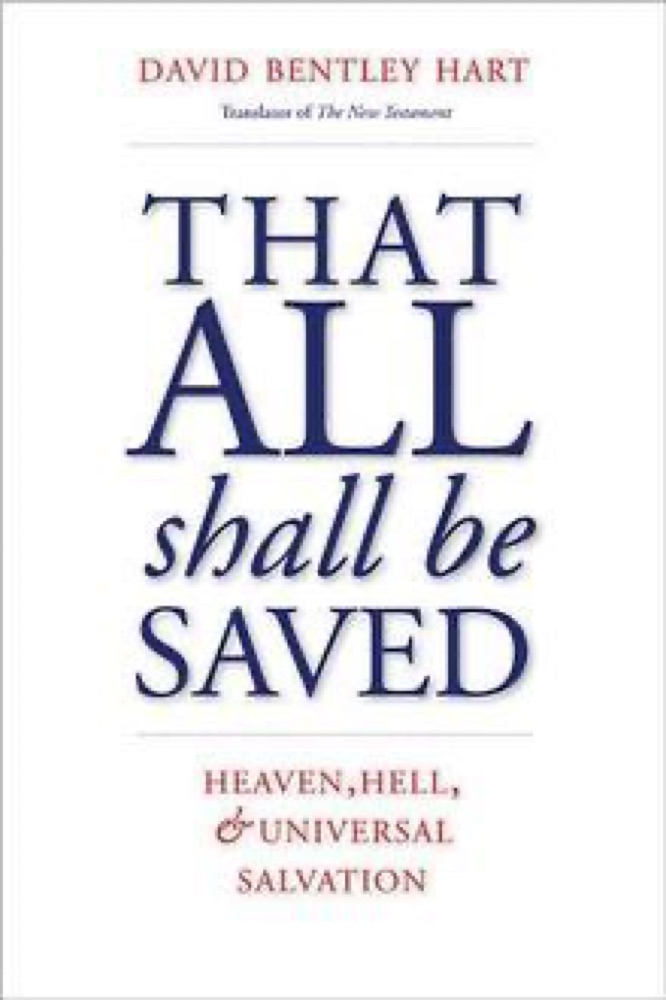
The great fourth-century church father Basil of Caesarea once observed that, in his time, most Christians believed that hell was not everlasting, and that all would eventually attain salvation. But today, this view is no longer prevalent within Christian communities. In this momentous book, David Bentley Hart makes the case that nearly two millennia of dogmatic tradition have misled readers on the crucial matter of universal salvation. On the basis of the earliest Christian writings, theological tradition, scripture, and logic, Hart argues that if God is the good creator of all, he is the savior of all, without fail. And if he is not the savior of all, the Kingdom is only a dream, and creation something considerably worse than a nightmare. But it is not so. There is no such thing as eternal damnation; all will be saved. With great rhetorical power, wit, and emotional range, Hart offers
Book details
- First published
- 2019
- Author
- David Bentley Hart
- Genre
- Nonfiction
- Goodreads rating
- 4.26 (2k ratings)
Keep reading
The Orthodox Way
 On the Incarnation
 The Case for Faith: A Journalist Investigates the Toughest Objections to Christianity
 The Reason for God: Belief in an Age of Skepticism
 Summa Theologica
 Life of Christ
 The Attributes of God
 The Cross of Christ
 The Knowledge of the Holy
 The Sovereignty of God
 Sinners in the Hands of a Loving God: The Scandalous Truth of the Very Good News
 Ethics
 Jesus Among Other Gods: The Absolute Claims of the Christian Message
 The Crucible of Doubt: Reflections On the Quest for Faith
 On Christian Doctrine
 A History of God: The 4,000-Year Quest of Judaism, Christianity, and Islam
 Simply Christian
 Surprised by Hope: A Study of Christian Hope and Resurrection
 Systematic Theology: An Introduction to Biblical Doctrine
 The Age of Reason
 Reasonable Faith
 King's Cross: The Story of the World in the Life of Jesus
 The Holiness of God
 What's So Great About Christianity
 The Infinite Atonement
 Studies in the Sermon on the Mount
 Jesus of Nazareth: The Infancy Narratives
 All of Grace
 We Who Wrestle with God: Perceptions of the Divine
 City of God
 Institutes of the Christian Religion, 2 Vols
 The Case for God
 Erasing Hell: What God Said About Eternity, and the Things We've Made Up
 The Kingdom of God Is Within You
 The Prodigal God: Recovering the Heart of the Christian Faith
 Knowing God
 The Everlasting Man
 No Man Is an Island
 Escape from Reason
 My Bright Abyss: Meditation of a Modern Believer
 The Explicit Gospel
 Epic: The Story God Is Telling And The Role That Is Yours To Play
 The Bible Jesus Read
 The Divine Conspiracy: Rediscovering Our Hidden Life in God
 None Like Him: 10 Ways God Is Different from Us
 The Hope of Glory: Reflections on the Last Words of Jesus from the Cross
 Bonhoeffer: Pastor, Martyr, Prophet, Spy
 Abandonment to Divine Providence: The Classic Text with a Spiritual Commentary
 Velvet Elvis: Repainting the Christian Faith
 Heaven and Hell: A History of the Afterlife
 The Perennial Philosophy
 The Attributes of God: A Journey Into the Father's Heart
 The Sermon on the Mount: The Key to Success in Life
 Discipline: The Glad Surrender
 The Problem of Pain
 The Anti-Christ
 The Grand Weaver: How God Shapes Us through the Events in Our Lives
 Searching for God Knows What
 Mere Christianity
 Desiring God: Meditations of a Christian Hedonist