 The World's Religions
Quotes from the Book
Once you’ve plunged into the ocean, does it really matter whether or not you believe in water?
21
Back in the Garden of Eden, maybe the forbidden fruit was forbidden for a reason. Who needs the fancy building, the priest and all the rest of it—even the Bible—if all you really need is the fruit?
9
To put Göbekli Tepe in context, its megaliths predate Stonehenge by at least six thousand years. They predate the first literate civilizations of Egypt, Sumer, India, and Crete by even more. Unearthing this kind of Stone Age sophistication so deep in our past is like finding out your great-grandparents have been secretly coding apps and trading cryptocurrency behind everyone’s back.
9
When it comes to “God”—a word rarely used by the mystics—there is total unanimity on one crucial issue of paramount importance. God does not reside in a holy book.
7
If you read the The Bacchae and the Gospel of John side by side, it’s kind of funny. The same scenes show up, sometimes even the same words. Greek vocabulary that doesn’t appear anywhere else in the three Synoptic Gospels—Matthew, Mark, or Luke.
4
In order to portray Jesus as the consummate Son of God, John knew all the loaded terms that would appeal to any Greek speaker of the time. And he used them throughout his Gospel to depict Jesus as the second coming of Dionysus.
4
The theme of tonight’s dinner is apotheosis. What does it mean to become God? If Father Francis has no problem with lesser mortals like ourselves bursting into kaleidoscopic rainbows after decades of intense meditation, then why not simply drink the sacred potion and cut to the chase? At the end of the day, aren’t we both talking about that cryptic promise from Eleusis: overcoming the limitations of the physical body and cheating death? That “moment of intense rapture” sought by the maenads of Dionysus, until they “became identified with the god himself.” And aren’t he and Ruck both committing the same arch-heresy by suggesting that the original, obscured truth of Christianity has nothing to do with worshipping Jesus, and everything to do with becoming Jesus? Aren’t we all just gods and goddesses in the making? Maybe the concept of apotheosis doesn’t sound particularly heretical today. But a few hundred years ago, it got the likes of Giovanni Pico della Mirandola into a load of trouble. In 1484 the upstart Italian was only twenty-one years old when he met Lorenzo de’ Medici, who promptly invited him into the Florentine Academy that was about to punch the Renaissance into high gear. Already a student of Greek, as well as Latin, Hebrew, and Arabic, the newest Florentine got to work writing Oratio de hominis dignitate (Oration on the Dignity of Man): the so-called Manifesto of the Renaissance. He wanted to publicly debut the Oratio, together with his 900 Theses, in Rome on the Epiphany of 1487, the God’s Gift Day. But Pope Innocent VIII was not impressed. He put a halt to the spectacle and condemned every one of Pico della Mirandola’s theses for “renovating the errors of pagan philosophers.
4
Over twenty-five hundred years into this experiment we call the West, is there any chance of reconciling the two competing worldviews that clashed so dramatically at the end of the fourth century AD? If so, then, as with any good compromise, there will be plenty of disappointment on both sides. People of reason may have to concede that modern science has its limits. Not everything of value can be weighed and measured. People of faith may have to admit that we can no longer afford legend over history, or obedience over curiosity. In a rapidly accelerating world Big Religion has failed to keep up with a younger generation that prefers fact over fiction. But Big Science and Big Technology may be going too fast, distracting us from the ancient search for meaning that defined the original religion of Western civilization. How do we bridge the gap?
3
...there’s only one thing the Vatican finds more suspicious than drugs. And that’s women.
3
Simply put, the story of paleo-Christianity is Greek-speaking mystics in southern Italy demanding personal access to the Eucharist. It wasn’t the priests who attracted them to Jesus. It wasn’t the Church Fathers. And it certainly wasn’t the Bible or the basilicas, because neither existed. It was an experience of meeting God, free from doctrine, dogma, and any institution whatsoever. Surely that’s something people today can appreciate.
3
Without the wine, there is no Dionysus. And without the Eucharist, there is no Christianity.
3
Isn’t it strange that the Christian holy family—Father, Son, and Holy Spirit—is an all-male ensemble? And isn’t it even stranger that the only woman worshipped alongside the Trinity never becomes a grandmother?
3
When we look at The Last Supper, maybe we’re not looking at Christianity’s founding event. Maybe we’re getting a glimpse of the mysterious religion that was practiced by Plato, Pindar, Sophocles, and the rest of the Athenian gang. And just maybe this is how our identity crisis comes to a dramatic end: with a psychedelic plot twist.
3
Throughout history the mystics have been persecuted, and sometimes executed, for a reason. “Nothing could be more alarming to the ecclesiastical hierarchy,” the philosopher Alan Watts once observed, “than a popular outbreak of mysticism, for this might well amount to setting up a democracy in the kingdom of heaven.
2
Before the rise of Christianity, did the Ancient Greeks consume a secret psychedelic sacrament during their most famous and well-attended religious rituals? Did the Ancient Greeks pass a version of their sacrament along to the earliest, Greek-speaking Christians, for whom the original Holy Communion or Eucharist was, in fact, a psychedelic Eucharist?
2
My own belief is that, though they may start by being something of an embarrassment, these new mind changers will tend in the long run to deepen the spiritual life of the communities in which they are available. That famous “revival of religion,” about which so many people have been talking for so long, will not come about as the result of evangelistic mass meetings or the television appearances of photogenic clergymen. It will come about as the result of biochemical discoveries that will make it possible for large numbers of men and women to achieve a radical self-transcendence and a deeper understanding of the nature of things. And this revival of religion will be at the same time a revolution. From being an activity mainly concerned with symbols, religion will be transformed into an activity concerned mainly with experience and intuition—an everyday mysticism underlying and giving significance to everyday rationality, everyday tasks and duties, everyday human relationships.
2
Participants in our study often described this experience with the newfound knowledge that consciousness survives bodily death—that we are not only our bodies—which is a profound gift to a person with a body that is failing, and will soon stop functioning due to advanced disease. It has been described as a transcendence of past, present, future. Timelessness in the moment. I’ve heard participants speak about feeling “outside of time.” The insight that we are not bound by the material world is a powerful one. It is psychologically, existentially and spiritually liberating.
2
The Bacchae left behind a thick trail of clues that we will begin exploring later in this book. Clues that lead to a magical version of Jesus: equal parts natural healer, initiator of mysteries, and concoctor of drugged wine. Unknown to many faithful today, it’s a version that places the founder of Christianity in the kind of detailed historical context that would have been self-evident to the earliest generations of Greek-speaking paleo-Christians.
2
Because there is, in fact, absolutely nothing you could ever learn about God. For the mystics, the only way to know God is to experience God. And the only way to experience God is to unlearn everything the ego has been trying so vigorously to manufacture since our infancy.
2
Perhaps the founder of the National Resources Defense Council, Gus Speth, said it best: “I used to think the top environmental problems facing the world were global warming, environmental degradation and eco-system collapse, and that we scientists could fix those problems with enough science. But I was wrong. The real problem is not those three items, but greed, selfishness and apathy. And for that we need a spiritual and cultural transformation. And we scientists don’t know how to do that.
2
It may all seem insignificant, but at the root of this Greek vs. Christian debate are some really profound questions. Are we a people of reason or faith? Is our society founded on science or religion? Whether the issue is climate change, reproductive rights, or a global pandemic, that stark divide between The School of Athens and The Last Supper continues to frame the national conversation on matters of life and death.
1
Unfortunately there’s only one way to silence a revolution. Sooner or later, the bodies start burning. And if there’s one thing the Church has always been good at, it’s a witch hunt.
1
The incarnation of the Word took place according to the male sex,” it proclaimed in an official declaration that was later endorsed by Pope John Paul II in 1994 and again by Pope Francis in 2016.20 Jesus was a man, his Apostles were men. Women can’t be trusted with the Eucharist. End of story.
1
Jesus’s coming-out party in Cana was perfectly positioned, and perfectly timed, to pick up where Dionysus left off.
1
After a close call with the giant Lastrygonians, Odysseus and his crew wash up on the mythological island of Aeaea—which, don’t worry, no classicist knows how to pronounce either.
1
Once you’ve plunged into the ocean
The importance of Mother Nature. Perhaps the founder of the National Resources Defense Council, Gus Speth, said it best: “I used to think the top environmental problems facing the world were global warming, environmental degradation and eco-system collapse, and that we scientists could fix those problems with enough science. But I was wrong. The real problem is not those three items, but greed, selfishness and apathy. And for that we need a spiritual and cultural transformation. And we scientists don’t know how to do that.
Is this what Praetextatus meant by Eleusis holding “the whole human race together”? And life becoming “unlivable” in their absence? Did the transformational inner journey unleashed by the kukeon remind us how to care for one another and the planet? Was this the true technology on which Western civilization was built? Is a society that fails to incorporate this mystical experience fundamentally flawed, its institutions empty of the shared vision that made the world’s first democracy actually work?
Los datos demuestran que cerca del 75% saldría de una iglesia de estas (aprobada por la fda) transformado para siempre. Y listo para comenzar un viaje espiritual de toda la vida que podría, una vez más, hacer que la vida fuera vivible en este planeta. Esto debería comenzar a ocurrir en el año 2030, si no es que antes.
Watch on YouTube
About Brian C. Muraresku
About the book
A groundbreaking, controversial dive into the role psychedelics have played in the human experience of the Divine throughout Western history, and the answer to a 2,000 year old mystery that could shake the Church to its foundations.
The Immortality Key connects the lost, psychedelic sacrament of Greek religion to early Christianity—exposing the true origins of Western Civilization. In the tradition of unsolved historical mysteries like David Grann's Killers of the Flower Moon and Douglas Preston's The Lost City of the Monkey God, Brian Muraresku’s 10-year investigation takes the reader through Greece, Germany, Spain, France and Italy, offering unprecedented access to the hidden archives of the Louvre and the Vatican along the way.
In The Immortality Key, Muraresku explores a little-known connection between the best-kept secret in Ancient Greece and Christianity. This is the real st
Book details
- First published
- 2020
- Author
- Brian C. Muraresku
- Genre
- History
- Goodreads rating
- 4.24 (6k ratings)
Keep reading
The World's Religions
 The Darkening Age: The Christian Destruction of the Classical World
 The Everlasting Man
 Godless: How an Evangelical Preacher Became One of America's Leading Atheists
 A Little History of Religion
 The Portable Atheist: Essential Readings for the Nonbeliever
 A Pilgrimage to Eternity: From Canterbury to Rome in Search of a Faith
 Miracles: What They Are, Why They Happen, and How They Can Change Your Life
 Father Joe: The Man Who Saved My Soul
 Bad Religion: How We Became a Nation of Heretics
 Reasonable Faith
 Forged: Writing in the Name of God—Why the Bible's Authors Are Not Who We Think They Are
 The Case for Christ
 Food of the Gods: The Search for the Original Tree of Knowledge
 A History of God: The 4,000-Year Quest of Judaism, Christianity, and Islam
 Surprised by Hope: A Study of Christian Hope and Resurrection
 The Benedict Option: A Strategy for Christians in a Post-Christian Nation
 The Story of B: An Adventure of the Mind and Spirit
 Myths to Live By
 The Messiah Matrix
 Simply Christian
 The Perennial Philosophy
 What's So Great About Christianity
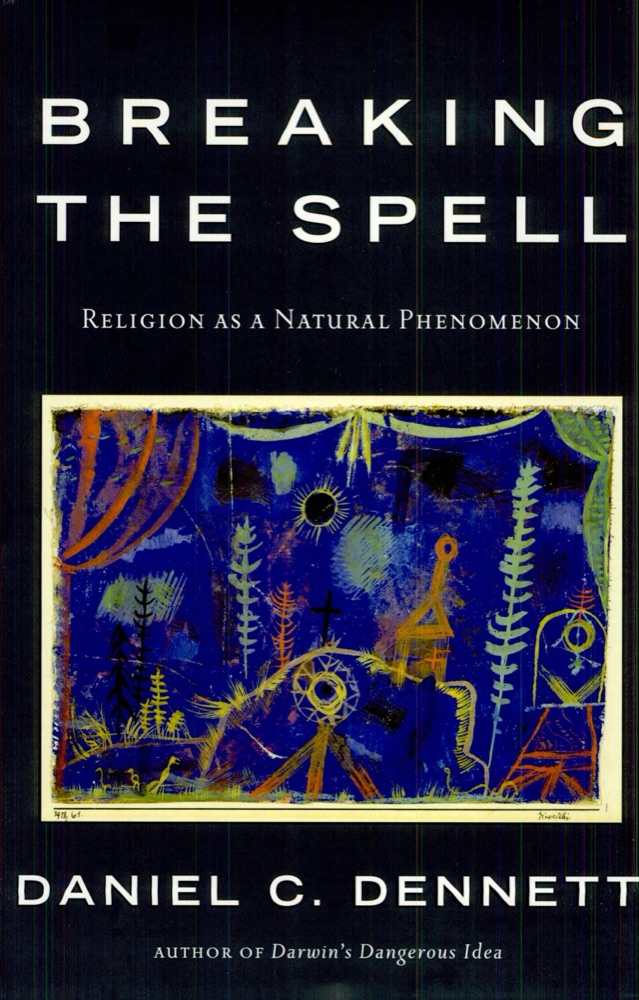 Breaking the Spell: Religion as a Natural Phenomenon
 Under the Glacier
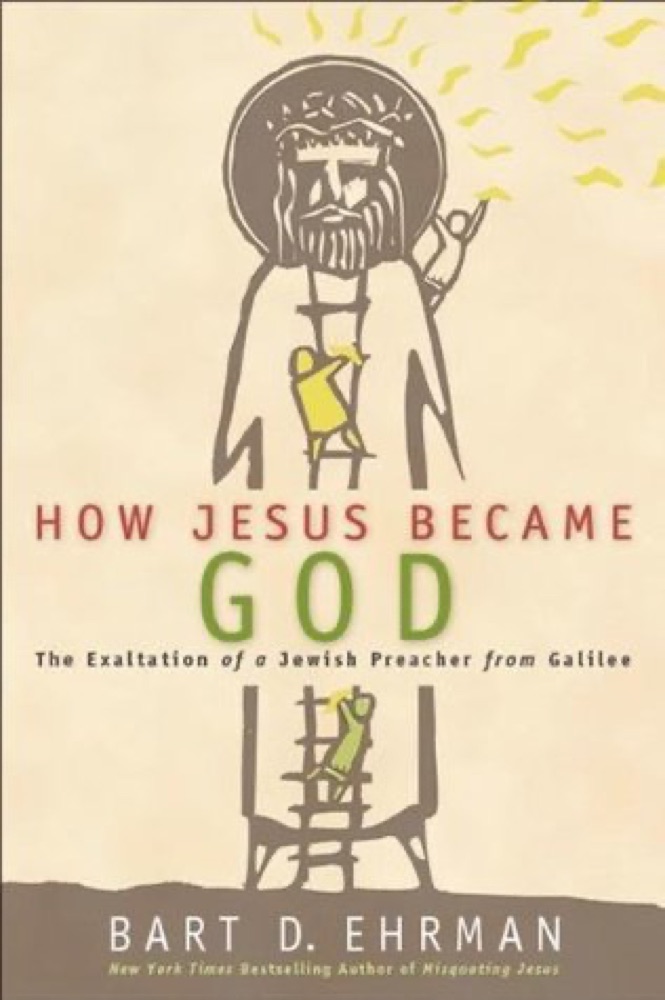 How Jesus Became God: The Exaltation of a Jewish Preacher from Galilee
 The Age of Reason
 My Bright Abyss: Meditation of a Modern Believer
 The Gnostic Gospels
 The Triumph of Christianity: How a Forbidden Religion Swept the World
 The Reason for God: Belief in an Age of Skepticism
 The Divine Dance: The Trinity and Your Transformation
 The Case for God
 What We Talk about When We Talk about God
 The Occult
 Orthodoxy
 The Language of God: A Scientist Presents Evidence for Belief
 The Sacred and the Profane: The Nature of Religion
 The Divine Conspiracy: Rediscovering Our Hidden Life in God
 Escape from Reason
 Jesus of Nazareth: The Infancy Narratives
 God Is Not One: The Eight Rival Religions That Run the World--and Why Their Differences Matter
 Amazing Grace: A Vocabulary of Faith
 The Orthodox Way
 Finding God in the Waves: How I Lost My Faith and Found It Again Through Science
 The Secret Magdalene
 What Is the Bible?: How an Ancient Library of Poems, Letters, and Stories Can Transform the Way You Think and Feel About Everything
 Velvet Elvis: Repainting the Christian Faith
 How God Became King: The Forgotten Story of the Gospels
 The Source Field Investigations: The Hidden Science and Lost Civilizations Behind the 2012 Prophecies
 King's Cross: The Story of the World in the Life of Jesus
 The Parafaith War
 The End of Faith: Religion, Terror, and the Future of Reason
 Life of Christ
 The Crucible of Doubt: Reflections On the Quest for Faith
 Saint Thomas Aquinas
 Holy Envy: Finding God in the Faith of Others
 The Divine Invasion
 A History of the World in 100 Objects