 The Benedict Option: A Strategy for Christians in a Post-Christian Nation
Quotes from the Book
We would like a church that again asserts that God, not nations, rules the world, that the boundaries of God's kingdom transcend those of Caesar, and that the main political task of the church is the formation of people who see clearly the cost of discipleship and are willing to pay the price.
10
The cross is not a sign of the church's quiet, suffering submission to the powers-that-be, but rather the church's revolutionary participation in the victory of Christ over those powers. The cross is not a symbol for general human suffering and oppression. Rather, the cross is a sign of what happens when one takes God's account of reality more seriously than Caesar's. The cross stands as God's (and our) eternal no to the powers of death, as well as God's eternal yes to humanity, God's remarkable determination not to leave us to our own devices.
7
As a society of unbelief, Western culture is devoid of a sense of journey, of adventure, because it lacks belief in much more than the cultivation of an ever-shrinking horizon of self-preservation and and self-expression.
6
We reject the charge of tribalism, particularly from those whose theologies serve to buttress the most nefarious brand of tribalism of all—the omnipotent state. The church is the one political entity in our culture that is global, transnational, transcultural. Tribalism is not the church determined to serve God rather than Caesar. Tribalism is the United States of America, which sets up artificial boundaries and defends them with murderous intensity.
4
Mainline American Protestantism, as is often the case, plodded wearily along as if nothing had changed. Like an aging dowager, living in a decaying mansion on the edge of town, bankrupt and penniless, house decaying around her but acting as if her family still controlled the city, our theologians and church leaders continued to think and act as if we were in charge, as if the old arrangements were still valid.
4
We believe that many Christians do not fully appreciate the odd way in which the church, when it is most faithful, goes about its business. We want to claim the church's "oddness" as essential to its faithfulness.
3
The loss of Christendom gives us a joyous opportunity to reclaim the freedom to proclaim the gospel in a way in which we cannot when the main social task of the church is to serve as one among many helpful props for the state.
3
That which makes the church "radical" and forever "new" is not that the church tends to lean toward the left on most social issues, but rather that the church knows Jesus whereas the world does not. In the church's view, the political left is not noticeably more interesting than the political right; both sides tend towards solutions that act as if the world has not ended and begun in Jesus.
2
sentimentality makes ministry impossible. If the ministry is reduced to being primarily a helping profession then those who take up that office cannot help being destroyed if they have any integrity. For they will find themselves frustrated by a people not trained on the narrative of God’s salvation, not trained to want the right things rightly, but rather a people who share the liberal presumption that all needs which are sincerely felt are legitimate.
2
Atheism slips into the church where God really does not matter, as we go about building bigger and better congregations (church administration), confirming people’s self-esteem (worship), enabling people to adjust to their anxieties brought on by their materialism (pastoral care), and making Christ a worthy subject for poetic reflection (preaching). At every turn the church must ask itself, Does it really make any difference, in our life together, in what we do, that in Jesus Christ God is reconciling the world to himself?
2
we are forever getting confused into thinking that scripture is mainly about what we are supposed to do rather than a picture of who God is.
2
The rules of grammar come later, if at all, as a way of enabling you to nourish and sustain the art of speaking well. Ethics, as an academic discipline, is simply the task of assembling reminders that enable us to remember how to speak and to live the language of the gospel. Ethics can never take the place of community any more than rules of grammar can replace the act of speaking the language. Ethics is always a secondary enterprise and is parasitic to the way people live together in a community.
2
The new Christian is engrafted into a family. Therefore, we cannot say to the pregnant fifteen-yearold, “Abortion is a sin. It is your problem.” Rather, it is our problem. We ask ourselves what sort of church we would need to be to enable an ordinary person like her to be the sort of disciple Jesus calls her to be.
1
Apologetics is based on the political assumption that Christians somehow have a stake in transforming our ecclesial claims into intellectual assumptions that will enable us to be faithful to Christ while still participating in the political structures of a world that does not yet know Christ.
1
Rather than helping us to judge our needs, to have the right needs which we exercise in right ways, our society becomes a vast supermarket of desire under the assumption that if we are free enough to assert and to choose whatever we want we can defer eternally the question of what needs are worth having and on what basis right choices are made. What we call “freedom” becomes the tyranny of our own desires.
1
For example, when Christians discuss sex, it often sounds as if we are somehow "against sex". What we fail to make clear is that sexual passion (the good gifts of God's creation) is now subservient to the demanding business of maintaining a revolutionary community in a world that often uses sex as a means of momentarily anesthetizing or distracting people from the basic vacuity of their lives. When the only contemporary means of self-transcendence is orgasm, we Christians are going to have a tough time convincing people that it would be nicer if they were not promiscuous.
1
No wonder modern humanity, even as it loudly proclaims its freedom and power to choose, is really an impotent herd drive this way and that, paralyzed by the disconnectedness of it all. It's just one damn thing after another.
1
loneliness is endemic to the human condition, and it is more intense in our society, where we are taught to call our loneliness “freedom of the individual.
1
It was a short step from the liberal Christ-the-highest-in-humanity to the Nazi Superman.
1
For Barth, and for us, Nazi Germany was the supreme test for modern theology. There we experienced the “modern world,” which we had so labored to understand and to become credible to, as the world, not only of the Copernican world view, computers, and the dynamo, but also of the Nazis.
1
Free is not how many of our citizens feel—with our overstocked medicine cabinets, burglar alarms, vast ghettos, and drug culture. Eighteen hundred New Yorkers are murdered every year by their fellow citizens in a city whose police department is larger than the standing army of many nations. The adventure went sour.
1
Our selves are shaped, our thoughts arise out of a tradition. In our world, where so many feel rootless, detached, and homeless, many people are out shopping for a “tradition.” And this trend, wherein people search for their roots, recover their past, and affirm a tradition, is often seen as good and healthful. But just as the Christian faith has no stake in people being a part of just any old community, so we have no stake in people affirming any old tradition. Traditions can be less and more true. They can also be false and lead to the false security, the arrogant claims of those who presume to be different from others on the basis of shallow pronouncements about an often false memory. We are both Southerners and know, firsthand, the demonic quality of tradition based on a lie.
You know, you have a point,” I said. “What would be a Christian response to this?” Then I answered, right off the top of my head, “A Christian response might be that tomorrow morning The United Methodist Church announces that it is sending a thousand missionaries to Libya. We have discovered that it is fertile field for the gospel. We know how to send missionaries. Here is at least a traditional Christian response.” “You can’t do that,” said my adversary. “Why?” I asked. “You tell me why.” “Because it’s illegal to travel in Libya. President Reagan will not give you a visa to go there.” “No! That’s not right,” I said. “I’ll admit that we can’t go to Libya, but not because of President Reagan. We can’t go there because we no longer have a church that produces people who can do something this bold. But we once did.” We would like a church that again asserts that God, not nations, rules the world, that the boundaries of God’s kingdom transcend those of Caesar, and that the main political task of the church is the formation of people who see clearly the cost of discipleship and are willing to pay the price.
The confessing church is not a synthesis of the other two approaches, a helpful middle ground. Rather, it is a radical alternative. Rejecting both the individualism of the conversionists and the secularism of the activists and their common equation of what works with what is faithful, the confessing church finds its main political task to lie, not in the personal transformation of individual hearts or the modification of society, but rather in the congregation’s determination to worship Christ in all things.
The individual is given a status that makes incomprehensible the Christian notion of salvation as a political, social phenomenon in the family of God.
both the conservative and liberal church, the so-called private and public church, are basically accommodationist (that is, Constantinian) in their social ethic. Both assume wrongly that the American church’s primary social task is to underwrite American democracy.
Modern interpreters of the faith have tended to let the “modern world” determine the questions and therefore limit the answers. Is it true that the church’s modern problem is the intellectual dilemma posed by Tillich: how to relate the ancient world of the faith to a modern world of disbelief?
the gradual decline of the notion that the church needs some sort of surrounding “Christian” culture to prop it up and mold its young, is not a death to lament. It is an opportunity to celebrate.
we American Christians are at last free to be faithful in a way that makes being a Christian today an exciting adventure.
Watch on YouTube
About Stanley Hauerwas
We have collected 29 quotes from 1 book by Stanley Hauerwas on BookQuoters.
More about the author →About the book
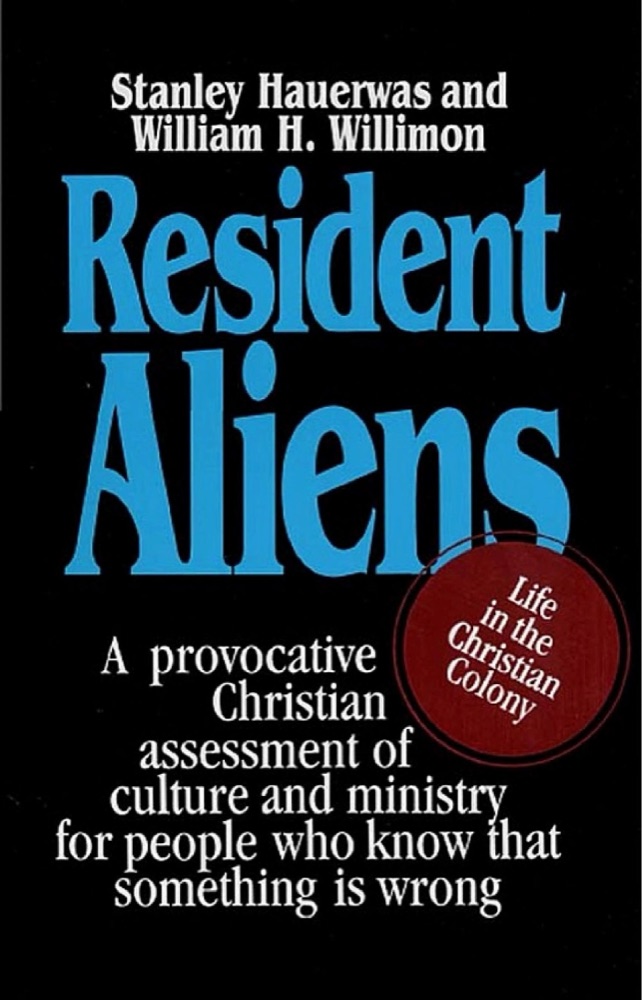
In this bold and visionary book, two leading Christian thinkers explore the "alien" status of Christians in today's world and offer a compelling new vision of how the Christian church can regain its vitality, battle its malaise, reclaim its capacity to nourish souls, and stand firmly against the illusions, pretensions, and eroding values of today's world. Hauerwas and Willimon call for a radical new understanding of the church. By renouncing the emphasis on personal psychological categories, they offer a vision of the church as a colony, a holy nation, a people, a family standing for sharply focused values in a devalued world.
Book details
- First published
- 1989
- Author
- Stanley Hauerwas
- Genre
- Nonfiction
- Goodreads rating
- 4.13 (3k ratings)
Keep reading
The Benedict Option: A Strategy for Christians in a Post-Christian Nation
 Jesus for President: Politics for Ordinary Radicals
 Total Truth: Liberating Christianity from its Cultural Captivity
 Bad Religion: How We Became a Nation of Heretics
 The Gospel in a Pluralist Society
 Simply Christian
 Ethics
 unChristian: What a New Generation Really Thinks about Christianity... and Why It Matters
 Christless Christianity: The Alternative Gospel of the American Church
 The Reason for God: Belief in an Age of Skepticism
 Amazing Grace: A Vocabulary of Faith
 The Spirit of the Disciplines: Understanding How God Changes Lives
 Compassion (&) Conviction: The AND Campaign's Guide to Faithful Civic Engagement
 The Prodigal God: Recovering the Heart of the Christian Faith
 Shameless: A Case for Not Feeling Bad About Feeling Good
 A Generous Orthodoxy
 A Theology of Liberation
 Jesus and the Disinherited
 Surprised by Hope: A Study of Christian Hope and Resurrection
 The Irresistible Revolution: Living as an Ordinary Radical
 The Crucible of Doubt: Reflections On the Quest for Faith
 The Explicit Gospel
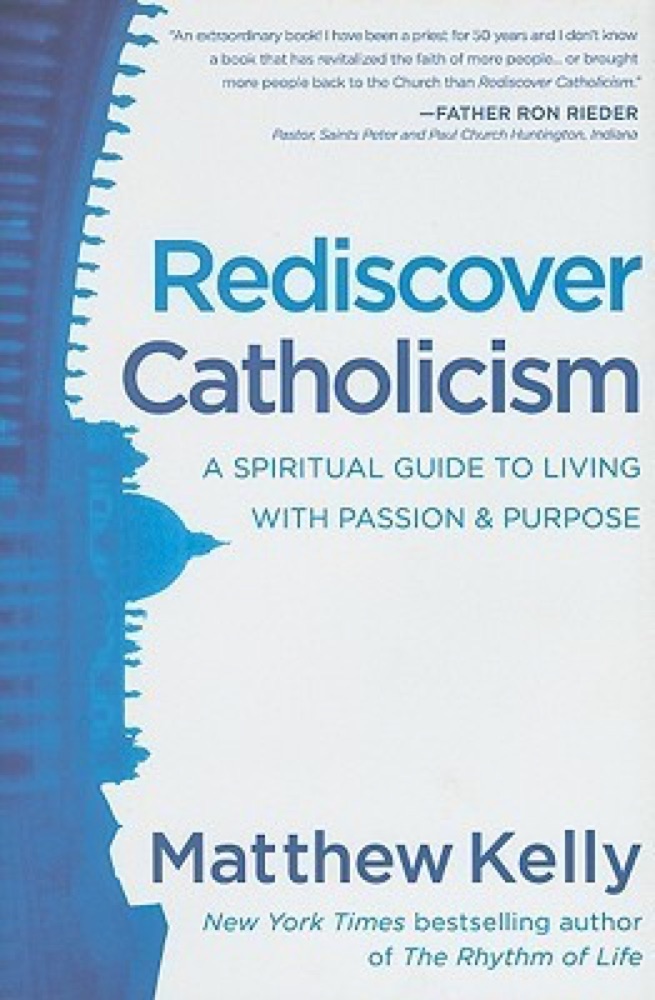 Rediscover Catholicism
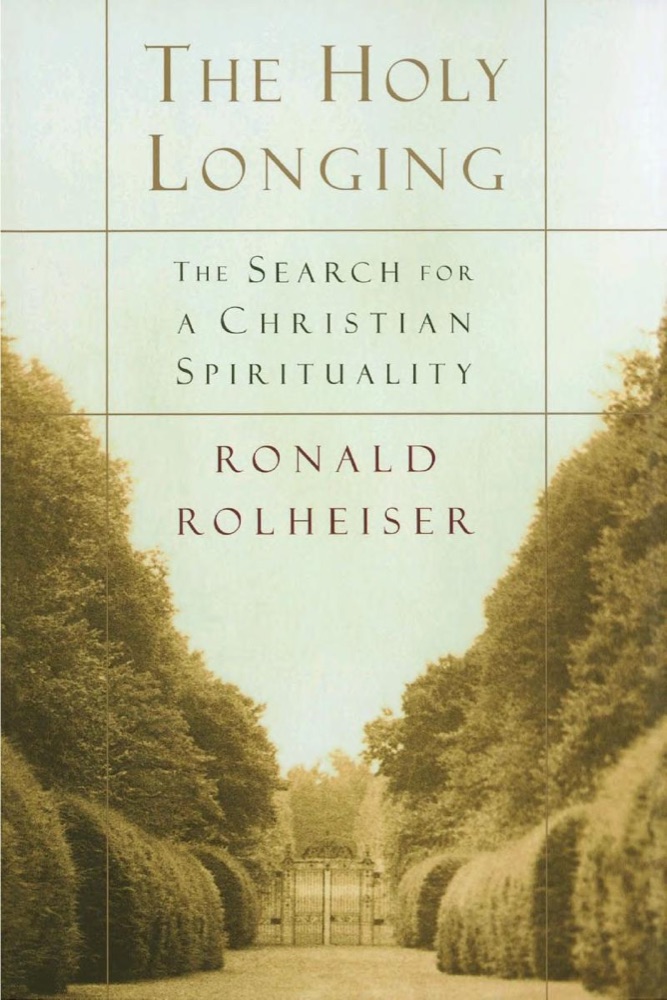 The Holy Longing: The Search for a Christian Spirituality
 Velvet Elvis: Repainting the Christian Faith
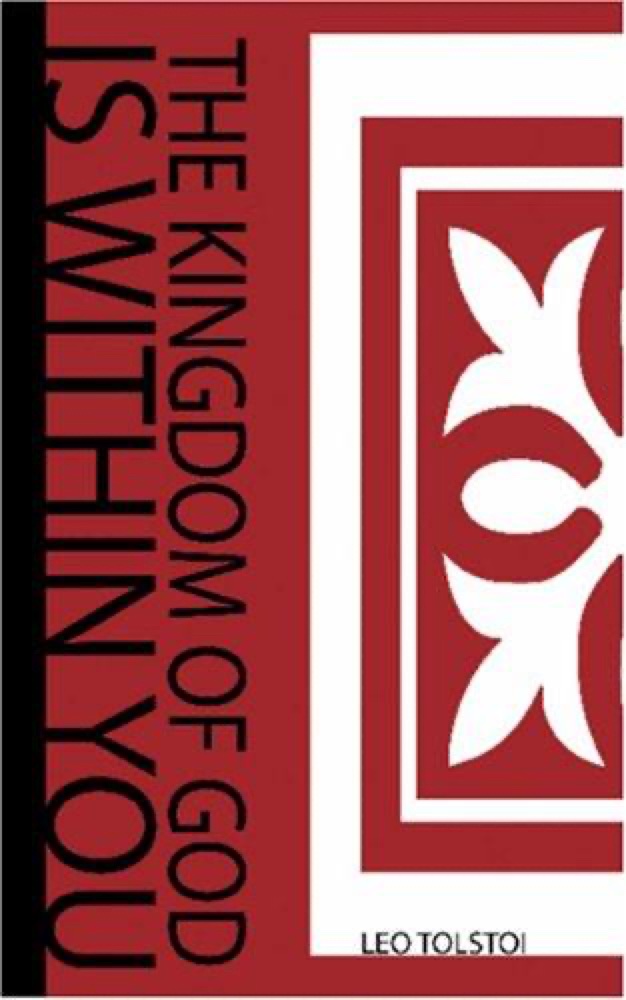 The Kingdom of God Is Within You
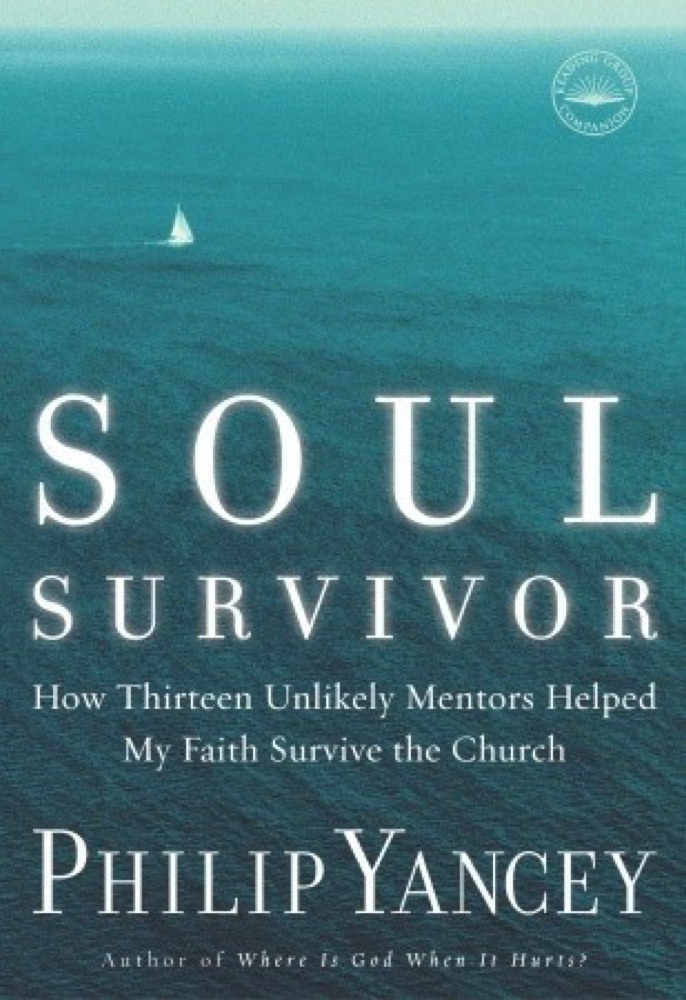 Soul Survivor: How Thirteen Unlikely Mentors Helped My Faith Survive the Church
 Searching for Sunday: Loving, Leaving, and Finding the Church
 The Cross of Christ
 Studies in the Sermon on the Mount
 Radical: Taking Back Your Faith from the American Dream
 Instruments in the Redeemer's Hands: People in Need of Change Helping People in Need of Change
 Letters and Papers from Prison
 For the Life of the World: Sacraments and Orthodoxy
 Adopted for Life: The Priority of Adoption for Christian Families & Churches
 The Divine Conspiracy: Rediscovering Our Hidden Life in God
 The Secret Thoughts of an Unlikely Convert: An English Professor's Journey Into Christian Faith
 Leaving Church: A Memoir of Faith
 Life Together: The Classic Exploration of Christian Community
 Letter to a Christian Nation
 Live Not by Lies: A Manual for Christian Dissidents
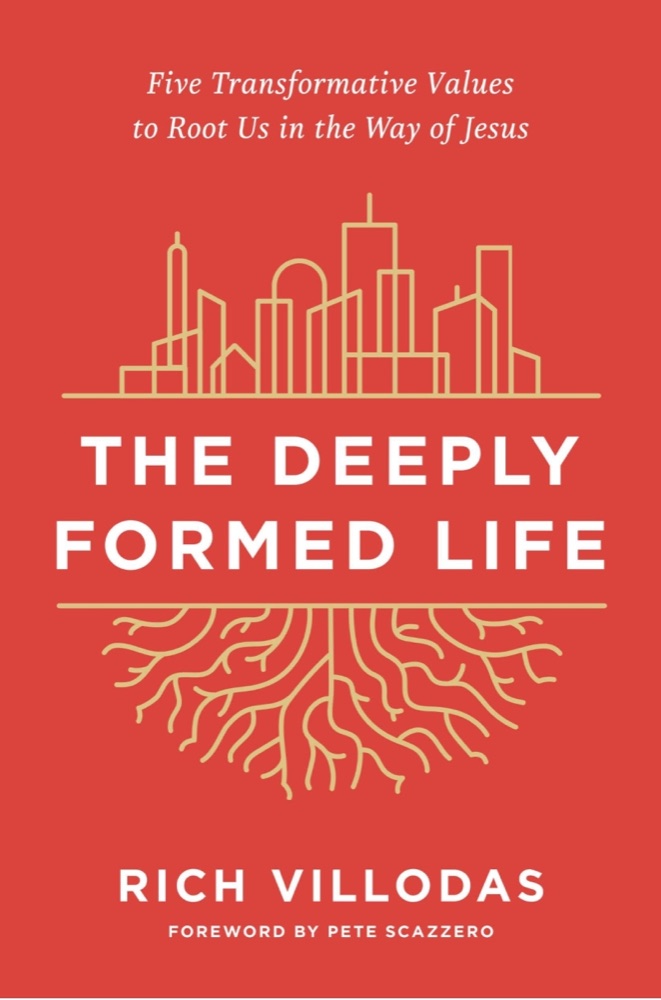 The Deeply Formed Life: Five Transformative Values to Root Us in the Way of Jesus
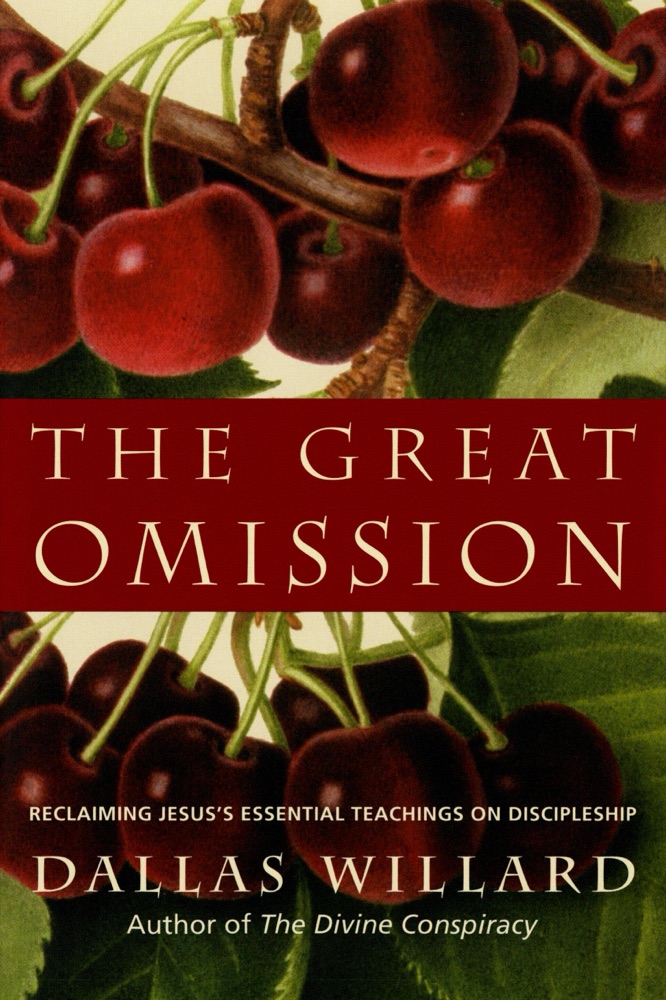 The Great Omission: Reclaiming Jesus's Essential Teachings on Discipleship
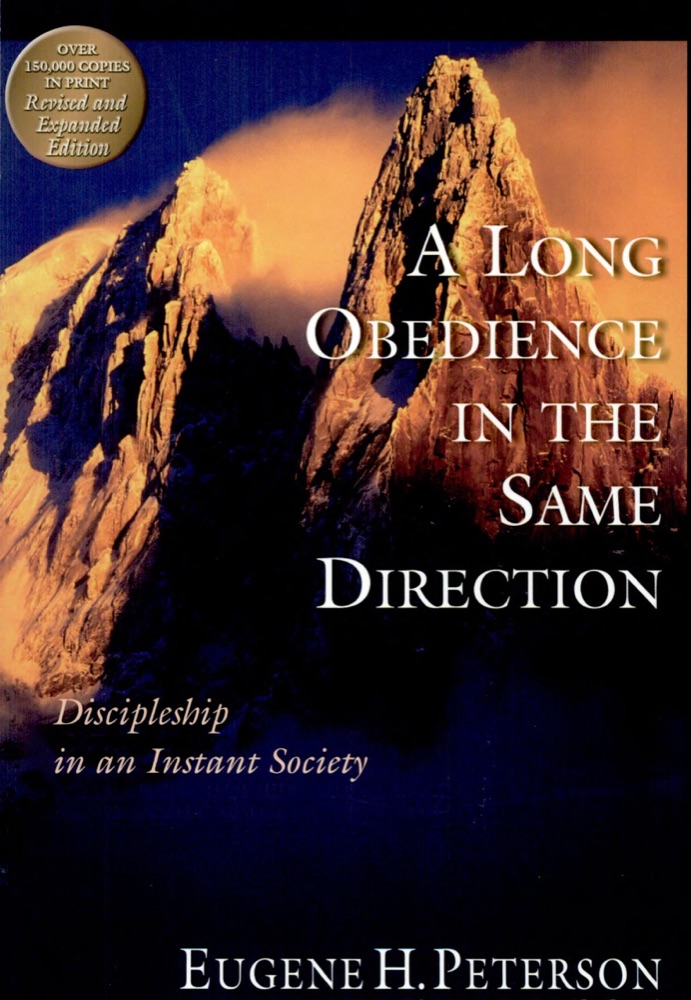 A Long Obedience in the Same Direction: Discipleship in an Instant Society
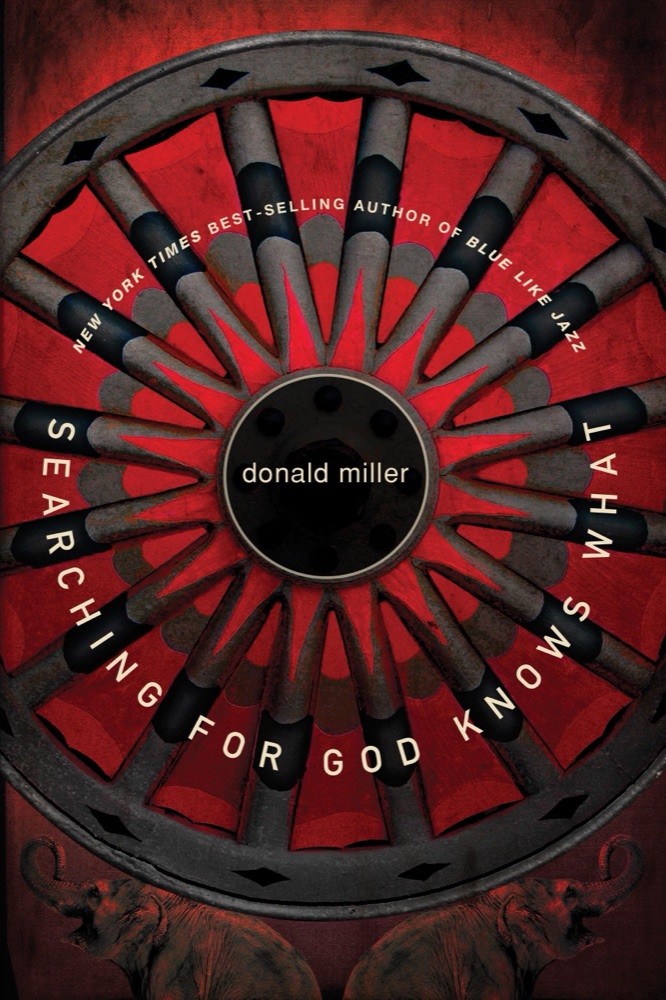 Searching for God Knows What
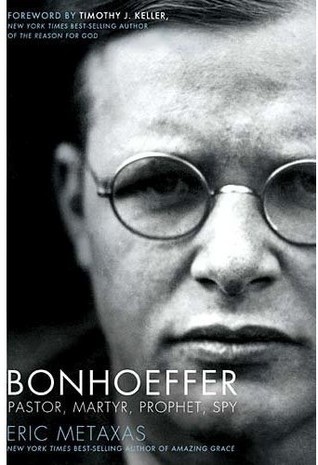 Bonhoeffer: Pastor, Martyr, Prophet, Spy
 What's So Great About Christianity
 The Prophetic Imagination
 Escape from Reason
 Jesus Among Other Gods: The Absolute Claims of the Christian Message
 Misreading Scripture with Western Eyes: Removing Cultural Blinders to Better Understand the Bible
 Evangelism & the Sovereignty of God
 Holy Envy: Finding God in the Faith of Others
 Celebration of Discipline: The Path to Spiritual Growth
 Tactics: A Game Plan for Discussing Your Christian Convictions
 Let Us Dream: The Path to a Better Future
 Reasonable Faith
 The Orthodox Way
 Discipline: The Glad Surrender