
 Resident Aliens: Life in the Christian Colony
Quotes from the Book
In this America, too, the Christian teaching that every human soul is unique and precious has been stressed, by the prophets of self-fulfillment and gurus of self-love, at the expense of the equally important teaching that every human soul is fatally corrupted by original sin. Absent the latter emphasis, religion becomes a license for egotism and selfishness, easily employed to justify what used to be considered deadly sins. The result is a society where pride becomes 'healthy self-esteem', vanity becomes 'self-improvement', adultery becomes 'following your heart', greed and gluttony become 'living the American dream'.
21
The result is a nation where gurus and therapists have filled the roles once occupied by spouses and friends, and where professional caregivers minister, like seraphim around the throne, to the needs of people taught from infancy to look inside themselves for God. Therapeutic religion promises contentment, but in many cases it seems to deliver a sort of isolation that’s at once comfortable and terrible—leaving us alone with the universe, alone with the God Within.
6
The physical vanity of the diet-and-exercise obsessive is recast as the pursuit of a kind of ritual purity, hedged about with taboos and guilt trips and mysticized by yoga.
6
[M]ost Americans are still drawing some water from the Christian well. But a growing number are inventing their own versions of what Christianity means, abandoning the nuances of traditional theology in favor of religions that stroke their egos and indulge or even celebrate their worst impulses. . . . Both doubters and believers stand to lose if religion in the age of heresy turns out to be complicit in our fragmented communities, our collapsing families, our political polarization, and our weakened social ties. Both doubters and believers will inevitably suffer from a religious culture that supplies more moral license than moral correction, more self-satisfaction than self-examination, more comfort than chastisement. . . . Many of the overlapping crises in American life . . . can be traced to the impulse to emphasize one particular element of traditional Christianity—one insight, one doctrine, one teaching or tradition—at the expense of all the others. The goal is always progress: a belief system that’s simpler or more reasonable, more authentic or more up-to-date. Yet the results often vindicate the older Christian synthesis. Heresy sets out to be simpler and more appealing and more rational, but it often ends up being more extreme. . . . The boast of Christian orthodoxy . . . has always been its fidelity to the whole of Jesus. Its dogmas and definitions seek to encompass the seeming contradictions in the gospel narratives rather than evading them. . . . These [heretical] simplifications have usually required telling a somewhat different story about Jesus than the one told across the books of the New Testament. Sometimes this retelling has involved thinning out the Christian canon, eliminating tensions by subtracting them. . . . More often, though, it’s been achieved by straightforwardly rewriting or even inventing crucial portions of the New Testament account. . . . “Religious man was born to be saved,” [Philip Rieff] wrote, but “psychological man is born to be pleased.” . . . In 2005, . . . . Smith and Denton found no evidence of real secularization among their subjects: 97 percent of teenagers professed some sort of belief in the divine, 71 percent reported feeling either “very” or “somewhat” close to God, and the vast majority self-identified as Christian. There was no sign of deep alienation from their parents’ churches, no evidence that the teenagers in the survey were poised to convert outright to Buddhism or Islam, and no sign that real atheism was making deep inroads among the young. But neither was there any evidence of a recognizably orthodox Christian faith. “American Christianity,” Smith and Denton suggested, is “either degenerating into a pathetic version of itself,” or else is “actively being colonized and displaced by a quite different religious faith.” They continued: “Most religious teenagers either do not really comprehend what their own religious traditions say they are supposed to believe, or they do understand it and simply do not care to believe it.” . . . An ego that’s never wounded, never trammeled or traduced—and that’s taught to regard its deepest impulses as the promptings of the divine spirit—can easily turn out to be an ego that never learns sympathy, compassion, or real wisdom. And when contentment becomes an end unto itself, the way that human contents express themselves can look an awful lot like vanity and decadence. . . . For all their claims to ancient wisdom, there’s nothing remotely countercultural about the Tolles and Winfreys and Chopras. They’re telling an affluent, appetitive society exactly what it wants to hear: that all of its deepest desires are really God’s desires, and that He wouldn’t dream of judging. This message encourages us to justify our sins by spiritualizing them. . . . Our vaunted religiosity is real enough, but our ostensible Christian piety doesn’t have the consequences a casual observer might expect. . . . We nod to God, and then we do as we please.
5
Many of the overlapping crises in American life, from our foreign policy disasters to the housing bubble to the rate of out-of-wedlock births, can be traced to the impulse to emphasize one particular element of traditional Christianity—one insight, one doctrine, one teaching or tradition—at the expense of all the others. The goal is always progress: a belief system that’s simpler or more reasonable, more authentic or more up-to-date. Yet the results often vindicate the older Christian synthesis. Heresy sets out to be simpler and more appealing and more rational, but it often ends up being more extreme.
4
There are seven deadly sins, not just one, and Christianity's understanding of marriage and chastity is intimately bound to its views on gluttony, avarice and pride. (Recall that in the Inferno, Dante consigns gluttons, misers, and spendthrifts to lower circles of hell than adulterers and fornicators.)
4
Christians can disagree about public policy in good faith, and a libertarian and a social democrat can both claim to be living out the gospel. But the Christian libertarian has a particular obligation to recognize those places where libertarianism’s emphasis on freedom can shade into an un-Christian worship of the individual. Likewise the Christian liberal: even as he supports government interventions to assist the poor and dispossessed, he should be constantly on guard against the tendency to deify Leviathan and wary of the ways that government power can easily be turned to inhuman and immoral ends. In the contemporary United States, a host of factors—from the salience of issues like abortion to the anti-Christian biases of our largely left-wing intelligentsia—ensure that many orthodox Christians feel more comfortable affiliating with the Republican Party than with the Democrats. But this comfort should not blind Christians to the GOP’s flaws.
3
As a purely intellectual matter, nothing was suddenly discovered in the 1960s that contradicted the biblical witness on fornication, adultery, and homosexuality, or that established that Jesus hadn’t really meant what he said about the indissolubility of marriage. . . . The difference was that in 1970 many more people wanted to believe these arguments because of the new sexual possibilities associated with the birth control pill.
3
However superficially appealing, the idea that a religious tradition could be saved from crisis because a group of intellectuals radically reinterpreted its sacred texts is the kind of conceit that only, well, an intellectual could possibly believe.
3
What he felt during his Spanish encounter with left-wing anti-Christianity was similar to his reactions to the anti-Christianity of the right. The "novelty and shock of the Nazis", Auden wrote, and the blitheness with which Hitler's acolytes dismissed Christianity "on the grounds that to love one's neighbor as oneself was a command fit only for effeminate weaklings", pushed him inexorably toward unavoidable questions. "If, as I am convinced, the Nazis are wrong and we are right, what is it that validates our values and invalidates theirs?" The answer to this question, he wrote later, was part of what "brought me back to the church.
3
For American Catholics, a millennium that John Paul II had hailed as a “new springtime” for Christianity began instead with a wave of revelations about priestly sex abuse. There had been intimations of this crisis in the 1980s, when several high-profile instances of priestly pedophilia had surfaced in the media. But nothing prepared Catholic America for the flood of 2003, which began in New England but ultimately left no diocese or community untouched, reaching even to the doors of the Vatican itself. Horror upon horror, cover-up upon cover-up, and sacrilege piled on sacrilege—it was like an anti-Catholic polemic from the nineteenth century, except that it was all too terribly true. No atheist or anticlericalist, no Voltaire or Ingersoll or Twain could have invented a story so perfectly calculated to discredit the message of the Gospel as the depredations of Thomas Geoghan and the legalistic indifference of Bernard Cardinal Law. No external enemy of the faith, no Attila or Barbarossa or Hitler, could have sown so much confusion and dismay among the faithful as Catholicism’s own bishops managed to do.
2
In their quest to be inclusive and tolerant and up-to-date, the accommodationists imitated his scandalously comprehensive love, while ignoring his scandalously comprehensive judgments. They used his friendship with prostitutes as an excuse to ignore his explicit condemnations of fornication and divorce. They turned his disdain for the religious authorities of his day and his fondness for tax collectors and Roman soldiers into a thin excuse for privileging the secular realm over the sacred. While recognizing his willingness to dine with outcasts and converse with nonbelievers, they deemphasized the crucial fact that he had done so in order to heal them and convert them—ridding the leper of his sickness, telling the Samaritans that soon they would worship in spirit and truth, urging the woman taken in adultery to go, and from now on sin no more.
2
Man is homo religiosus, by “nature” religious: As much as he needs food to eat and air to breathe, he needs a faith for living…. But—and this is the challenging word of Jewish-Christian faith—so long as he pursues this quest in self-sufficiency, relying on his own virtue, wisdom, or piety, it will not be God that he finds, but an idol—the self, or some aspect of the self, writ large, projected, objectified, and worshiped.—Will Herberg, Protestant–Catholic–Jew
1
There is almost no human action, however particular one supposes it, that does not arise from a very general idea that men have conceived of God, of his relations with human race, of the nature of their souls, and of their duties toward those like them. One cannot keep these ideas from being the common source from which all the rest flow.—Alexis de Tocqueville, Democracy in America
1
That’s because America’s problem isn’t too much religion, or too little of it. It’s bad religion: the slow-motion collapse of traditional Christianity and the rise of a variety of destructive pseudo-Christianities in its place.
1
Indeed, this is perhaps the greatest Christian paradox of all—that the world’s most paradoxical religion has cultivated rationalism and scientific rigor more diligently than any of its rivals, making the Christian world safe for philosophy as well as fervor, for the study of nature as well as the contemplation of divinity.
1
In an age of stagnant or declining birthrates, too, these communities’ willingness to heed the admonition to be fruitful and multiply has led to speculation about what the demographer Philip Longman calls “the survival of the godliest.
1
Among the tastemakers and power brokers and intellectual agenda setters of late-twentieth-century America, orthodox Christianity was completely déclassé.
1
Religious man was born to be saved,” he wrote, but “psychological man is born to be pleased.
real spiritual breakthroughs generally require a narrowing—the decision to pick a path and stick with it,
(Indeed, by the mid-2000s, college graduates were actually more likely to be in church on Sunday than Americans who had only a high school diploma.)
He who marries the spirit of the age is soon left a widower,” the Anglican Ralph Inge remarked,
Entering the ministry had always involved sacrifice, but the scale of that sacrifice grew considerably steeper during the 1960s and ’70s. Swiftly rising salaries in every nonclerical career almost certainly depleted the ranks of would-be priests and ministers, depriving the established churches of youthful leadership at precisely the moment when it was needed most. (A representative statistic: the average salary for a married Protestant minister with a graduate degree rose just 11 percent between the 1970s and the 1990s; for a doctor or lawyer, it rose 37 percent.
One need not subscribe to a vulgar Marxism to recognize the impact of economic changes on patterns of belief. It was John Wesley, no prophet of secularization, who remarked that “wherever riches have increased, the essence of religion has decreased in the same proportion.
the City of God had far more to offer the City of Man than it had to fear from it.
the Jesus of the New Testament, whose paradoxical mix of qualities and commandments presents a challenge to every ideology and faction, has been replaced in the hearts and minds of many Americans with a more congenial figure—a “choose your own Jesus” who better fits their own preconceptions about what a savior should and shouldn’t be.
You’re either a rigid fundamentalist who believes that dinosaurs just missed hitching a ride on Noah’s Ark, or a self-consciously progressive believer for whom the Bible is a kind of refrigerator magnet poetry, awaiting rearrangement by more enlightened minds.
Christian Smith and Melinda Lundquist Denton conducted a long investigation into the religious lives of American teenagers, and discovered exactly the kind of therapeutic theology that Rieff had seen coming. Smith and Denton found no evidence of real secularization among their subjects: 97 percent of teenagers professed some sort of belief in the divine, 71 percent reported feeling either “very” or “somewhat” close to God, and the vast majority self-identified as Christian.59 There was no sign of deep alienation from their parents’ churches, no evidence that the teenagers in the survey were poised to convert outright to Buddhism or Islam, and no sign that real atheism was making deep inroads among the young. But neither was there any evidence of a recognizably orthodox Christian faith. “American Christianity,” Smith and Denton suggested, is “either degenerating into a pathetic version of itself,” or else is “actively being colonized and displaced by a quite different religious faith.”60 They continued: “Most religious teenagers either do not really comprehend what their own religious traditions say they are supposed to believe, or they do understand it and simply do not care to believe it.
nothing prepared Catholic America for the flood of 2003, which began in New England but ultimately left no diocese or community untouched, reaching even to the doors of the Vatican itself. Horror upon horror, cover-up upon cover-up, and sacrilege piled on sacrilege—it was like an anti-Catholic polemic from the nineteenth century, except that it was all too terribly true. No atheist or anticlericalist, no Voltaire or Ingersoll or Twain could have invented a story so perfectly calculated to discredit the message of the Gospel as the depredations of Thomas Geoghan and the legalistic indifference of Bernard Cardinal Law. No external enemy of the faith, no Attila or Barbarossa or Hitler, could have sown so much confusion and dismay among the faithful as Catholicism’s own bishops managed to do.
These changing attitudes led to the redefinition of the private sphere, in the courts and the culture alike, and a widespread sense that issues like contraception, premarital cohabitation, and divorce—and then, much more controversially, abortion—were private matters where the government had no business interfering. The very idea of “morals legislation” became suspect, and Christian arguments about family law and public policy that might have been accepted even by secular audiences in the 1940s came to be regarded with suspicion as potential violations of the separation of church and state.
Watch on YouTube
About Ross Douthat
We have collected 30 quotes from 1 book by Ross Douthat on BookQuoters.
More about the author →About the book
From the popular New York Times columnist, a powerful and original critique of how American Christianity has gone astray — and the deeply troubling consequences for American life and politics. As the youngest-ever op-ed columnist for The New York Times and the author of the critically acclaimed books Privilege and Grand New Party, Ross Douthat has emerged as one of the most provocative and influential voices of his generation. Now he offers a masterful and hard-hitting account of how American Christianity has gone off the rails — and why it threatens to take American society with it.
In a story that moves from the 1950s to the age of Obama, Douthat brilliantly charts traditional Christianity’s decline from a vigorous, mainstream, and bipartisan faith — which acted as a “vital center” and the moral force behind the Civil Rights movement — through the culture wars of the 1960s and 1970s
Book details
- First published
- 2012
- Author
- Ross Douthat
- Genre
- Nonfiction
- Goodreads rating
- 3.97 (2k ratings)
Keep reading
Resident Aliens: Life in the Christian Colony
 The Benedict Option: A Strategy for Christians in a Post-Christian Nation
 Jesus for President: Politics for Ordinary Radicals
 Under the Banner of Heaven: A Story of Violent Faith
 Total Truth: Liberating Christianity from its Cultural Captivity
 Amazing Grace: A Vocabulary of Faith
 A History of God: The 4,000-Year Quest of Judaism, Christianity, and Islam
 unChristian: What a New Generation Really Thinks about Christianity... and Why It Matters
 Christless Christianity: The Alternative Gospel of the American Church
 The Reason for God: Belief in an Age of Skepticism
 Jesus and the Disinherited
 The Rage Against God: How Atheism Led Me to Faith
 Letter to a Christian Nation
 The Gospel in a Pluralist Society
 The End of Faith: Religion, Terror, and the Future of Reason
 The Portable Atheist: Essential Readings for the Nonbeliever
 Leaving Church: A Memoir of Faith
 Shameless: A Case for Not Feeling Bad About Feeling Good
 Holy Envy: Finding God in the Faith of Others
 The Crucible of Doubt: Reflections On the Quest for Faith
 The Prodigal God: Recovering the Heart of the Christian Faith
 Bonhoeffer: Pastor, Martyr, Prophet, Spy
 Soul Survivor: How Thirteen Unlikely Mentors Helped My Faith Survive the Church
 Simply Christian
 The Spirit of the Disciplines: Understanding How God Changes Lives
 Life of Christ
 The Darkening Age: The Christian Destruction of the Classical World
 God Is Not One: The Eight Rival Religions That Run the World--and Why Their Differences Matter
 Religion for Atheists: A Non-Believer's Guide to the Uses of Religion
 A Generous Orthodoxy
 A Pilgrimage to Eternity: From Canterbury to Rome in Search of a Faith
 Saint Thomas Aquinas
 The Case for God
 Forged: Writing in the Name of God—Why the Bible's Authors Are Not Who We Think They Are
 What's So Great About Christianity
 A Little History of Religion
 The Secret Thoughts of an Unlikely Convert: An English Professor's Journey Into Christian Faith
 The Immortality Key: Uncovering the Secret History of the Religion with No Name
 Ethics
 The Devil's Advocate
 Surprised by Hope: A Study of Christian Hope and Resurrection
 The Holy Longing: The Search for a Christian Spirituality
 Letters and Papers from Prison
 The Age of Reason
 The God Delusion
 Velvet Elvis: Repainting the Christian Faith
 What We Talk about When We Talk about God
 Lord of the World
 The Explicit Gospel
 Studies in the Sermon on the Mount
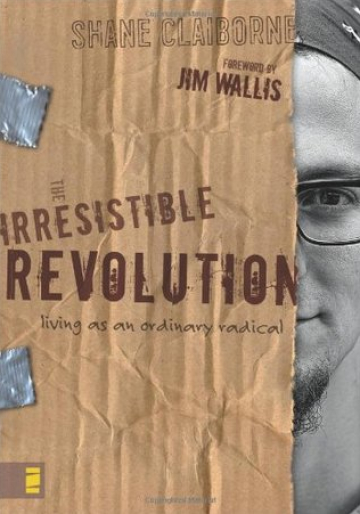 The Irresistible Revolution: Living as an Ordinary Radical
 When I Was a Child I Read Books
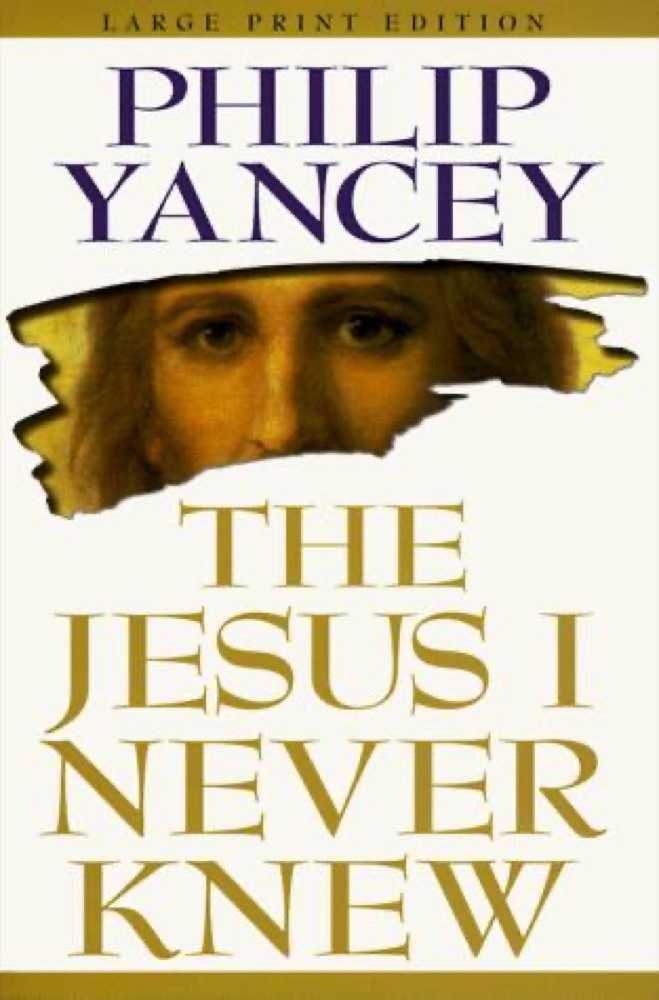 The Jesus I Never Knew
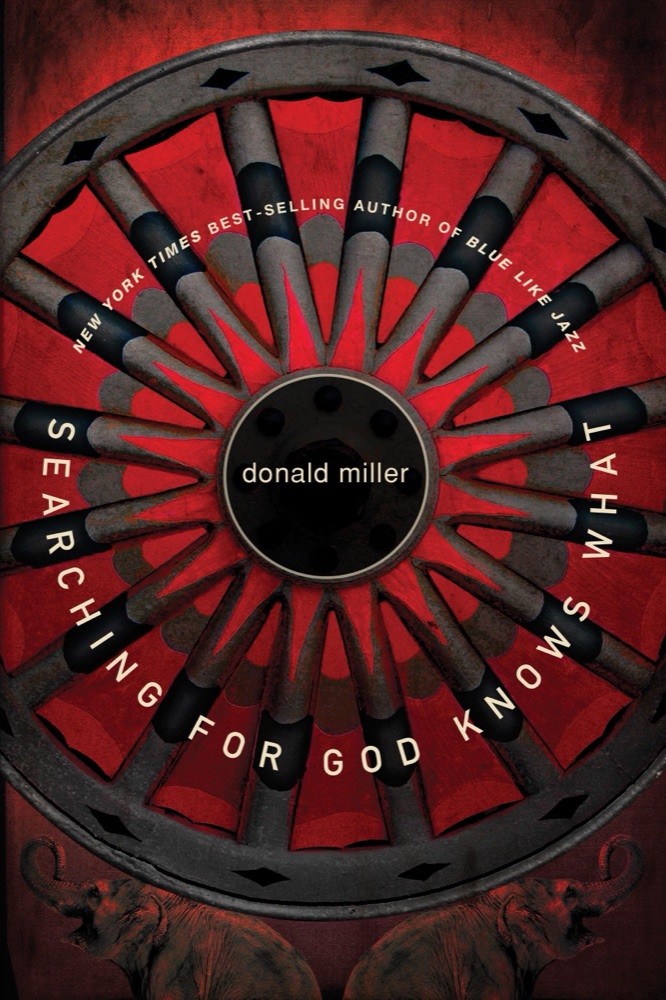 Searching for God Knows What
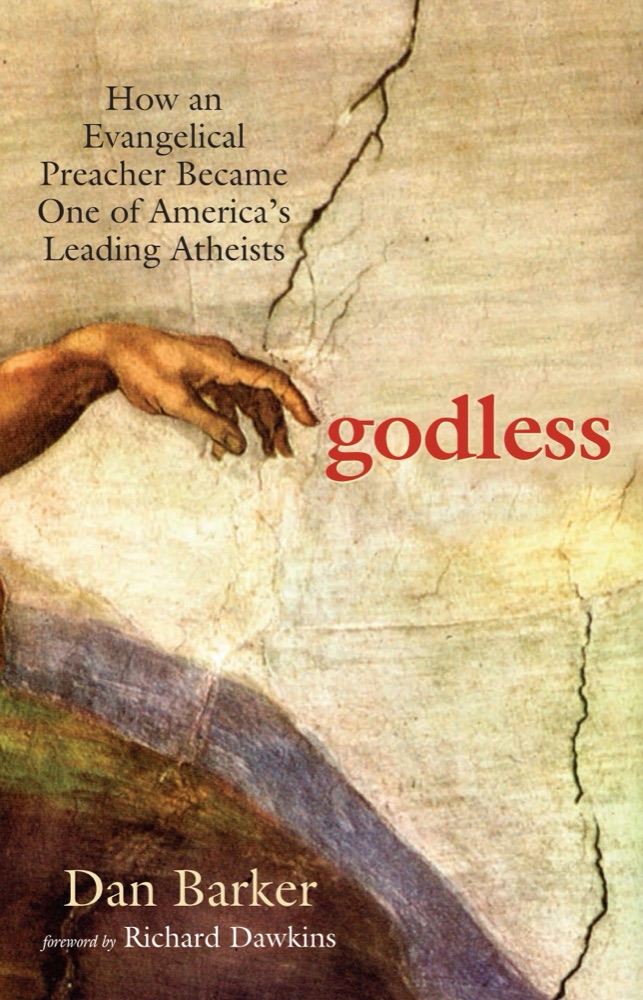 Godless: How an Evangelical Preacher Became One of America's Leading Atheists
 god is Not Great: How Religion Poisons Everything
 How Should We Then Live? The Rise and Decline of Western Thought and Culture
 Reasonable Faith
 The Cross of Christ