
 The Resurrection of the Son of God
Quotes from the Book
When people in churches today discuss Paul and his letters, they often think only of the man of ideas who dealt with lofty and difficult concepts, implying a world of libraries, seminar rooms, or at least the minister’s study for quiet sermon preparation. We easily forget that the author of these letters spent most of his waking hours with his sleeves rolled up, doing hard physical work in a hot climate, and that perhaps two-thirds of the conversations he had with people about Jesus and the gospel were conducted not in a place of worship or study, not even in a private home, but in a small, cramped workshop. Saul had his feet on the ground, and his hands were hardened with labor. But his head still buzzed with scripture and the news about Jesus.
2
But the fact remains that Paul had, to this point, made a career out of telling people things he knew they would find either mad or blasphemous or both. He had grown used to it. This was what he did.
1
Paul does not quote the Psalms or Isaiah, but we can see the influence of their double vision of the One God all the way through: the sovereign God, high above and beyond the earth so that its inhabitants are like grasshoppers, yet gently at hand, gathering the lambs in his arms and leading the mother sheep.
1
Our philosophies have tended to split the world in two: “science” deals only with “hard facts,” while the “arts” are imagined to deal in nebulous questions of inner meanings. Equally, in popular culture, inner feelings and motivations (“ discovering who you really are” or “going with your heart”) are regularly invoked as the true personal reality over against mere outward “identities.
1
BIOGRAPHY, AS WE said before, involves thinking into the minds of people who did not think the same way we do. And history often involves trying to think into the minds of various individuals and groups who, though living at the same time, thought in very different ways from one another as well as from ourselves. Trying to keep track of the swirling currents of thought and action in Paul’s world is that kind of exercise.
1
People who believe that their ruler is in some sense “son of a god” are less likely to rise in revolt than people who see their rulers merely as ordinary muddled human beings. And when the good news of Jesus called its hearers to turn from “idols,” some of those idols, in towns and cities across Paul’s world, would have been statues of Caesar or members of his family. It begins to look as though Paul’s geographical strategy had a quiet but definite political undertone. Many of the key places on his journeys—Pisidian Antioch, where we will join him presently, but also such places as Ephesus, Philippi, and Corinth—were key centers of Roman rule and of Roman cult in the eastern Mediterranean. And of course he was then heading for Rome itself, and for Spain, a major center of Roman culture and influence.
1
Hope” in this sense is not a feeling. It is a virtue. You have to practice it, like a difficult piece on the violin or a tricky shot at tennis. You practice the virtue of hope through worship and prayer, through invoking the One God, through reading and re-imagining the scriptural story, and through consciously holding the unknown future within the unshakable divine promises.
1
When he is weak, then he will be strong.
When I’m weak, you see, then I am strong.
With it all, take the shield of faith; if you’ve got that, you’ll be able to quench all the flaming arrows of the evil one. Take the helmet of salvation, and the sword of the spirit, which is God’s word.
For Plutarch, the aim of the game was eventually to leave the wicked realm of space, time, and matter and find the way to a “heaven” from which pure souls have been temporarily exiled and to which they would return in everlasting bliss. (If that sounds like much modern Western Christianity, that is our problem.
He would be taking it all in, not simply as further evidence of pagan folly (though there would be plenty of that), but as signs that the One God, the creator of all, was at work in the world and in human lives, even if those lives and that wider world were twisted and flawed through the worship of other gods.
Paul believed that in Jesus the One God had acted “when the fullness of time arrived.”5 Paul saw himself living at the ultimate turning point of history. His announcement of Jesus in that culture at that moment was itself, he would have claimed, part of the long-term divine plan.
So when, in what is probably his earliest letter, Paul talks about “advancing in Judaism beyond any of his age,”1 the word “Judaism” refers, not to a “religion,” but to an activity: the zealous propagation and defense of the ancestral way of life. From the point of view of Saul of Tarsus, the first followers of Jesus of Nazareth were a prime example of the deviant behavior that had to be eradicated if Israel’s God was to be honored.
In the modern Western world, “religion” tends to mean God-related individual beliefs and practices that are supposedly separable from culture, politics, and community life. For Paul, “religion” was woven in with all of life; for the modern Western world, it is separated from it.
Paul’s letters, in a standard modern translation, occupy fewer than eighty pages. Even taken as a whole, they are shorter than almost any single one of Plato’s dialogues or Aristotle’s treatises. It is a safe bet to say that these letters, page for page, have generated more comment, more sermons and seminars, more monographs and dissertations than any other writings from the ancient world. (The gospels, taken together, are half as long again.) It is as though eight or ten small paintings by an obscure artist were to become more sought after, more studied and copied, more highly valued than all the Rembrandts and Titians and all the Monets and Van Goghs in the world.
History is always a matter of trying to think into the minds of people who think differently from ourselves. And ancient history in particular introduces us to some ways of thinking very different from those of the sixteenth or the twentieth century.
The mature Paul would not have been afraid of giving impressions such as these. He believes, and says explicitly here and there, that the new wisdom unveiled in Israel’s Messiah can take on the world and incorporate its finest insights into a different, larger frame. The “good news” of the Messiah opens up for him the vision of a whole new creation in which everything “true, attractive, and pleasing”7 will find a home.
[Imperial] diversity was, after all, still seen in strictly hierarchical terms: men over women, free over slaves, Romans over everybody else… In this imperial world there appeared… through the energetic work of this strange man Paul, a vision of a different kind of community owing allegiance to a different kind of Kyrios, offering a different vision of unity, hosting a different kind of diversity.
Galatians, for the young reformer eager to defend the gospel and attack the heretics; 2 Corinthians, for the adult sadly aware that things are more complicated and disturbing than he had though; Romans at last, to remind us, despite everything, that nothing “will be able to separate us from the love of God in King Jesus our Lord.
I am reminded of one of the finest British journalists of the last generation, Bernard Levin, who spoke of how great composers had accompanied him through his life: “Beethoven first, for the boy who wanted to put the world to rights; Wagner next, for the man unable to put himself to rights; Mozart at last, as the shadows lengthen, to confirm the growing belief that there is a realm where everything is known and yet forgiven
[Paul] is the kind of man you want on your side in a debate but who may just alienate more sensitive souls. He confronts the magistrates at Philippi; he is itching to speak to the vast crowd in Ephesus; he tries to explain himself to the Jerusalem mob that had been trying to lynch him; he rebukes the high priest. He knows how to turn the factions in the Sanhedrin against one another. He lectures the Roman governor himself about justice, self-control, and the coming judgment. He tells the ship owner where he should and shouldn’t spend the winter, and then says, “I told you so” when it all goes horribly wrong. He spots the sailors who are trying to bolt and tells the centurion to stop them. As a companion, he must have been exhilarating when things were going well and exasperating when they weren’t. As an opponent, he could cause some people to contemplate murder as their only recourse.
Those who are grasped by grace in the gospel and who bear witness to that in their loyal belief in the One God, focused on Jesus, are not merely beneficiaries, recipients of God’s mercy; they are also agents. They are poems in which God is addressing his world, and, as poems are designed to do, they break open existing ways of looking at things and spark the mind to imagine a different way to be human.
The Creator works in a thousand ways, but one central way is through people—people who think, who pray, who make difficult decisions, who work hard, especially in prayer. That is part of what it means to be image-bearers. The question of divine action and human action is seldom a zero-sum game. If the worlds of heaven and earth have rushed together in Jesus and the spirit, one should expect different layers of explanation to reside together, to reinforce one another.
Learning how to think as the Messiah had thought, Paul insisted, was the only way to radical unity in the church, and it was also the secret of how to live as “pure and spotless children of God in the middle of a twisted and depraved generation
One day the whole creation will be flooded with his presence. Then they will look back and realize that they, like the Temple itself, had been a small working model, an advance blueprint, of that renewed creation.
It is, in other words, inviting those who read it or pray it to imagine a different world from the one they see all around them—a world with a different Lord, a world in which the One God rules and rescues, a world in which a new sort of wisdom has been unveiled, a world in which there is a different way to be human. “Wisdom” is in fact the subtext of much of Colossians.
Perhaps, indeed, that is what "holy scripture" really is — not a calm, serene list of truths to be learned or commands to be obeyed, but a jagged book that forces you to grow up in your thinking as you grapple with it.
Watch on YouTube
About N.T. Wright
We have collected 212 quotes from 9 books by N.T. Wright on BookQuoters.
More about the author →More by N.T. Wright
The Resurrection of the Son of God
 Simply Christian
 Surprised by Hope: A Study of Christian Hope and Resurrection
 Evil and the Justice of God
About the book
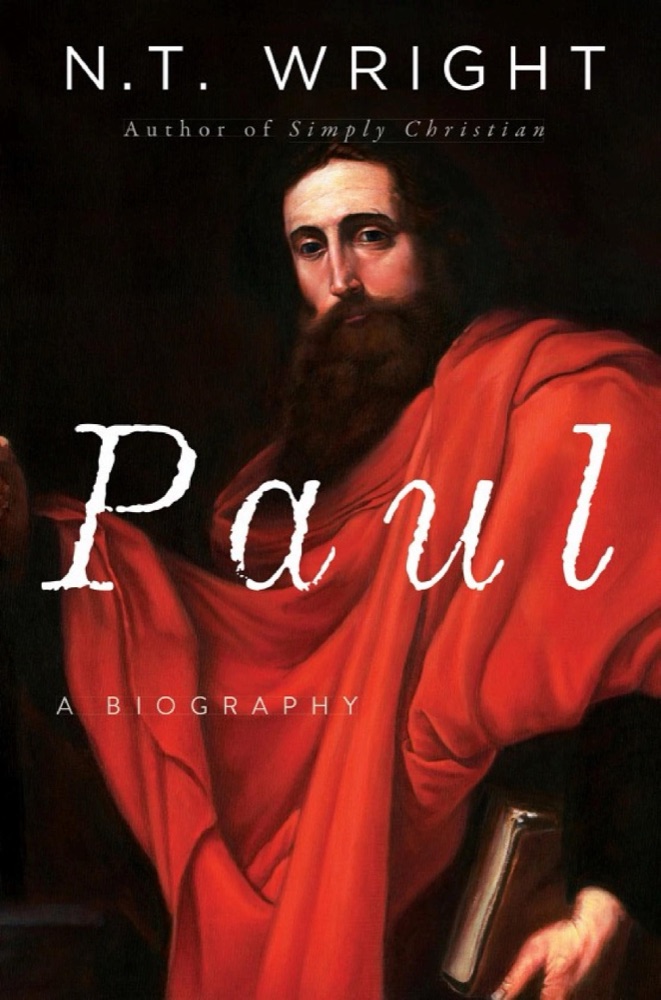
‘A biography of St Paul by his greatest living it is a dream come true. This is the book that I had always hoped Tom Wright might write, while doubting that he ever would. And now here it is – and, my goodness, it does not disappoint!’Tom Holland, author of The Triumph and Tragedy of the Roman Republic ‘In eloquent and inviting prose, one of the world’s leading New Testament scholars retells the story behind the story, the story of the Apostle Paul whose letters have shaped so much of subsequent history. Drawing on his decades of acquaintance with Paul, both informed on other Pauline scholarship and ready to reread Paul independently where needed, Wright brings forth treasures both old and new. A master teacher here communicates Paul in language every reader can understand.’Craig S. Keener, Professor of New Testament, Asbury Theological Seminary, Kentucky ‘Wright’s excellent book not onl
Book details
- First published
- 2018
- Author
- N.T. Wright
- Genre
- Biography
- Goodreads rating
- 4.35 (7k ratings)
Keep reading
 The Apostle : A Life of Paul
 Studies in the Sermon on the Mount
 The Bible Jesus Read
 Jesus of Nazareth: The Infancy Narratives
Simply Christian
Jesus of Nazareth: The Infancy Narratives
Simply Christian
 Systematic Theology: An Introduction to Biblical Doctrine
 Forged: Writing in the Name of God—Why the Bible's Authors Are Not Who We Think They Are
 Inspired: Slaying Giants, Walking on Water, and Loving the Bible Again
 On the Incarnation
 Life of Christ
 The Crucible of Doubt: Reflections On the Quest for Faith
 The Challenge of Jesus: Rediscovering Who Jesus Was & Is
 The Divine Conspiracy: Rediscovering Our Hidden Life in God
 Jesus Among Other Gods: The Absolute Claims of the Christian Message
 The Bible Tells Me So: Why Defending Scripture Has Made Us Unable to Read It
 Reflections on the Psalms
 Amazing Grace: A Vocabulary of Faith
 How God Became King: The Forgotten Story of the Gospels
 The Gospel in a Pluralist Society
 The Spirit of the Disciplines: Understanding How God Changes Lives
 To Live Is Christ: Joining Paul's Journey of Faith
 Encounters with Jesus: Unexpected Answers to Life's Biggest Questions
 On Christian Doctrine
 The Reason for God: Belief in an Age of Skepticism
 King's Cross: The Story of the World in the Life of Jesus
 Jesus for President: Politics for Ordinary Radicals
 Searching for God Knows What
 The History of the Church: From Christ to Constantine
 Letters and Papers from Prison
 Ethics
 Knowing God
 Velvet Elvis: Repainting the Christian Faith
 The Sermon on the Mount: The Key to Success in Life
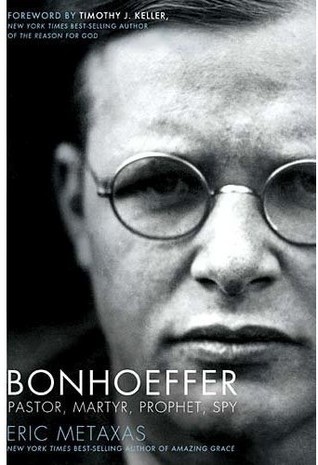 Bonhoeffer: Pastor, Martyr, Prophet, Spy
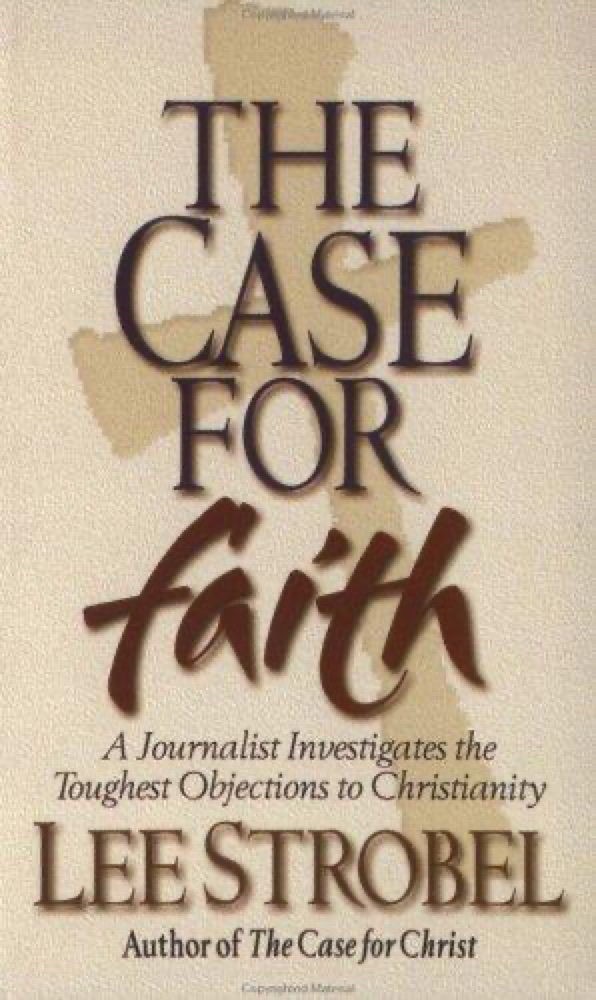 The Case for Faith: A Journalist Investigates the Toughest Objections to Christianity
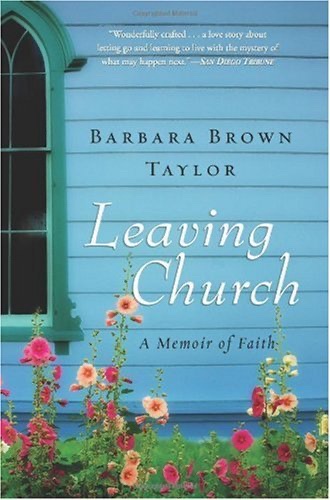 Leaving Church: A Memoir of Faith
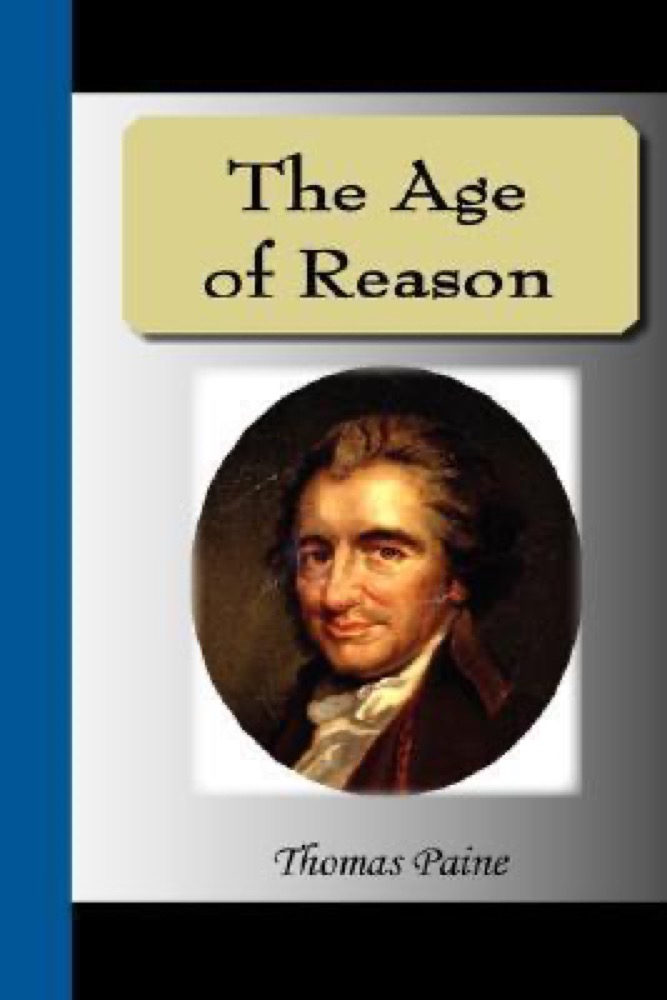 The Age of Reason
 Shadow of the Almighty: The Life and Testament of Jim Elliot
 Jesus and the Disinherited
 A History of God: The 4,000-Year Quest of Judaism, Christianity, and Islam
 The Everlasting Man
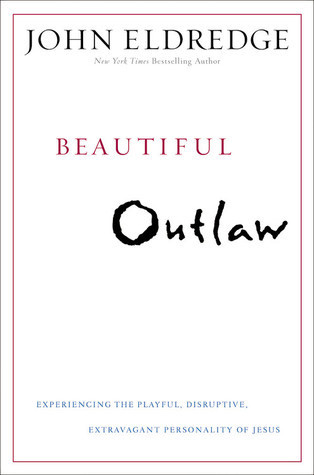 Beautiful Outlaw: Experiencing the Playful, Disruptive, Extravagant Personality of Jesus
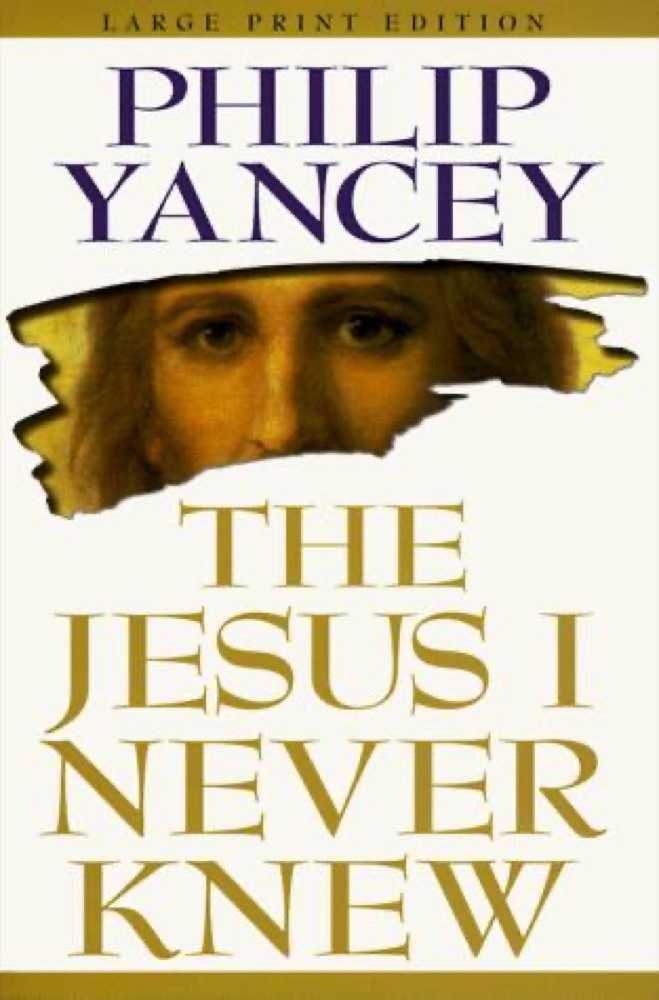 The Jesus I Never Knew
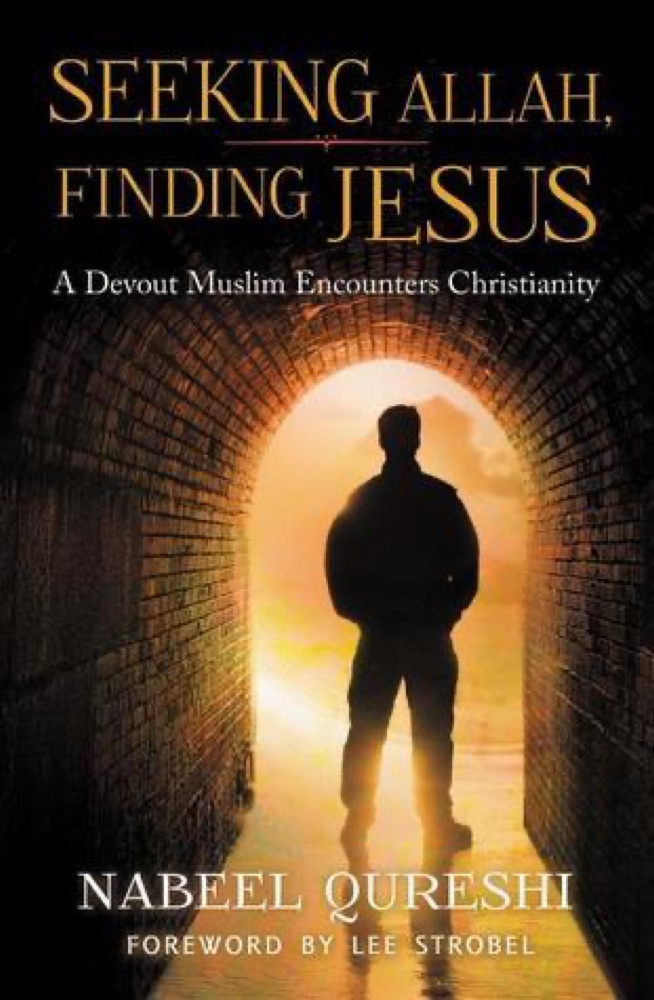 Seeking Allah, Finding Jesus: A Devout Muslim Encounters Christianity
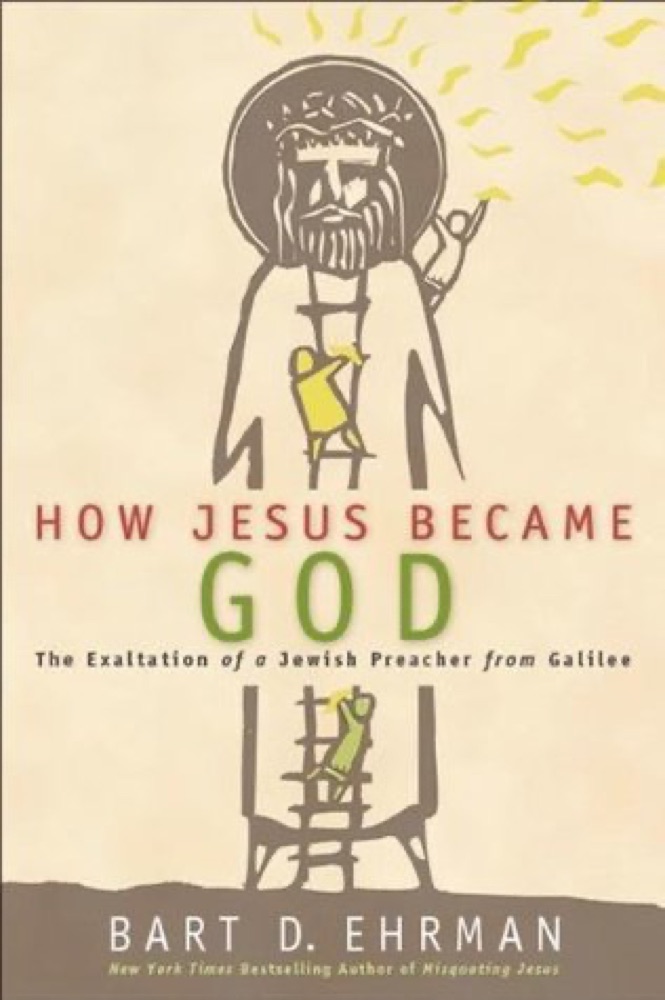 How Jesus Became God: The Exaltation of a Jewish Preacher from Galilee
 The Normal Christian Life
 What Is the Bible?: How an Ancient Library of Poems, Letters, and Stories Can Transform the Way You Think and Feel About Everything
 A Little Book on the Christian Life
 Sitting at the Feet of Rabbi Jesus: How the Jewishness of Jesus Can Transform Your Faith
 The Hope of Glory: Reflections on the Last Words of Jesus from the Cross
 The Good Man Jesus and the Scoundrel Christ
 The Cross of Christ
 The Orthodox Way
 The Message Remix
 Total Truth: Liberating Christianity from its Cultural Captivity
 The Grand Weaver: How God Shapes Us through the Events in Our Lives
 The Kingdom of God Is Within You
 The Case for Christ
 Renovation of the Heart: Putting On the Character of Christ