
 Blowout
Quotes from the Book
The reason the founders chafed at the idea of an American standing army and vested the power of war making in the cumbersome legislature was not to disadvantage us against future enemies, but to disincline us toward war as a general matter... With citizen-soldiers, with the certainty of a vigorous political debate over the use of a military subject to politicians' control, the idea was for us to feel it- uncomfortably- every second we were at war. But after a generation or two of shedding the deliberate political encumbrances to war that they left us... war making has become almost an autonomous function of the American state. It never stops.
22
The artificial primacy of defense among our national priorities is a constant unearned windfall for some, but it's privation for the rest of America; it steals from what we could be and can do. In Econ 101, they teach that the big-picture fight over national priorities is guns versus butter. Now it's butter versus margarine—guns get a pass. Overall, we're weaker for it, and at enormous cost.
13
When civilians are not asked to pay any price, it's easy to be at war - not just to intervene in a foreign land in the first place, but to keep on fighting there. The justifications for staying at war don't have to be particularly rational or cogently argued when so few Americans are making the sacrifice that it takes to stay.
10
The Army's new pitch was simple. Good pay, good benefits, a manageable amount of adventure... but don't worry, we're not looking to pick fights these days. For a country that had paid so dear a price for its recent military buccaneering, the message was comforting. We still had the largest and most technologically advanced standing army in the world, the most nuclear weapons, the best and most powerful conventional weapons systems, the biggest navy. At the same time, to the average recruit the promise wasn't some imminent and dangerous combat deployment; it was 288 bucks a month (every month), training, travel, and experience. Selling the post-Vietnam military as a career choice meant selling the idea of peacetime service. It meant selling the idea of peacetime. Barf.
9
This isn’t a partisan thing—constitutionalists left and right have equal reason to worry over the lost constraint on the executive. Republicans and Democrats alike have options to vote people into Congress who are determined to stop with the chickenshittery and assert the legislature’s constitutional prerogatives on war and peace.
7
Well, they got caught of course. The whole thing was so dunderheaded, how could they not? By November 1986, Reagan's "Secret Dealings with Iran" had supplanted the 1986 midterm election results on the front page of Time magazine.
5
By 2001, even the peacetime US military budget was well over half the size of all other military budgets in the world combined.
4
Overall, the United States admits to having lost track of eleven nuclear bombs over the years. I
3
But somehow Carter’s “battlefield of energy” never really filled up with eager American combatants. It just never felt like anybody was going to be draped in glory for taking public transportation, or carpooling, or turning down the thermostat and wearing a cardigan.
3
We’ve done these mental-health assessment team studies for six years now—between nine and twelve [months] is where a lot of the stress problems really manifest themselves, where the family problems really manifest themselves,” former Army chief of staff George Casey said recently. “The human mind and body weren’t made to do repeated combat deployments without substantial time to recover.” The suicide rate among active-duty servicemen doubled in the first five years of the Afghanistan War and then kept rising. In the past decade, the US Army lost more soldiers to suicide than to enemy fire in Afghanistan.
3
The report made a science fiction-like case that the president was within his constitutional rights to reinterpret congressional legislation to conform more closely to his own desires, or to simply refuse to carry out laws with which he did not agree, or that, the report harrumphed, “unconstitutionally encroach on the executive branch.” In sum, anything the president doesn’t want to do he doesn’t have to do; anything he wants to do, consider it done.
3
By the time Bill Clinton left office in 2001, an Operation Other Than War, as Pentagon forces called them, could go on indefinitely, sort of on autopilot - without real political costs or consequences, or much civilian notice. We'd gotten used to it. By 2001, the ability of a president to start and wage military operations without (or even in spite of) Congress was established precedent.
3
It apparently took a lot of layers of Brown & Root management and administration to turn a $14 sheet of plywood into an $86 sheet of plywood
2
Reagan and his growing right-wing "truth" machine had stirred public opinion to such a frothy head that Senate Minority Leader Howard Baker was warned that a vote for the treaty would cost him any chance at the GOP presidential nomination in 1980. On the way to the Senate floor to cast his aye vote, a popular centrist Democrat from New Hampshire asked his wife to "come on and watch me lose my seat
2
Deploying LOGCAP or other contractors instead of military personnel can alleviate the political and social pressures that have come to be a fact of life in the U.S. whenever military forces are deployed,” wrote Lt. Col. Steven Woods in his Army War College study about the effects of LOGCAP. “While there has been little to no public reaction to the deaths of five DynCorp employees killed in Latin America or the two American support contractors from Tapestry Solutions attacked (and one killed) in Kuwait … U.S. forces had to be withdrawn from Somalia after public outcry following the deaths of U.S. soldiers in Mogadishu.… “Additionally, military force structure often has a force cap, usually for political reasons. Force caps impose a ceiling on the number of soldiers that can be deployed into a defined area. Contractors expand this limit.
2
The nuclear thing is harder to figure. The United States, according to a 1998 study by the Brookings Institution, spent nearly eight trillion in today’s dollars on nukes in the last half of the twentieth century, which represents something like a third of our total military spending in the Cold War. Just the nuke budget was more than that half-century’s federal spending on Medicare, education, social services, disaster relief, scientific research (of the non-nuclear stripe), environmental protection, food safety inspectors, highway maintenance, cops, prosecutors, judges, and prisons … combined.
1
Congress has never since effectively asserted itself to stop a president with a bead on war. It was true of George Herbert Walker Bush. It was true of Bill Clinton. And by September 11, 2001, even if there had been real resistance to Vice President Cheney and President George W. Bush starting the next war (or two), there were no institutional barriers strong enough to have realistically stopped them. By 9/11, the war-making authority in the United States had become, for all intents and purposes, uncontested and unilateral: one man’s decision to make. It wasn’t supposed to be like this.
1
Carter's renowned 1979 "malaise speech" [...] is little remembered for what it actually was: a call to arms for fixing our nation's dire energy future. "Beginning this moment, this nation will never use more foreign oil than we did in 1977--never" [...] Carter was going to use all the weapons at his disposal: import quotas, public investment in coal, solar power, and alternative fuel, and [...] "a bold conservation program" where "every act of energy conservation ... is more than just common sense; I tell you it is an act of patriotism.
1
In the 1991 Gulf War, the United States employed one private contract worker for every one hundred American soldiers on the ground; in the Clinton-era Balkans, it neared one to one—about 20,000 privateers tops. In early 2011, there were 45,000 US soldiers stationed inside Iraq, and 65,000 private contract workers there.
1
the American public doesn’t mourn contractor deaths the way we do the deaths of our soldiers. We rarely even hear about them. Private companies are under no obligation to report when their employees are killed while, say, providing armed security to tractor-trailer convoys running supplies into Iraq. In the 1991 Gulf War, the United States employed one private contract worker for every one hundred American soldiers on the ground; in the Clinton-era Balkans, it neared one to one—about 20,000 privateers tops. In early 2011, there were 45,000 US soldiers stationed inside Iraq, and 65,000 private contract workers there.
1
And every year the Pentagon bite of the federal dollar got bigger and bigger. In Reagan’s eight years in office, military expenditure doubled from around $150 billion to $300 billion a year, until it represented nearly 30 percent of our overall annual budget and more than 6 percent of GDP.
1
In 1981, and 1983, and every year thereafter, right around budget time, the Pentagon released its newest installment of Soviet Military Power to the public,
1
The umbrella assertion made by Team B—and the most inflammatory—was that the previous National Intelligence Estimates “substantially misperceived the motivations behind Soviet strategic programs, and thereby tended consistently to underestimate their intensity, scope, and implicit threat.” Soviet military leaders weren’t simply trying to defend their territory and their people; they were readying a First Strike option, and the US intelligence community had missed it. What led to this “grave and dangerous flaw” in threat assessment, according to Team B, was an overreliance on hard technical facts, and a lamentable tendency to downplay “the large body of soft data.” This “soft” data, the ideological leader of Team B, Richard Pipes, would later say, included “his deep knowledge of the Russian soul.
1
shock troops in the assault on the last remaining constraints keeping us from going to war all the time. The little darlings were terribly dear.
1
Watch on YouTube
About Rachel Maddow
We have collected 59 quotes from 3 books by Rachel Maddow on BookQuoters.
More about the author →More by Rachel Maddow
About the book
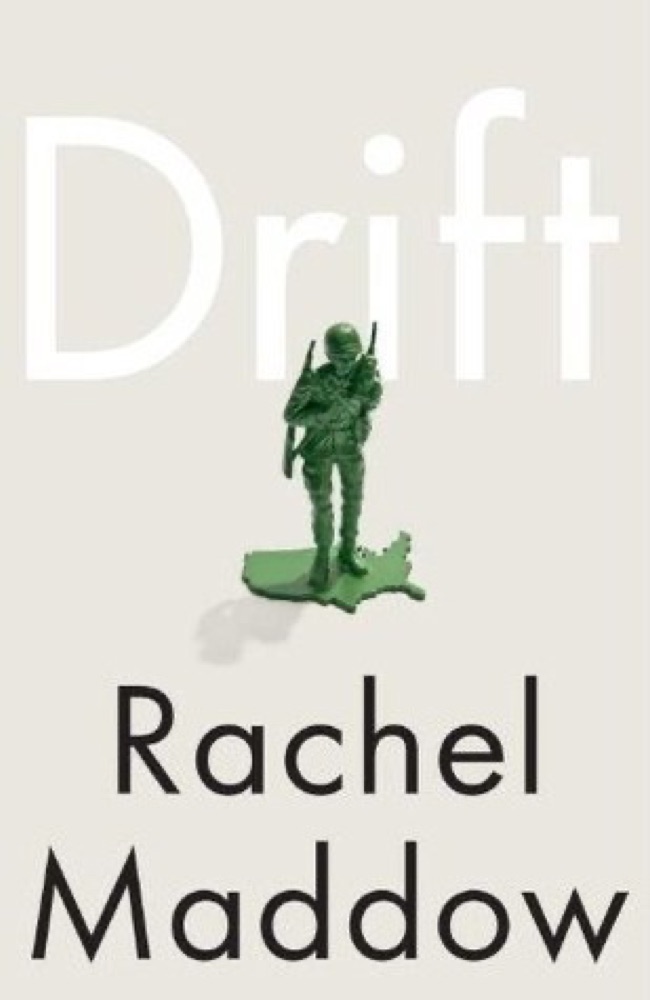
"One of my favorite ideas is, never to keep an unnecessary soldier," Thomas Jefferson wrote in 1792. Neither Jefferson nor the other Founders could ever have envisioned the modern national security state, with its tens of thousands of "privateers"; its bloated Department of Homeland Security; its rusting nuclear weapons, ill-maintained and difficult to dismantle; and its strange fascination with an unproven counterinsurgency doctrine. Written with bracing wit and intelligence, Rachel Maddow's Drift argues that we've drifted away from America's original ideals and become a nation weirdly at peace with perpetual war, with all the financial and human costs that entails. To understand how we've arrived at such a dangerous place, Maddow takes us from the Vietnam War to today's war in Afghanistan, along the way exploring the disturbing rise of executive authority, the gradual outsourcing of
Book details
- First published
- 2012
- Author
- Rachel Maddow
- Genre
- Nonfiction
- Goodreads rating
- 4.07 (21k ratings)
Keep reading
 This Kind of War: A Study in Unpreparedness
 Imperial Ambitions: Conversations on the Post-9/11 World
 War Is a Racket
 Dead Fall
 Executive Orders
 The War on Warriors: Behind the Betrayal of the Men Who Keep Us Free
 American Sniper: The Autobiography of the Most Lethal Sniper in U.S. Military History
 The Next Decade: Where We've Been . . . and Where We're Going
 The Pentagon's Brain
 The Untold History of The United States
 The Invisible Bridge: The Fall of Nixon and the Rise of Reagan
 The Coldest Winter: America and the Korean War
 The World As It Is: Inside the Obama White House
 Behold a Pale Horse
 Evil Geniuses: The Unmaking of America
 Nixonland: The Rise of a President and the Fracturing of America
 Power Systems: Conversations on Global Democratic Uprisings and the New Challenges to U.S. Empire
 The Best and the Brightest
 Hidden History: An Exposé of Modern Crimes, Conspiracies, and Cover-Ups in American Politics
 Distraction
 The First Salute : View of the American Revolution
 One Year After
 The Jakarta Method: Washington's Anticommunist Crusade and the Mass Murder Program that Shaped Our World
 Understanding Power: The Indispensable Chomsky
 The Revolution: A Manifesto
 A Full Life: Reflections at Ninety
 A Fighting Chance
 Vietnam: An Epic Tragedy, 1945-1975
 Enemies: A History of the FBI
 Becoming Madam Secretary
 Radio Free Albemuth
 Flyboys: A True Story of Courage
 Conspirators' Hierarchy: The Story of the Committee of 300
 Nuclear War: A Scenario
 Black Hawk Down
 The Shock Doctrine: The Rise of Disaster Capitalism
 Deer Hunting with Jesus: Dispatches from America's Class War
 The Next 100 Years: A Forecast for the 21st Century
 Truman
 The Great Derangement: A Terrifying True Story of War, Politics, and Religion at the Twilight of the American Empire
 One Second After
 Decision Points
 Generation Kill: Devil Dogs, Iceman, Captain America, and the New Face of American War
 One Nation: What We Can All Do to Save America's Future
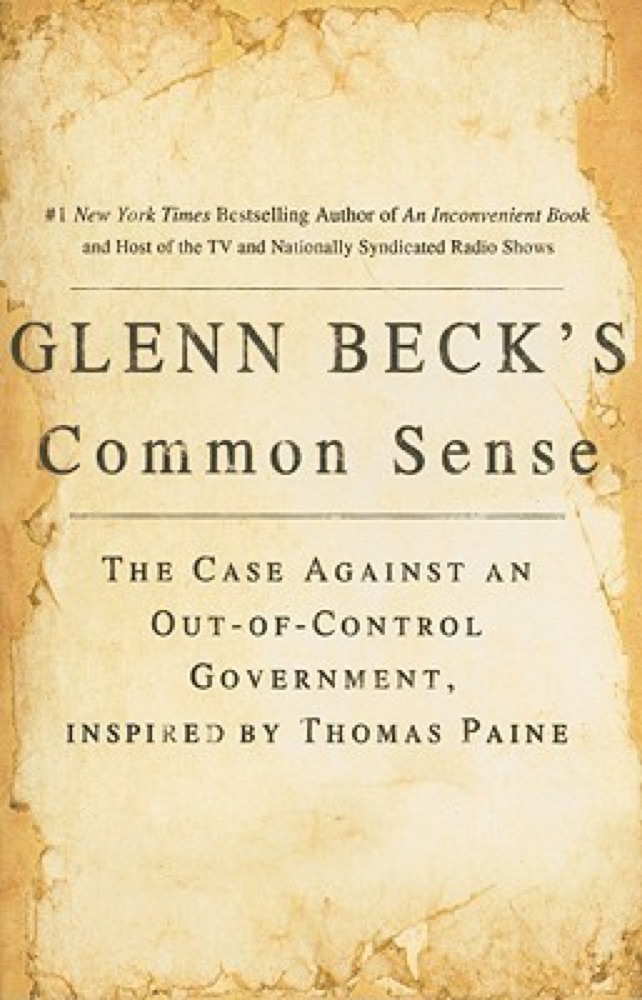 Glenn Beck's Common Sense: The Case Against an Out-of-Control Government, Inspired by Thomas Paine
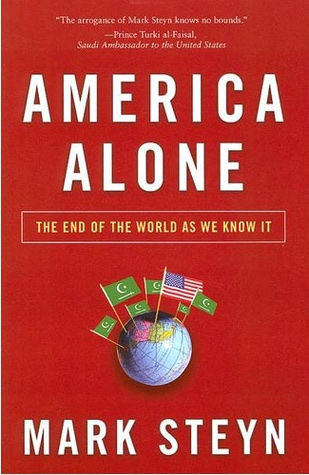 America Alone: The End of the World As We Know It
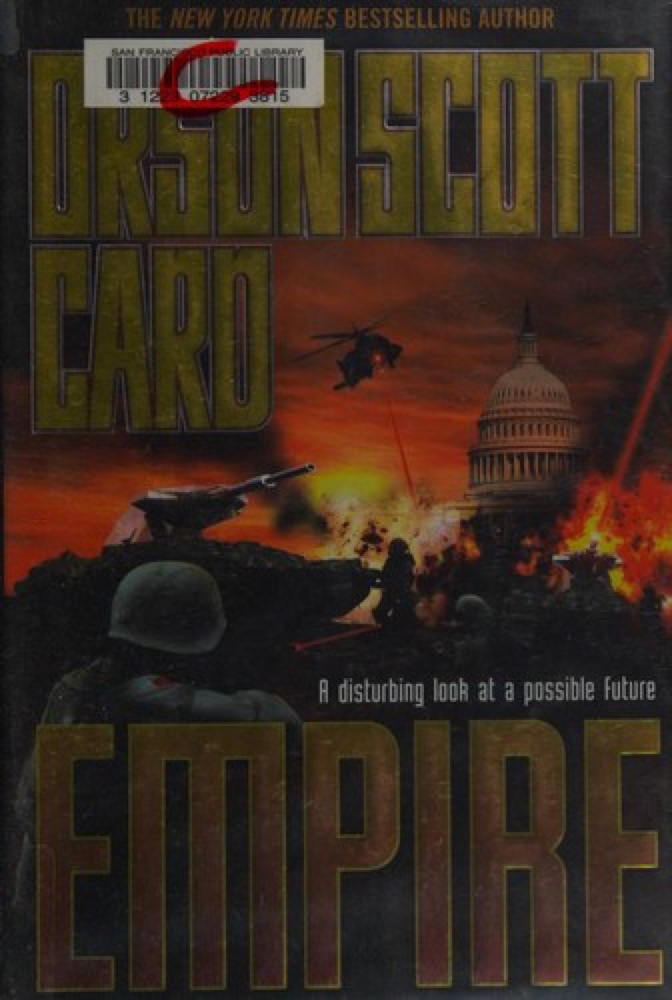 Empire
 A Better World
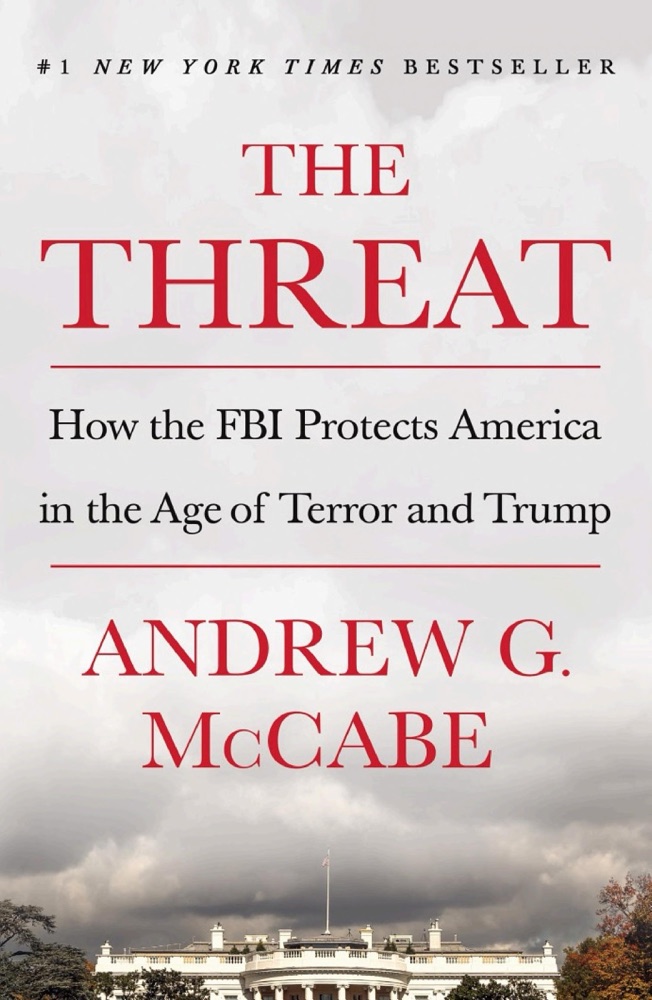 The Threat: How the FBI Protects America in the Age of Terror and Trump
 Twilight of the Elites: America After Meritocracy
 The Audacity of Hope: Thoughts on Reclaiming the American Dream
 Battle Cry of Freedom
 Upheaval: Turning Points for Nations in Crisis
 Mr. Lincoln's Army
 Ripple
 Burr
Burr
 Starship Troopers
 Killing Kennedy: The End of Camelot
 America (The Book): A Citizen's Guide to Democracy Inaction
 The Greatest Generation