
 The Black Jacobins: Toussaint L'Ouverture and the San Domingo Revolution
Quotes from the Book
-I'm going to heaven! I replied. -What do you mean, you're going to heaven? -Let me pass. -And what will you do in heaven, my poor child? -I'm going there to kill God, who killed Daddy.
18
GENERAL, I have learned that the jack ass whose business it is to report to you upon the battle of the 27th [the 27 Nivôse, i.e., January 16] stated that I was only in observation throughout the battle. I don't wish any such observation on him, for he would have shit in his pants. Salute and Brotherhood! ALEX. DUMAS
15
The novelist Dumas would one day borrow features from both of his uncles, not to mention his grandfather, the acknowledged scoundrel, in fashioning the central villains of The Count of Monte Cristo. Reading court documents detailing the sordid unraveling of Charles's sham fortune, which would have devastating effects on his daughter and her unsuspecting husband, I couldn't help thinking that one of the interesting things about Dumas's villains is that, while greedy and unprincipled themselves, they produce children who can be innocent and decent. This was something that the writer understood very well from his own family.
8
Unhappiness cannot but draw tighter the bonds which hold us fast to one another," General Dumas had written to Marie-Louise as he made his way home.
6
While Americans view the Revolutionary War as a conflict fought from Maine to Florida, France actually forced Britain to fight the Revolution as a world war, defending its outposts in India, Jamaica, and Africa. The British had to divert most of their celebrated navy from the American coast to defend against French attacks elsewhere.‡
4
Indeed, who has a greater right to public respect than the man of color fighting for freedom after having experienced all the horrors of slavery? To equal the most celebrated warriors he need only keep in mind all the evils he has suffered.
4
But his main character flaw was that of so many French revolutionaries: a zeal for human rights so self-righteous that it translated into intolerance for the actual human beings around him. Brissot
3
The chevalier’s multiple talents were well summed up by John Adams, visiting Paris in 1779: The “mulatto man,” wrote the future American president, “is the most accomplished man in Europe in riding, shooting, fencing, dancing, music. He will hit a button on the coat or waistcoat of the masters. He will hit a crown piece in the air with a pistoll [sic] ball.
3
The Republic can count on me to battle its enemies... Offensive war suits the passionate character of the French, but it is the responsibility of the man in charge of leading them to prepare with caution and wisdom everything that leads to victory.
3
But after taking command of the Army of Italy in 1796, Napoleon took organized theft to a new level. ... The French also stole art at a new level: Napoleon requested that the government send him experts qualified to judge which paintings his men should steal; priceless canvases by Titian, Raphael, Rubens, and Leonardo da Vinci were shipped to Paris.
3
To remember a person is the most important thing
2
Man is born free but is everywhere in chains,” wrote Jean-Jacques Rousseau in The Social Contract in 1762. A generation of crusading lawyers put Enlightenment principles into action by helping slaves sue for the right to be treated as ordinary French subjects. They took the issue of human bondage to the sovereign parlement courts of France—and won, in nearly every case, liberty for their black and mixed-race clients. The infuriated Louis XV found his hands tied. The phrase “absolute monarchy” is misleading: Ancien Régime France was a state of laws, of ancient precedents, where the spark of enlightened reason could and occasionally did ignite great things.
2
The past is not alive to them the way it is to Georges; they do not remember—and thus do not see the reality of things. That reality is the dream Georges has come to embody: that a black man can become a nobleman and be better educated and more talented and powerful than the white plantation owners.
2
Many of the Founding Fathers themselves foresaw that their compromise with southern states was a poison pill that would eventually lead to tragedy. But the French stalwarts of the new America found every way of glossing over the problem. Paris theaters staged plays about the idyllic life in Virginia, where black slaves and their masters sang songs of liberty as they worked together side by side.
2
But France did not have a normal government: it had a collection of caffeinated intellectuals
2
THE original Alexandre Dumas was born in 1762, the son of “Antoine Alexandre de l’Isle,” in the French sugar colony of Saint-Domingue. Antoine was a nobleman in hiding from his family and from the law, and he fathered the boy with a black slave. Later Antoine would discard his alias and reclaim his real name and title—Alexandre Antoine Davy, the Marquis de la Pailleterie—and bring his black son across the ocean to live in pomp and luxury near Paris.
2
The new calendar was only one of countless utopian measures the ruling Jacobins initiated in 1793–94, but it is notable because, apparently, not a single person had to be murdered to carry it out.
2
Suddenly Paris fashion-that bellwether for the French mind-had to be à l'Amérique: tailors manufactured "insurgent coats" and "lightning-conductor dresses" (in honor of Ben Franklin, with two wires hanging to the ground).
2
...the former King Louis XVI, who, after titles were abolished, was now simply called "Louis Capet" - a mocking reference to his distant ancestor Hugh Capet, who had assumed the throne in the year 987.
2
Early in the battle, Dumas's horse was shot out from under him and fell in such a way that the Austrians were sure it had killed him. "The Black Devil is dead!" the cry went up. But then Dumas rose from the dead, or rather, from behind his horse, which he then used as cover to stage his own counter-fusillade. He had discovered a small cache of loaded Austrian guns, which he now used to return fire. As Dermoncourt lay in a bleeding heap, he later recalled, "I managed to turn toward the general; he was standing at the head of the bridge of Clausen and holding it alone against the whole Austrian squadron; and as the bridge was narrow and the men could only get at him two or three abreast, he cut down as many as came at him. Bleeding from the arm, thigh, and head, Dumas slashed and stabbed with unrelenting fury, and with such power that most every Austrian touched by his blade fell mortally wounded or took a deadly dive over the bridge into the river below. When he was finally relieved on the bridge by a few dozen French cavalry and the Austrians retreated, Dumas did not rest but leapt on a horse to purse the fleeing enemy nearly ten miles into the alpine woods.
1
In October, after a two-month siege, the government had retaken Lyon from a group of moderates who had overthrown the local Jacobin club the previous spring; the government carried out reprisals intended to punish the entire city, destroying many of its finest buildings and murdering nearly two thousand of its residents. The Jacobins then proceeded to rename Lyon—with no apparent irony—“Liberated City.
1
Where streetlights failed, there were lanternmen. The lanternmen—numbered, so the police could keep track of them—waited around the doors of townhouses in Paris whenever an entertainment was going on inside, and, for a few coins, one of them would accompany a reveler home, lighting his way even up the stairs and into his room.
1
Spain laid the foundations of this great wealth and evil in the Americas, then quickly became distracted and forgot about it. After introducing the plants, the technology, and the slaves into Santo Domingo, the Spanish dropped the sugar business in favor of hunting for gold and silver. They moved on to Mexico and South America in search of the precious metals,
1
It was no wonder, then, that Dumas lost his temper when he read the official report of the battle, compiled by Napoleon’s aide-de-camp General Berthier, and saw that his role had been diminished to one of “in observation at San Antonio.” Berthier did include a phrase about Dumas’s fighting the enemy “well,” but this did nothing to make Alex Dumas reconsider what he was about to write into the official military record of the Army of Italy. Dumas picked up his quill and wrote to Napoleon a letter of such fantastical insolence it would be cited in every historical account of him as an example of his legendary temper: January 18, 1797 GENERAL, I have learned that the jack ass whose business it is to report to you upon the battle of the 27th [the 27 Nivôse, i.e., January 16] stated that I stayed in observation throughout that battle. I don’t wish any such observation on him, since he would have shit in his pants. Salute and Brotherhood! ALEX. DUMAS
1
Despite his brilliance, he missed a basic secondary education, for lack of scholarship funds. He believed that the rejection was due to Napoleon’s hatred for his father: “this hatred extended even to me, for in spite of the attempts made on my behalf by my father’s old comrades, I could never gain entrance to any military school or civilian college.
1
Meanwhile, Napoleon’s younger brother, Lucien Bonaparte, had managed to get himself elected to the Council of Five Hundred—and was even made its president. The maneuver required Lucien to lie about his age—he was only twenty-four, when the official minimum age was thirty—but this paled in comparison with his larger deviousness: he was getting himself elected president of the country’s main legislative body and at the same time he was about to help his big brother stage a coup d’état to eliminate it.
1
Napoleon had developed an identification with Egypt from the time he was twelve, reading about Alexander the Great. At the end of his life, having gained and lost control of Europe, he would remember his heady time in Egypt. “I dreamed of many things and I saw how I could realize all my dreams,” he mused. “I imagined myself on the road to Asia, mounted on an elephant, a turban on my head, and in my hand, a new Koran that I had written myself for my own purposes. I would have combined in my enterprises the experience of two worlds, scouring the terrain of all world history for my profit.” Though the general had absorbed Volney’s extensive knowledge of Egypt, he ignored his most important lesson: that his dream of a Middle Eastern empire was a mirage.
1
In all his adventures, the main thing that set Dumas apart was his refusal to countenance the bullying of the weak by the strong. This meant that whenever a unit he commanded seized a thousand prisoners or the wealth of a town, he told his fellow officers and his men, perhaps too often for their taste, that they must restrain themselves from taking the slightest advantage. Dumas was unrestrained when outnumbered and outgunned, just as he was unrestrained when he disagreed with his superiors. But toward anyone less powerful than he was, Alex Dumas showed nothing but self-restraint, and a kind of violent love.
1
Watch on YouTube
About Tom Reiss
We have collected 28 quotes from 1 book by Tom Reiss on BookQuoters.
More about the author →About the book
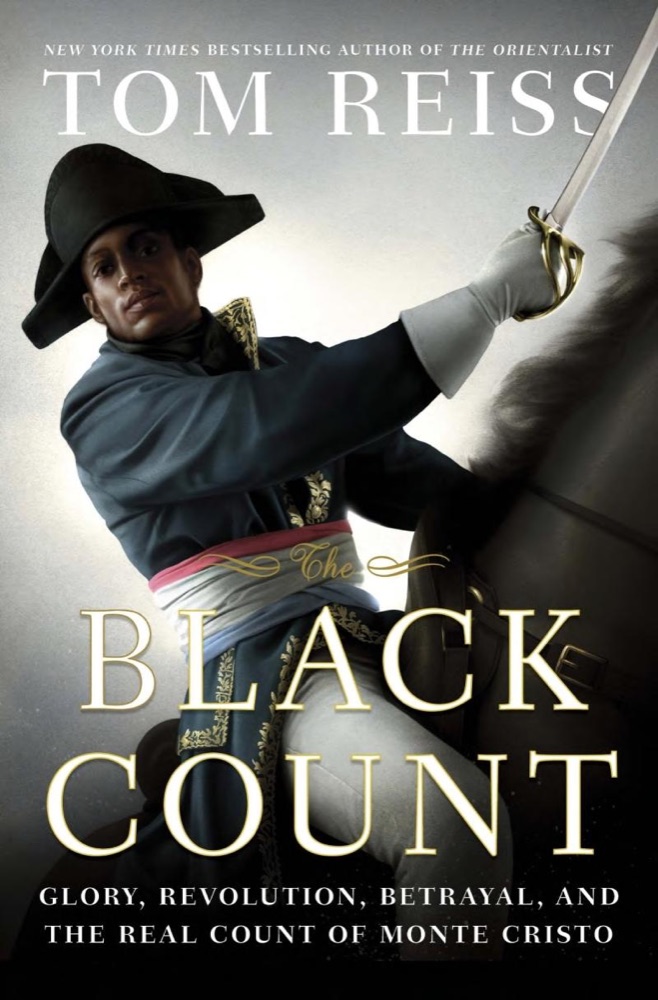
Here is the remarkable true story of the real Count of Monte Cristo – a stunning feat of historical sleuthing that brings to life the forgotten hero who inspired such classics as The Count of Monte Cristo and The Three Musketeers.
The real-life protagonist of The Black Count, General Alex Dumas, is a man almost unknown today yet with a story that is strikingly familiar, because his son, the novelist Alexandre Dumas, used it to create some of the best loved heroes of literature.
Yet, hidden behind these swashbuckling adventures was an even more incredible secret: the real hero was the son of a black slave -- who rose higher in the white world than any man of his race would before our own time. Born in Saint-Domingue (now Haiti), Alex Dumas was briefly sold into bondage but made his way to Paris where he was schooled as a sword-fighting member of the French aristocracy. Enlisting as
Keep reading
The Black Jacobins: Toussaint L'Ouverture and the San Domingo Revolution
 The First Salute : View of the American Revolution
 The Glass-Blowers
 The Paris Vendetta
 The Proud Tower: A Portrait of the World Before the War, 1890-1914
 Founding Brothers: The Revolutionary Generation
 Black AF History: The Un-Whitewashed Story of America
 Ninety-Three
 The Hemingses of Monticello: An American Family
 The Eighteenth Brumaire of Louis Bonaparte
 The Black Wolf
 Epitaph for a Spy
 A Place of Greater Safety
 1000 Years of Annoying the French
 The Greater Journey: Americans in Paris
 The Mask of Dimitrios
 King Leopold's Ghost
 Destiny of the Republic: A Tale of Madness, Medicine and the Murder of a President
 The Age of Revolution, 1789–1848
 Plutarch's Lives
 The Napoleon of Notting Hill
 The Persecution and Assassination of Jean-Paul Marat as Performed by the Inmates of the Asylum of Charenton Under the Direction of the Marquis de Sade
 The Surgeon's Mate
 1776
1776
 A Distant Mirror: The Calamitous 14th Century
 The Lily and The Lion
 The Histories
 The Old Regime and the French Revolution
 The Will to Battle
 The Wager: A Tale of Shipwreck, Mutiny and Murder
 Alexander Hamilton
 Joseph Anton: A Memoir
 Madame Tussaud
 Revolutionary Summer: The Birth of American Independence
 The Bonfire of the Vanities
 The Path Between the Seas: The Creation of the Panama Canal, 1870-1914
 The Monuments Men: Allied Heroes, Nazi Thieves, and the Greatest Treasure Hunt in History
 The Prague Cemetery
 The Winds of War
 Dictator
 Black Lamb and Grey Falcon
 Fall of Giants
 The History of the Decline and Fall of the Roman Empire Volume I
 The Confusion
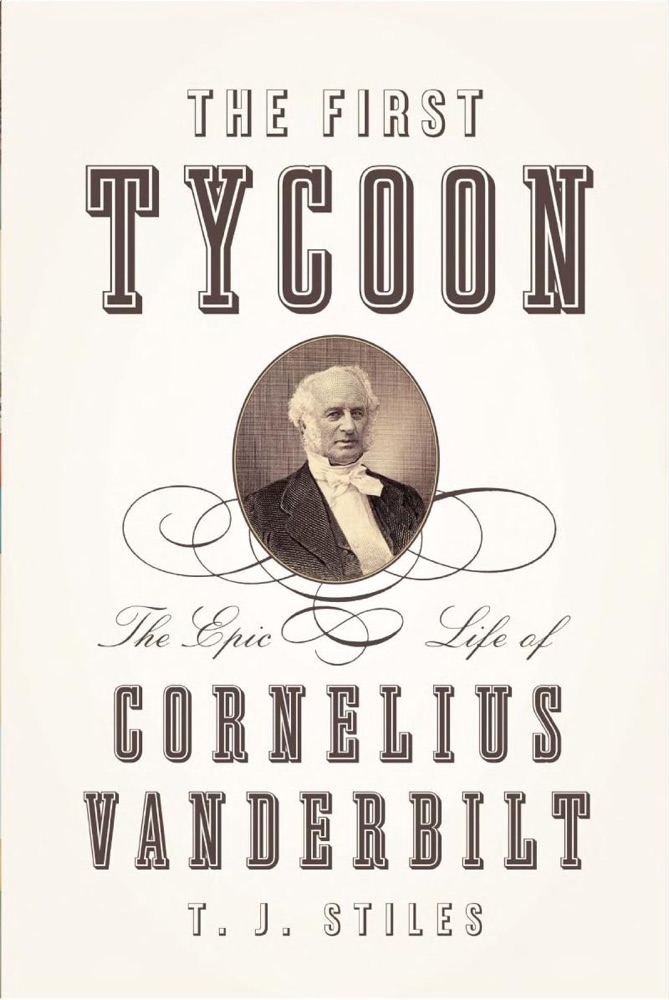 The First Tycoon: The Epic Life of Cornelius Vanderbilt
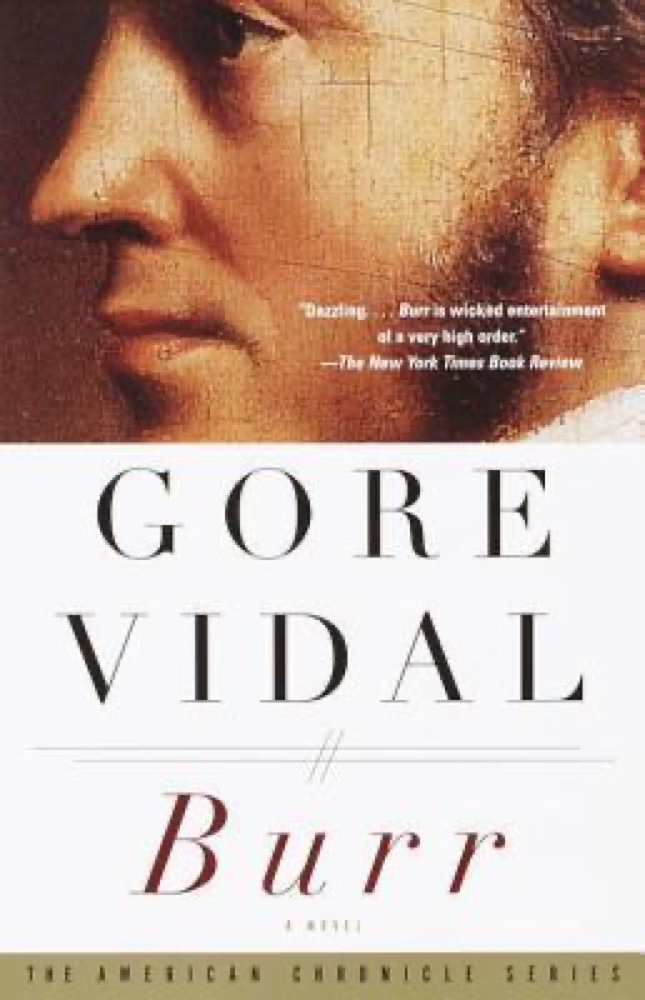 Burr
Burr
 Nicholas and Alexandra
 River of Smoke
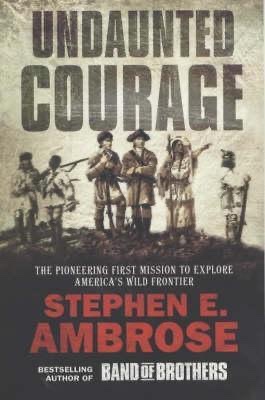 Undaunted Courage: The Pioneering First Mission to Explore America's Wild Frontier
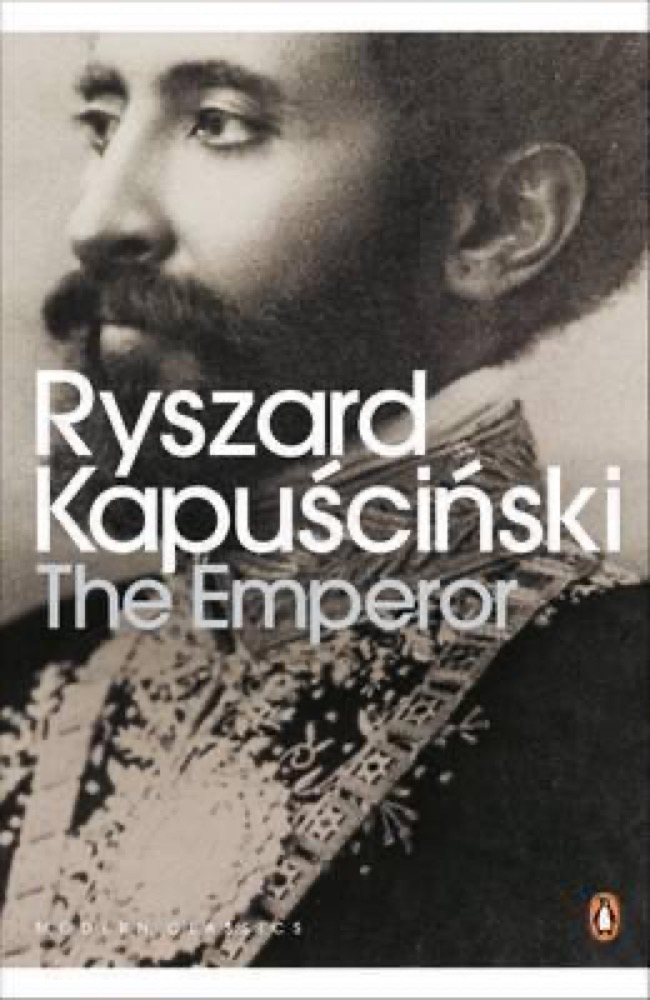 The Emperor
 Too Like the Lightning
 Sackett's Land
 Flashpoints: The Emerging Crisis in Europe
 The Enchantress of Florence
 The Nutmeg of Consolation
 Gulliver's Travels
 Warlock
 Augustus
 The Man in the Red Coat