
 Rebecca
Quotes from the Book
how lacking in intuition men could be in persuading themselves that mending some stranger's socks, and attending to his comfort, could content a woman...
20
The system might one day change, but human nature remained the same, and there were always people who profited at the expense of others.
8
Here was Pierre laying down the law about what the King should say to the Assembly, or what the Assembly should say to the King, and yet he could not order his own unruly boys to come down from off the hay-shocks. My mother would have done so and boxed the ears of the pair of them.
3
But he was quite eclipsed by one of the deputies of the Third Estate, a young lawyer called Robespierre—I wonder if Pierre has heard of him?—who suggested that the Archbishop would do better if he told his fellow clergy to join forces with the patriots who were friends to the people, and that if they wanted to help they might set an example by giving up some of their own luxurious way of living, and returning to the simple ways of the founder of their faith.
3
The glass world was unique, a law unto itself. It had its own rules and customs, and a separate language too, handed down not only from father to son but from master to apprentice, instituted heaven knows how many centuries ago wherever the glass-makers settled—in Normandy, in Lorraine, by the Loire—but always, naturally, by forests, for wood was the glass foundry’s food, the mainstay of its existence.
3
Sentiment can turn afterlife into a fairy tale for children, and I prefer this to Edmé’s theory of oblivion.
2
They say death does this to us once we are warned. Unconsciously, we strive not to waste time. Pettiness falls away, with all those things of little value in our lives. Could we but have known sooner, we tell ourselves, it would have been otherwise; no anger, no destruction, above everything no pride.
2
Where do they go, Sophie, those younger selves of ours? How do they vanish and dissolve?” “They don’t,” I said. “They’re with us always, like little shadows, ghosting us through life. I’ve been aware of mine, often enough, wearing a pinafore over my starched frock, chasing Edmé up and down the great staircase in la Pierre.
2
Marat, in L’Ami du Peuple, declared that the only way to save the Revolution for the people was to slaughter the aristocrats en masse; yet if this happened the innocent might suffer with the guilty. Somehow, we no longer seemed to preach the brotherhood of man.
2
In fact, one of the first decrees passed, the day after the storming of the Tuileries, was an order giving every municipality throughout the country the right to arrest suspects on sight.
2
Jacques Duval became a close friend of Marat, editor of L’Ami du Peuple, one of the most widely read and popular newspapers in Paris, and he used to send this down to us every week, so that we could keep abreast of all that was said and done in the capital. I was not sure what to make of it myself; it was an inflammatory sheet, whipping its readers to violence, and urging them to take action against the “enemies of the people” if legislation should be slow. Michel and François read every word of it, and passed it on to the workmen too—a mistaken gesture.
2
The carriages and the folk who rode in them, gorgeously if sometimes absurdly attired, had made a kind of magic, and given a fairy-tale glitter to the capital. Now it seemed just like any other city,
2
If my mother had known what small seed of longing she was sowing in my brother’s being, to develop into a folie de grandeur that nearly broke my father’s heart, and certainly was partly responsible for his death, she would not have taken Robert so often to the château at Chérigny, to be fed and fondled by the marquise. She would have put him to play among the hens and pigs in the muddied farmyard of le Maurier.
2
It has always seemed to me significant that Robert’s first memories, whenever he spoke of them, should not be of the farmhouse le Maurier, or of the lowing of cattle, the scratching of hens and other homely sounds, or even of the roar of the furnace chimney and the bustle of the glass-house; but always of an immense salon, so he described it, filled with mirrors and satin-covered chairs, with a harpsichord standing in one corner, and a fine lady, not my mother, picking him up in her arms and kissing him, then feeding him with little sugared cakes.
2
These instruments are now made in bulk and used by doctors and chemists all over France, while my father’s name is forgotten, but a hundred years ago the “instruments de chimie” designed at la Brûlonnerie were sought after by all the apothecaries in Paris.
2
My aunt Déméré was shocked. Her husband, my uncle Déméré, was one of the foremost important men in the foundry. He was a master melter, that is to say he prepared the mixture for the pots, and saw to it that the pots were filled with the right amount for the furnaces before the day’s melt, and never, since they had been married, had my aunt Déméré watched the potash being prepared by the flux-burner. “The first duty of a master’s wife is to have food ready for her husband between shifts,” she told my mother, “and then to attend to any women or children directly employed by her husband who may be sick. The work in the furnace house, or outside it, is nothing to do with
2
Perhaps we shall not see each other again. I will write to you, though, and tell you, as best as I can, the story of your family. A glass-blower, remember, breathes life into a vessel, giving it shape and form and sometimes beauty; but he can, with that same breath, shatter and destroy it. If what I write displeases you, it will not matter. Throw my letters in the fire unread, and keep your illusions. For myself, I have always preferred to know the truth.
2
Daphne du Maurier was the fifth-generation descendant of a French master craftsman who settled in England during the Revolution. The Glass-Blowers, the fictionalized story of his family, was originally published in 1963, but du Maurier first conceived of writing about her French forebears in the mid-1950s. She had recently completed her novel about Mary Anne Clarke, her famous great-great-grandmother, and a complementary work about the French side of her family seemed logical.
2
Nothing is left,” my brother replied. “That is why I brought you my son.
1
Was he playing upon my fear today, and the fear of hundreds like me, just as he had once played upon my mother’s ignorance—and all to inflate his sense of power?
1
When Robert asks Sophie where our younger selves go, how they dissolve and vanish, she answers that they don’t. “They’re with us always, like little shadows, ghosting us through life.
1
Nothing is degraded that is bequeathed with love. My father handed down a passion for craftsmanship to the grandsons he never saw.
1
Life, on the contrary, is at its most intense when it is silent; the silence of a prison cell, for instance, which gives every opportunity for thought, or when sitting beside the dead body of a loved one to whom you never bade goodbye.
1
I thought how lacking in intuition men could be in persuading themselves that mending some stranger’s socks, and attending to his comfort, could content a woman of thirty-eight like my sister Edmé, who, with her quick brain and passion for argument, would—had she lived in another age—have fought for her beliefs like Joan of Arc.
1
St. Christophe might become Rabriant, Madame Busson a “citoyenne,” kings, queens, and princes go to their death and the whole country change; but my mother had held fast to her own timeless world.
1
Death, instead of severing all ties, made family feeling stronger.
1
I wondered, thinking how much my husband must have borne in silence in order to spare his friend. Men have strange loyalties to one another.
1
It was not until long afterwards that I heard the tale from Edmé. He all but beggared himself in the process, without a word to anyone but her, and was forced to sell his practice, a year later, and accept payment from the municipality as a public notary. I think, if anyone lived up to the principles of equality and brotherhood that had first inspired our revolution, it was my brother Pierre.
1
Watch on YouTube
About Daphne du Maurier
We have collected 218 quotes from 10 books by Daphne du Maurier on BookQuoters.
More about the author →More by Daphne du Maurier
All books by Daphne du Maurier →

About the book
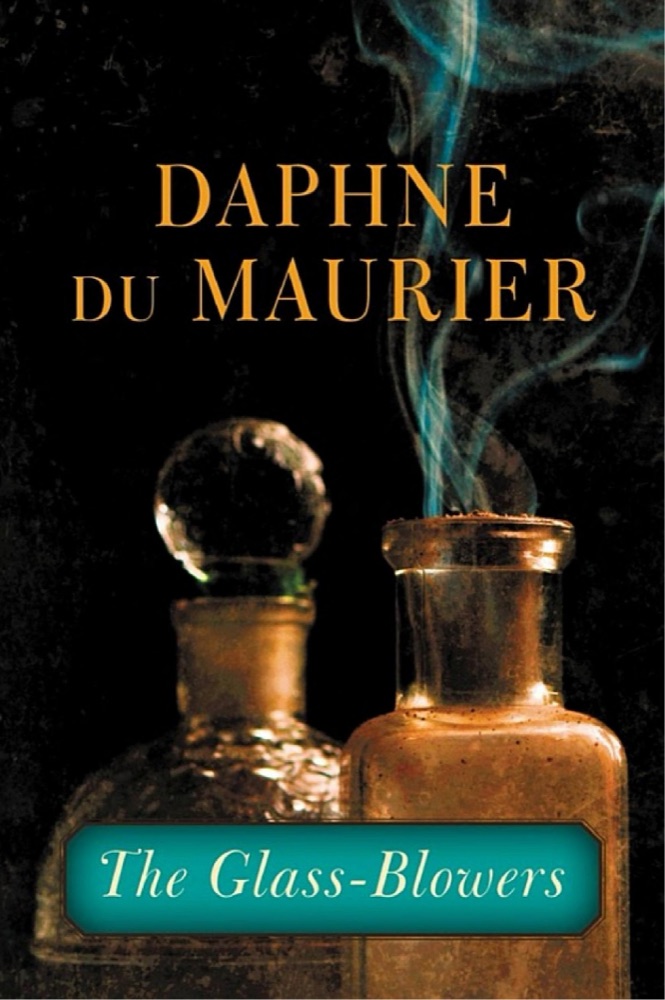
The world of the glass-blowers has its own traditions, it's own language - and its own rules. 'If you marry into glass' Pierre Labbe warns his daughter, 'you will say goodbye to everything familiar, and enter a closed world'. But crashing into this world comes the violence and terror of the French Revolution, against which the family struggles to survive.Years later, Sophie Duval reveals to her long-lost nephew the tragic story of a family of master craftsmen in eighteenth-century France. Drawing on her own family's tale of tradition and sorrow, Daphne du Maurier weaves an unforgettable saga of beauty, war, and family.
Book details
- First published
- 1963
- Author
- Daphne du Maurier
- Genre
- Historical
- Goodreads rating
- 3.71 (3k ratings)
Keep reading
 This Strange Eventful History
 The Brutal Telling
 The Scapegoat
 The Sweetness of Water
 A Place of Greater Safety
 Dombey and Son
 Uncle Silas
 Brother, I'm Dying
 Bury Your Dead
 The Clockmaker's Daughter
 The Postcard
 All Passion Spent
 The Water Dancer
 The Golden Tresses of the Dead
 Armadale
 The Cruelest Month
 Jeremy Poldark
 The Enchantress of Florence
 Green Dolphin Street
 The First Man
 Death Watch
 The Book of Life
 Black Lamb and Grey Falcon
 The Silence of Bones
 Shadows of the Workhouse
 Little Dorrit
 Oliver Twist
 Held
Held
 Madame Tussaud
 Warlight
 A Beautiful Blue Death
 A Desperate Fortune
 The Eighth Life
 My Cousin Rachel
 Dr. Thorne
 The Round House
 A Song to Drown Rivers
 The Foxglove King
 Moonglow
 Call for the Dead
 The Fraud
 Close
Close
 The Children's Book
 One of Ours
 The Hangman's Daughter
 Spare
Spare
 The Untouchable
 The Raven Spell
 Another Country
 Christmas Holiday
 Laddie: A True Blue Story
 The Ministry of Fear
 The French Lieutenant's Woman
 The Glass Palace
 The Orphan Master's Son
 The Lifted Veil
 The Eyes of the Dragon
 The Fall of Babel
 The Good Soldier
 The Devil and the Dark Water