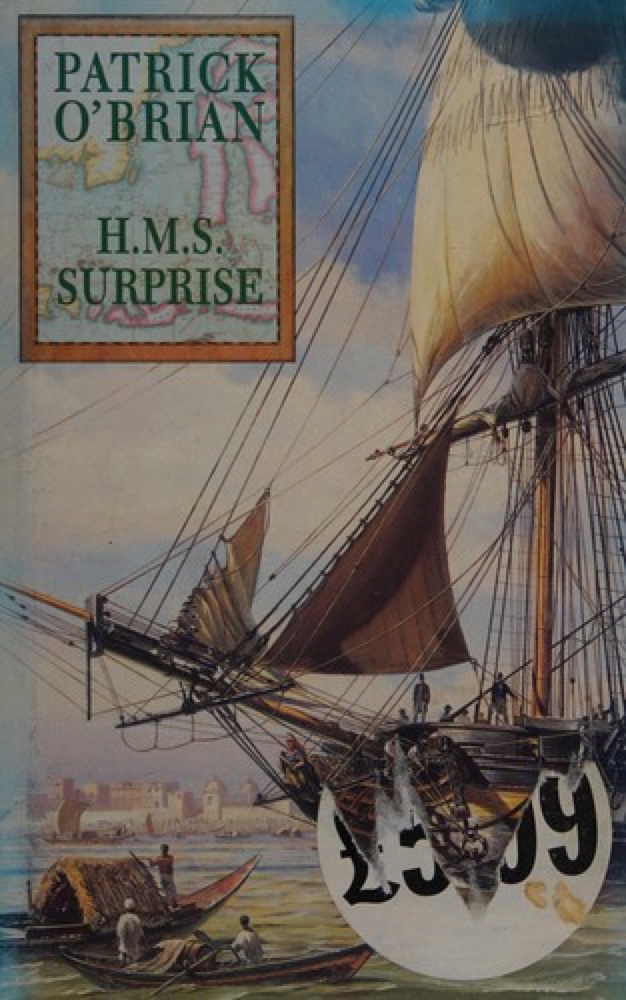
 H.M.S. Surprise
Quotes from the Book
Sir,’ said Stephen, ‘I read novels with the utmost pertinacity. I look upon them--I look upon good novels--as a very valuable part of literature, conveying more exact and finely-distinguished knowledge of the human heart and mind than almost any other, with greater breadth and depth and fewer constraints.
43
What do you say to taking up our game where we left off? I was winning, you will recall.' Winning, for all love: how your ageing memory does betray you, my poor friend,' said Stephen, fetching his 'cello. They tuned, and at no great distance Killick said to his mate, 'There they are, at it again. Squeak, squeak; boom, boom. And when they do start a-playing, it's no better. You can't tell t'other from one. Never nothing a man could sing to, even as drunk as Davy's sow.' I remember them in the Lively: but it is not as chronic as a wardroom full of gents with German flutes, bellyaching night and day, like we had in Thunderer. No. Live and let live, I say.' Fuck you, William Grimshaw.
11
Love, sorrow, and wealth are the three things that cannot be concealed.
5
I read novels with the utmost pertinaity. I look upon them - I look upon good novels - as a very valuable part of literature, conveying more exact and finely-distinguished knowledge of the human heart and mind than almost any other, with greater beadth and depth and fewer contraints.
4
One of the miseries of medical life is that on the one hand you know what shocking things can happen to the human body and on the other you know how very little we can really do about most of them.
3
The boomerang did all that Riley had said of it and more: at one point, having returned, it rose and floated above the Aboriginal’s head in a slow circle before descending into his hand. Stephen and Martin gazed at the object in astonishment, turning it over and over in their hands. ‘I cannot understand the principle at all,’ said Stephen. ‘I should very much like to show it to Captain Aubrey, who is so very well versed in the mathematics and dynamics of sailing. Landlord, pray ask him whether he is willing to part with the instrument.’ ‘Not on your fucking life,’ said the Aboriginal, snatching the boomerang and clasping it to his bosom. ‘He says he does not choose to dispose of it, your honour,’ said the landlord.
3
It would be strange if the weather-gage had to be explained to so old a sea-dog; though I must confess that there was a time when I confused it with that thing which creaks on the roof, showing which way the wind is blowing. Yet could you not obtain this valuable gage by some less arduous means than running a hundred miles and hiding behind a more or less mythical island which no one has ever seen, and that in the dark, a perilous proceeding if ever there was one?
3
But I will tell you another misery that is not to be denied. In the common, natural course of events physicians, surgeons and apothecaries are faced with enormous demands for sympathy: they may come into immediate contact with half a dozen deeply distressing cases in a single day. Those who are not saints are in danger of running out of funds and becoming bankrupt; a state which deprives them of a great deal of their humanity. If the man is in private practice he is obliged to utter more or less appropriate words to preserve his connexion, his living;and the mere adoption of a compassionate face as you have no doubt observed goes some little way towards producing at least the ghost of pity. But our patients cannot leave us. They have no alternative. We are not required to put on a conciliating expression, for our inhumanity in no way affects our livelihood. We have a monopoly; and I believe that many of us pay a very ugly price for it in the long run. You must already have met a number of callous idle self-important self-indulgent hardhearted pragmatic brutes wherever the patients have no free choice.
3
As it usually happened after an engagement, a heavy sadness was coming down over his spirits. To some degree it was the prodigious contrastbetween two modes of life: in violent hand-to-hand fighting threr was no room for time, reflexion, enmity or even pain unless it was disabling; everything moved with extreme speed, cut and parry with a reflex as fast as a sword-thrust, eyes automatically keeping watch on three or four men within reach, arm lunging at the first hint of a lowered guard, a cry to warn a friend, a roar to put an enemy off his stroke; and all this in an extraordinarily vivid state of mind, a kind of fierce exaltation, an intense living in the most immediate present.
3
It might be, too. There is a group of them somewhat to the east. No, my dear Martin: the east is to the right.' 'Surely not in the southern hemisphere?' 'We will ask Captain Aubrey. He will probably know.
2
I tell you what, Stephen,’ he said as they walked along, ‘I know the constraint of having your captain in your bosom – all sitting straight, no belching, no filthy stories – so I have ordered up a case of our eighty-seven port. I hope you do not mind it?’ ‘I mind it very much indeed. Pouring that irreplaceable liquid into my messmates is impious.’ ‘But they will appreciate the gesture: it will take some of the stiffness away. I cannot tell you how disagreeable it is, feeling like a killjoy whose going will be a relief. You are luckier than I am in that way. They do not look upon you with any respect. That is to say, not with any undue respect. I mean they have an amazing respect for you, of course; but they do not look upon you as a superior being.
2
The sun had set in its usual abrupt tropical manner soon after they had made themselves comfortable: night had swept over the sky, showing the eastern stars after the few minutes of twilight, and now on the larboard beam a glowing planet heaved up on the horizon, lying there for a moment like the stern-lantern of some important ship. Martin was a man of peace; Maturin, with certain qualifications, was in principle opposed to violence; yet both had absorbed so much of the man-of-war's and even more the letter of marque's predatory values that they fell silent, staring like tigers at the planet until it rose clear of the sea and betrayed its merely celestial character.
1
The meal ran its pleasant course, and although Jack and Stephen were the only men invited, Mrs Raffles had asked no less than four Dutch ladies to keep them company, Dutch ladies moderately fluent in English who had contrived to keep their delicate complexions in the climate of Batavia, and whose bulk had not diminished either, nor their merriment. For the first time in his life Stephen found that he and Rubens were of one mind, particularly as their generous décolletés and their diaphanous gowns showed expanses of that nacreous Rubens flesh that had so puzzled him before. The nacreous flesh did in fact exist: and it excited desire. The notion of being in bed with one of these cheerful exuberant creatures quite troubled him for a moment, and he regretted Mrs Raffles' signal, at which they all departed, while the men gathered at the end of the table.
1
The grey-haired man was obviously the woman's inferior; he sat on the ground at a distance, and although what he said was urbane enough, in the Malayan way, it was nothing like so urbane nor nearly as copious as her conversation, a steady, lively flow, not of anything so coarse as direct enquiry but of remarks that would have elicited information if Stephen had chosen to give it. He did not choose, of course: after so long a course of discretion his mind would scarcely agree to give the exact time without an effort.
1
Since then he has said nothing and although from time to time I have thrown out what I hope were delicate hints and suggestions he has not seemed to notice them; and with a man Lucifer could not hold a book, bell or candle to for pride I cannot raise the subject directly.
1
of the party was Wilkins, whose broken arm you saw in the sick-berth: may I break off for a moment and ask what you thought of him?’ ‘It seemed to me an ordinary distal radius-ulna transverse fracture with some lateral displacement effectively reduced: the kind of break you would expect from a fall. But as it was dressed according to the Basra method I did not see much of the arm. When did it take place?
rocking them in his arms all night and wondering dare he toss ’em out of window
You are no doubt usually surrounded with gentlemen and fellow-officers – people who know your origin and your worth. I wonder whether you are aware how widespread these illiberal opinions are? Poverty, illiteracy, Popery and so on?
And then, not to be mentioned on the same page, because some apothecary or medical man may renew my stock as it was renewed in Stockholm. I should be sorry to be reduced to the state of the two animals I see but do not hear in the corner by my stool – do not hear, so that their frenzied, tight-locked battle has a horror of its own – yet man (or at all events this particular man) is so weak that if an innocent leaf can protect him even a little then hey for the innocent
often an unfinished picture is all the more interesting for the bare canvas.
Would you expect a mutiny?’ ‘Mutiny in the sense of outright revolt and refusal of command? No. But from some of the people I expect muttering, discontent, ill-will; and nothing makes work slower or more inefficient or more unsafe than ill-will and its perpetual quarrels.
Watch on YouTube
About Patrick O'Brian
We have collected 216 quotes from 12 books by Patrick O'Brian on BookQuoters.
More about the author →More by Patrick O'Brian
All books by Patrick O'Brian →

About the book
Alternate Cover Edition can be found here.
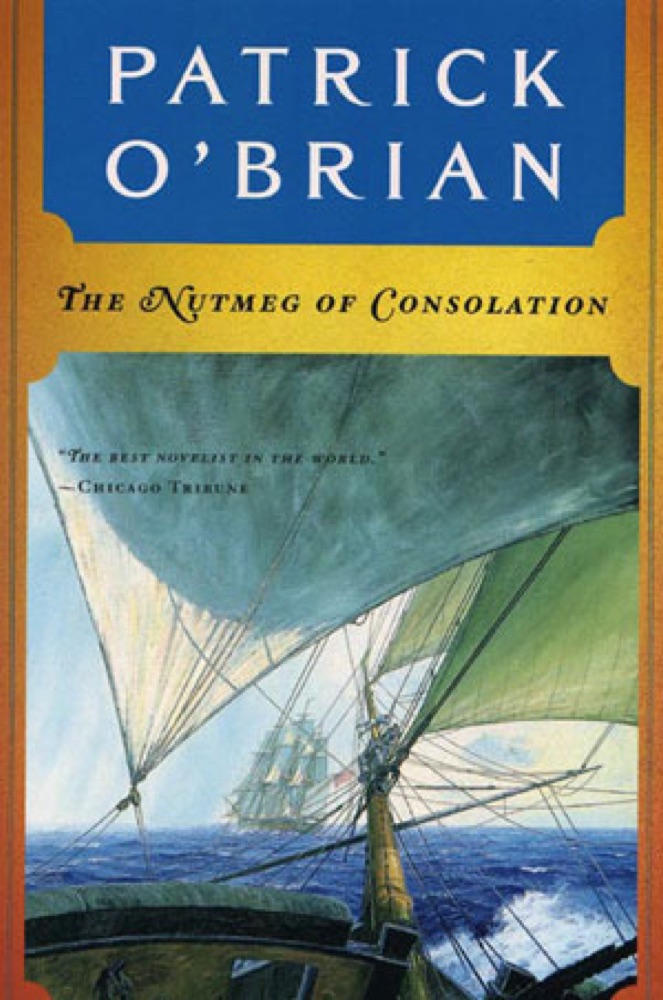
Shipwrecked on a remote island in the Dutch East Indies, Captain Aubrey, surgeon and secret intelligence agent Stephen Maturin, and the crew of the Diane fashion a schooner from the wreck. A vicious attack by Malay pirates is repulsed, but the makeshift vessel burns, and they are truly marooned. Their escape from this predicament is one that only the whimsy and ingenuity of Patrick O'Brian—or Stephen Maturin—could devise.
In command now of a new ship, the Nutmeg, Aubrey pursues his interrupted mission. The dreadful penal colony in New South Wales, harrowingly described, is the backdrop to a diplomatic crisis provoked by Maturin's Irish temper, and to a near-fatal encounter with the wildlife of the Australian outback.
Book details
- First published
- 1991
- Author
- Patrick O'Brian
- Genre
- Historical
- Goodreads rating
- 4.42 (11k ratings)
Keep reading
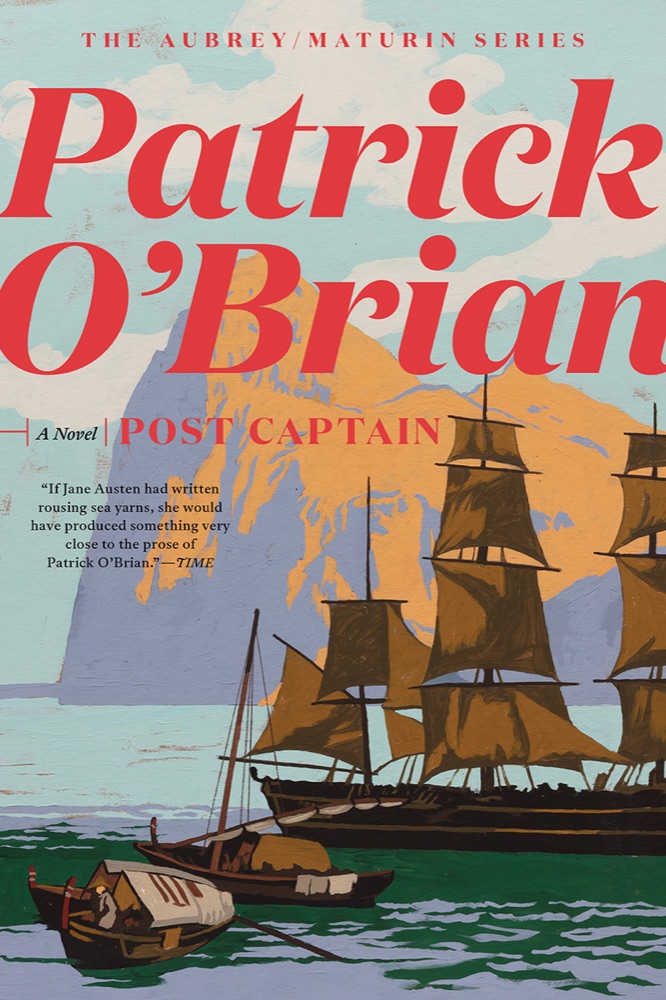 Post Captain
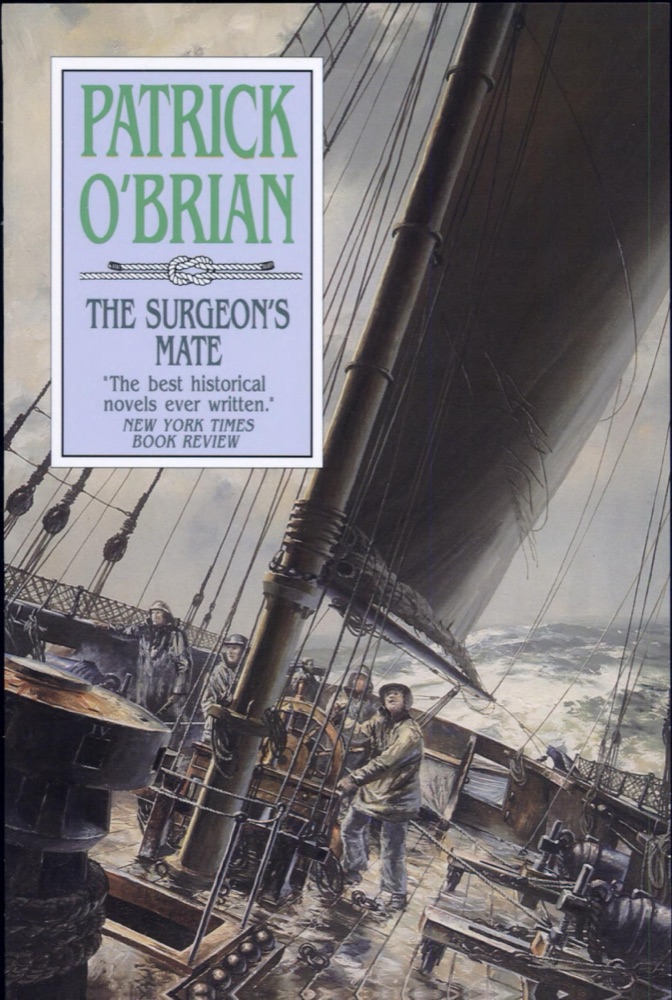 The Surgeon's Mate
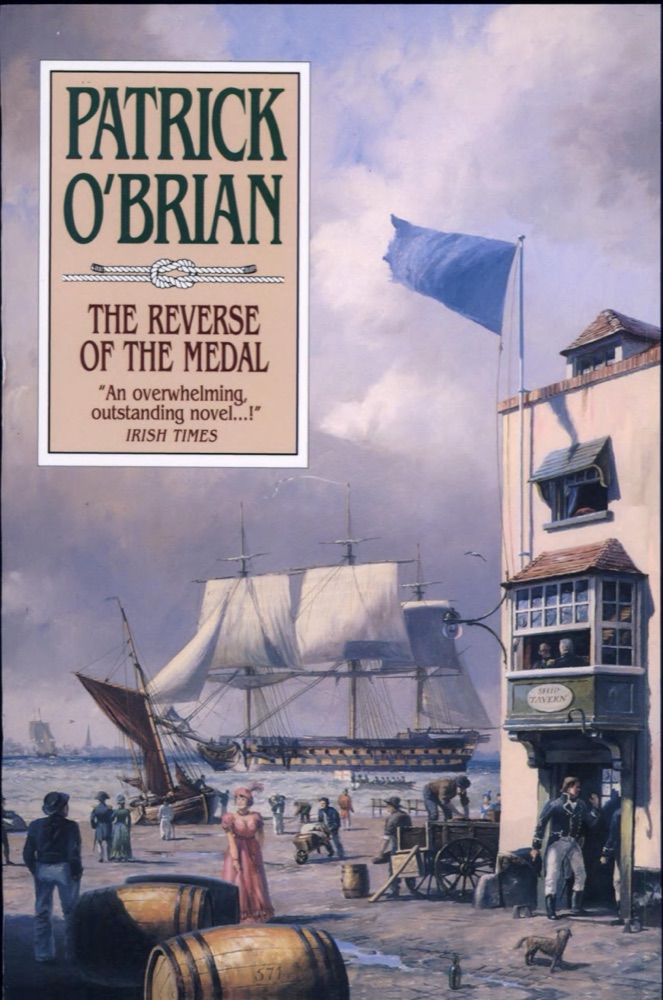 The Reverse of the Medal
 Armadale
 The Complete Works of Charles Dickens
 Sherlock Holmes
 The System of the World
 Barnaby Rudge
 The Honourable Schoolboy
 Kidnapped
 The Cat's Table
 The Looking Glass War
 Hard Times
 The Bedlam Stacks
 Decline and Fall
 The Confusion
 My Father's House
 Rain and Other South Sea Stories
 Sword & Citadel
 River of Smoke
 A Burnt-Out Case
 Don't Look Now and Other Stories
 Black Lamb and Grey Falcon
 The Isle of Blood
 That Hideous Strength
 The Long Dark Tea-Time of the Soul
 The Third Policeman
 Selected Stories
 The History of Tom Jones, a Foundling
 Busman's Honeymoon
 The Complete Adventures and Memoirs of Sherlock Holmes
 Three Men in a Boat
 The Tiger in the Smoke
 Checkmate
 Roughing It
 The Good Soldier
 Mason & Dixon
 The Professor's House
 Tigerman
 The Fear Institute
 Sea of Poppies
 The Lost World
 The Mask of Dimitrios
 At Swim-Two-Birds
 King Solomon's Mines
 Christmas Holiday
 Rites of Passage
 The Shipping News
 The Glass Palace
 The Naked and the Dead
 The Man Who Was Thursday
 The Coral Island
 Use of Weapons
 A Beautiful Blue Death
 Victory
 Assassin's Quest
 The Mysterious Island
 The Golden Tresses of the Dead
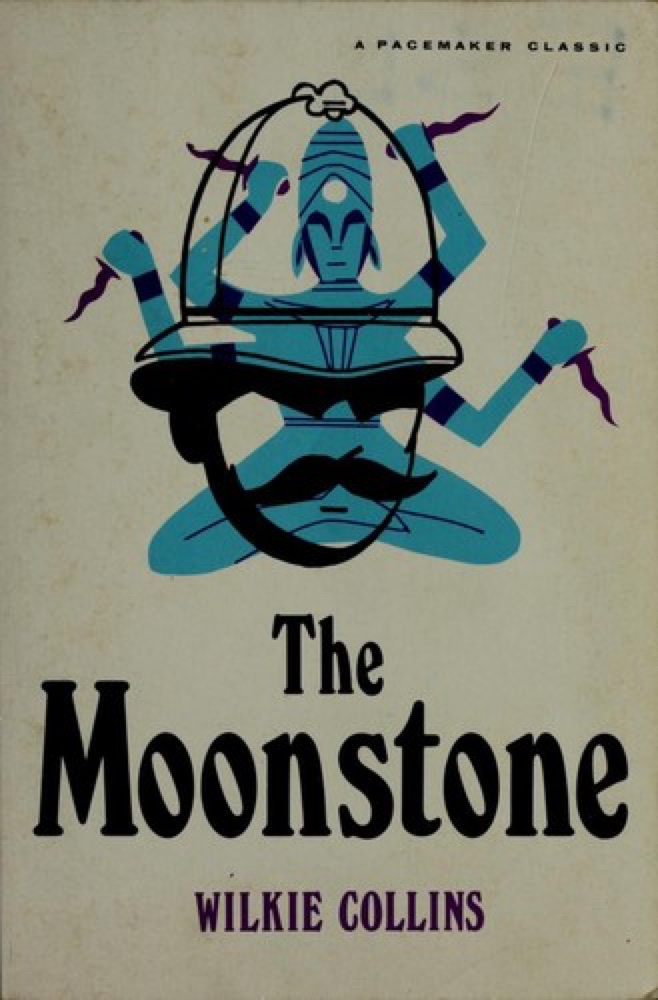 The Moonstone