
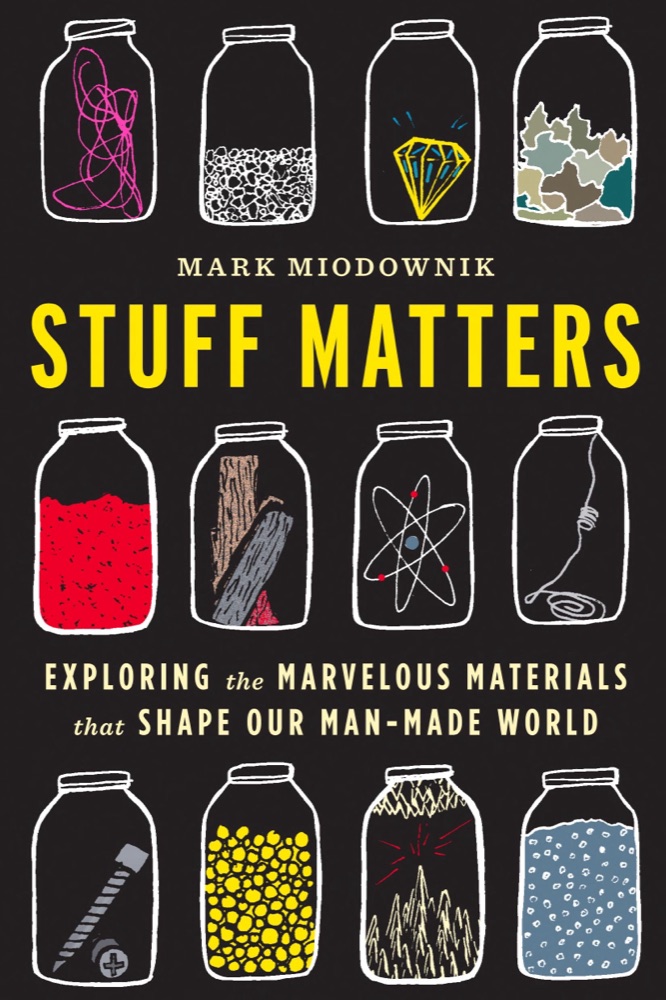
 Stuff Matters: Exploring the Marvelous Materials That Shape Our Man-Made World
Quotes from the Book
Critical thinking is essential to make sense of our world, especially with advertisers and politicians all telling us loudly that they know best. We need to be able to look at the evidence and work out whether we agree with them.
21
This process of discovery is science: the continual refinement and testing of our understanding, alongside the digging that reveals even more to be understood.
5
Nothing that is in equilibrium can be alive.
4
Destruction doesn't always have to be a bad thing.
1
humans; we’re not aware of the ultraviolet light in the first place, so we don’t lose anything when it gets turned into something we can use.
1
Tuberculosis is an airborne disease. Carried out of the lungs with each cough are thousands of fluid droplets, plumes of minuscule crusaders. Some of them will contain the tiny rod-shaped TB bacteria, each only three-thousandths of a millimetre long. The fluid droplets themselves start off fairly big, perhaps a few tenths of a millimetre. These droplets are being pulled downwards by gravity and once they hit the floor, at least they’re not going anywhere else. But it doesn’t happen quickly, because it’s not just liquids that are viscous. Air is too – it has to be pushed out of the way as things move through it. As the droplets drift downwards, they are bumped and jostled by air molecules that slow their descent. Just as the cream rises slowly through viscous milk to the top of the bottle, these droplets are on course to slide through the viscous air to reach the floor. Except they don’t. Most of that droplet is water, and in the first few seconds in the outside air, that water evaporates. What was a droplet big enough for gravity to pull it through the viscous air now becomes a mere speck, a shadow of its former self. If it was originally a droplet of spit with a tuberculosis bacterium floating about in it, it’s now a tuberculosis bacterium neatly packaged up in some leftover organic crud. The gravitational pull on this new parcel is no match for the buffeting of the air. Wherever the air goes, the bacterium goes. Like the miniaturized fat droplets in today’s homogenized milk, it’s just a passenger. And if it lands in a person with a weak immune system, it might start a new colony, growing slowly until new bacteria are ready to be coughed out all over again.
As the droplets drift downwards, they are bumped and jostled by air molecules that slow their descent. Just as the cream rises slowly through viscous milk to the top of the bottle, these droplets are on course to slide through the viscous air to reach the floor.
Learning the science of the everyday is a direct route to the background knowledge about the world that every citizen needs in order to participate fully in society.
Watch on YouTube
About Helen Czerski
We have collected 8 quotes from 1 book by Helen Czerski on BookQuoters.
More about the author →About the book
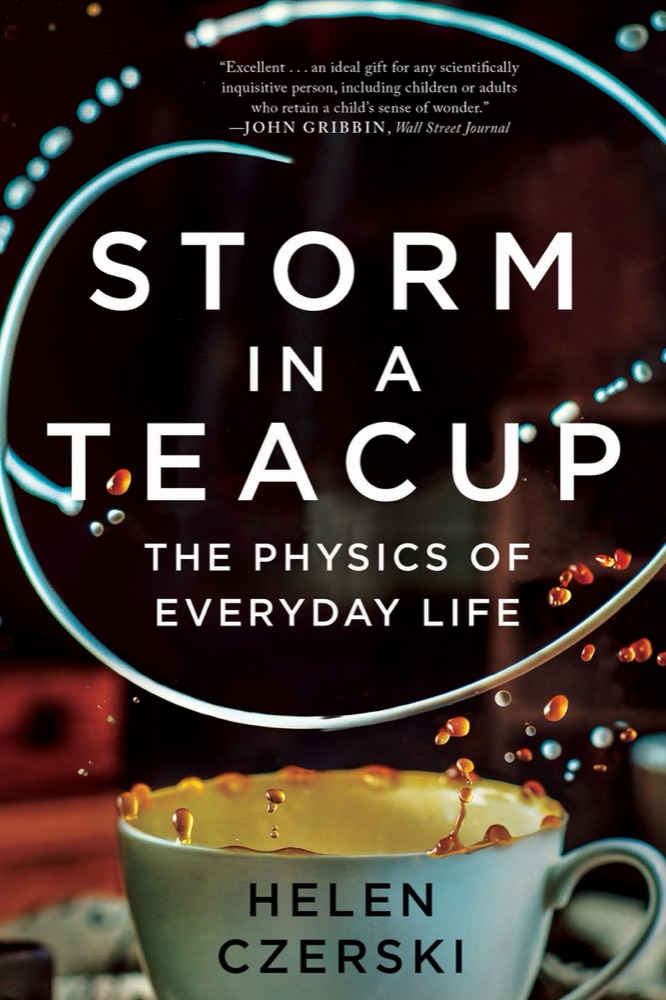
Storm in a Teacup is Helen Czerski’s lively, entertaining, and informed introduction to the world of physics. Czerski provides the tools to alter the way we see everything around us by linking ordinary objects and occurrences, like popcorn popping, coffee stains, and fridge magnets, to big ideas like climate change, the energy crisis, or innovative medical testing. She provides answers to vexing questions: How do ducks keep their feet warm when walking on ice? Why does it take so long for ketchup to come out of a bottle? Why does milk, when added to tea, look like billowing storm clouds? In an engaging voice at once warm and witty, Czerski shares her stunning breadth of knowledge to lift the veil of familiarity from the ordinary.
Book details
- First published
- 2016
- Author
- Helen Czerski
- Genre
- Nonfiction
- Goodreads rating
- 4.02 (5k ratings)
Keep reading
Stuff Matters: Exploring the Marvelous Materials That Shape Our Man-Made World
 Six Easy Pieces: Essentials of Physics By Its Most Brilliant Teacher
 A Short History of Nearly Everything
 The Big Picture: On the Origins of Life, Meaning, and the Universe Itself
 Astrophysics for People in a Hurry
 The Biology of Belief: Unleashing the Power of Consciousness, Matter and Miracles
 Jurassic Park
 Soonish: Ten Emerging Technologies That'll Improve and/or Ruin Everything
 Letters from an Astrophysicist
 Black Holes and Baby Universes and Other Essays
 Genome
 Chaos: Making a New Science
 The Grand Design
 The Feynman Lectures on Physics
 My Ishmael
 Gathering Moss: A Natural and Cultural History of Mosses
 Parasite
 Moving Pictures
 The Light Eaters: How the Unseen World of Plant Intelligence Offers a New Understanding of Life on Earth
 The Fifth Science
 The Lost World
 Drive Your Plow Over the Bones of the Dead
 Why Fish Don’t Exist: A Story of Loss, Love, and the Hidden Order of Life
 How To: Absurd Scientific Advice for Common Real-World Problems
 Silent Spring
 Death's End
 Falter: Has the Human Game Begun to Play Itself Out?
 The Ersatz Elevator
 The Lives of a Cell: Notes of a Biology Watcher
 To Be Taught, If Fortunate
 The Legacy
 The Three-Body Problem
 All the Light We Cannot See
 Until the End of Time: Mind, Matter, and Our Search for Meaning in an Evolving Universe
 Winter
 The Character of Physical Law
 The Dark Forest
 The Humans
 The Future
 The Tipping Point: How Little Things Can Make a Big Difference
 Grunt: The Curious Science of Humans at War
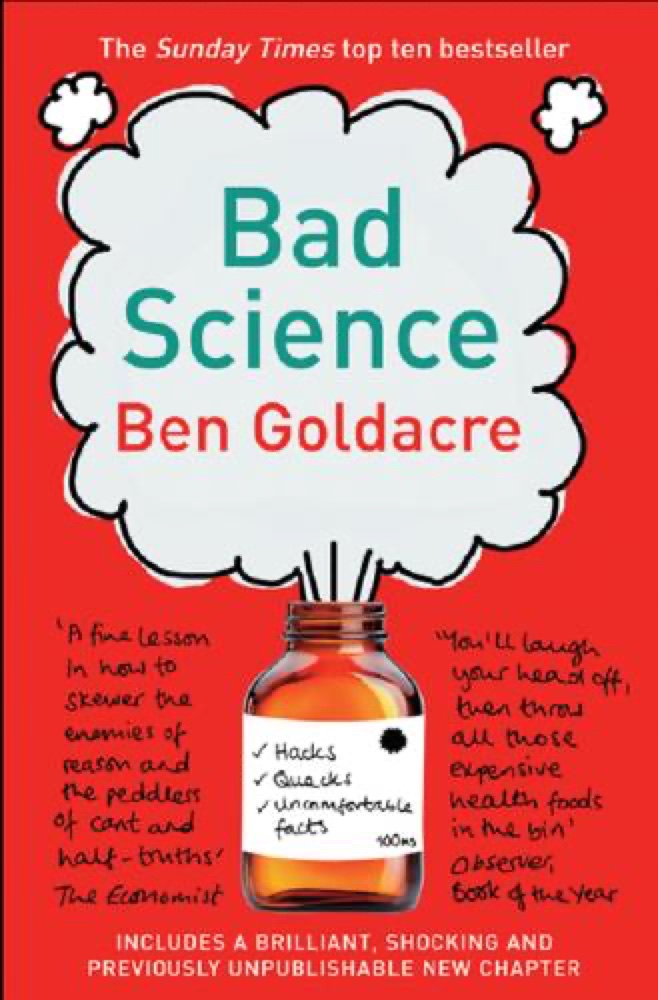 Bad Science
 Small Wonder
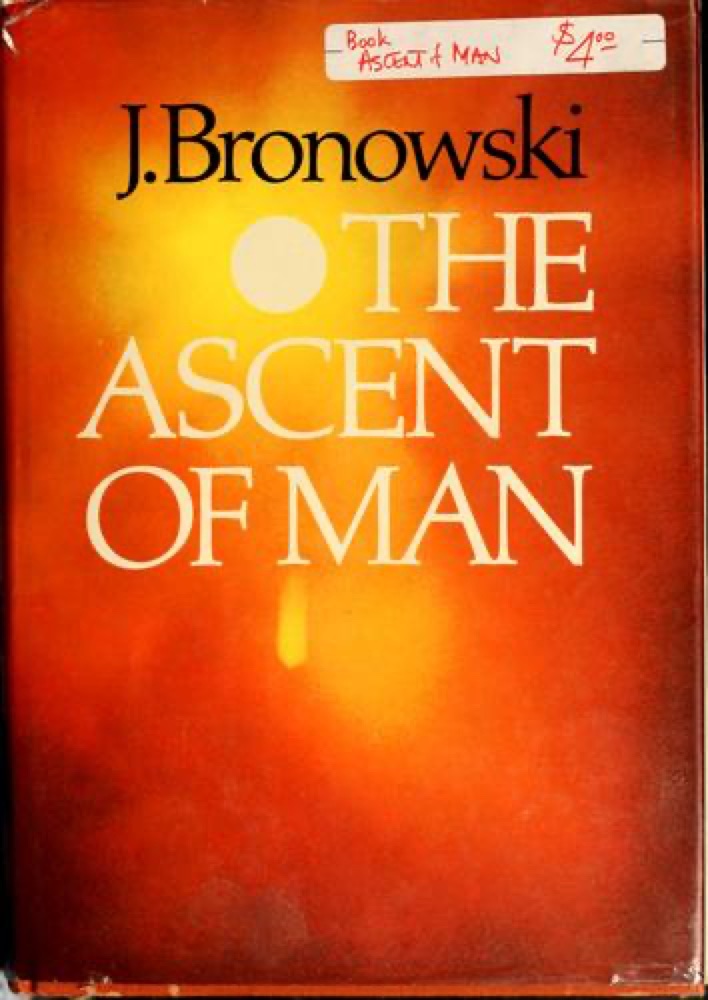 The Ascent of Man
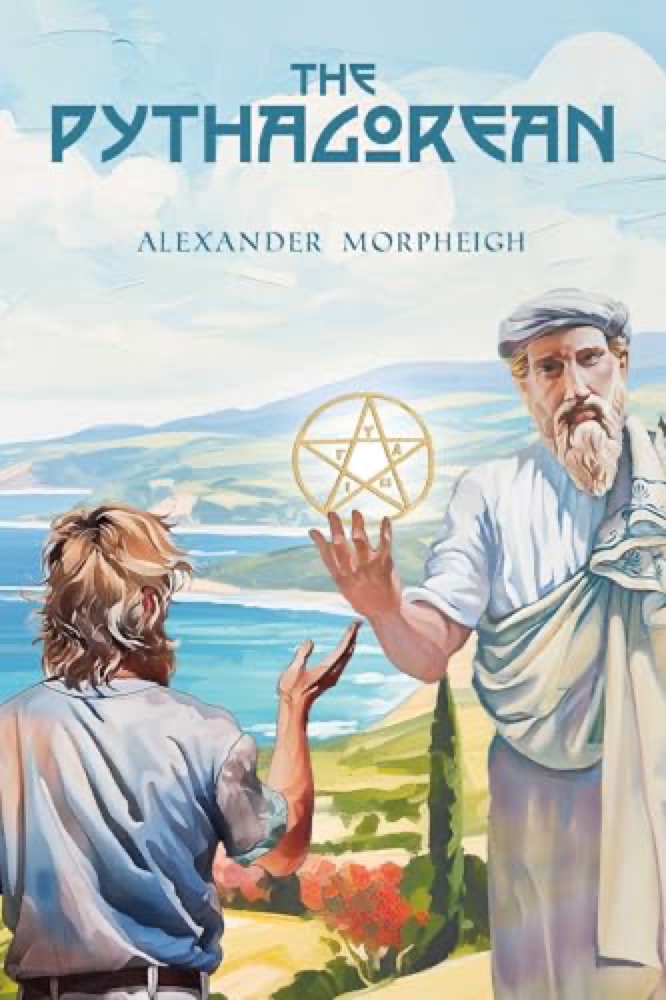 The Pythagorean
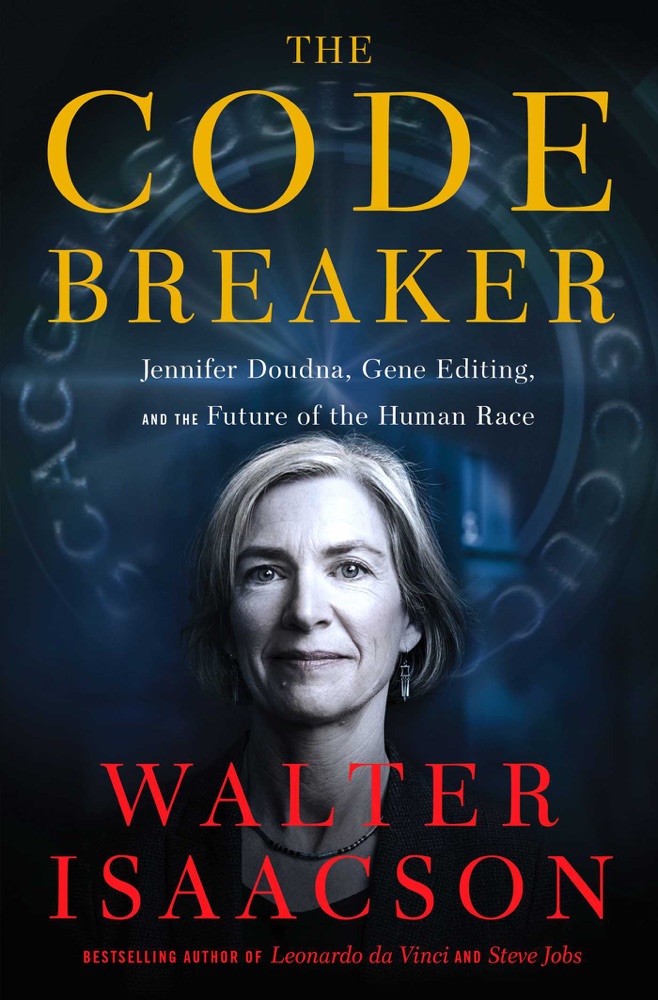 The Code Breaker: Jennifer Doudna, Gene Editing, and the Future of the Human Race
 Influx
 Cosmos
 Zen and the Art of Motorcycle Maintenance
 Death by Black Hole: And Other Cosmic Quandaries
 Robopocalypse
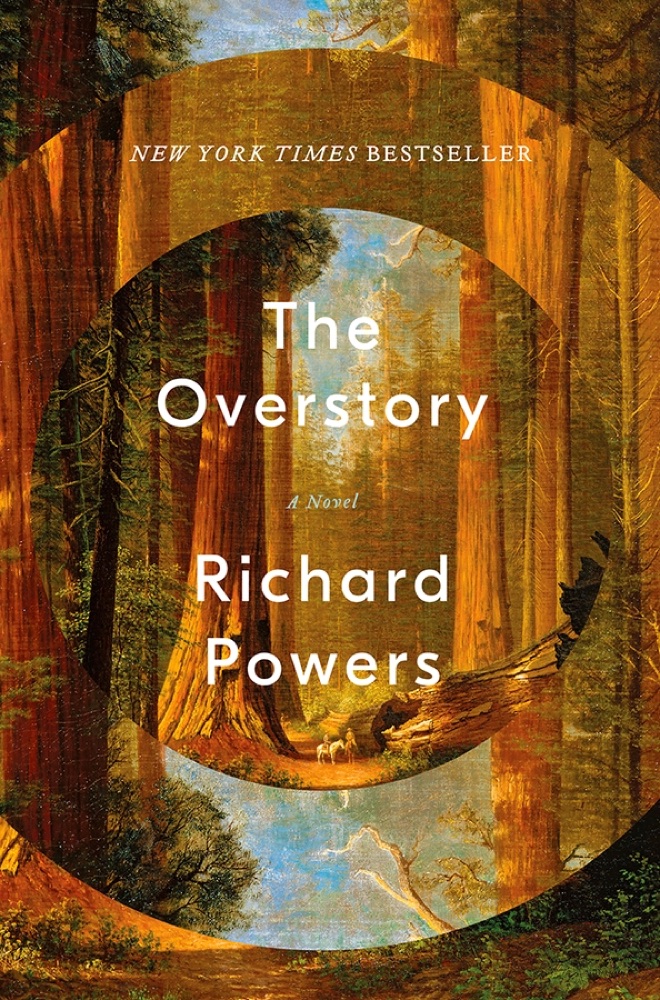 The Overstory
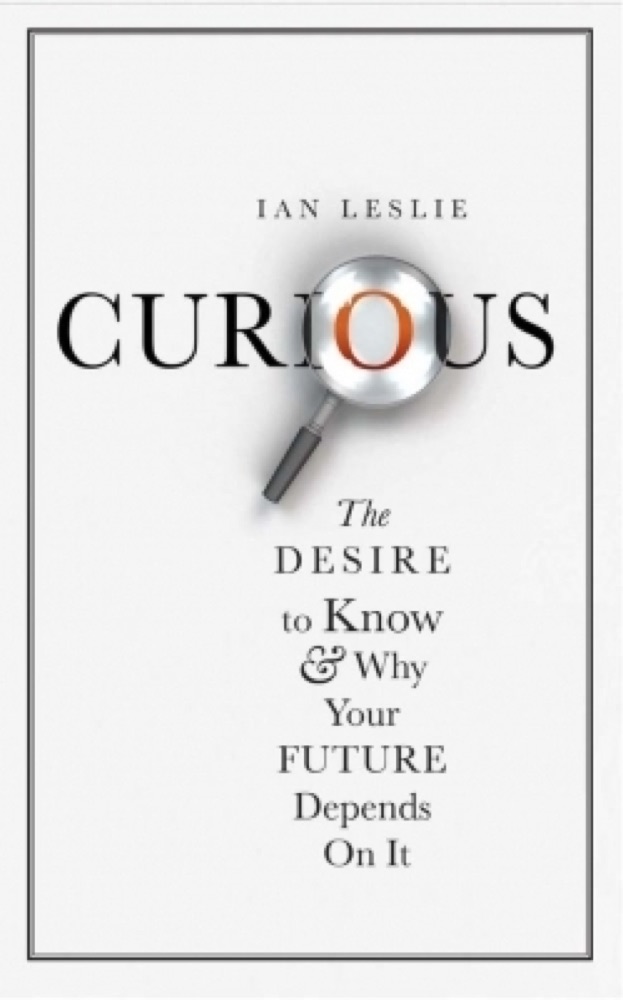 Curious: The Desire to Know and Why Your Future Depends On It
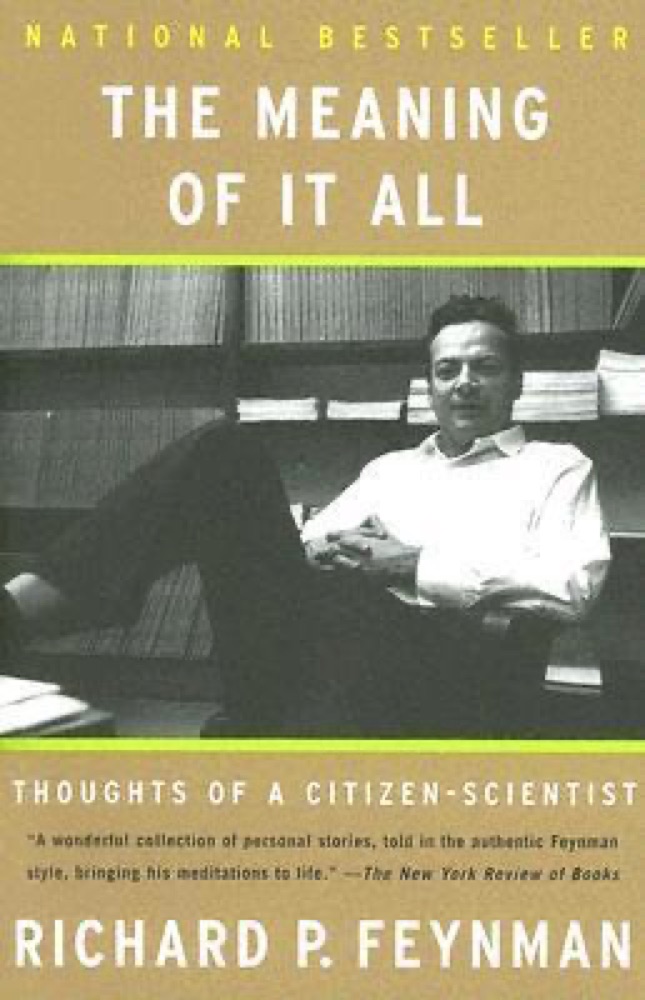 The Meaning of It All: Thoughts of a Citizen-Scientist
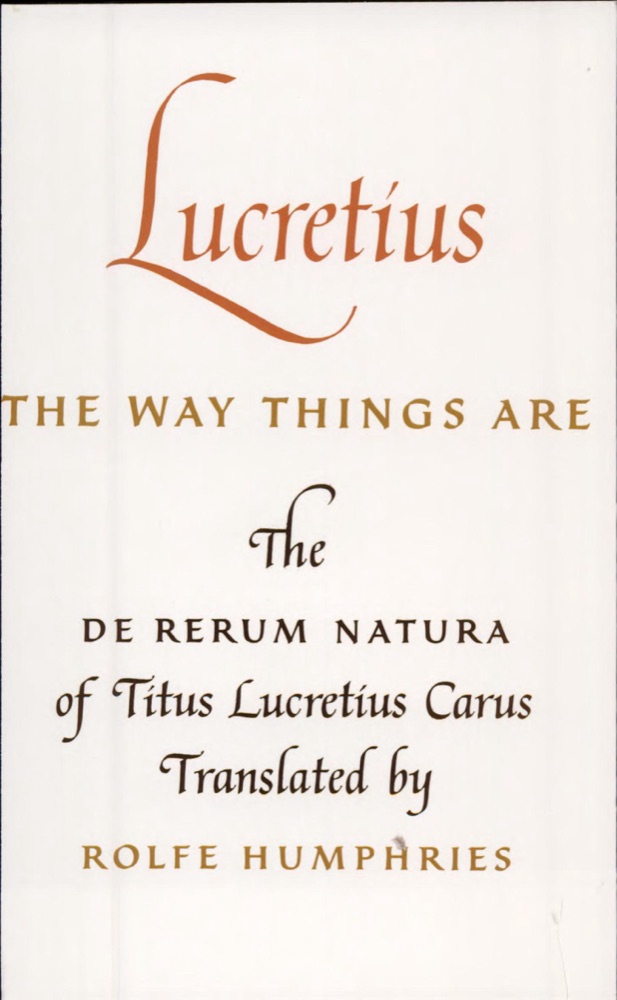 The Way Things Are
 Vanishing Treasures: A Bestiary of Extraordinary Endangered Creatures
 The Abundance
 Rama II
 All Our Wrong Todays
 Red Mars