

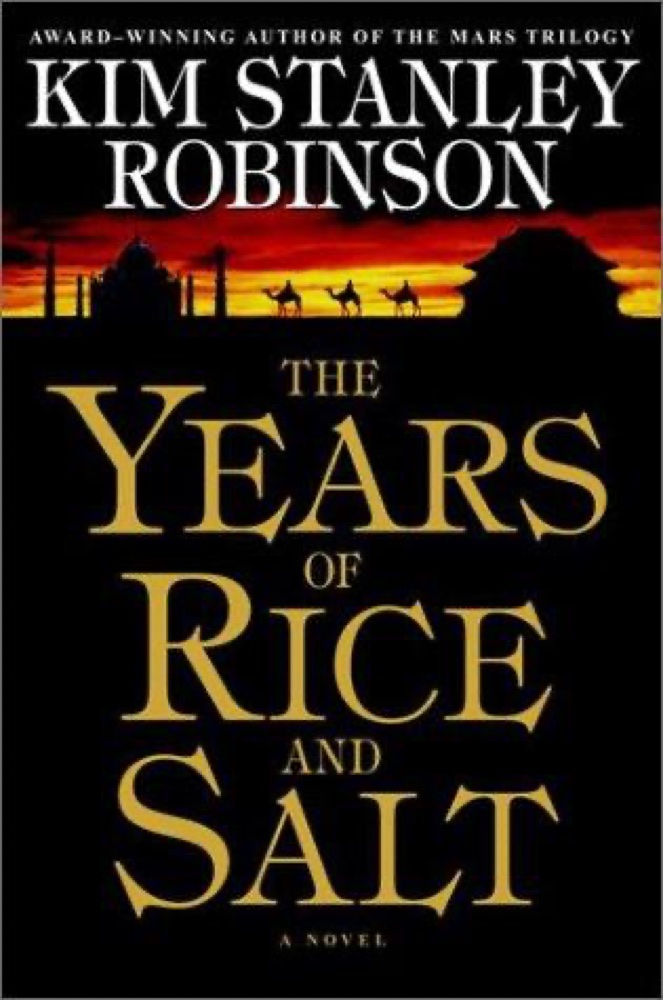
 The Years of Rice and Salt
Quotes from the Book
Beauty is power and elegance, right action, form fitting function, intelligence, and reasonability. And very often expressed in curves.
Science was many things, Nadia thought, including a weapon with which to hit other scientists.
Very few people ever bother to find out what other people really think. They are willing to accept whatever they are told about anyone sufficiently distant.
We were outside the world, we didn't even own things -- some clothes. . . . This arrangement resembles the prehistoric way to live, and it therefore feels right to us, because our brains recognize it from 3 millions of years practicing it. In essence our brains grew to their current configuration in response to the realities of that life. So as a result people grow powerfully attached to that kind of life, when they get the chance to live it. It allows you to concentrate your attention on the real work, which means everything that is done to stay alive, to make things, or satisfy one's curiosity, or play. That is utopia.
History was like some vast thing that was always over the tight horizon, invisible except in its effects. It was what happened when you weren't looking -- an unknowable infinity of events, which although out of control, controlled everything.
They were so ignorant! Young men and women, educated very carefully to be apolitical, to be technicians who thought they disliked politics, making them putty in the hands of their rulers, just like always. It was appalling how stupid they were, really, and he could not help lashing into them.
But lies were what people wanted; that was politics.
Historical analogy is the last refuge of people who can't grasp the current situation.
In games there are rules, but in life the rules keep changing.
It's the love of right lures men to wrong.
That's a large part of what economics is - people arbitrarily, or as a matter of taste, assigning numerical values to non-numerical things. And then pretending that they haven't just made the numbers up, which they have. Economics is like astrology in that sense, except that economics serves to justify the current power structure, and so it has a lot of fervent believers among the powerful.
The only part of an argument that really matters is what we think of the people arguing. X claims a, Y claims b. They make arguments to support their claims with any number of points. But when their listeners remember the discussion, what matters is simply that X believes a and Y believes b. People then form their judgment on what they think of X and Y.
Money equals power; power makes the law; and law makes government.
It was a world of acts, and words had no more influence on acts than the sound of a waterfall has on the flow of the stream.
The intense thereness of it-haecceity Sax had called it once, when John had asked him something about his religious beliefs-I believe in haecceity, Sax had said, in thisness, in here-and-nowness, in the particular individuality of every moment. That's why I want to know what is this? what is this? what is this? Now, remembering Sax's odd word and his odd religion, John finally understood him; because he was feeling the thisness of the moment like a rock in his hand, and it felt as if his entire life had been lived only to get him to this moment.
Each of us have a gift, you see, given us freely by the universe. And each of us with every breath gives something back
And, you know, you never really summon all of your strength until you know that there’s no way back, no way to go but onward.
I know.” She sighed. “We’ll all say that. We’ll all go on and make the place safe. Roads, cities. New sky, new soil. Until it’s all some kind of Siberia or Northwest Territories, and Mars will be gone and we’ll be here, and we’ll wonder why we feel so empty. Why when we look at the land we can never see anything but our own faces.
He pointed to another number, changing as rapidly as the first, but on a lower trajectory; it rose to a high of 8.79 rem per hour. Several lifetimes of dentists’ X-rays, to be sure; but the radiation outside the storm shelter would have been a lethal dose, so they were getting off lightly. Still, the amount flying through the rest of the ship! Billions of particles were penetrating the ship and colliding with the atoms of water and metal they were huddled behind; hundreds of millions were flying between these atoms and then through the atoms of their bodies, touching nothing, as if they were no more than ghosts. Still, thousands were striking atoms of flesh and bone. Most of those collisions were harmless; but in all those thousands, there were in all probability one or two (or three?) in which a chromosome strand was taking a hit, and kinking in the wrong way: and there it was. Tumor initiation, begun with just that typo in the book of the self. And years later, unless the victim's DNA luckily repaired itself, the tumor promotion that was a more or less unavoidable part of living would have its effect, and there would appear a bloom of Something Else inside: cancer. Leukemia, most likely; and, most likely, death.
It was a mistake to speak one's mind at any time, unless it perfectly matched your political purpose; and it never did.
When Reinhold Messner returned from the first solo climb of Everest, he was severely dehydrated, and utterly exhausted; he fell down most of the last part of the descent, and collapsed on the Rongbuk glacier, and he was crawling over it on hands and knees when the woman who was his entire support team reached him; and he looked up at her out of a delirium, and said, “Where are all my friends?
In games there are rules, but in life the rules keep changing. You could put your bishop out there to mate the other guy’s king, and he could lean down and whisper in your bishop’s ear, and suddenly it’s playing for him, and moving like a rook. And you’re fucked.
When obsessives are given their object of desire, what do they feel? It was hard to say, really. In a sense their lives were ending; yet something else, some other life, had finally, finally begun…. Filled with so many emotions at once, it was impossible not to be confused; it was an interference pattern, some feelings cancelled, others reinforced.
And it came to her that the pleasure and stability of dining rooms had always occurred against such a backdrop, against the catastrophic background of universal chaos; such moments of calm were things as fragile and transitory as soap bubbles, destined to burst almost as soon as they blew into existence. Groups of friends, rooms, streets, years, none of them would last. The illusion of stability was created by a concerted effort to ignore the chaos they were imbedded in. And so they ate, and talked, and enjoyed each other’s company; this was the way it had been in the caves, on the savannah, in the tenements and the trenches and the cities huddling under bombardment.
Relationships were for that reason utterly mysterious, they took place between two subconscious minds, and whatever the surface trickle thought was going on could not be trusted to be right.
It’s amazing how little you need to keep starving people strung along.
They lived like monkeys still, while their new god powers lay around them in the weeds.
it’s like in eco-economics where what you take from the system has to be balanced by what you give in to it, balanced or exceeded to create that anti-entropic surge which characterizes all creative life and especially this step across to a new world, this place that is neither nature nor culture, transformation of a planet into a world and then a home.
So it’s democracy versus capitalism at this point, friends, and we out on this frontier outpost of the human world are perhaps better positioned than anyone else to see this and to fight this global battle, there’s empty land here, there’s scarce and nonrenewable resources here, and we’re going to get swept up into the fight and we cannot choose not to be part of it, we are one of the prizes and our fate will be decided by what happens throughout the human world. That being the case, we had better band together for the common good, for Mars and for us and for all the people on earth and for the seven generations, it’s going to be hard it’s going to take years, and the stronger we are the better our chances, which is why I’m so happy to see that burning meteor in the sky pumping the matrix of life into our world, and why I’m so happy to see you all here to celebrate it together, a representative congress of all that I love in this world, but look I think that steel-drum band is ready to play aren’t you” (shouts of assent) “so why don’t you folks start and we’ll dance till dawn and tomorrow scatter on the winds and down the sides of this great mountain, to carry the gift everywhere.
Watch on YouTube
About Kim Stanley Robinson
We have collected 228 quotes from 9 books by Kim Stanley Robinson on BookQuoters.
More about the author →More by Kim Stanley Robinson
All books by Kim Stanley Robinson →
Book details
- Author
- Kim Stanley Robinson
- Genre
- Fiction
- Goodreads rating
- 3.85 (90k ratings) →
Keep reading
 That Hideous Strength
 Green Mars
 Tiamat's Wrath
 The Sirens of Titan
 State of Wonder
 Fall; or, Dodge in Hell
 Blue Mars
 The State of the Art
 Gravity's Rainbow
 Babylon's Ashes
 Consider Phlebas
 Alien Clay
 Use of Weapons
 Anathem
 Pyramids
 We All Looked Up
 Rapture
 Persepolis Rising
 Breakfast of Champions
 Songs of Distant Earth
 The Shockwave Rider
 The Fall
 Wanderers
 The City in the Middle of the Night
 Skinny Legs and All
 Hyperion
 Quicksilver
 All the King's Men
 Blackfish City
 The Ground Beneath Her Feet
 Influx
 Rot & Ruin
 Dust
Dust
 Libra
Libra
 The Magic Mountain
 Flight Behavior
 Seven Surrenders
 The Lives of Others
 The Fifth Science
 Schismatrix Plus
 The Water Knife
 Altered Carbon
 Foundation and Empire
 Pandora's Star
 Woken Furies
 The Gone-Away World
 The Testaments
 Enchantment
 Too Like the Lightning
 The Atlas Paradox
 Last First Snow
 Against the Day
 Authority
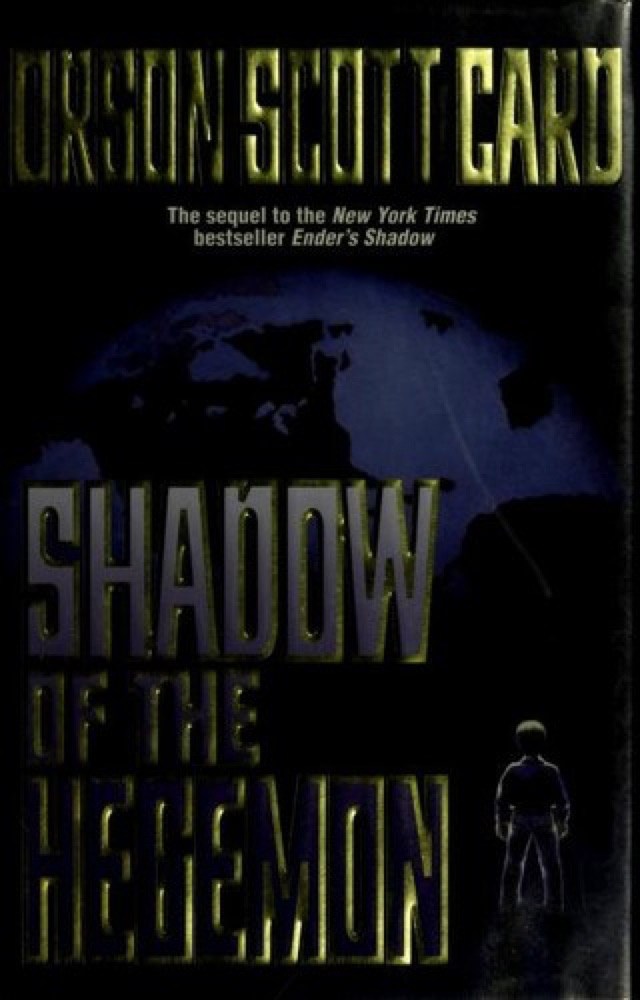 Shadow of the Hegemon
 The Long Way to a Small, Angry Planet
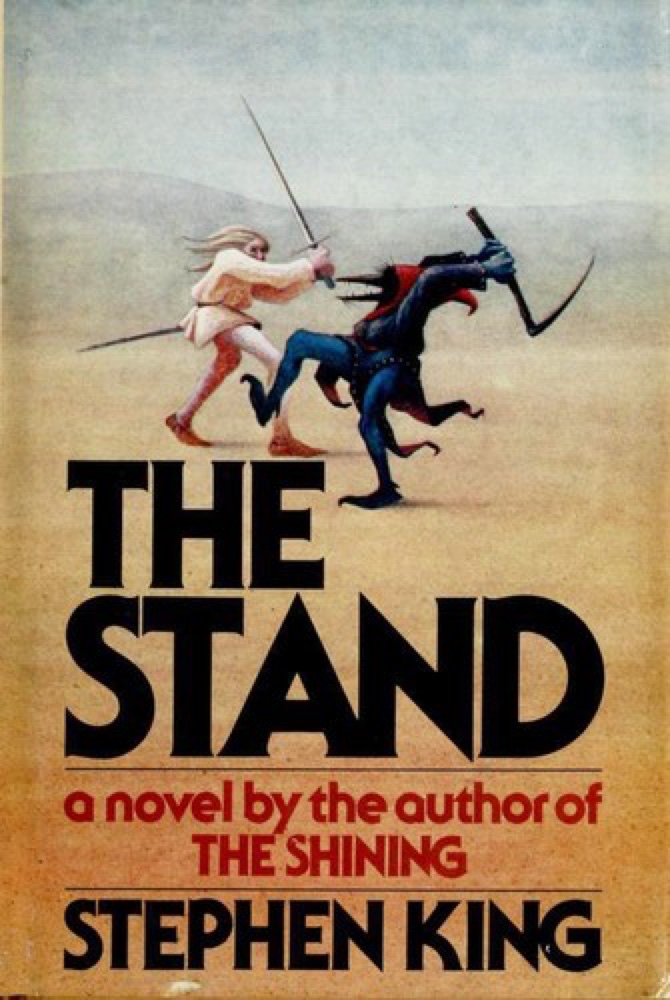 The Stand
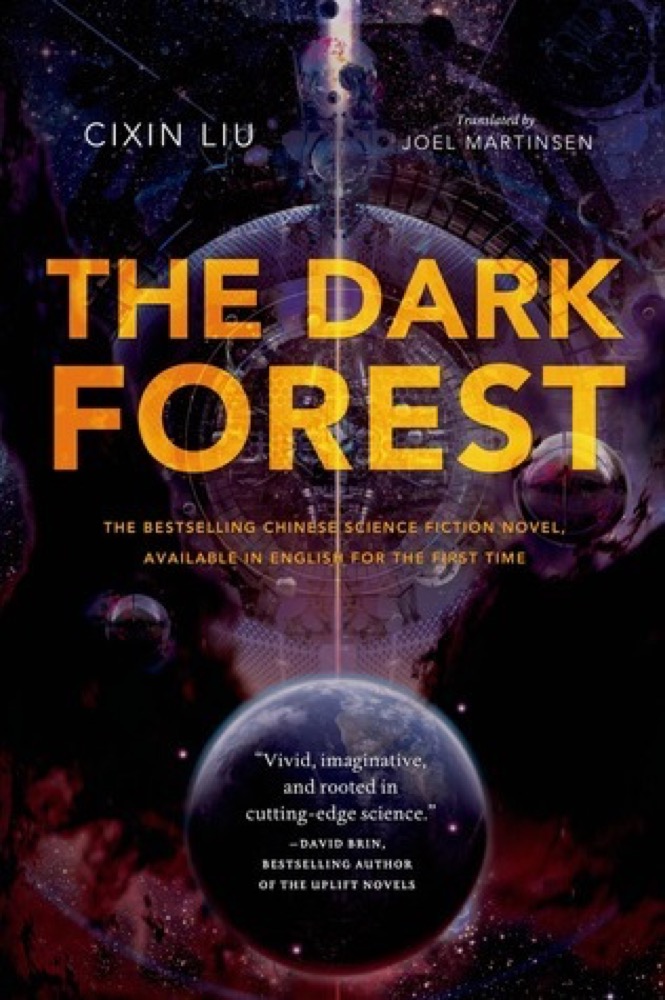 The Dark Forest
 Devolution: A Firsthand Account of the Rainier Sasquatch Massacre
 The Power
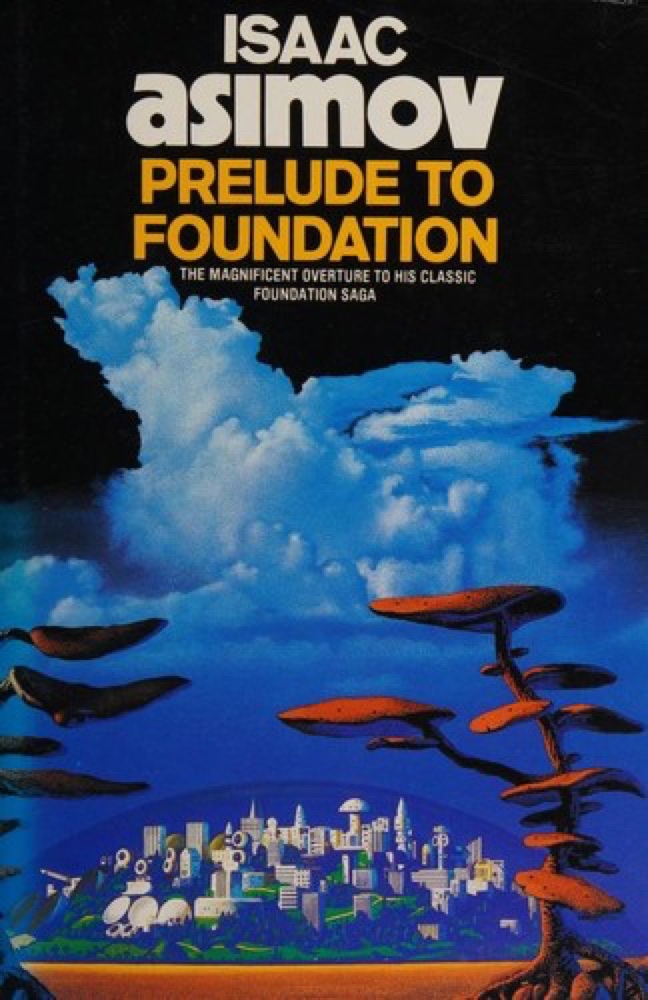 Prelude to Foundation