
 The Disappearing Spoon: And Other True Tales of Madness, Love, and the History of the World from the Periodic Table of the Elements
Quotes from the Book
In a very real way, then, materials are a reflection of who we are, a multi-scale expression of our human need and desires.
14
It is often said that there are very few places left on earth that have yet to be discovered. But those who say this are usually referring to places that exist at the human scale. Take a magnifying glass to any part of your house and you will find a whole new world to explore. Use a powerful microscope and you will find another, complete with a zoo of living organisms of the most fantastic nature. Alternatively, use a telescope and a whole universe of possibilities will open up before you.
11
We may like to think of ourselves as civilized, but that civilization is in large part bestowed by material wealth. Without this stuff, we would quickly be confronted by the same basic struggle for survival that animals are faced with.
6
Some say that eating chocolate is better than kissing, and scientists have dutifully tested this hypothesis by carrying out a set of experiments. In 2007, a team led by Dr. David Lewis recruited pairs of passionate lovers, whose brain activity and heart rate were monitored first while they kissed each other and then while they ate chocolate (separately). The researchers found that although kissing set the heart pounding, the effect did not last as long as when the participants ate chocolate. The study also showed that when the chocolate started melting, all regions of the brain received a boost far more intense and longer lasting than the brain activity measured while kissing.
5
The appreciation of wine was based solely on the way it tasted. The invention of drinking glasses meant that the color, transparency, and clarity of wine became important, too. We are used to seeing what we drink, but this was new to the Romans, and they loved it.
4
For, in the end, Brearley did manage to create cutlery from stainless steel, and it’s the transparent protective layer of chromium oxide that makes the spoon tasteless, since your tongue never actually touches the metal and your saliva cannot react with it; it has meant that we are one of the first generations who have not had to taste our cutlery.
4
what allows us to behave as humans are our clothes, our homes, our cities, our stuff, which we animate through our customs and language. (This becomes clear if you ever visit a disaster zone.) The material world is not just a display of our technology and culture, it is part of us. We invented it, we made it, and in turn it makes us who we are.
3
studies of “crispness” have shown that the sound created by certain foods is as important to our enjoyment of them as their taste. This has inspired some chefs to create dishes with added sound effects. Some potato chip manufacturers, meanwhile, have increased not just the crunchiness of their chips but the noisiness of the chip bag itself.
2
Sadly the receipt will not survive long enough for Lazlo to read it. It is already fading, as the thermal paper on which it is printed degrades over time. The reason for this is that printing on thermal paper does not mean adding ink to it. Rather, the ink is already encapsulated within the paper, in the form of a so-called leuco dye and an acid. The act of printing requires only a spark to heat up the paper so that the acid and dye react with each other, converting the dye from a transparent state into a dark pigment. It is this cunning paper technology that ensures that cash registers never run out of ink. But over time the pigment reverts to its transparent state and so the ink fades, taking with it the evidence of curry and beer dinners.
2
When light from the sun enters the Earth’s atmosphere, it hits all sorts of molecules (mostly nitrogen and oxygen molecules) on its way to Earth and bounces off them like a pinball. This is called scattering, which means that on a clear day, if you look at any part of the sky, the light you see has been bouncing around the atmosphere before coming into your eye. If all light was scattered equally, the sky would look white. But it doesn’t. The reason is that the shorter wavelengths of light are more likely to be scattered than the longer ones, which means that blues get bounced around the sky more than reds and yellows. So instead of seeing a white sky when we look up, we see a blue one.
2
These samurai swords were made from a special type of steel called tamahagane, which translates as “jewel steel,” made from the volcanic black sand of the Pacific (this consists mostly of an iron ore called magnetite, the original material for the needle of compasses). This steel is made in a huge clay vessel four feet tall, four feet wide, and twelve feet long called a tatara. The vessel is “fired”—hardened from molded clay into a ceramic—by lighting a fire inside it. Once fired, it is packed meticulously with layers of black sand and black charcoal, which are consumed in the ceramic furnace. The process takes about a week and requires constant attention from a team of four or five people, who make sure that the temperature of the fire is kept high enough by pumping air into the tatara using a manual bellows. At the end the tatara is broken open and the tamahagane steel is dug out of the ash and remnants of sand and charcoal. These lumps of discolored steel are very unprepossessing, but they have a whole range of carbon content, some of it very low and some of it high. The samurai innovation was to be able to distinguish high-carbon steel, which is hard but brittle, from low-carbon steel, which is tough but relatively soft. They did this purely by how it looked, how it felt in their hands, and how it sounded when struck. By separating the different types of steel, they could make sure that the low-carbon steel was used to make the center of the sword. This gave the sword an enormous toughness, almost a chewiness, meaning that the blades were unlikely to snap in combat. On the edge of the blades they welded the high-carbon steel, which was brittle but extremely hard and could therefore be made very sharp. By using the sharp high-carbon steel as a wrapper on top of the tough low-carbon steel they achieved what many thought impossible: a sword that could survive impact with other swords and armor while remaining sharp enough to slice a man’s head off. The best of both worlds.
2
This is essentially why gold is still valuable in the twenty-first century. If gathered together, all the gold ever mined would fit inside a large town house.
2
In fact, the titanium dioxide does more than clean the concrete: it can also reduce the level of nitrogen oxide in the air, produced by cars, like a catalytic converter. Several studies have shown that this works, and
1
...If we can achieve this, then one day whole rooms, buildings, perhaps even bridges may generate their own energy, funnel it to where it is needed, detect damage, and self-heal. If this seems like science fiction, bear in mind that it is only what living materials do already.
1
It is important to note,” he said, “that although diamond is culturally revered as the superior form of carbon, it is in fact incapable of deep expression, and unlike graphite no good art can come from diamond.
1
It is important when proposing marriage that the diamond you offer, although physically identical to a synthetic one, was forged in the depths of the Earth a billion years ago.
1
Chemistry was transformed by glass perhaps more than any other discipline. You only have to go to any chemistry lab to see that the transparency and inertness of the material make it perfect for mixing chemicals and monitoring what they do. Before the glass test tube was born, chemical reactions were performed in opaque beakers, so it was hard to see what was happening. With glass, and especially with a new glass called Pyrex that was immune to thermal shock, chemistry as a systematic discipline really got going.
1
These atom substitutions happen naturally inside other crystals too. A crystal of aluminum oxide is colorless if pure but becomes blue when it contains impurities of iron atoms: it is the gemstone called sapphire. Exactly the same aluminum oxide crystal containing impurities of chromium is the gem called ruby.
1
While glass had been used by the rich to drink wine for hundreds of years, most beers until the nineteenth century were drunk from opaque vessels such as ceramic, pewter, or wooden mugs. Since most people couldn’t see the color of the liquid they were drinking, it presumably didn’t matter much what these beers looked like, only what they tasted like. Mostly, they were dark brown and murky brews. Then in 1840 in Bohemia, a region in what is now the Czech Republic, a method to mass-produce glass was developed, and it became cheap enough to serve beer to everyone in glasses. As a result people could see for the first time what their beer looked like, and they often did not like what they saw: the so-called top-fermented brews were variable not just in their taste, but in their color and clarity too. Not ten years later, a new beer was developed in Pilsen using bottom-fermenting yeast. It was lighter in color, it was clear and golden, it had bubbles like champagne—it was lager.
1
The aging process also results in the formation of a wide range of volatile (meaning that they evaporate easily) organic molecules, which are responsible for the smell of old paper and books. Libraries are now actively researching the chemistry of book smell to see if they can use it to help them monitor and preserve large collections of books. Although it is a smell of decay, to many it is nevertheless perceived to be a pleasant one.
You don’t have to go into a museum to wonder at how history and technology have affected human culture; their effects are all around you now.
Despite the march of digital technologies, it is hard to believe that paper will completely disappear as a means of communication. For some messages we trust it above all other media. There is nothing that quite grips the stomach while simultaneously making your heart skip than a letter from your beloved arriving by post. Phone calls are fine and intimate, text messages and e-mails are instantaneous and gratifying, but to hold in your hands the very material that your beloved touched and to breathe in their sweetness from the paper is truly the stuff of love. It is a communication of more than words. There is a permanence, a physical solidity to soothe those of an insecure nature. It can be read and reread over and over again. It physically takes up space in your life. The paper itself becomes a simulacrum of the loved one’s skin, it smells of their scent, and their writing is as much an expression of their unique nature as a fingerprint. A love letter is not faked, and is not cut and pasted. What is it about paper that allows words to be expressed that might otherwise be kept secret? They are written in a private moment, and as such, paper lends itself to sensual love—the act of writing being one fundamentally of touch, of flow, of flourish, of sweet asides and little sketches, an individuality that is free from the mechanics of the keyboard. The ink becomes a kind of blood that demands honesty and expression, it pours on to the page, allowing thoughts to flow. Letters make splitting up harder too, since like photographs they echo forever on the page. For one whose heart is broken this is a cruelty, and for those who have moved on it is a stinging rebuke of infidelity or, at the very least, a thorn of inconstancy in the side of their constructed personality. Paper, though, as a carbon-based material, has a bright solution for those wanting to be released from such torture: a match.
The Janus particle has made reading e-books much more like the experience of reading a physical book, at least in terms of the appearance of the words on the page. It could yet be the future of the written word. However, it is unlikely that electronic paper will completely supplant books while it lacks paper's distinctive smell, feel, and sound, since it is this multisensual physicality of reading that is one of its great attractions. People love books, more perhaps than they love the written word. They use them as a way to define who they are and to provide physical evidence of their values. Books on shelves and on tables are a kind of internal marketing exercise, reminding us who we are and who we want to be. We are physical beings so it perhaps makes sense for us to identify and express our values using physical objects, which we like to touch and smell as well as read.
The Mantra of a concrete engineer is: you want foundations, we will pour you foundations; you want pillars, we will pour you pillars; you want a floor, we will pour you a floor; you want it twice the size? - no problem; you want it curved? - no problem.
Aerogel had done the job that no other material could do: it had brought back pristine samples of dust from a comet formed before the Earth even existed.
Graphite was used by Edison for the first light bulb filaments because it also has a high melting point, which allows it to glow white hot without melting when a high current passes through it.
The Roman love of glass as a material is perhaps best demonstrated by their imaginative new uses for it. For instance, they invented the glass window (the word means “wind eye”).
The invention of the roll of film, made possible by the use of celluloid plastic, led directly to the technology of motion pictures. The idea that a picture could be made to “move” by sequentially showing small changes in the image had been known for hundreds of years, but without a flexible transparent material, the only way it could be made to work was using the rotating cylinder of a zoetrope. Celluloid changed everything, allowing a sequence of photographs to be taken on a roll of film and then played back fast enough for the picture to appear to move. This not only allowed a longer sequence of motion to be shown than with the zoetrope, but the moving image could be projected, and so the experience could be shared by the whole audience of a theater. This was the key insight of the Lumière brothers and led to the establishment of the cinema.
In 1913, as the European powers were busily arming themselves for the First World War, Harry Brearley had the job of investigating metal alloys in order to create improved gun barrels. He was working in one of Sheffield, England’s metallurgy labs, adding different alloying elements to steel, casting specimens, and then mechanically testing them for hardness. Brearley knew that steel was an alloy of iron and carbon, and he also knew that lots of other elements could be added to steel to improve or destroy its properties. No one at the time knew why, so he proceeded by trial and error, melting steels and adding different ingredients in order to discover their effects. One day it was aluminum, the next it was nickel. Brearley made no progress. If a new specimen turned out not to be hard, he chucked it in the corner. His moment of genius came when after a month he walked through the lab and saw a bright glimmer in the pile of rusting specimens. Rather than ignoring it and going to the pub, he fished out this one specimen that had not rusted and realized its significance: he was holding the first piece of stainless steel the world had ever known.
Watch on YouTube
About Mark Miodownik
We have collected 29 quotes from 1 book by Mark Miodownik on BookQuoters.
More about the author →About the book
An adventure deep inside the everyday materials that surround us, packed with surprising stories and fascinating science. Why is glass see-through? What makes elastic stretchy? Why does a paper clip bend? Why does any material look and behave the way it does? These are the sorts of questions that Mark Miodownik a globally-renowned materials scientist has spent his life exploring In this book he examines the materials he encounters in a typical morning, from the steel in his razor and the graphite in his pencil to the foam in his sneakers and the concrete in a nearby skyscraper.
Book details
- First published
- 2013
- Author
- Mark Miodownik
- Genre
- Nonfiction
- Goodreads rating
- 4.11 (21k ratings)
Keep reading
The Disappearing Spoon: And Other True Tales of Madness, Love, and the History of the World from the Periodic Table of the Elements
 How We Got to Now: Six Innovations That Made the Modern World
 Soonish: Ten Emerging Technologies That'll Improve and/or Ruin Everything
 Storm in a Teacup: The Physics of Everyday Life
 At Home: A Short History of Private Life
 A Short History of Nearly Everything
 Gathering Moss: A Natural and Cultural History of Mosses
 Six Easy Pieces: Essentials of Physics By Its Most Brilliant Teacher
 The Future of Humanity: Terraforming Mars, Interstellar Travel, Immortality and Our Destiny Beyond Earth
 What Technology Wants
 The Periodic Table
 For the Love of Physics: From the End of the Rainbow to the Edge of Time: A Journey Through the Wonders of Physics
 Distrust That Particular Flavor
 The Big Picture: On the Origins of Life, Meaning, and the Universe Itself
 The Medium is the Massage
 The Code Breaker: Jennifer Doudna, Gene Editing, and the Future of the Human Race
 Understanding Media: The Extensions of Man
 The Beauty of Everyday Things
 2312
2312
 Genome
 Trilobite: Eyewitness to Evolution
 Uncle Tungsten
 The Feynman Lectures on Physics
 The Futurological Congress: From the Memoirs of Ijon Tichy
 The Lives of a Cell: Notes of a Biology Watcher
 Underland: A Deep Time Journey
 The Botany of Desire: A Plant's-Eye View of the World
 The Salmon of Doubt
 How To: Absurd Scientific Advice for Common Real-World Problems
 The Information: A History, a Theory, a Flood
 Women's Work: The First 20,000 Years: Women, Cloth, and Society in Early Times
 Bicycle Diaries
 What If?: Serious Scientific Answers to Absurd Hypothetical Questions
 Physics of the Impossible: A Scientific Exploration Into the World of Phasers, Force Fields, Teleportation, and Time Travel
 Physics of the Future: How Science Will Shape Human Destiny and Our Daily Lives by the Year 2100
 Until the End of Time: Mind, Matter, and Our Search for Meaning in an Evolving Universe
 Emotional Design: Why We Love (or Hate) Everyday Things
 Space Chronicles: Facing the Ultimate Frontier
 The Fifth Science
 Cosmos
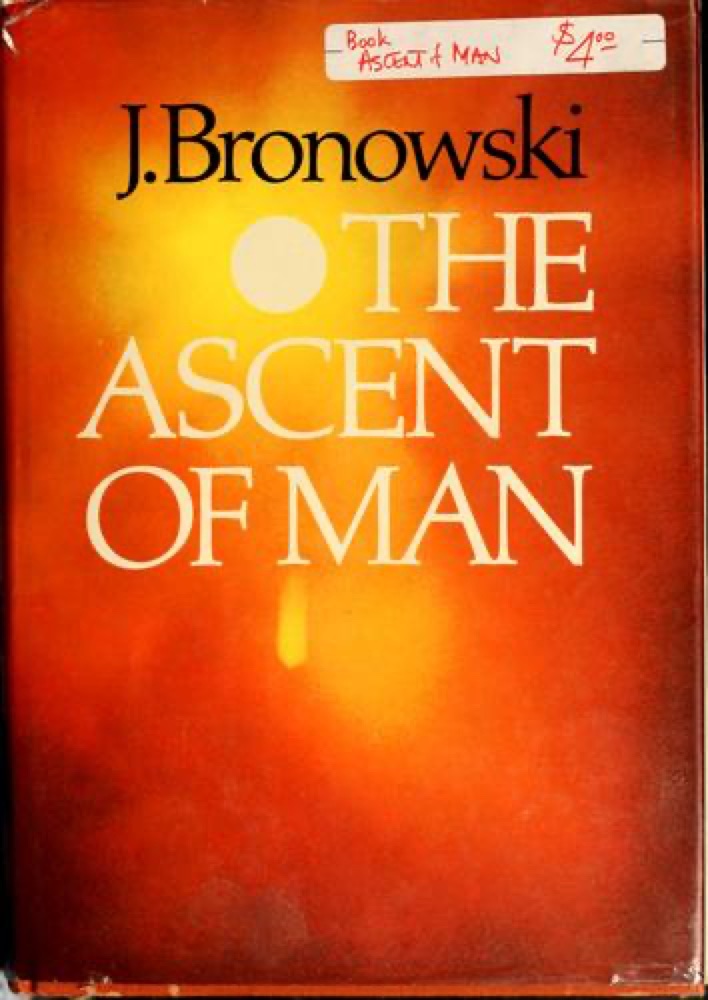 The Ascent of Man
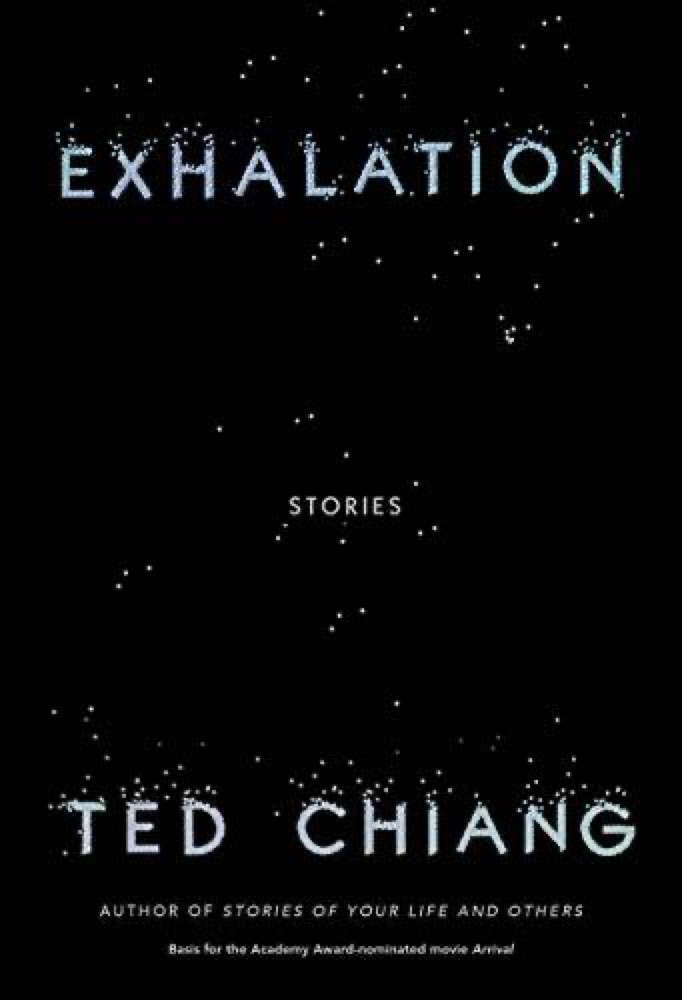 Exhalation
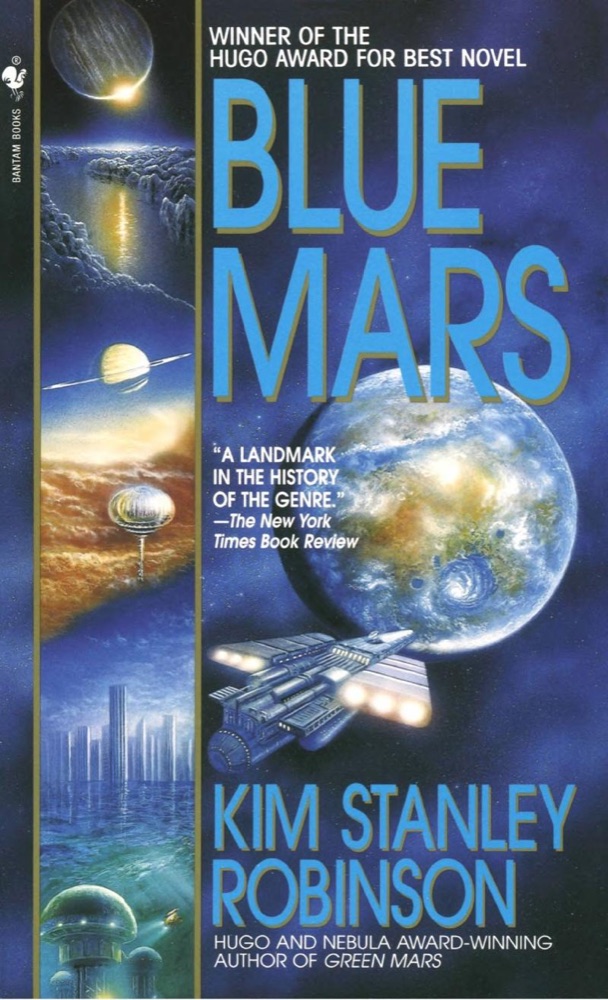 Blue Mars
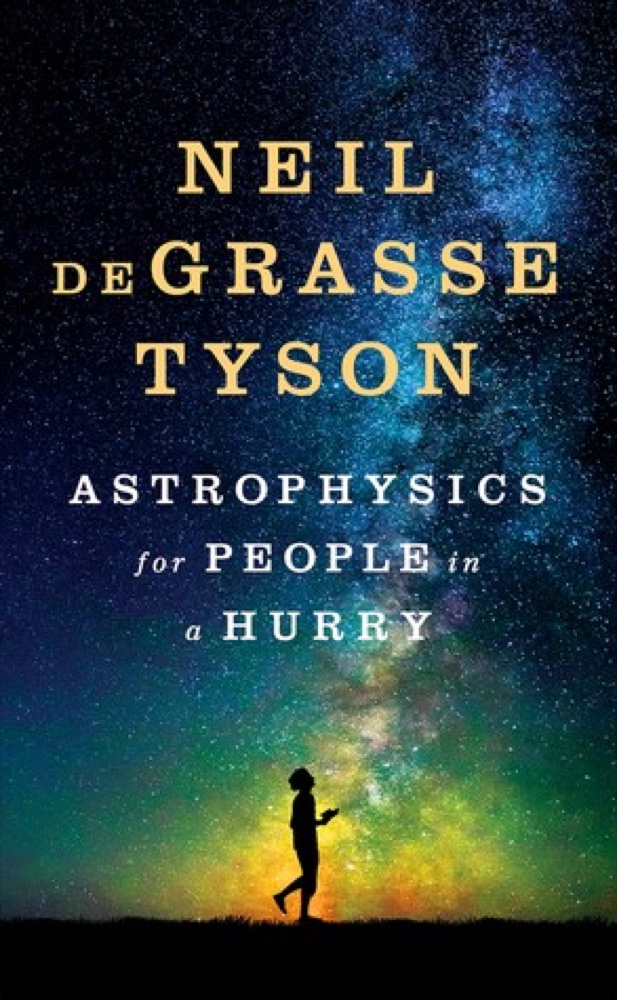 Astrophysics for People in a Hurry
 The Grand Design
 The Abundance
 How to Fly a Horse: The Secret History of Creation, Invention, and Discovery
 Humble Pi: A Comedy of Maths Errors
 Blue Remembered Earth
 The Wizard and the Prophet: Two Remarkable Scientists and Their Dueling Visions to Shape Tomorrow's World
 The Mezzanine
 A Natural History of the Senses
 Vanishing Treasures: A Bestiary of Extraordinary Endangered Creatures
 Chaos: Making a New Science
 The Forest Unseen: A Year’s Watch in Nature
 The Blind Watchmaker: Why the Evidence of Evolution Reveals a Universe Without Design
 Life on the Edge: The Coming of Age of Quantum Biology
 In Praise of Shadows
 Skinny Legs and All
 The Mountain in the Sea