
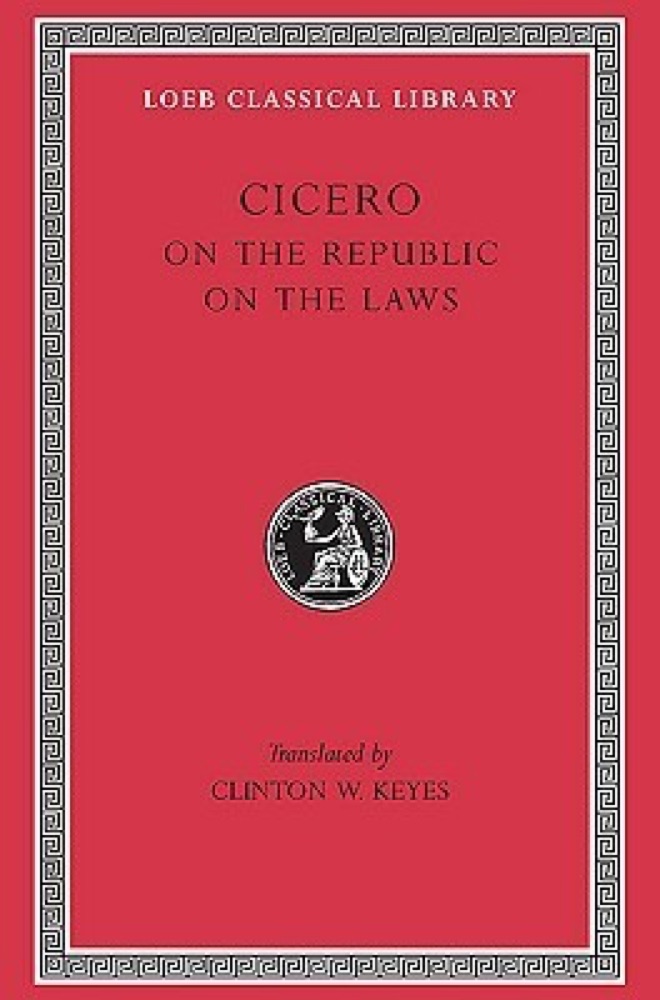
 On the Republic / On the Laws
Quotes from the Book
Law applied to its extreme is the greatest injustice
125
No power on earth, if it labours beneath the burden of fear, can possibly be strong enough to survive.
20
In all matters, before beginning, a diligent preparation should be made.
8
Of this last kind of comparisons is that quoted from the elder Cato, who, when asked what was the most profitable thing to be done on an estate, replied, “To feed cattle well.” “What second best?” “To feed cattle moderately well.” “What third best?” “To feed cattle, though but poorly.” “What fourth best?” “To plough the land.” And when he who had made these inquiries asked, “What is to be said of making profit by usury?” Cato replied, “What is to be said of making profit by murder?
5
Il y a encore de certains devoirs à remplir envers même de qui nous avons reçu une injure; car la vengeance et la punition ont aussi leurs bornes. Je ne sais même si repentir de celui qui a fait l'injure ne suffirait pas et pour l'empêcher d'en faire une semblable à l'avenir et pour retenir les autres dans le devoir.
5
a distinction has gradually sprung up between what is expedient and what is right. But the implication that something can be right without being expedient, or expedient without being right, is the most pernicious error that could possibly be introduced into human life.
3
But of all the bonds of fellowship, there is none more noble, none more powerful than when good men of congenial character are joined in intimate friendship.
3
It is the function of justice not to do wrong to one's fellow-men; of considerateness , not to wound their feelings; and in this the essence of propriety is best seen.
3
Now in regard to trades and other means of livelihood, which ones are to be considered becoming to a gentleman and which ones are vulgar, we have been taught, in general, as follows. First, those means of livelihood are rejected as undesirable which incur people's ill-will, as those of tax-gatherers and usurers. Unbecoming to a gentleman, too, and vulgar are the means of livelihood of all hired workmen whom we pay for mere manual labour, not for artistic skill; for in their case the very wage they receive is a pledge of their slavery. Vulgar we must consider those also who buy from wholesale merchants to retail immediately; for they would get no profits without a great deal of downright lying; and verily, there is no action that is meaner than misrepresentation. And all mechanics are engaged in vulgar trades; for no workshop can have anything liberal about it. Least respectable of all are those trades which cater for sensual pleasures.
1
For every systematic development of any subject ought to begin with a definition, so that everyone may understand what the discussion is about.
Watch on YouTube
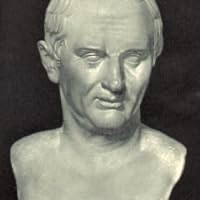
About Marcus Tullius Cicero
We have collected 46 quotes from 3 books by Marcus Tullius Cicero on BookQuoters.
More about the author →More by Marcus Tullius Cicero
On the Republic / On the Laws
 How to Be a Friend: An Ancient Guide to True Friendship
About the book
De Officiis (On Duties) is Cicero's last theoretical work and contains his analysis, in a Greek theoretical framework, of the political and ethical values of the Roman governing class in the late Republic. It has often been treated merely as a key to the Greek philosophical works that Cicero used, but this volume aims to render De Officiis, which had a profound impact upon subsequent political thinkers, more intelligible by explaining its relation to its own time and place. All the standard series features are present, including a wholly new translation, a concise introduction by a leading scholar, select bibliography, chronology, notes on vocabulary and brief biographies of the most prominent individuals mentioned in the text.
Book details
- Author
- Marcus Tullius Cicero
- Genre
- Philosophy
- Goodreads rating
- 3.96 (3k ratings)
Keep reading
On the Republic / On the Laws
 Justice: What's the Right Thing to Do?
 Reflections on the Revolution in France
 Leviathan
 On Liberty
 The Laws of Plato
 The Rhetoric & The Poetics of Aristotle
 The Spirit of the Laws
 The Nicomachean Ethics
 Groundwork of the Metaphysics of Morals
 A Theory of Justice
 Rules for Radicals: A Pragmatic Primer for Realistic Radicals
 Anarchy, State, and Utopia
 Elements of the Philosophy of Right
 Civil Disobedience
 On the Genealogy of Morals
 Ethics
 The Will to Power
 Doing Justice: A Prosecutor's Thoughts on Crime, Punishment, and the Rule of Law
 Philosophical Dictionary
 Politics
 Civil Disobedience and Other Essays
 Gorgias
 The Social Contract
 Utopia
 The Republic
 The Art of Always Being Right
 The History of Tom Jones, a Foundling
 History of the Peloponnesian War
 Theological-Political Treatise
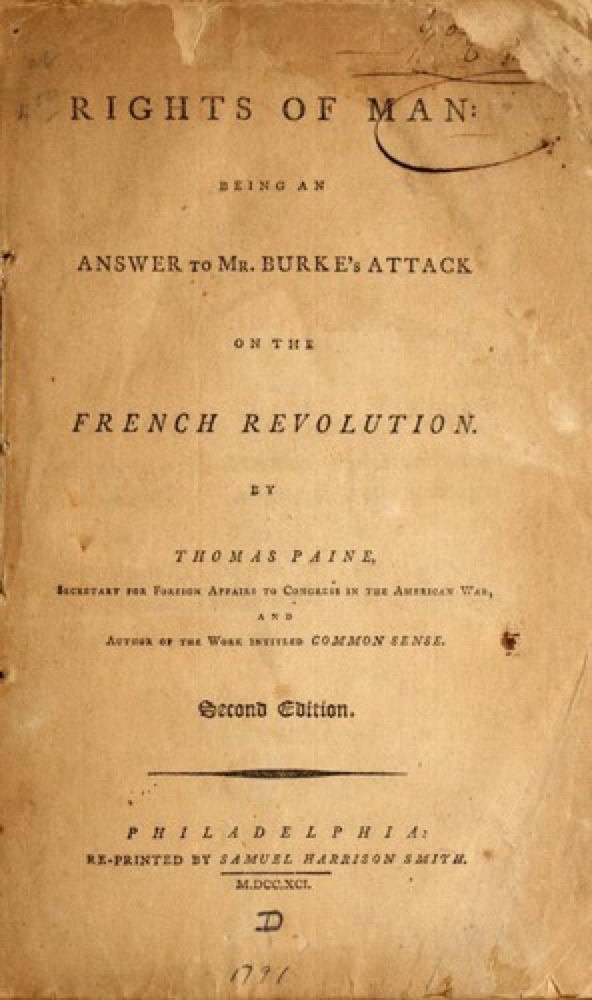 Rights of Man
 The Way of All Flesh
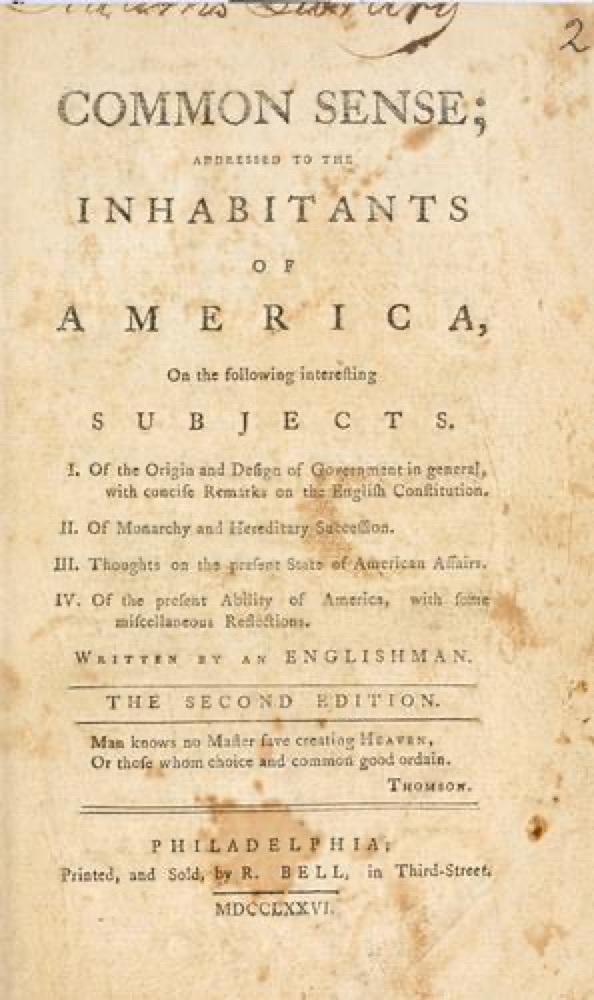 Common Sense
 Erewhon
 The Muqaddimah: An Introduction to History
 After Virtue
 The Accursed Share: An Essay on General Economy, Volume I: Consumption
 How to Be a Stoic: Using Ancient Philosophy to Live a Modern Life
 Discourse on the Origin of Inequality
 On the Genealogy of Morals/Ecce Homo
 The Iron Heel
 The Theory of Moral Sentiments
 Gulliver's Travels
 Heretics
 Liberalism: The Classical Tradition
 Power vs. Force
 An Enquiry Concerning the Principles of Morals
 The Federalist Papers
 The Ides of March
 Starship Troopers
 The Autobiography of Benjamin Franklin
 An Inquiry into the Nature and Causes of the Wealth of Nations
 Sacred Hunger
 The Machiavellians: Defenders of Freedom
 The Autobiography of Eleanor Roosevelt
 The Analects
 The Philosopher and the Wolf
 The Discourses
 The Intellectual Life: Its Spirit, Conditions, Methods
 The Abolition of Man