 Heretics
Quotes from the Book
For such is the nature of man, that howsoever they may acknowledge many others to be more witty, or more eloquent, or more learned; Yet they will hardly believe there be many so wise as themselves: For they see their own wit at hand, and other mens at a distance.
The source of every crime, is some defect of the understanding; or some error in reasoning; or some sudden force of the passions. Defect in the understanding is ignorance; in reasoning, erroneous opinion.
No arts; no letters; no society; and which is worst of all, continual fear and danger of violent death; and the life of man solitary, poor, nasty, brutish, and short.
So that in the nature of man, we find three principal causes of quarrel: First, Competition; Secondly, Dissidence; Thirdly, Glory. The first, maketh men invade for Gain; the second, for Safety; and the third, for Reputation. The first use Violence, to make themselves Masters of other men's persons, wives, children and cattle; the second, to defend them; the third, for trifles, as a word, a smile, a different opinion, and any other sign of undervalue, either direct in their Persons, or by reflexion in their Kindred, their Friends, their Nation, their Profession, or their Name.
For it can never be that war shall preserve life, and peace destroy it.
For to accuse requires less eloquence, such is man's nature, than to excuse; and condemnation, than absolution, more resembles justice.
If men are naturally in a state of war, why do they always carry arms and why do they have keys to lock their doors?
Covenants, without the sword, are but words and of no strength to secure a man at all.
The universe, the whole mass of things that are, is corporeal, that is to say, body, and hath the dimensions of magnitude, length, breadth and depth. Every part of the universe is ‘body’ and that which is not ‘body’ is no part of the universe, and because the universe is all, that which is no part of it is nothing, and consequently nowhere.
He that is to govern a whole Nation, must read in himselfe, not this, or that particular man; but Man-kind;
Another doctrine repugnant to civil society, is that whatsoever a man does against his conscience, is sin; and it dependeth on the presumption of making himself judge of good and evil. For a man's conscience and his judgement are the same thing, and as the judgement, so also the conscience may be erroneous.
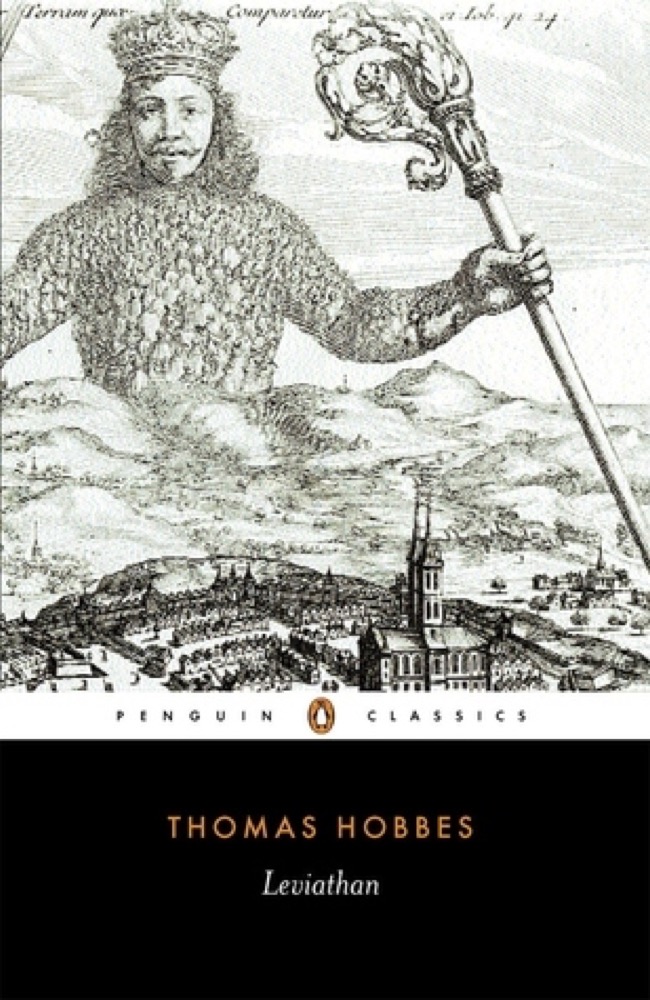
For by Art is created that great LEVIATHAN called a COMMON-WEALTH, or STATE, (in latine CIVITAS) which is but an Artificiall Man; though of greater stature and strength than the Naturall, for whose protection and defence it was intended; and in which, the Soveraignty is an Artificiall Soul, as giving life and motion to the whole body;
War consisteth not in battle only,or the act of fighting;but in a tract of time,wherein the will to contend by battle is sufficiently known
In such condition, there is no place for Industry; because the fruit thereof is uncertain; and consequently no Culture of the Earth; no Navigation, nor use of the commodities that may be imported by Sea; no commodious Building; no Instruments of moving, and removing such things as require much force; no Knowledge of the face of the Earth; no account of Time; no Arts; no Letters; no Society; and which is worst of all, continual fear, and danger of violent death; And the life of man, solitary, poor, nasty, brutish, and short.
As if it were Injustice to sell dearer than we buy; or to give more to a man than he merits. The value of all things contracted for, is measured by the Appetite of the Contractors: and therefore the just value, is that which they be contented to give.
Hurt inflicted, if lesse than the benefit of transgressing, is not punishment... and is rather the Price, or Redemption, than the Punishment of a Crime.
And because the condition of man . . . is a condition of war of every one against every one, in which case every one is governed by his own reason, and there is nothing he can make use of that may not be a help unto him in preserving his life against his enemies; it followeth that in such a condition every man has a right to every thing, even to one another's body. And therefore, as long as this natural right of every man to every thing endureth, there can be no security to any man, how strong or wise soever he be, of living out the time which nature ordinarily alloweth men to live. And consequently it is a precept, or general rule of reason: that every man ought to endeavour peace, as far as he has hope of obtaining it; and when he cannot obtain it, that he may seek and use all helps and advantages of war. The first branch of which rule containeth the first and fundamental law of nature, which is: to seek peace and follow it. The second, the sum of the right of nature, which is: by all means we can to defend ourselves.
The skill of making, and maintaining Common-wealths, consisteth in certain Rules, as doth Arithmetique and Geometry; not (as Tennis-play) on Practise onely: which Rules, neither poor men have the leisure, nor men that have had the leisure, have hitherto had the curiosity, or the method to find out.
And if this be madness in the multitude, it is the same in every particular man. For as in the midst of the sea, though a man perceive no sound of that part of the water next him, yet he is well assured that part contributes as much to the roaring of the sea as any other part of the same quantity: so also, though we perceive no great unquietness in one or two men, yet we may be well assured that their singular passions are parts of the seditious roaring of a troubled nation.
That Wisedome is acquired, not by reading of Books, but of Men. Consequently whereunto, those persons, that for the most part can give no other proof of being wise, take great delight to shew what they think they have read in men, by uncharitable censures of one another behind their backs.
Fear of things invisible is the natural seed of that which every one in himself calleth religion.
Ignorance of naturall causes disposeth a man to Credulity, so as to believe many times impossibilities: for such know nothing to the contrary, but that they may be true; being unable to detect the Impossibility. And Credulity, because men love to be hearkened unto in company, disposeth them to lying: so that Ignorance it selfe without Malice, is able to make a man bothe to believe lyes, and tell them; and sometimes also to invent them.
Respice finem; that is to say, in all your actions, look often upon what you would have, as the thing that directs all your thoughts in the way to attain it.
These dictates of Reason, men use to call by the name of Lawes; but improperly: for they are but Conclusions, or Theoremes concerning what conduceth to the conservation and defence of themselves; whereas Law, properly is the word of him, that by right hath command over others. But yet if we consider the same Theoremes, as delivered in the word of God, that by right commandeth all things; then are they properly called Lawes.
The attaining to this Soveraigne Power, is by two wayes. One, by Naturall force; as when a man maketh his children, to submit themselves, and their children to his government, as being able to destroy them if they refuse, or by Warre subdueth his enemies to his will, giving them their lives on that condition. The other, is when men agree amongst themselves, to submit to some Man, or Assembly of men, voluntarily, on confidence to be protected by him against all others. This later, may be called a Politicall Common-wealth, or Common-wealth by Institution; and the former, a Common-wealth by Acquisition. And first, I shall speak of a Common-wealth by Institution.
About Thomas Hobbes
We have collected 25 quotes from 1 book by Thomas Hobbes on BookQuoters.
More about the author →Book details
- Author
- Thomas Hobbes
- Genre
- Philosophy
- Goodreads rating
- 3.70 (54k ratings) →
Keep reading
Heretics
 The Wisdom of Life
 Ethics
 Rights of Man
 Common Sense
 The Will to Power
 On the Genealogy of Morals/Ecce Homo
 A Treatise of Human Nature
 Leonardo's Notebooks
 Human, All Too Human
 Philosophical Dictionary
 Utopia
 Forge of Darkness
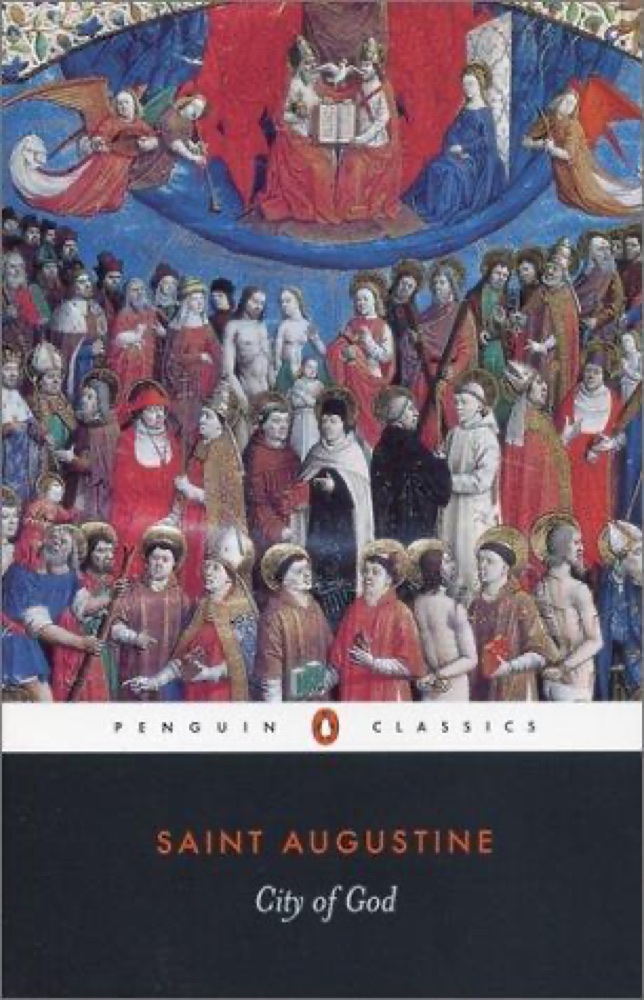 City of God
 Discourse on the Origin of Inequality
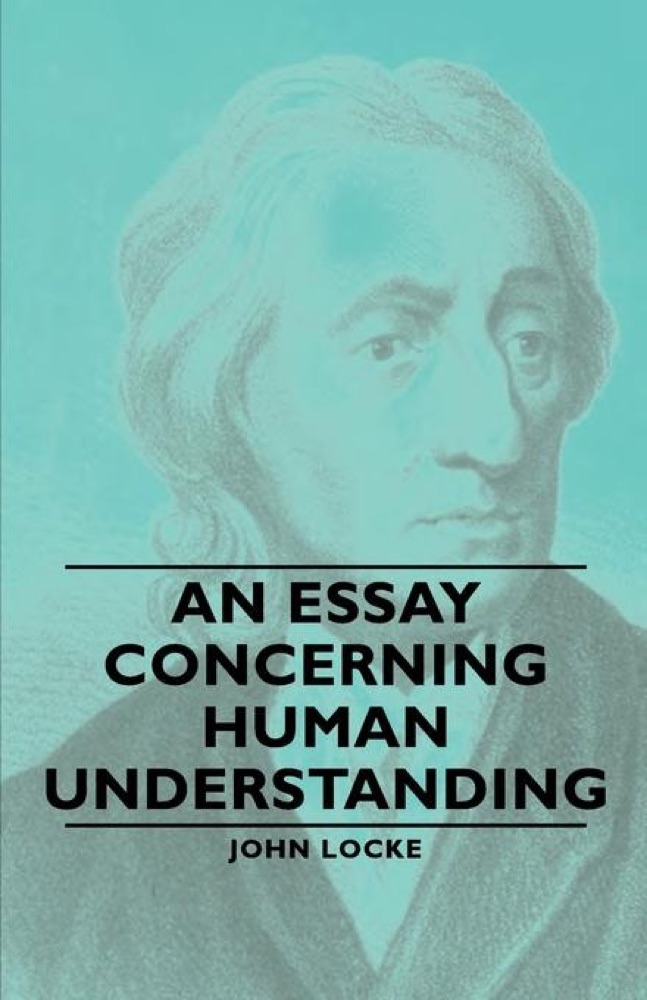 An Essay Concerning Human Understanding
 Pensées
 The Autobiography of Benjamin Franklin
 Theological-Political Treatise
 Blood Meridian: Or the Evening Redness in the West
 On the Republic / On the Laws
 Shōgun
 The Story of My Experiments With Truth
 A Canticle for Leibowitz
 The Enneads
 Fall of Light
 The Laws of Plato
 Ninety-Three
 Sacred Hunger
 The Midwich Cuckoos
 The Essays of Ralph Waldo Emerson
 The Warrior Prophet
 The Essential Writings of Ralph Waldo Emerson
 Persian Letters
 On Liberty
 The Age of Reason
 Blood Meridian, or the Evening Redness in the West
 Man and Superman
 What's Wrong with the World
 Walden & Civil Disobedience
 The Kingdom of God Is Within You
 Politics
 Erewhon
 Self-Reliance and Other Essays
 The House of the Dead
 Reflections on the Revolution in France
 The Once and Future King
 The Abolition of Man
 Maldoror and the Complete Works
 History of the Peloponnesian War
 Midnight Tides
 The First Circle
 The Book of Mirdad: The Strange Story of a Monastery Which Was Once Called the Ark
 Atlas Shrugged
 The Grace of Kings
 Emile or On Education
 The Ides of March
 Complete Works of Oscar Wilde
 Complete Works
 The Walking Drum