
 Story of the Eye
Quotes from the Book
An immense industrial network cannot be managed in the same way that one changes a tire... It expresses a circuit of cosmic energy on which it depends, which it cannot limit, and whose laws it cannot ignore without consequences.
11
Under the present conditions, everything conspires to obscure the basic movement that tends to restore wealth to its function, to gift-giving, to squandering without reciprocation.
11
The living organism, in a situation determined by the play of energy on the surface of the globe, ordinarily receives more energy than is necessary for maintaining life; the excess energy (wealth) can be used for the growth of a system (e.g., an organism); if the system can no longer grow, or if the excess cannot be completely absorbed in it's growth, it must necessarily be lost without profit; it must be spent, willingly or not, gloriously or catastrophically.
3
Intimacy is never separated from external elements, without which it could not be signified. Where we think we have caught hold of the Grail, we have only grasped a thing, and what is left in our hands is only a cooking pot.
3
Christianity dates from the individual birth of a redeeming god; Islam, from the birth of a community, of a new kind of state, which did not have its basis in either blood or place. Islam differs from Christianity and Buddhism in that it became, after the Hegira, something different from a teaching propagated in the framework of a society already formed (a local or blood community). It was the establishment of a society based on the new teaching.
3
One cannot all of a sudden deprive a society of its essence.
2
But the reduction of "that which is" to the order of things is not limited to slavery. Slavery is abolished, but we ourselves are aware of the aspects of social life in which man is ):~legated to the level of things, and we should know that this relegation did not await slavery. From the start, the introduction of labor into the world replaced intimacy, the depth of desire and its free outbreaks, with rational progression, where what matters is no longer the truth of the present moment, but, rather, the subsequent results of operations. The first labor established the world ofthings, to which the profane world of the Ancients generally corresponds. Once the world of things was posited, man himself became one of the things of this world, at least for the time in which he labored. It is this degradation that man has always tried to escape. In his strange myths, in his cruel rites, man is in search of a lost intimacy from the first.
1
To solve political problems becomes difficult for those who allow anxiety alone to pose them.
The change would be meaningful only if it was the doing of men of unassailable moral authority, speaking to down-to-earth interests on behalf of higher powers. What was needed was less to give complete freedom to the natural impulses of the merchants than to tie them to some dominant moral position.
Watch on YouTube
About Georges Bataille
We have collected 17 quotes from 2 books by Georges Bataille on BookQuoters.
More about the author →More by Georges Bataille
Story of the Eye
About the book
The three volumes of The Accursed Share address what Georges Bataille sees as the paradox of utility: namely, if being useful means serving a further end, then the ultimate end of utility can only be uselessness. In the second and third volumes, The History of Eroticism and Sovereignty, Bataille explores the same paradox of utility from an anthropological and an ethical perspective, respectively. The History of Eroticism analyzes the fears and fascination, the prohibitions and transgressions attached to the realm of eroticism as so many expressions of the "uselessness" of erotic life.
Book details
- First published
- 1949
- Author
- Georges Bataille
- Genre
- Philosophy
- Goodreads rating
- 4.08 (2k ratings)
Keep reading
 Small Is Beautiful: Economics as if People Mattered
 The Human Condition
 Human Action: A Treatise on Economics
 Reflections on the Revolution in France
 Economic & Philosophic Manuscripts of 1844
 The World-Ending Fire: The Essential Wendell Berry
 Walden Two
 Revolution
 In Praise of Idleness and Other Essays
 The Fatal Conceit: The Errors of Socialism
 The Great Transformation: The Political and Economic Origins of Our Time
 Sacred Economics: Money, Gift, and Society in the Age of Transition
 Ill Fares the Land
 Anarchy, State, and Utopia
 The Discovery of India
 The Constitution of Liberty
 Erewhon
 First As Tragedy, Then As Farce
 From Dawn to Decadence: 500 Years of Western Cultural Life, 1500 to the Present
 The Dispossessed
 The Sane Society
 The Soul of Man Under Socialism
 The Will to Power
 The Crisis of the Modern World
 The Road to Serfdom
 Discourse on the Origin of Inequality
 Civilization and Its Discontents
 What's Wrong with the World
 Blue Mars
 Capitalism: The Unknown Ideal
 Utopia
 Elements of the Philosophy of Right
 Talking to My Daughter About the Economy: or, How Capitalism Works—and How It Fails
 Sex, Economy, Freedom, and Community: Eight Essays
 Untimely Meditations
 Dialectic of Enlightenment: Philosophical Fragments
 Anthills of the Savannah
 Sapiens: A Brief History of Humankind
 Sacred Hunger
 The Art of the Commonplace: The Agrarian Essays
 Justice: What's the Right Thing to Do?
 Debt: The First 5,000 Years
 The Protestant Ethic and the Spirit of Capitalism
 The Abolition of Man
 The Lessons of History
 Children of Dune
 The Social Contract
 Green Mars
 After Virtue
 Let Us Dream: The Path to a Better Future
 Leviathan
 Escape from Freedom
 The Coming Insurrection
 Heretics
 Walden & Civil Disobedience
 A Short History of Progress
 One-Dimensional Man: Studies in the Ideology of Advanced Industrial Society
 Minima Moralia: Reflections on a Damaged Life
 Anti-Oedipus: Capitalism and Schizophrenia
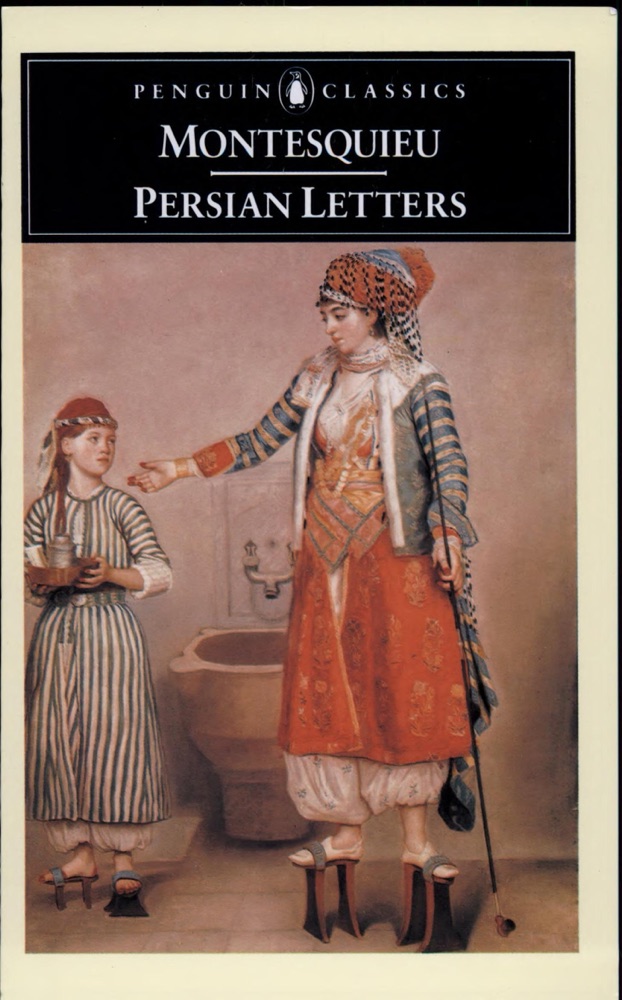 Persian Letters