
 The Madness of Crowds: Gender, Race and Identity
Quotes from the Book
Attention, as well as being a commodity that can be monetised through digital platforms, is a psychological wage. We know this from when we are children: think of the heaven of basking in the glow of an attentive parent or teacher. To be recognised is to be told that you matter, that your life has worth and that you have a place in the world. There’s nothing unhealthy about that. But our media and politics leverage the psychological wages of attention in a way that is utterly corrosive and warping.
2
One in eight trans people report having been attacked while at work, and half of all trans and non-binary people report having to hide their identity from employers because they’re afraid of being discriminated against. Transgender people are at the sharp edge of material dispossession, while at the same time being used by the press and politicians as a means of distracting people away from economic issues. It’s a classic minority rule strategy of division. It’s not my intention to close down good-faith conversations. It’s important to talk openly about where we, as a society, establish the threshold for being legally and socially recognised as your chosen gender. But that discussion has been hijacked by a highly motivated ideological network to clamp down on the rights of transgender people. They don’t want to consider the idea that trans people, and transgender women in particular, are just as deserving of respect as they are.
1
As W. E. B. Du Bois pointed out, to only see yourself as a figure of ‘crime or ridicule’ is a form of oppression. While wealth inequalities grow ever wider, there has been – at least – some redistribution in the psychological wage of attention. But this can be manipulated. Though identity minorities are objects of fear and derision, presented as an enemy within for wanting to impose Minority Rule, they’re also given a degree of social prestige by being acknowledged as minorities. Recognised identity minorities like people of colour, some of those with disabilities or LGBTQ people get the consolation of attention. While this attention doesn’t necessarily convert into justice or systemic change, it does at least establish a sense of public importance. That’s not nothing in our information-saturated, discourse-obsessed attention economy.
1
But would imposing a blanket rule that trans women should be incarcerated in men’s prisons really make people safer? The first thing to point out is that we’re talking about small numbers of people. According to the latest available data, between 2021 and 2022, only six trans women were housed in female prisons. Between 2020 and 2022, there were no reported sexual assaults carried out by transgender women in women’s prisons. The same can’t be said for trans victims of sexual assault in men’s prisons – in 2019 alone, there were eleven such cases. Though gender critical campaigners, politicians and the media all focus on the risk posed by trans women in female prisons, the fact is that they’re far more likely to be victims of sexual assault in men’s facilities. Surely that matters as much as the safety of cisgender women inmates?
By presenting anti-racism as a threat to the white working class, two things happen. The first is that the experiences of white working-class people are weaponised. They are wielded as a tool against attempts to diagnose problems of racial inequality, and to delegitimise any proposed solutions. Acknowledge institutional racism? What about the white working class. Tackle discriminatory policing? What about the white working class. Address the legacies of colonialism and slavery in modern society? What about the white working class. This is not a real question, but a mechanism that cuts off a conversation about racial inequalities. It is a dance between mythical enemies that isn’t intended to advance the cause of working-class people, but to obstruct racial progress. The second and most devious effect of this weaponisation of white working-class identity is that it actively inhibits efforts to redistribute wealth to address the scourge of economic inequality. By selectively championing the white working class in order to attack people of colour, the working classes of all races lose out. Blaming an imaginary problem, and an imaginary enemy, creates space for politicians to wriggle off the hook.
Politics takes place within a competitive attention economy. So a news story about Sainsbury’s supporting Black History Month is folded into a war between ‘woke’ graduates versus ‘the white working class’, the demand for trans equality is framed as trans activists versus women, and anything to do with anti-black racism (whether it’s a protest about police violence, or statues of slavers) is BLM versus everybody else. Identity politics has come to describe the fight about how we see ourselves, rather than what kind of society we want to have.
Race has been used not to describe differences amongst humanity, but to enforce inequality amongst humanity.
You can look at any one of the crises surrounding us - whether it's the climate emergency, the genocide in Gaza or rising inequality - and just see a reason to give up the hope that human beings are capable of bettering ourselves as a species. But the odds have always been stacked against justice. You'd never have bet on the success of the abolitionists, or the suffrage movement, or the civil rights struggle, or the fight for abortion access. But courage and collective action are capable of wondrous things. We have an obligation to resist the temptation of passivity and despair, while also seeing the scale of the challenge around us clearly.
Did you know?
- It is Ash Sarkar's debut book.
- The book was published by Bloomsbury on 27 February 2025.
- It became an instant Sunday Times bestseller, reaching number four on the chart in March 2025.
- The Guardian named it a Book of the Summer 2025.
- A later paperback edition was issued with a new afterword by the author.
Watch on YouTube
About Ash Sarkar
Ash Sarkar is a British political commentator, journalist and academic who serves as a senior editor at Novara Media and has contributed to The Guardian and The Independent. Minority Rule is her debut book.
More about the author →About the book
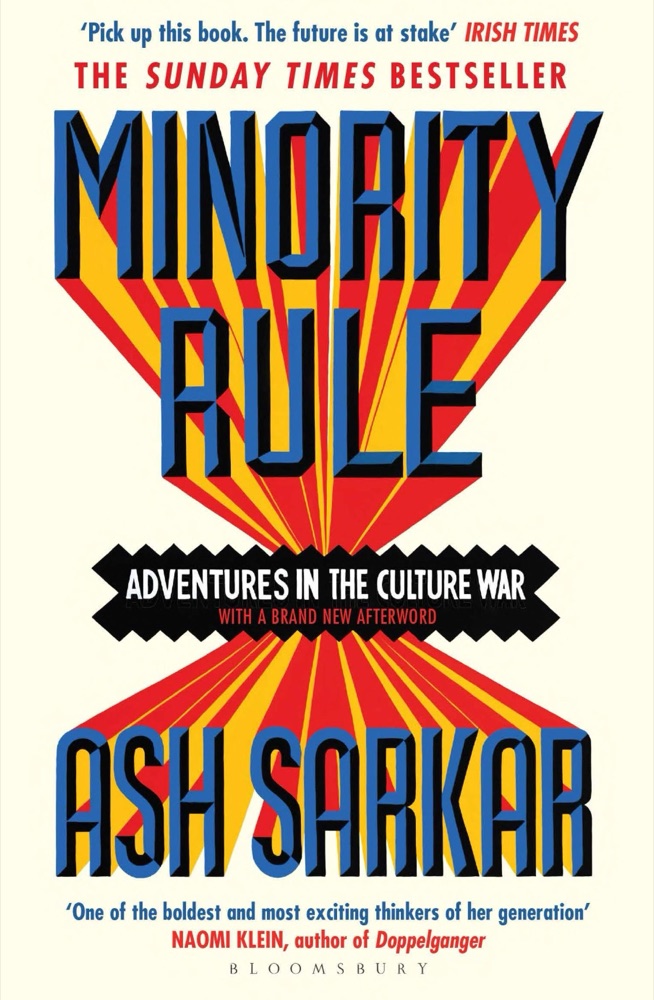
Minority Rule: Adventures in the Culture War is the debut book of British political commentator Ash Sarkar, published by Bloomsbury in February 2025. It is a polemical work of political and cultural criticism that argues contemporary culture wars are not spontaneous eruptions of public feeling but conflicts stoked by those at the top to keep the majority divided. Drawing on her own experience as a public-facing commentator, Sarkar moves through flashpoints of recent British and Western political debate to make her case.
The book's central theme is the gap between a vocal politics of identity and the underlying realities of wealth and power. Sarkar contends that a small minority hoards economic and political power while the public is encouraged to fight over cultural symbols, and she argues that nothing threatens that minority more than people overcoming their differences to direct their anger upward. She is critical not only of the right's manufactured outrage but also of forms of identity politics on the left that she sees as fragmenting potential solidarity between minorities and the working class.
Minority Rule became an instant Sunday Times bestseller, reaching number four on the chart in March 2025, and was named a Guardian Book of the Summer 2025. Reception was mixed but engaged: reviewers such as Kevin Power in The Irish Times praised it as clarifying and essential, while others questioned its originality or, like Baroness Claire Fox, argued it let the left off the hook. It was widely discussed across the British political press and in broadcast and podcast interviews.
Book details
- First published
- 2025
- Length
- 320 pages
- Reading time
- 6 hours
- Author
- Ash Sarkar
- Genre
- Nonfiction
- Goodreads rating
- 4.16 (2k ratings)
Critical reception
- The book reached number four on the Sunday Times bestseller list in March 2025.
- Kevin Power in The Irish Times praised it as essential reading that helps readers see the world clearly, while noting the prose occasionally slips into agitprop.
- The Guardian selected it as a Book of the Summer 2025.
- Baroness Claire Fox criticised it for not holding the left sufficiently accountable for its own role in identity politics.
The buzz
- The Irish TimesMinority Rule by Ash Sarkar: Pick up this book and see the world clearly2025Largely admiring review by novelist Kevin Power
Keep reading
The Madness of Crowds: Gender, Race and Identity
 What White People Can Do Next: From Allyship to Coalition – An Empowering Guide to Interrogating Whiteness and Creating Justice
 Elite Capture: How the Powerful Took Over Identity Politics
 Why I'm No Longer Talking to White People About Race
 The Transgender Issue: An Argument for Justice
 Doppelganger: A Trip into the Mirror World
 The Identity Trap: A Story of Ideas and Power in Our Time
 We Gon' Be Alright: Notes on Race and Resegregation
 Opinions: A Decade of Arguments, Criticism, and Minding Other People’s Business
 Uncomfortable Conversations With a Black Man
 Tomorrow Will Be Different: Love, Loss, and the Fight for Trans Equality
 The Sum of Us: What Racism Costs Everyone and How We Can Prosper Together
 The View From Flyover Country: Essays by Sarah Kendzior
 The Spirit Level: Why More Equal Societies Almost Always Do Better
 Cynical Theories: How Activist Scholarship Made Everything about Race, Gender, and Identity—and Why This Harms Everybody
 White Like Me: Reflections On Race From A Privileged Son
 Identity: The Demand for Dignity and the Politics of Resentment
 Why I Am Not a Feminist: A Feminist Manifesto
 Just Us: An American Conversation
 This Is What Inequality Looks Like
 Why Are All The Black Kids Sitting Together in the Cafeteria?
 What's Our Problem?: A Self-Help Book for Societies
 On the Other Side of Freedom: The Case for Hope
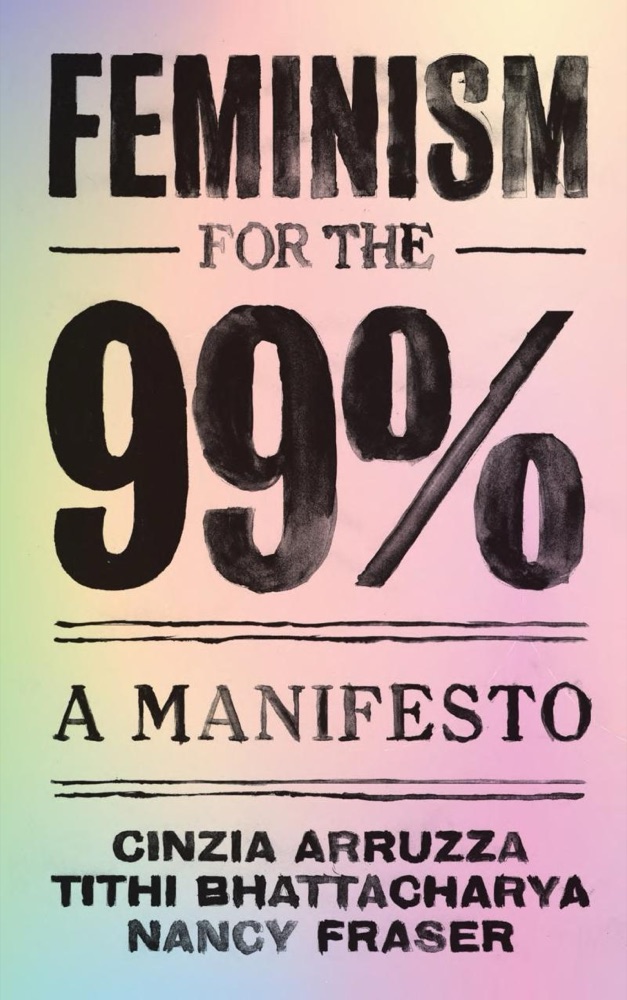 Feminism for the 99%: A Manifesto
 Material Girls: Why Reality Matters for Feminism
 Stamped: Racism, Antiracism, and You
 Tears We Cannot Stop: A Sermon to White America
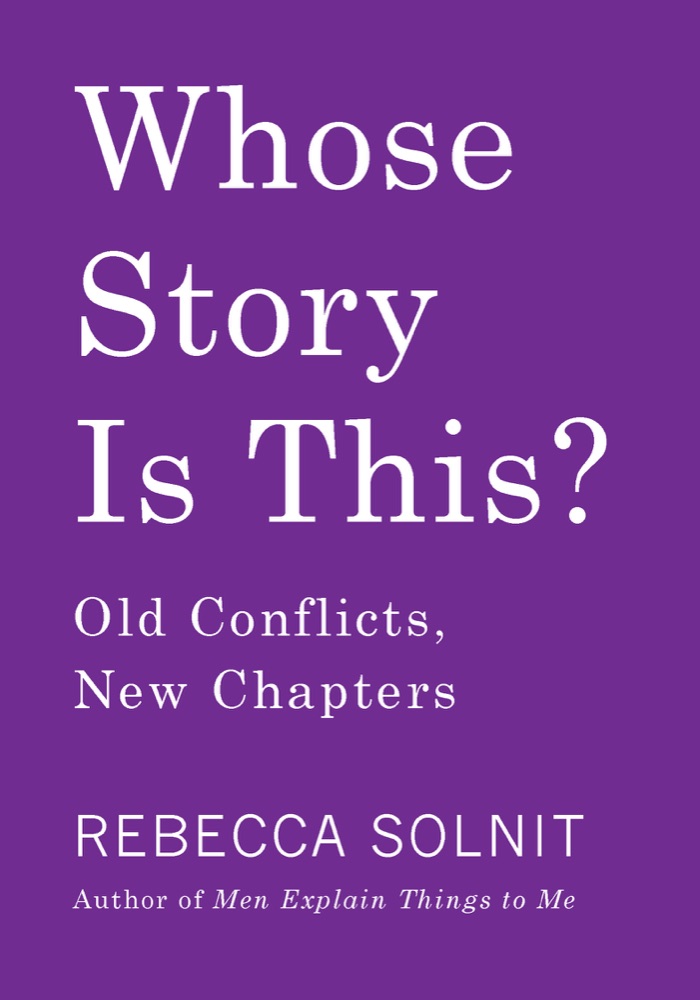 Whose Story Is This? Old Conflicts, New Chapters
 Thick: And Other Essays
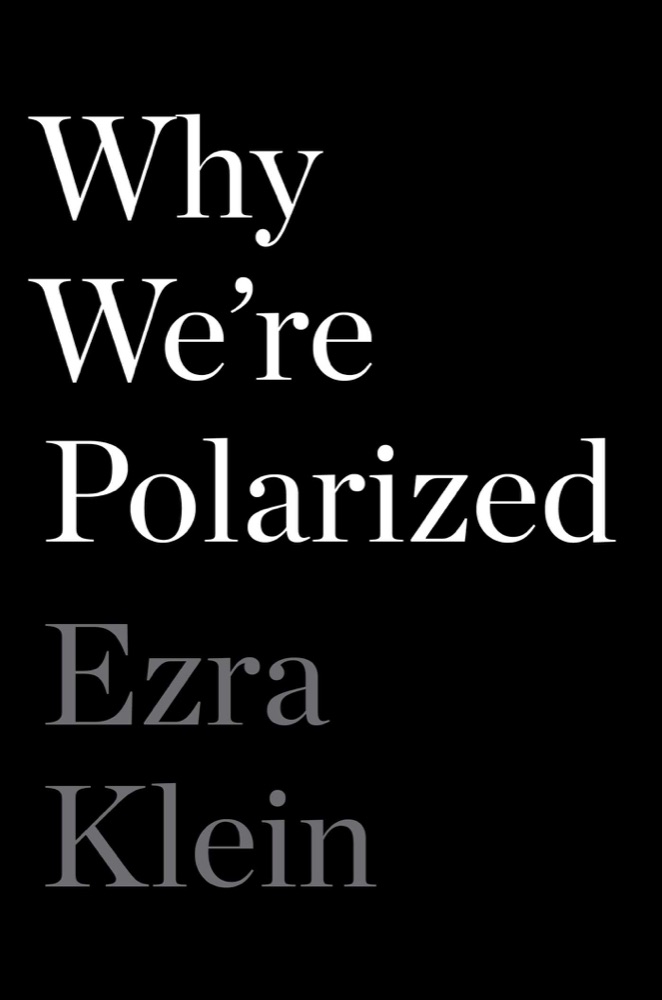 Why We're Polarized
 This Book Is Anti-Racist: 20 Lessons on How to Wake Up, Take Action, and Do the Work
 When They Call You a Terrorist: A Black Lives Matter Memoir
 Occupy
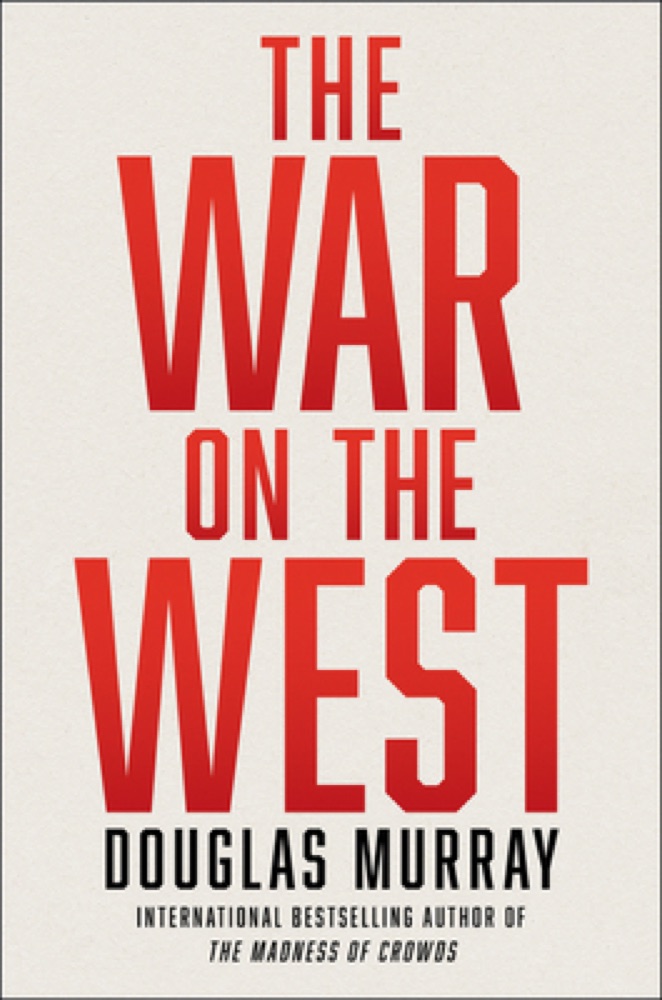 The War on the West: An Instant NYT Bestselling History of the Modern World
 Where Do We Go from Here: Chaos or Community?
 Feminist Theory: From Margin to Center
 How to Argue With a Racist: What Our Genes Do (and Don't) Say About Human Difference
 Chavs: The Demonization of the Working Class
 Mediocre: The Dangerous Legacy of White Male America
 Trans: When Ideology Meets Reality
 America: The Farewell Tour
 This Bridge Called My Back: Writings by Radical Women of Color
 I'm Still Here: Black Dignity in a World Made for Whiteness
 Against White Feminism: Notes on Disruption
 Pathologies of Power: Health, Human Rights, and the New War on the Poor
 The Witches Are Coming
 The End of Race Politics: Arguments for a Colorblind America
 Living a Feminist Life
 Parasitic Mind: How Infectious Ideas Are Killing Common Sense
 Invisible Man, Got the Whole World Watching: A Young Black Man's Education
 A People's History of the United States
 Unspeakable Things: Sex, Lies and Revolution
 Conflict Is Not Abuse: Overstating Harm, Community Responsibility, and the Duty of Repair
 Humankind: A Hopeful History
 Persist
 Wealth, Poverty and Politics: An International Perspective
 Capital and Ideology
 On Fire: The Case for the Green New Deal
 You Can't Be Neutral on a Moving Train: A Personal History of Our Times
 Waking Up White: And Finding Myself in the Story of Race