
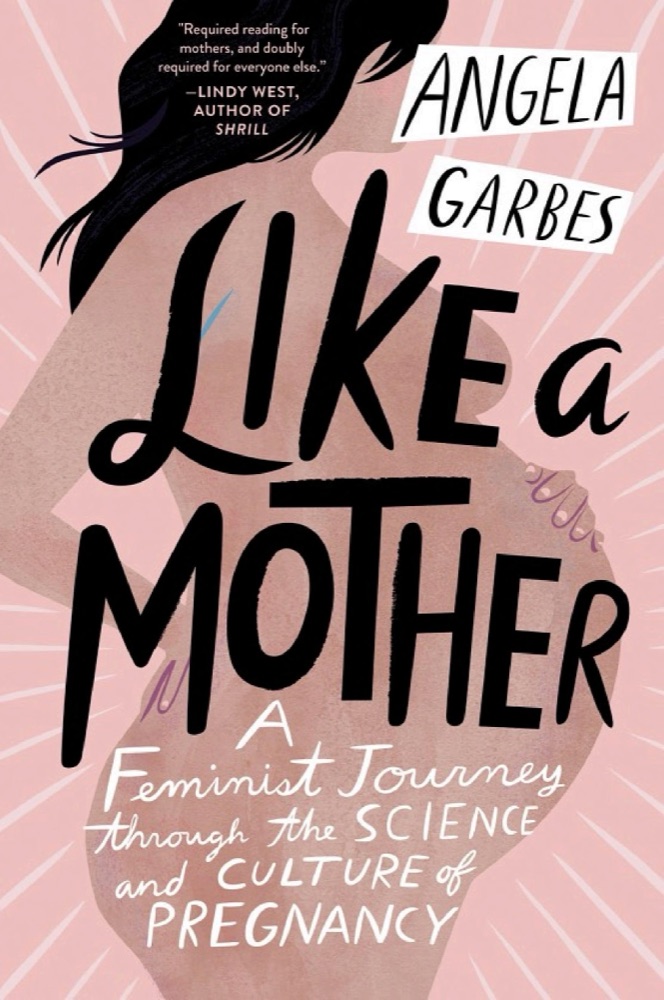
 Like a Mother: A Feminist Journey Through the Science and Culture of Pregnancy
Quotes from the Book
I'm not trying to romanticize or fetishize the past, but the simple fact is that for centuries, throughout the world, we lived communally. Having individual families siloed off from one another behind fences, out of sight and out of mind, is a relatively recent social structure that we accept. This model has been forced upon us, at a steep cost to parents and children.
3
Doing this requires knowledge of the history of mothering and care work—how they came to be seen as naturally female, which is to say invisible and undervalued.
2
When you become a mother, you engender life, endless possibilities. Mothering is creative in a very literal sense—it is cultivating all that potential, bringing a small person into consciousness.
2
I want more friends, more casual impromptu hangs, more dropping by with dinner, more walking and talking and advice sessions, more kids underfoot, more asking for and saying what we need, more hands to carry heavy boxes, more laughing and cackling and snorting, more children farting at the dinner table, more of what makes life messy, less painful, more sweet. I want to give and receive, to always be swapping Tupperware and food, all of us crowded together like curvy lumpen mangoes in a baking dish.
2
I never really wanted to be a professional; all I knew was that I wanted whatever I did to matter. I believe writing matters, of course, but nothing has ever felt more real to me than the work of caring. That energy and effort to maintain—ourselves, our loved ones, our community—has always felt substantial, true, visceral, and, yes, real to me. I don’t believe care work has to wreck us. This labor can be shared, social, collective—and transformative.
1
Mothering is creative in a very literal sense—it is cultivating all that potential, bringing a small person into consciousness.
I grew up with maids, Angela,” my mother says, dismissing the idea that it was a difficult decision. “They hear everything you say.” She wanted privacy, she says, and she wanted to be accountable to the family she was building with my father: “Whatever mistakes I made, whatever happens to my kids, it’s my responsibility.” She adds that she “didn’t want to be responsible for another persons.
We are caught between how we were raised and how we really want to live.
Mothering is sensual—endemic to the body and bringing both profound joy and fulfillment. It cultivates and nurtures a child’s life force and essence. It is labor that can bestow a primal sense of satisfaction to children and caregivers alike.
Hearing “I love you” is nothing compared to feeling it, your body absorbing the message from another. Before we learn verbal language, we communicate through our bodies. The only way a young child can comprehend love is physically.
As the poet Cathy Park Hong writes, “one characteristic of racism is that children are treated like adults and adults are treated like children. . .
understanding of freedom that we must rediscover. The words free and friend are derived from the Indo-European friya, which means “beloved.” Freedom, Birdsong writes, was originally “the idea that together we can ensure that we have all the things we need—love, food, shelter, safety.” Freedom is not an individual effort, but a collective one. “Being free,” writes Birdsong, “is achieved through being connected.
In modern American culture, that sort of tight-knit community structure seems increasingly rare. For centuries, extended personal networks have been eroded, replaced with privatized jobs and small, isolated kin units. “The extended family and relationships that could sustain families were transformed and professionalized,” write Patel and Moore.3 A lack of shared responsibility and interconnectedness makes it difficult to find solutions for needs more easily addressed in community, such as childcare, meal preparation, and household maintenance. It leads to isolation and an every-family-for-themselves mentality. It leaves parents feeling common domestic strains as personal problems rather than structural ones.
More than in any other human relationship, overwhelmingly more, motherhood means being instantly interruptible,” wrote Tillie Olsen in 1968.
Watch on YouTube
About Angela Garbes
We have collected 30 quotes from 2 books by Angela Garbes on BookQuoters.
More about the author →More by Angela Garbes
Like a Mother: A Feminist Journey Through the Science and Culture of Pregnancy
About the book
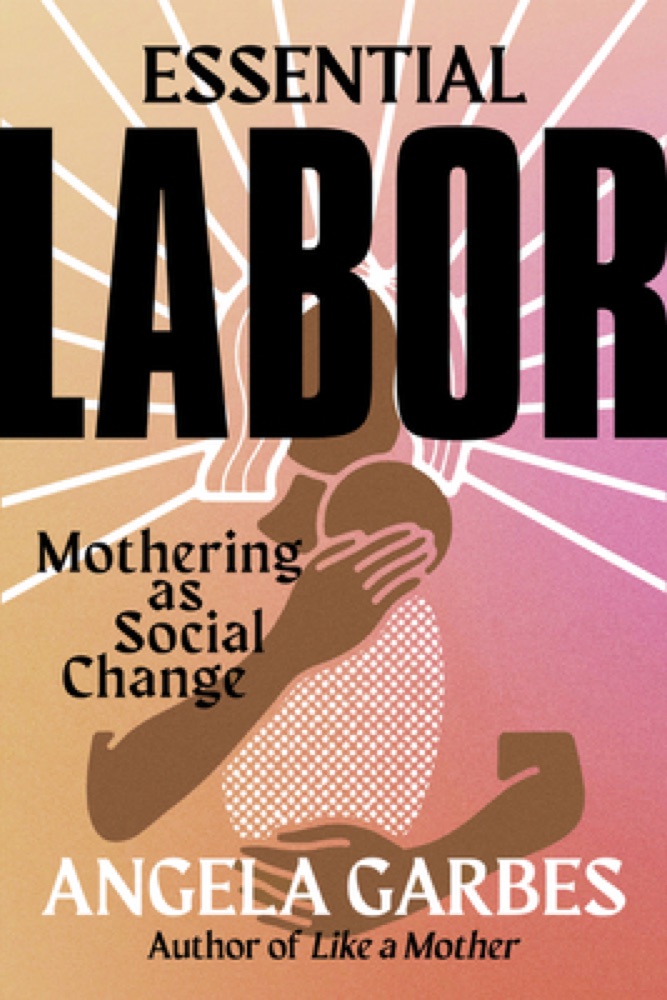
From the acclaimed author of Like a Mother comes a reflection on the state of caregiving in America, and an exploration of mothering as a means of social change.
The Covid-19 pandemic shed fresh light on a long-overlooked truth: mothering is among the only essential work humans do. In response to the increasing weight placed on mothers and caregivers—and the lack of a social safety net to support them—writer Angela Garbes found herself pondering a vital question: How, under our current circumstances that leave us lonely, exhausted, and financially strained, might we demand more from American family life?
In Essential Labor, Garbes explores assumptions about care, work, and deservedness, offering a deeply personal and rigorously reported look at what mothering is, and can be. A first-generation Filipino-American, Garbes shares the perspective of her family's complicated relationshi
Book details
- First published
- 2022
- Author
- Angela Garbes
- Genre
- Nonfiction
- Goodreads rating
- 3.79 (3k ratings)
The buzz
- The New YorkerReview in The New Yorkerprofessional review (via Book Marks)
- The Washington PostReview in The Washington Postprofessional review (via Book Marks)
- SlateReview in Slateprofessional review (via Book Marks)
- Publishers WeeklyReview in Publishers Weeklyprofessional review (via Book Marks)
- LA Review of BooksReview in LA Review of Booksprofessional review (via Book Marks)
- BooklistReview in Booklistprofessional review (via Book Marks)
Keep reading
 To Have and to Hold: Motherhood, Marriage, and the Modern Dilemma
 Motherhood
 Mom & Me & Mom
 Fair Play: A Game-Changing Solution for When You Have Too Much to Do
 Untamed
 Glitter and Glue
 A Beautiful Day in the Neighborhood: The Poetry of Mister Rogers
 All Joy and No Fun: The Paradox of Modern Parenthood
 Far from the Tree: Parents, Children, and the Search for Identity
 Joan Is Okay
 In Search of Our Mothers' Gardens: Womanist Prose
 Simplicity Parenting: Using the Extraordinary Power of Less to Raise Calmer, Happier, and More Secure Kids
 What My Mother and I Don't Talk About: Fifteen Writers Break the Silence
 Aftermath: On Marriage and Separation
 This Is Not a Book About Benedict Cumberbatch: The Joy of Loving Something--Anything--Like Your Life Depends On It
 MILF: Motherhood, Identity, Love and F*ckery
 The Conscious Parent: Transforming Ourselves, Empowering Our Children
 This Is What Inequality Looks Like
 Constellations
 The Soul of a Woman
 Becoming Human
 How Do We Know We're Doing It Right: & Other Essays on Modern Life
 The World According to Mister Rogers: Important Things to Remember
 Overwhelmed: Work, Love, and Play When No One Has the Time
 The Master's Tools Will Never Dismantle the Master's House
 Hold On, But Don't Hold Still
 See No Stranger: A Memoir and Manifesto of Revolutionary Love
 Spinster: Making a Life of One's Own
 The Awakened Family: A Revolution in Parenting
 Mothers Who Can't Love: A Healing Guide for Daughters
 The Vanishing American Adult: Our Coming-of-Age Crisis—and How to Rebuild a Culture of Self-Reliance
 Confessions of a Scary Mommy: An Honest and Irreverent Look at Motherhood - The Good, The Bad, and the Scary
 Women's Bodies, Women's Wisdom: Creating Physical and Emotional Health and Healing
 A Woman's Worth
 Us: Getting Past You and Me to Build a More Loving Relationship
 Is Mother Dead
 Dear Girls: Intimate Tales, Untold Secrets, & Advice for Living Your Best Life
 The Mother of All Questions
![The Book You Wish Your Parents Had Read [and Your Children Will Be Glad That You Did]](/i/book/g/63/the-book-you-wish-your-parents-had-read-and-your-children-will-be-glad-that-you-did.jpg) The Book You Wish Your Parents Had Read [and Your Children Will Be Glad That You Did]
The Book You Wish Your Parents Had Read [and Your Children Will Be Glad That You Did]
 Now Is the Time to Open Your Heart
 Earthlings
 Breasts and Eggs
 The Collapse of Parenting: How We Hurt Our Kids When We Treat Them Like Grown-Ups
 Some Assembly Required: A Journal of My Son's First Son
 Love, Loss, and What We Ate: A Memoir
 Girl, Woman, Other
 The Air You Breathe
 Communion: The Female Search for Love
 The Trauma Cleaner: One Woman's Extraordinary Life in the Business of Death, Decay, and Disaster
 Bad Mother: A Chronicle of Maternal Crimes, Minor Calamities, and Occasional Moments of Grace
 I Guess I Haven't Learned That Yet: Discovering New Ways of Living When the Old Ways Stop Working
 Good Morning, Destroyer of Men's Souls: A Memoir of Women, Addiction, and Love
 Of Woman Born: Motherhood as Experience and Institution
 One True Thing
 Herland
 The Argonauts
 Are You My Mother?: A Comic Drama
 Emergent Strategy: Shaping Change, Changing Worlds
 Aftershocks
 The Mother-in-Law