 America
Quotes from the Book
We live in a world where there is more and more information, and less and less meaning.
562
This is what terrorism is occupied with as well: making real, palpable violence surface in opposition to the invisible violence of security.
78
But what if God himself can be simulated, that is to say can be reduced to signs that constitute faith? Then the whole system becomes weightless, it is no longer anything but a gigantic simulacrum - not unreal, but simulacrum, that is to say never exchanged for the real, but exchanged for itself, in an uninterrupted circuit without reference or circumference.
61
Whence the possibility of an ideological analysis of Disneyland (L. Marin did it very well in Utopiques, jeux d'espace [Utopias, play of space]): digest of the American way of life, panegyric of American values, idealized transposition of a contradictory reality. Certainly. But this masks something else and this "ideological" blanket functions as a cover for a simulation of the third order: Disneyland exists in order to hide that it is the "real" country, all of "real" America that is Disneyland (a bit like prisons are there to hide that it is the social in its entirety, in its banal omnipresence, that is carceral). Disneyland is presented as imaginary in order to make us believe that the rest is real, whereas all of Los Angeles and the America that surrounds it are no longer real, but belong to the hyperreal order and to the order of simulation. It is no longer a question of a false representation of reality (ideology) but of concealing the fact that the real is no longer real, and thus of saving the reality principle.
61
the neighborhood is nothing but a protective zone- remodeling, disinfection, a snobbish and hygenic design- but above all in a figurative sense: it is a machine for making emptiness.
60
The media represents world that is more real than reality that we can experience. People lose the ability to distinguish between reality and fantasy. They also begin to engage with the fantasy without realizing what it really is. They seek happiness and fulfilment through the simulacra of reality, e.g. media and avoid the contact/interaction with the real world. (Note: This quote is fake and does not appear in Simulacra and Simulation. I tried to delete it, but the system doesn't allow that because this quote has "too many fans" lol.)
57
And so art is everywhere, since artifice is at the very heart of reality. And so art is dead, not only because its critical transcendence is gone, but because reality itself, entirely impregnated by an aesthetic which is inseparable from its own structure, has been confused with its own image. Reality no longer has the time to take on the appearance of reality. It no longer even surpasses fiction: it captures every dream even before it takes on the appearance of a dream.
48
Animals have no unconscious, because they have a territory. Men have only had an unconscious since they lost a territory.
45
it is dangerous to unmask images, since they dissimulate the fact that there is nothing behind them).
43
One has never said better how much "humanism", "normality", "quality of life" were nothing but the vicissitudes of profitability.
43
We will live in this world, which for us has all the disquieting strangeness of the desert and of the simulacrum, with all the veracity of living phantoms, of wandering and simulating animals that capital, that the death of capital has made of us—because the desert of cities is equal to the desert of sand—the jungle of signs is equal to that of the forests—the vertigo of simulacra is equal to that of nature—only the vertiginous seduction of a dying system remains, in which work buries work, in which value buries value—leaving a virgin, sacred space without pathways, continuous as Bataille wished it, where only the wind lifts the sand, where only the wind watches over the sand.
40
Forgetting extermination is part of extermination.
31
There is no more hope for meaning. And without a doubt this is a good thing: meaning is mortal. Appearances, they, are immortal, invulnerable to the nihilism. This is where seduction begins.
25
We need a visible past, a visible continuum, a visible myth of origin to reassure us as to our ends, since ultimately we have never believed in them.
22
Hell of simulation, which is no longer one of torture, but of subtle, maleficent, elusive twisting of meaning...
22
But what becomes of the divinity when it reveals itself in icons, when it is simply incarnated in images as a visible theology? Or does it volatilize itself in the simulacra that, alone, deploy their power and pomp of fascination - the visible machinery of icons substituted for the pure and intelligible Idea of God? This is precisely what was feared by Iconoclasts, whose millennial quarrel is still with us today. This is precisely because they predicted this omnipotence of simulacra, the faculty simulacra have of effacing God from the conscience of man, and the destructive, annihilating truth that they allow to appear - that deep down God never existed, even God himself was never anything but his own simulacra - from this came their urge to destroy the images. If they could have believed that these images only obfuscated or masked the Platonic Idea of God, there would have been no reason to destroy them. One can live with the idea of distorted truth. But their metaphysical despair came from the idea that the image didn't conceal anything at all.
22
Whereas representation attempts to absorb simulation by interpreting it as a false representation, simulation envelops the whole edifice of representation itself as a simulacrum. Such would be the successive phases of the image: it is the reflection of a profound reality; it masks and denatures a profound reality; it masks the absence of a profound reality; it has no relation to any reality whatsoever; it is its own pure simulacrum.
21
It is from the death of the social that socialism will emerge, as it is from the death of God that religions emerge.
15
By crossing into a space whose curvature is no longer that of the real, nor that of truth, the era of simulation is inaugurated by a liquidation of all referentials - worse: with their artificial resurrection in the systems of signs, a material more malleable than meaning, in that it lends itself to all systems of equivalences, to all binary oppositions, to all combinatory algebra. It is no longer a question of imitation, nor duplication, nor even parody. It is a question of substituting the signs of the real for the real, that is to say of an operation of deterring every real process via its operational double, a programmatic, metastable, perfectly descriptive machine that offers all the signs of the real and shortcircuits all its vicissitudes.
13
The old slogan 'truth is stranger than fiction,' that still corresponded to the surrealist phase of this estheticization of life, is obsolete. There is no more fiction that life could possibly confront, even victoriously-it is reality itself that disappears utterly in the game of reality-radical disenchantment, the cool and cybernetic phase following the hot stage of fantasy.
13
Today abstraction is no longer that of the map, the double, the mirror, or the concept. Simulation is no longer that of a territory, a referential being or substance. It is the generation by models of a real without origin or reality: A hyperreal. The territory no longer precedes the map, nor does it survive it. It is nevertheless the map that precedes the territory - precession of simulacra - that engenders the territory.
13
It is useless to dream of revolution through content, useless to dream of a revelation through form, because the medium and the real are now in a single nebula whose truth is indecipherable.
12
To dissimulate is to pretend not to have what one has. To simulate is to feign to have what one doesn't have. One implies a presence, the other an absence. But it is more complicated than that because simulating is not pretending
11
Melancholic and fascinated, such is our general situation in an era of involuntary transparency.
10
The simulacrum is never that which conceals the truth—it is the truth which conceals that there is none. The simulacrum is true.
9
Even the Middle Ages, which condemned and punished animals in due form, was in this way much closer to them than we are. They held them to be guilty: which was a way of honoring them. We take them for nothing, and it is on this basis that we are "human" with them.
9
The only weapon of power, its only strategy against this defection, is to reinject the real and the referential everywhere, to persuade us of the reality of the social, of the gravity of the economy and the finalities of production.
9
If being a nihilist, is carrying, to the unbearable limit of hegemonic systems, this radical trait of derision and of violence, this challenge that the system is summoned to answer through its own death, then I am a terrorist and nihilist in theory as the others are with their weapons. Theoretical violence, not truth, is the only resource left us.
9
Pretending, or dissimulating, leaves the principle of reality intact: the difference is always clear, it is simply masked, whereas simulation threatens the difference between the "true" and the "false," the "real" and the "imaginary.
8
Watch on YouTube
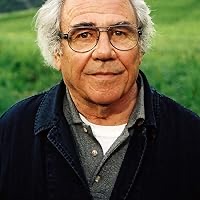
About Jean Baudrillard
We have collected 58 quotes from 2 books by Jean Baudrillard on BookQuoters.
More about the author →More by Jean Baudrillard
America
About the book
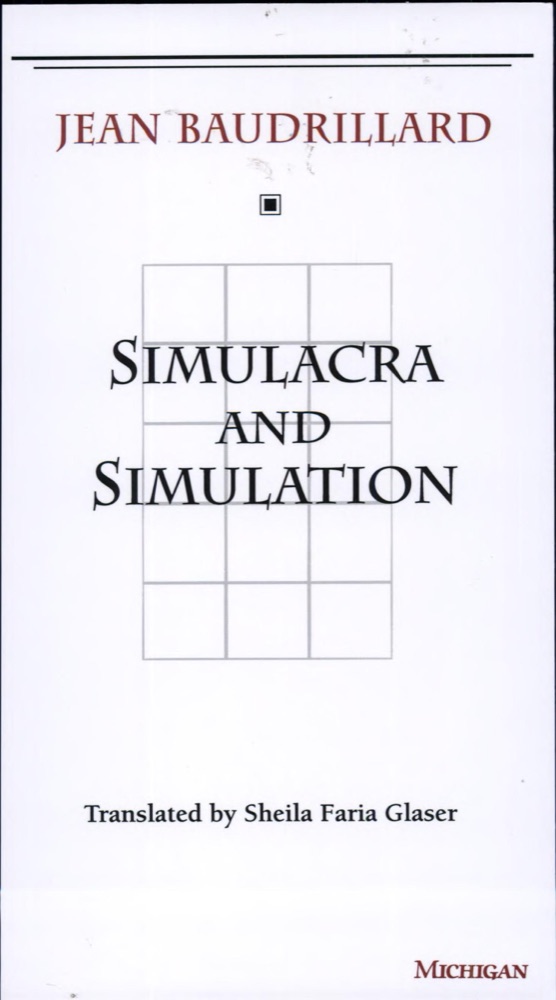
The publication of Simulacra et Simulation in 1981 marked Jean Baudrillard's first important step toward theorizing the postmodern. Moving away from the Marxist/Freudian approaches that had concerned him earlier, Baudrillard developed in this book a theory of contemporary culture that relies on displacing economic notions of cultural production with notions of cultural expenditure.
Baudrillard uses the concepts of the simulacra—the copy without an original—and simulation. These terms are crucial to an understanding of the postmodern, to the extent that they address the concept of mass reproduction and reproduceability that characterizes our electronic media culture.
Baudrillard's book represents a unique and original effort to rethink cultural theory from the perspective of a new concept of cultural materialism, one that radically redefines postmodern formulations of the body.
S
Book details
- First published
- 1981
- Author
- Jean Baudrillard
- Genre
- Philosophy
- Goodreads rating
- 4.00 (17k ratings)
Keep reading
 Ghosts of My Life: Writings on Depression, Hauntology and Lost Futures
 Understanding Media: The Extensions of Man
 Irrational Man: A Study in Existential Philosophy
 Dialectic of Enlightenment: Philosophical Fragments
 Anti-Oedipus: Capitalism and Schizophrenia
 On Truth and Lies in a Nonmoral Sense
 Gnomon
 The Coming Insurrection
 Myths to Live By
 The Birth of Tragedy
 The Closing of the American Mind
 Genesis
 The Medium is the Massage
 The Crisis of the Modern World
America
The Crisis of the Modern World
America
 The Futurological Congress: From the Memoirs of Ijon Tichy
 Twilight of the Idols/The Anti-Christ
 The Master and His Emissary: The Divided Brain and the Making of the Western World
 Maps of Meaning: The Architecture of Belief
 The Society of the Spectacle
 The Arcades Project
 The Origin of Consciousness in the Breakdown of the Bicameral Mind
 The Occult
 The Order of Things: An Archaeology of the Human Sciences
 The Shock of the New
 The Doors of Perception & Heaven and Hell
 Minima Moralia: Reflections on a Damaged Life
 The Atrocity Exhibition
 The Rebel: An Essay on Man in Revolt
 The Fifth Science
 From Dawn to Decadence: 500 Years of Western Cultural Life, 1500 to the Present
 Invisible Planets: Contemporary Chinese Science Fiction in Translation
 The Art of the Novel
 Empire of Illusion: The End of Literacy and the Triumph of Spectacle
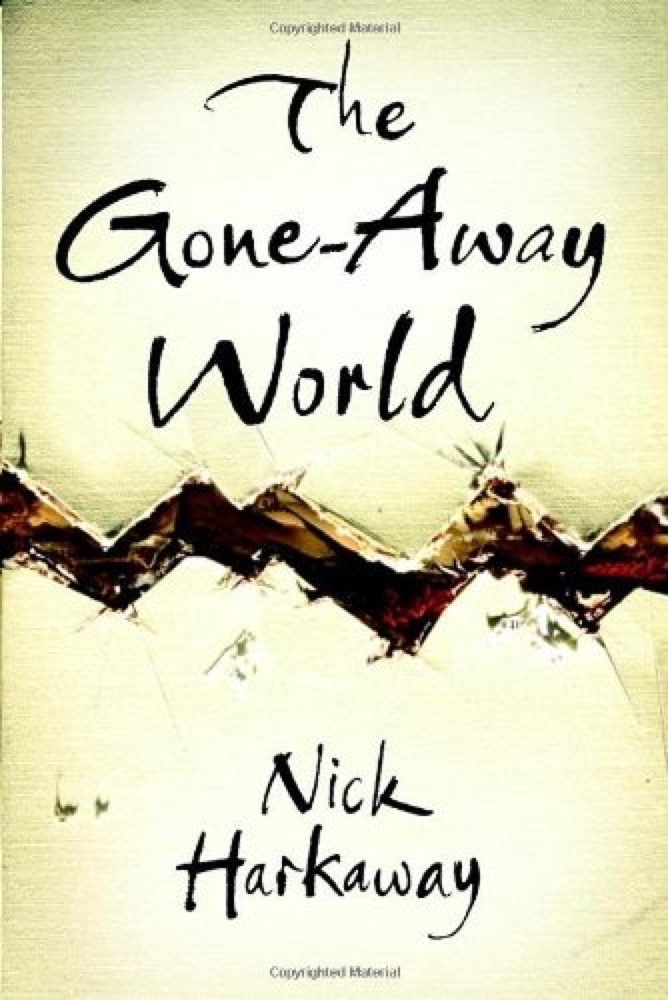 The Gone-Away World
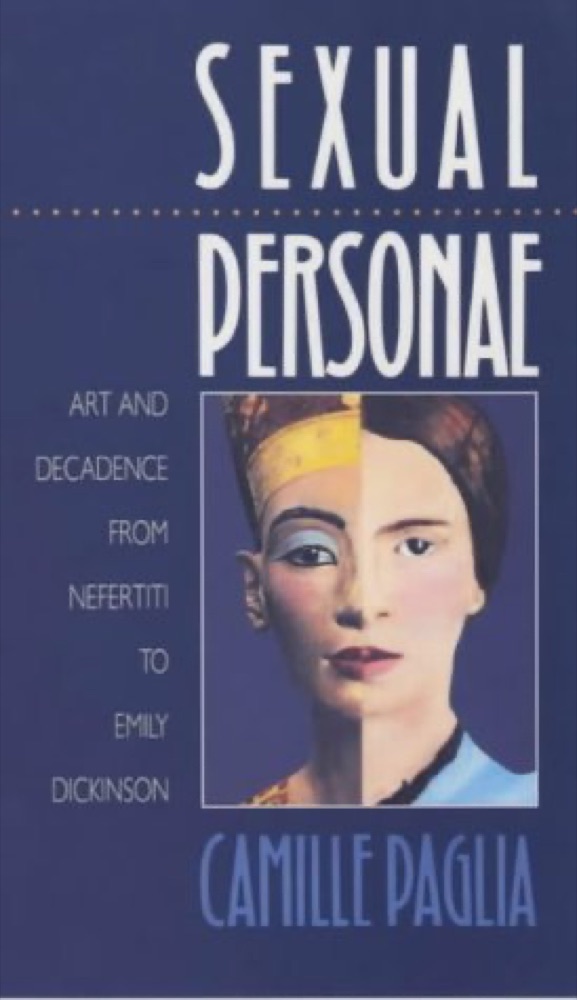 Sexual Personae: Art and Decadence from Nefertiti to Emily Dickinson
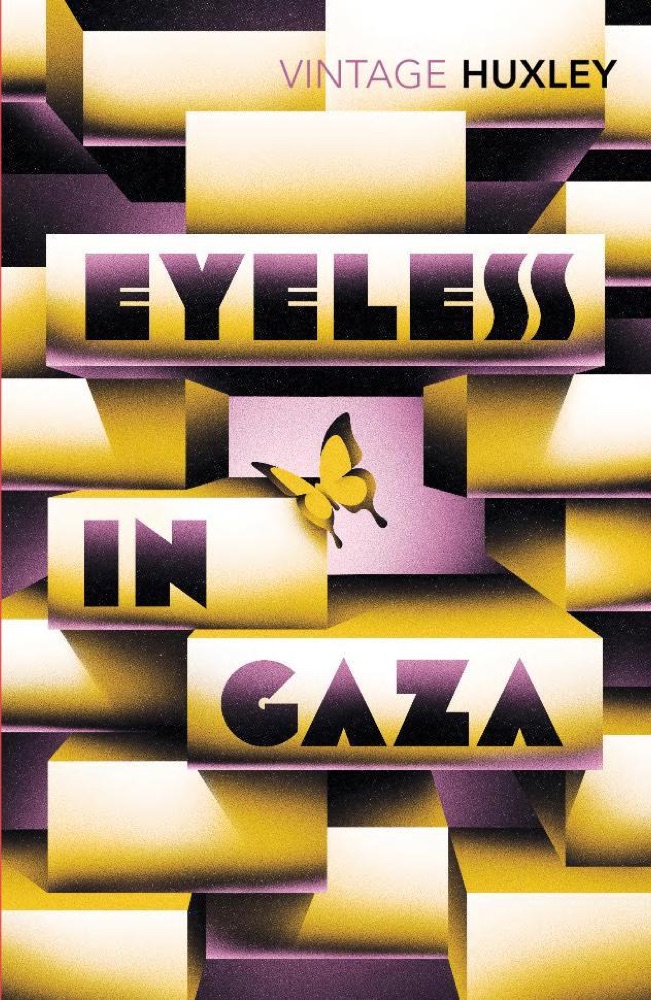 Eyeless in Gaza
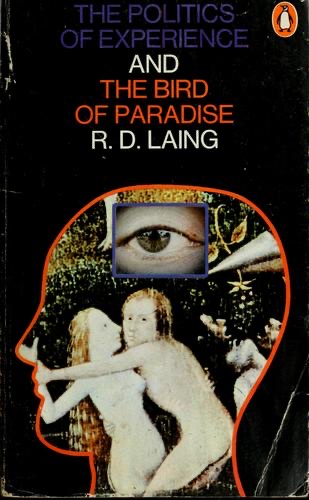 The Politics of Experience/The Bird of Paradise
 Man and His Symbols
 The World as Will and Representation, Vol 1
 Food of the Gods: The Search for the Original Tree of Knowledge
 The State of the Art
 Awakenings
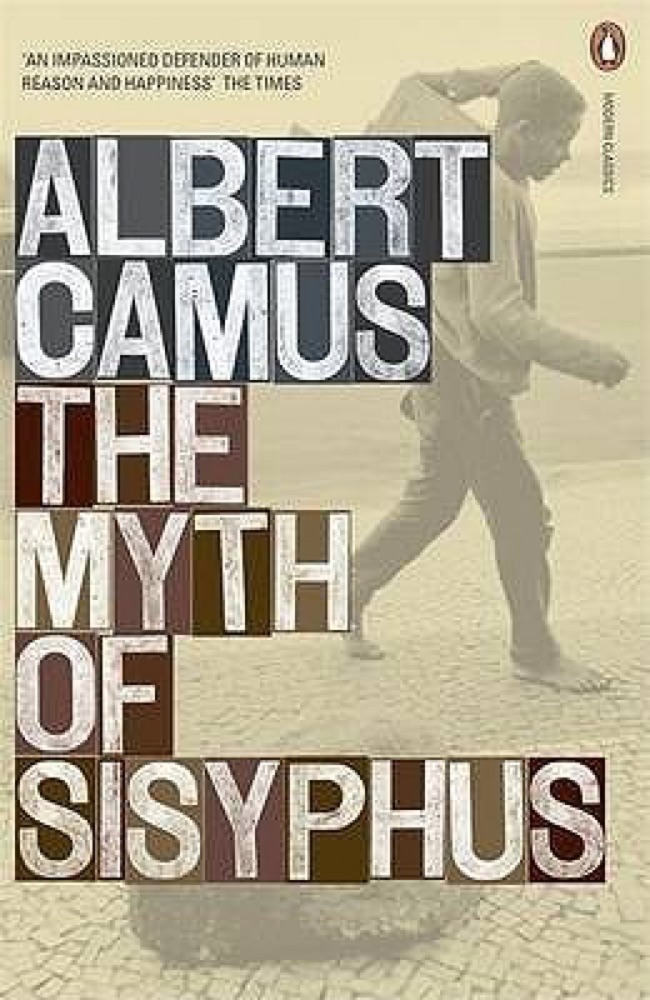 The Myth of Sisyphus
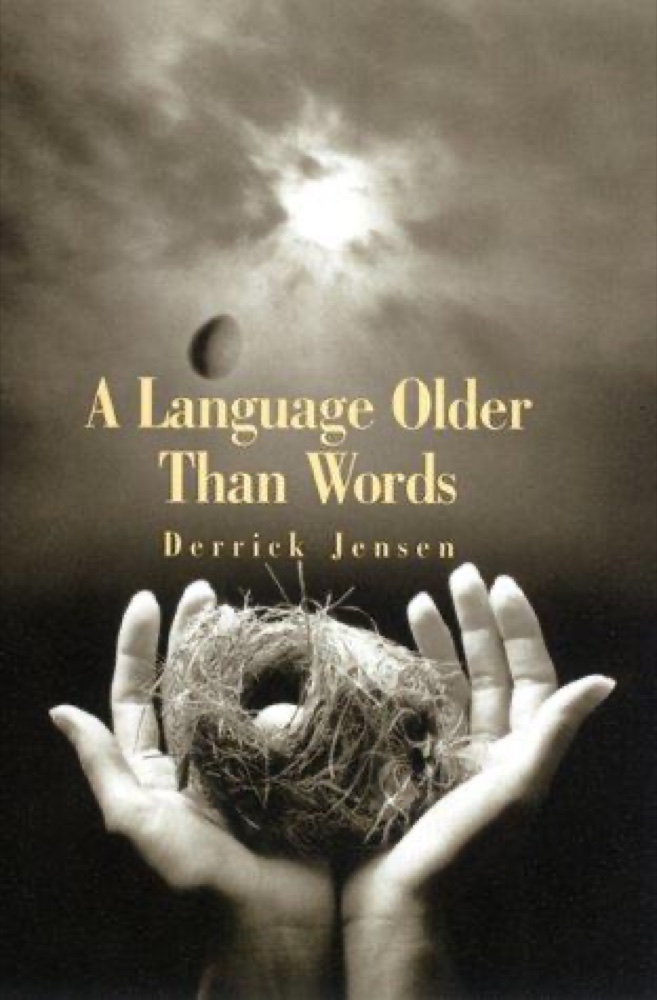 A Language Older Than Words
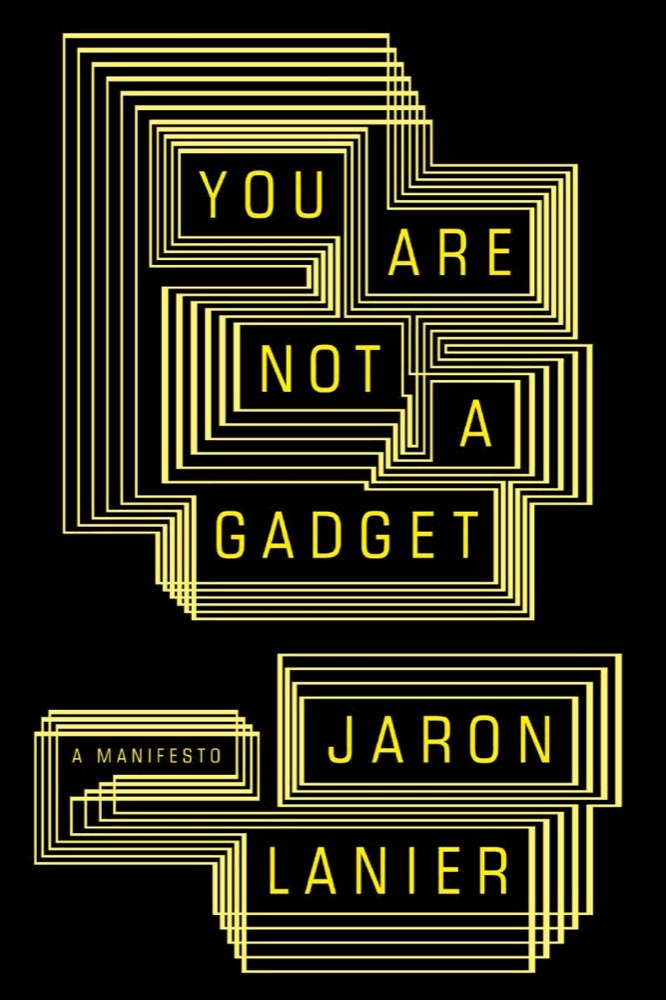 You Are Not a Gadget
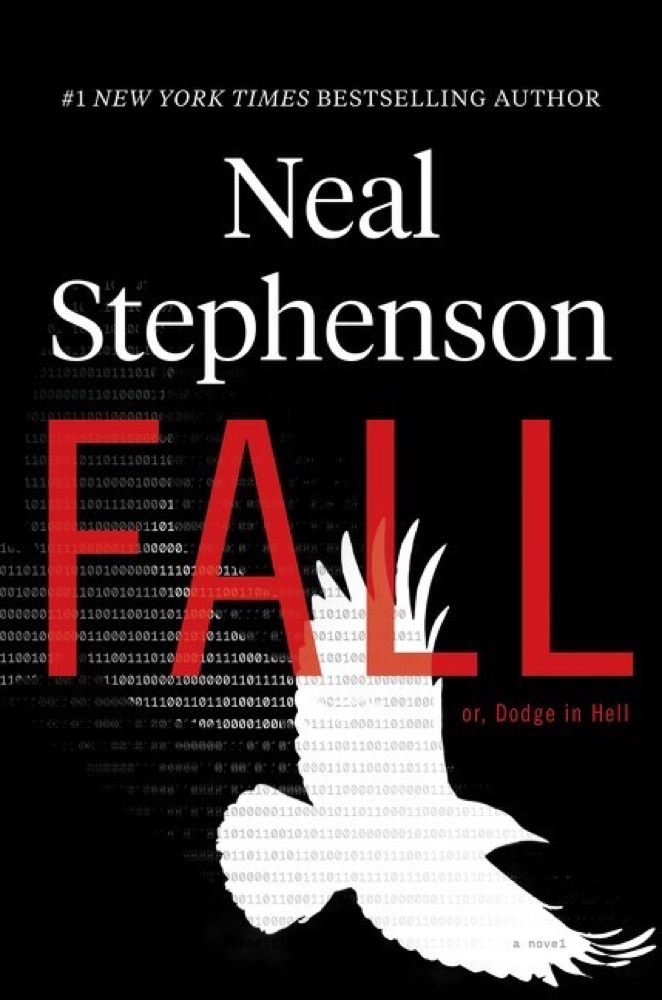 Fall; or, Dodge in Hell
 Phenomenology of Perception
 Science and Sanity: An Introduction to Non-Aristotelian Systems and General Semantics
 The Blank Slate: The Modern Denial of Human Nature
 Finite and Infinite Games: A Vision of Life as Play and Possibility
 The Wisdom of Insecurity: A Message for an Age of Anxiety
 The Human Condition
 Songs of a Dead Dreamer
 The Anomaly
 The Perennial Philosophy
 Amusing Ourselves to Death: Public Discourse in the Age of Show Business
 First As Tragedy, Then As Farce
 The Denial of Death