
 Death's End
Quotes from the Book
We can pull atoms apart, peer back at the first light and predict the end of the universe with just a handful of equations, squiggly lines and arcane symbols that normal people cannot fathom, even though they hold sway over their lives. But it's not just regular folks; even scientists no longer comprehend the world. Take quantum mechanics, the crown jewel of our species, the most accurate, far-ranging and beautiful of all our physical theories. It lies behind the supremacy of our smartphones, behind the Internet, behind the coming promise of godlike computing power. It has completely reshaped our world. We know how to use it, it works as if by some strange miracle, and yet there is not a human soul, alive or dead, who actually gets it. The mind cannot come to grips with its paradoxes and contradictions. It's as if the theory had fallen to earth from another planet, and we simply scamper around it like apes, toying and playing with it, but with no true understanding.
52
Looking at the waves scudding outwards and getting lost on the horizon, he could not help but recall the words of his mentor, the Danish physicist Niels Bohr, who had once told him that a part of eternity lies in reach of those capable of staring, unblinking, at the sea’s deranging expanses.
17
He had also gone through a bad divorce, become estranged from his only daughter and been diagnosed with skin cancer, but he insisted that all of that, however painful, was secondary to the sudden realization that it was mathematics—not nuclear weapons, computers, biological warfare or our climate Armageddon—which was changing our world to the point where, in a couple of decades at most, we would simply not be able to grasp what being human really meant.
15
Heisenberg’s uncertainty principle shredded the hopes of all those who had put their faith in the clockwork universe Newtonian physics had promised.
10
Reality, they said to those present, does not exist as something separate from the act of observation.
8
He has no friends that I know of, and his few neighbours consider him a bit of a weirdo, but I like to think of him as my friend as he will sometimes leave buckets of compost outside my house, as a gift for my garden. The oldest tree on my property is a lemon, a sprawling mass of twigs with a heavy bow. The night gardener once asked me if I knew how citrus trees died: when they reach old age, if they are not cut down and they manage to survive drought, disease and innumerable attacks of pests, fungi and plagues, they succumb from overabundance. When they come to the end of their life cycle, they put out a final, massive crop of lemons. In their last spring their flowers bud and blossom in enormous bunches and fill the air with a smell so sweet that it stings your nostrils from two blocks away; then their fruits ripen all at once, whole limbs break off due to their excessive weight, and after a few weeks the ground is covered with rotting lemons. It is a strange sight, he said, to see such exuberance before death. One can picture it in animal species, those million salmon mating and spawning before dropping dead, or the billions of herrings that turn the seawater white with their sperm and eggs and cover the coasts of the northeast Pacific for hundreds of miles. But trees are very different organisms, and such displays of overripening feel out of character for a plant and more akin to our own species, with its uncontrolled, devastating growth. I asked him how long my own citrus had to live. He told me that there was no way to know, at least not without cutting it down and looking inside its trunk. But, really, who would want to do that?
8
If matter were prone to birthing monsters of this kind, Schwarzschild asked with a trembling voice, were there correlations with the human psyche? Could a sufficient concentration of human will--millions of people exploited for a single end with their minds compressed into the same psychic space--unleash something comparable to the singularity? Schwarzschild was convinced that such a thing was not only possible but was actually taking place. . . . He babbled about a black sun dawning over the horizon, capable of engulfing the entire world, and he lamented that there was nothing we could do about it. Because the singularity sent out no warnings. The point of no return--the limit past which one fell prey to its unforgiving pull--had no sign or demarcation. Whoever crossed it was beyond hope. Their destiny was set, as all possible trajectories led irrevocably to the singularity. And if such was the nature of that threshold, Schwarzschild asked, his eyes shot through with blood, how would we know if we had already crossed it?
7
In 1907, Haber was the first to obtain nitrogen, the main nutrient required for plant growth, directly from the air. In this way, from one day to the next, he addressed the scarcity of fertilizer that threatened to unleash an unprecedented global famine at the beginning of the twentieth century. Had it not been for Haber, hundreds of millions of people who until then had depended on natural fertilizers such as guano and saltpetre for their crops would have died from lack of nourishment. In prior centuries, Europe’s insatiable hunger had driven bands of Englishmen as far as Egypt to despoil the tombs of the ancient pharaohs, in search not of gold, jewels or antiquities, but of the nitrogen contained in the bones of the thousands of slaves buried along with the Nile pharaohs, as sacrificial victims, to serve them even after their deaths. The English tomb raiders had exhausted the reserves in continental Europe; they dug up more than three million human skeletons, along with the bones of hundreds of thousands of dead horses that soldiers had ridden in the battles of Austerlitz, Leipzig and Waterloo, sending them by ship to the port of Hull in the north of England, where they were ground in the bone mills of Yorkshire to fertilize the verdant fields of Albion.
7
For Heisenberg, it was no longer possible to speak of any subatomic phenomenon with absolute certainty. Where before there had been a cause for every effect, now there was a spectrum of probabilities.
6
Schwarzschild complains of something strange that has begun to grow inside him: “I don’t know how to name or define it, but it has an irrepressible force and darkens all my thoughts. It is a void without form or dimension, a shadow I can’t see, but one that I can feel with the entirety of my soul.
5
Hsbd-iryt, the original colour of the sky—the legendary blue used by the Egyptians to adorn the skin of their gods. Passed down across the centuries, closely guarded by the priests of Egypt as part of their divine covenant, its formula was stolen by a Greek thief and lost forever after the fall of the Roman Empire.
5
Did you know the first symptom of a psychological disturbance is the inability to contend with the future?
4
yielding a world that would turn in on itself like an ouroboros:
4
when discussing atoms, language could serve as nothing more than a kind of poetry.
3
In his work Maladies and Remedies of the Life of the Flesh, published in Leiden under the pseudonym Christianus Democritus, he claimed to have discovered the Elixir of Life—a liquid counterpart to the Philosopher’s Stone—which would heal any ailment and grant eternal life to the person who drank it. He tried, but failed, to exchange the formula for the deed to Frankenstein Castle, and the only use he ever made of his potion—a mixture of decomposing blood, bones, antlers, horns and hooves—was as an insecticide, due to its incomparable stench. This same quality led the German troops to employ the tarry, viscous fluid as a non-lethal chemical weapon (therefore exempt from the Geneva Convention), pouring it into wells in North Africa to slow the advance of General Patton and his men, whose tanks pursued them across the desert sands. An ingredient in Dippel’s elixir would eventually produce the blue that shines not only in Van Gogh’s Starry Night and in the waters of Hokusai’s Great Wave, but also on the uniforms of the infantrymen of the Prussian army, as though something in the colour’s chemical structure invoked violence: a fault, a shadow, an existential stain passed down from those experiments in which the alchemist dismembered living animals to create it, assembling their broken bodies in dreadful chimeras he tried to reanimate with electrical charges, the very same monsters that inspired Mary Shelley to write her masterpiece, Frankenstein; or, The Modern Prometheus, in whose pages she warned of the risk of the blind advancement of science, to her the most dangerous of all human arts.
3
a part of eternity lies in reach of those capable of staring, unblinking, at the sea's deranging expanses
3
with time, the planets would escape from their orbits, the gaseous giants would engulf their neighbours, and Earth itself would be expelled from the solar system to roam, like a wandering star, until the end of time, unless the form of space were not planar.
3
A perspective is by nature limited. It offers us one single vision of a landscape. Only when complementary views of the same reality combine are we capable of achieving fuller access to the knowledge of things.
2
For years, he devoted the whole of his energy, twelve hours a day, seven days a week, to mathematics. He did not read newspapers, watch television or go to the cinema. He liked ugly women, squalid apartments, dilapidated rooms. He worked cloistered in a cold office with flaking paint falling from the walls, his back turned to the only window, with pen and paper on his desk and only four objects as decoration: his mother’s death mask, a small wire sculpture of a goat, a jar of Spanish olives, and a charcoal portrait of his father, drawn in Le Vernet concentration camp.
2
physicist—like the poet—should not describe the facts of the world, but rather generate metaphors and mental connections.
2
One ghost succeeds the other like waves on the illusory sea of birth and death.
2
Bohr was a colossus in the world of physics. The only scientist to achieve a similar degree of influence during the first half of the twentieth century was Albert Einstein, who was as much his rival as his friend. In 1922, Bohr had already received the Nobel Prize, and he had a gift for discovering young talents and bringing them under his wing. Such was the case with Heisenberg: during their strolls in the mountains, he convinced the young physicist that, when discussing atoms, language could serve as nothing more than a kind of poetry. Walking with Bohr, Heisenberg had his first intuition of the radical otherness of the subatomic world. “If a mere particle of dust contains billions of atoms,” Bohr said to him as they were scaling the massifs of the Harz range, “what possible way is there to talk meaningfully of something so small?” The physicist—like the poet—should not describe the facts of the world, but rather generate metaphors and mental connections. From that summer onwards, Heisenberg understood that to apply concepts of classical physics such as position, velocity and momentum to a subatomic particle was sheer madness. That aspect of nature required a completely new language.” Excerpt From: Benjamín Labatut. “When We Cease to Understand the World”.
2
«No lo sé nombrar ni definir, pero posee una fuerza incontenible y oscurece todos mis pensamientos. Es un vacío sin forma ni dimensiones, una sombra que no puedo ver, pero que siento con toda mi alma.»
1
Just imagine how far we have fallen into uncertainty if the human imagination cannot find a single place to lay its anchor, if not a single stone in the world has the right to be considered immobile!
1
Take quantum mechanics, the crown jewel of our species, the most accurate, far-ranging and beautiful of all our physical theories. It lies behind the supremacy of our smartphones, behind the Internet, behind the coming promise of godlike computing power. It has completely reshaped our world. We know how to use it, it works as if by some strange miracle, and yet there is not a human soul, alive or dead, who actually gets it. The mind cannot come to grips with its paradoxes and contradictions. It’s as if the theory had fallen to earth from another planet, and we simply scamper around it like apes, toying and playing with it, but with no true understanding
1
it was impossible to “see” a quantum entity for the simple reason that it did not have a single identity. Illuminating one of its properties necessarily obscured the other. The best description of a quantum system was neither an image nor a metaphor, but rather a set of numbers.
1
he was incapable of concentrating; one thought ran into the next, and he had the sense that the tedium of war was spawning a long-dormant psychosis in him.
1
Watch on YouTube
About Benjamín Labatut
We have collected 27 quotes from 1 book by Benjamín Labatut on BookQuoters.
More about the author →About the book
One of The New York Times Book Review ’s 10 Best Books of 2021
Shortlisted for the 2021 International Booker Prize and the 2021 National Book Award for Translated Literature
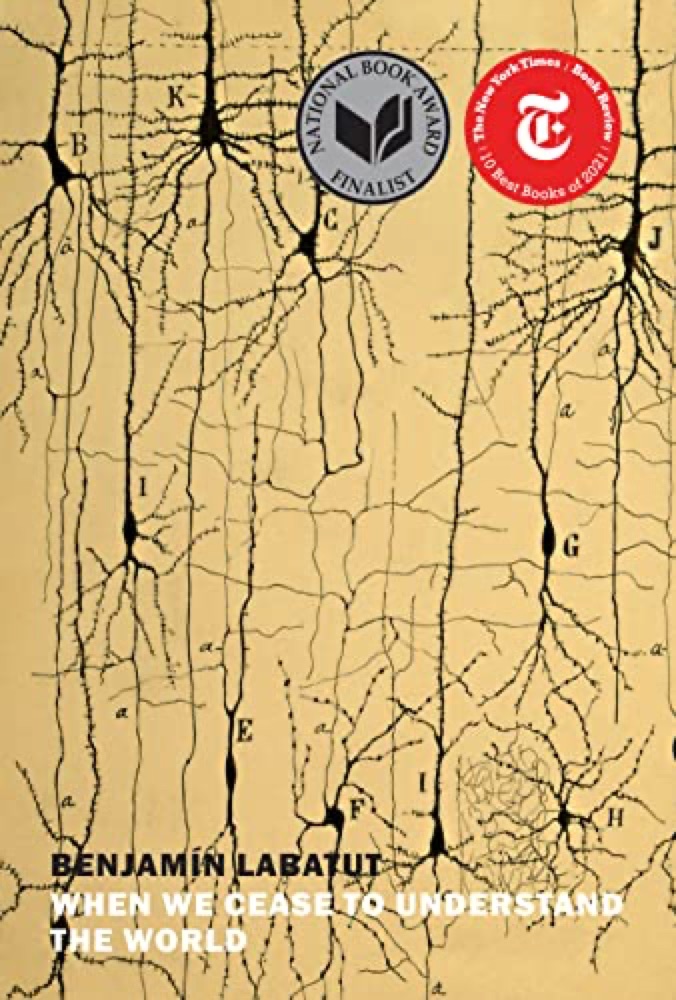
A fictional examination of the lives of real-life scientists and thinkers whose discoveries resulted in moral consequences beyond their imagining.
When We Cease to Understand the World is a book about the complicated links between scientific and mathematical discovery, madness, and destruction.
Fritz Haber, Alexander Grothendieck, Werner Heisenberg, Erwin Schrödinger—these are some of luminaries into whose troubled lives Benjamín Labatut thrusts the reader, showing us how they grappled with the most profound questions of existence. They have strokes of unparalleled genius, alienate friends and lovers, descend into isolation and insanity. Some of their discoveries reshape human life for the better; others
Book details
- First published
- 2020
- Author
- Benjamín Labatut
- Genre
- Nonfiction
- Goodreads rating
- 4.09 (68k ratings)
The buzz
- The New York TimesReview in The New York Timesprofessional review (via Book Marks)
- The New YorkerReview in The New Yorkerprofessional review (via Book Marks)
- The Wall Street JournalReview in The Wall Street Journalprofessional review (via Book Marks)
- The GuardianReview in The Guardianprofessional review (via Book Marks)
- Kirkus ReviewsReview in Kirkus Reviewsprofessional review (via Book Marks)
- Publishers WeeklyReview in Publishers Weeklyprofessional review (via Book Marks)
Keep reading
Death's End
 Helgoland: Making Sense of the Quantum Revolution
 The Three-Body Problem
 The Big Picture: On the Origins of Life, Meaning, and the Universe Itself
 The Dark Forest
 Songs of Distant Earth
 The Empusium
 Fiasco
 Why Does the World Exist?: An Existential Detective Story
 What Is Real?: The Unfinished Quest for the Meaning of Quantum Physics
 Genius: The Life and Science of Richard Feynman
 The Immense Journey
 From Eternity to Here: The Quest for the Ultimate Theory of Time
 The Star Diaries
 The Accidental Universe: The World You Thought You Knew
 Bewilderment
 The Fifth Science
 Blue Remembered Earth
 The Grand Design
 The World as Will and Representation, Vol 1
 Until the End of Time: Mind, Matter, and Our Search for Meaning in an Evolving Universe
 The Stories of Vladimir Nabokov
 Our Mathematical Universe: My Quest for the Ultimate Nature of Reality
 Bend Sinister
 Chaos: Making a New Science
 Solar
Solar
 The Occult
 The Man Without Qualities
 Point Omega
 Black Holes and Baby Universes and Other Essays
 Labyrinths: Selected Stories and Other Writings
 Fall; or, Dodge in Hell
 The Rings of Saturn
 Man and His Symbols
 Einstein: His Life and Universe
 Solaris
 The Time Machine
 Last and First Men
 Quicksilver
 Selected Non-Fictions
 On Truth and Lies in a Nonmoral Sense
 Endymion
 The Origin of Consciousness in the Breakdown of the Bicameral Mind
 Primeval and Other Times
 The Island of the Day Before
 The Elementary Particles
 The End of Time: The Next Revolution in Our Understanding of the Universe
 Irrational Man: A Study in Existential Philosophy
 The Invention of Solitude
 In the Light of What We Know
 The Complete Cosmicomics
 The Meaning of It All: Thoughts of a Citizen-Scientist
 Foucault's Pendulum
 The Fall of Hyperion
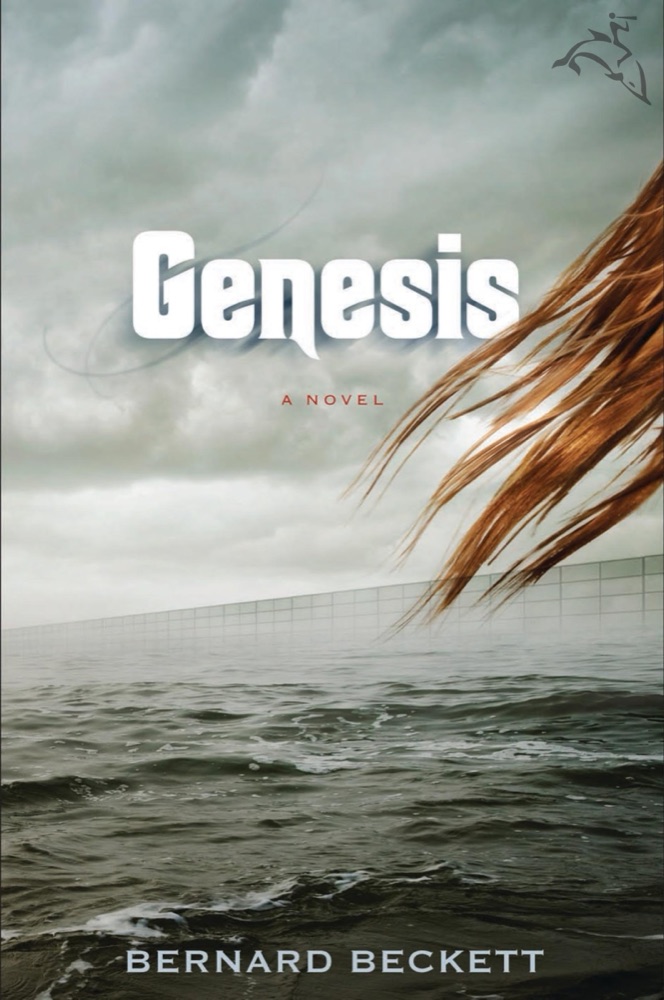 Genesis
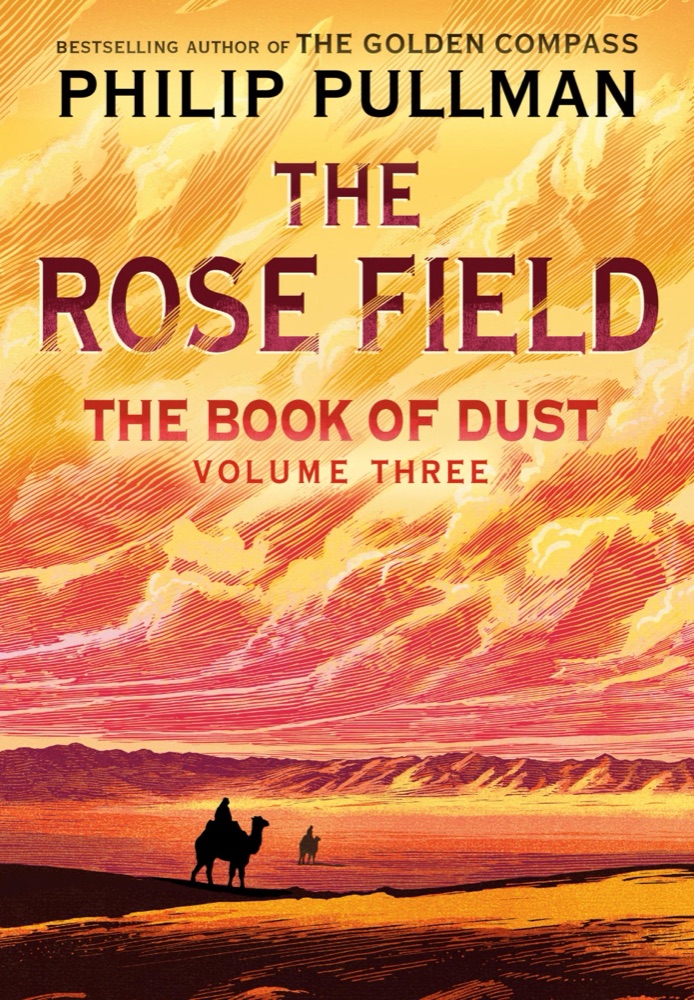 The Rose Field
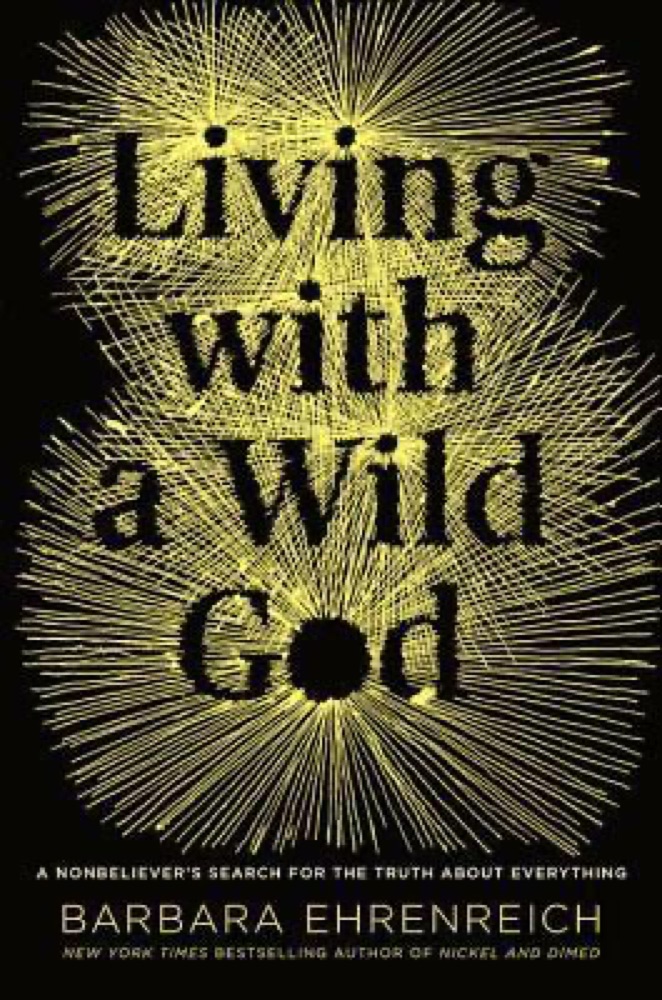 Living with a Wild God: A Nonbeliever's Search for the Truth about Everything
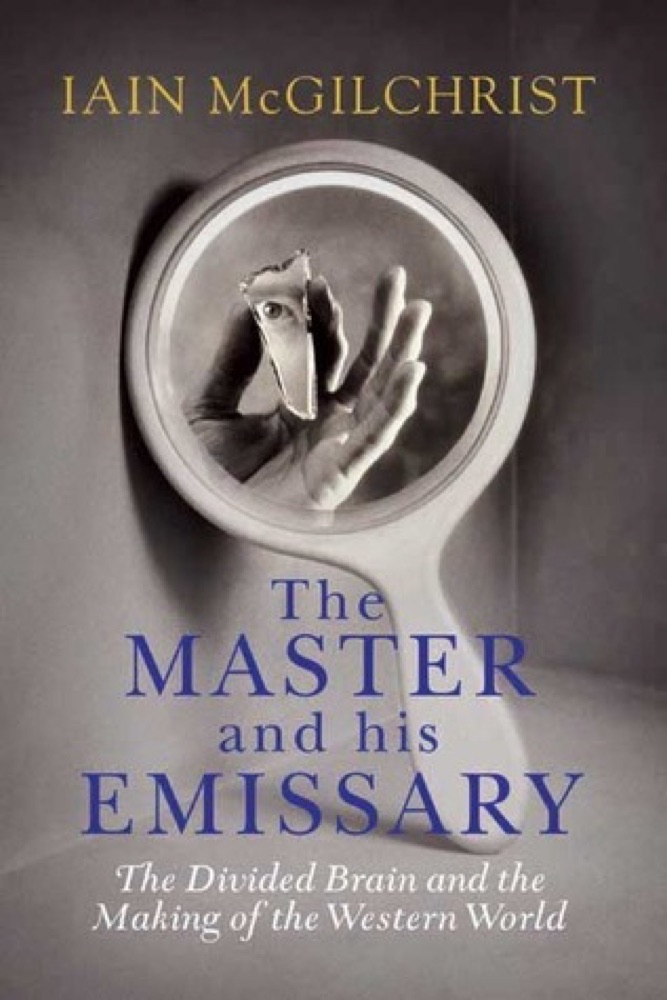 The Master and His Emissary: The Divided Brain and the Making of the Western World
 The Way Things Are
 Moravagine