
 The Hot Zone: The Terrifying True Story of the Origins of the Ebola Virus
Quotes from the Book
Make no mistake, they are connected, these disease outbreaks coming one after another. And they are not simply happening to us; they represent the unintended results of things we are doing. They reflect the convergence of two forms of crisis on our planet. The first crisis is ecological, the second is medical.
25
Alternatively, anyone who favors Intelligent Design in lieu of evolution might pause to wonder why God devoted so much of His intelligence to designing malarial parasites.
20
the most serious outbreak on the planet earth is that of the species Homo sapiens.
18
By the cold Darwinian logic of natural selection, evolution codifies happenstance into strategy.
11
In ecological terms, we are almost paradoxical: large-bodied and long-lived but grotesquely abundant. We are an outbreak.
10
We should recognize that they reflect things that we’re doing, not just things that are happening to us. We should understand that, although some of the human-caused factors may seem virtually inexorable, others are within our control.
8
People and gorillas, horses and duikers and pigs, monkeys and chimps and bats and viruses: We’re all in this together.
8
This form of interspecies leap is common, not rare; about 60 percent of all human infectious diseases currently known either cross routinely or have recently crossed between other animals and us.
7
Mathematics to me is like a language I don’t speak though I admire its literature in translation.
7
The transmission of SARS, Dwyer said, seems to depend much on super spreaders—and their behavior, not to mention the behavior of people around them, can be various. The mathematical ecologist’s term for variousness of behavior is “heterogeneity,” and Dwyer’s models have shown that heterogeneity of behavior, even among forest insects, let alone among humans, can be very important in damping the spread of infectious disease. “If you hold mean transmission rate constant,” he told me, “just adding heterogeneity by itself will tend to reduce the overall infection rate.” That sounds dry. What it means is that individual effort, individual discernment, individual choice can have huge effects in averting the catastrophes that might otherwise sweep through a herd. An individual gypsy moth may inherit a slightly superior ability to avoid smears of NPV as it grazes on a leaf. An individual human may choose not to drink the palm sap, not to eat the chimpanzee, not to pen the pig beneath mango trees, not to clear the horse’s windpipe with his bare hand, not to have unprotected sex with the prostitute, not to share the needle in a shooting gallery, not to cough without covering her mouth, not to board a plane while feeling ill, or not to coop his chickens along with his ducks. “Any tiny little thing that people do,” Dwyer said, if it makes them different from one another, from the idealized standard of herd behavior, “is going to reduce infection rates.
6
Sir Peter Medawar, an eminent British biologist who received a Nobel Prize the same year as Macfarlane Burnet, defined a virus as “a piece of bad news wrapped up in a protein.
5
How do such diseases leap from nonhuman animals into people, and why do they seem to be leaping more frequently in recent years? To put the matter in its starkest form: Human-caused ecological pressures and disruptions are bringing animal pathogens ever more into contact with human populations, while human technology and behavior are spreading those pathogens ever more widely and quickly.
4
Influenza is caused by three types of viruses, of which the most worrisome and widespread is influenza A. Viruses of that type all share certain genetic traits: a single-stranded RNA genome, which is partitioned into eight segments, which serve as templates for eleven different proteins. In other words, they have eight discrete stretches of RNA coding, linked together like eight railroad cars, with eleven different deliverable cargoes. The eleven deliverables are the molecules that comprise the structure and functional machinery of the virus. They are what the genes make. Two of those molecules become spiky protuberances from the outer surface of the viral envelope: hemagglutinin and neuraminidase. Those two, recognizable by an immune system, and crucial for penetrating and exiting cells of a host, give the various subtypes of influenza A their definitive labels: H5N1, H1N1, and so on. The term “H5N1” indicates a virus featuring subtype 5 of the hemagglutinin protein combined with subtype 1 of the neuraminidase protein. Sixteen different kinds of hemagglutinin, plus nine kinds of neuraminidase, have been detected in the natural world. Hemagglutinin is the key that unlocks a cell membrane so that the virus can get in, and neuraminidase is the key for getting back out. Okay so far? Having absorbed this simple paragraph, you understand more about influenza than 99.9 percent of the people on Earth. Pat yourself on the back and get a flu shot in November. At
4
disappointment, in science, is sometimes a gateway to insight.
4
Ecological disturbance causes diseases to emerge. Shake a tree, and things fall out. Nearly all zoonotic diseases result from infection by one of six kinds of pathogen: viruses, bacteria, fungi, protists (a group of
4
When a pathogen leaps from some nonhuman animal into a person, and succeeds there in establishing itself as an infectious presence, sometimes causing illness or death, the result is a zoonosis.
4
If SARS had conformed to the perverse pattern of presymptomatic infectivity, its 2003 emergence wouldn’t be a case history in good luck and effective outbreak response. It would be a much darker story. The much darker story remains to be told, probably not about this virus but about another. When the Next Big One comes, we can guess, it will likely conform to the same perverse pattern, high infectivity preceding notable symptoms. That will help it to move through cities and airports like an angel of death.
3
Some of these viruses,” he warned, citing coronaviruses in particular, “should be considered as serious threats to human health. These are viruses with high evolvability and proven ability to cause epidemics in animal populations.
3
Will the Next Big One be caused by a virus? Will the Next Big One come out of a rainforest or a market in southern China? Will the Next Big One kill 30 or 40 million people?
3
Our findings highlight the critical need for health monitoring and identification of new, potentially zoonotic pathogens in wildlife populations, as a forecast measure for EIDs.” That sounds reasonable: Let’s keep an eye on wild creatures. As we besiege them, as we corner them, as we exterminate them and eat them, we’re getting their diseases.
3
Ebola is a zoonosis. So is bubonic plague. So was the so-called Spanish influenza of 1918–1919, which had its ultimate source in a wild aquatic bird and, after passing through some combination of domesticated animals (a duck in southern China, a sow in Iowa?) emerged to kill as many as 50 million people before receding into obscurity.
3
A zoonosis is an animal infection transmissible to humans. There are more such diseases than you might expect. AIDS is one. Influenza is a whole category of others. Pondering them as a group tends to reaffirm the old Darwinian truth (the darkest of his truths, well known and persistently forgotten) that humanity is a kind of animal, inextricably connected with other animals: in origin and in descent, in sickness and in health.
2
When Homo sapiens passed the six-billion mark we had already exceeded by perhaps as much as 100 times the biomass of any large animal species that ever existed on the land.” Wilson meant wild animals. He omitted consideration of livestock, such as the domestic cow ( Bos taurus ), of which the present global population is about 1.3 billion. We are therefore only five times as numerous as our cattle (and probably less massive in total, since they’re each considerably bigger than a human). But of course they wouldn’t exist in such excess without us. A trillion pounds of cows, fattening in feedlots and grazing on landscapes that formerly supported wild herbivores, are just another form of human impact. They’re a proxy measure of our appetites, and we are hungry. We are prodigious, we are unprecedented. We are phenomenal. No other primate has ever weighed upon the planet to anything like this degree. In ecological terms, we are almost paradoxical: large-bodied and long-lived but grotesquely abundant. We are an outbreak.
2
The fossil record shows that no other species of large-bodied beast—above the size of an ant, say, or of an Antarctic krill—has ever achieved anything like such abundance as the abundance of humans on Earth right now.
2
a mutation in that strain might have made it especially aggressive, efficient, transmissible, and fierce.
2
One further factor, possibly the most crucial, was inherent to the way SARS-CoV affects the human body: Symptoms tend to appear in a person before, rather than after, that person becomes highly infectious. The headache, the fever, and the chills—maybe even the cough—precede the major discharge of virus toward other people. Even among some of the superspreaders, in 2003, this seems to have been true. That order of events allowed many SARS cases to be recognized, hospitalized, and placed in isolation before they hit their peak of infectivity. The downside was that hospital staff took the first big blasts of secondary infection; the upside was that those blasts generally weren’t emitted by people still feeling healthy enough to ride a bus or a subway to work. This was an enormously consequential factor in the SARS episode—not just lucky but salvational.
2
Identifying the new virus was only step one in solving the immediate mystery of Hendra, let alone understanding the disease in a wider context. Step two would involve tracking that virus to its hiding place. Where did it exist when it wasn’t killing horses and people? Step three would entail asking a further cluster of questions: How did the virus emerge from its secret refuge, and why here, and why now?
2
When the Next Big One comes, we can guess, it will likely conform to the same perverse pattern, high infectivity preceding notable symptoms. That will help it to move through cities and airports like an angel of death.
2
With influenza and many other diseases the order is reversed, high infectivity preceding symptoms by a matter of days. A perverse pattern: the danger, then the warning. That probably helped account for the scale of worldwide misery and death during the 1918–1919 influenza: high infectivity among cases before they experienced the most obvious and debilitating stages of illness.
2
Watch on YouTube
About David Quammen
We have collected 29 quotes from 1 book by David Quammen on BookQuoters.
More about the author →About the book
Ebola, SARS, Hendra, AIDS, and countless other deadly viruses all have one thing in common: the bugs that transmit these diseases all originate in wild animals and pass to humans by a process called spillover. In this gripping account, David Quammen takes the reader along on this astonishing quest to learn how, where from, and why these diseases emerge and asks the terrifying question: What might the next big one be?
Book details
- First published
- 2012
- Author
- David Quammen
- Genre
- Nonfiction
- Goodreads rating
- 4.42 (21k ratings)
Keep reading
The Hot Zone: The Terrifying True Story of the Origins of the Ebola Virus
 The Ghost Map: The Story of London's Most Terrifying Epidemic - and How It Changed Science, Cities, and the Modern World
 The Lost City of the Monkey God
 The Great Influenza: The Story of the Deadliest Pandemic in History
 Illness as Metaphor and AIDS and Its Metaphors
 The Coming Plague: Newly Emerging Diseases in a World Out of Balance
 The Third Chimpanzee: The Evolution and Future of the Human Animal
 The Story of the Human Body: Evolution, Health, and Disease
 The Code Breaker: Jennifer Doudna, Gene Editing, and the Future of the Human Race
 The Sixth Extinction: An Unnatural History
 Why We Get Sick: The New Science of Darwinian Medicine
 On Call: A Doctor's Journey in Public Service
 Regenesis: Feeding the World Without Devouring the Planet
 The Ancestor's Tale: A Pilgrimage to the Dawn of Evolution
 Clean: The New Science of Skin
 Everything Is Tuberculosis: The History and Persistence of Our Deadliest Infection
 Shadows of Forgotten Ancestors
 Silent Spring
 The Song of the Cell: An Exploration of Medicine and the New Human
 Undeniable: Evolution and the Science of Creation
 Genome
 Genome: the Autobiography of a Species in 23 Chapters
 Guns, Germs, and Steel: The Fates of Human Societies
 The Social Conquest of Earth
 Cannibalism: A Perfectly Natural History
 Billions & Billions: Thoughts on Life and Death at the Brink of the Millennium
 A Hunter-Gatherer's Guide to the 21st Century: Evolution and the Challenges of Modern Life
 Vanishing Treasures: A Bestiary of Extraordinary Endangered Creatures
 Dragons of Eden: Speculations on the Evolution of Human Intelligence
 The Genius of Birds
 The Violinist's Thumb: And Other Lost Tales of Love, War, and Genius, as Written by Our Genetic Code
 The Lost World
 The Lives of a Cell: Notes of a Biology Watcher
 Survival of the Sickest: A Medical Maverick Discovers Why We Need Disease
 The Selfish Gene
 Falter: Has the Human Game Begun to Play Itself Out?
 Your Inner Fish: A Journey Into the 3.5-Billion-Year History of the Human Body
 A Short History of Progress
 On Human Nature
 The Emperor of All Maladies: A Biography of Cancer
 Wild Ones: A Sometimes Dismaying, Weirdly Reassuring Story About Looking at People Looking at Animals in America
 The Origin of Species
 Maelstrom
 Homo Deus: A History of Tomorrow
 Natural Causes: An Epidemic of Wellness, the Certainty of Dying, and Killing Ourselves to Live Longer
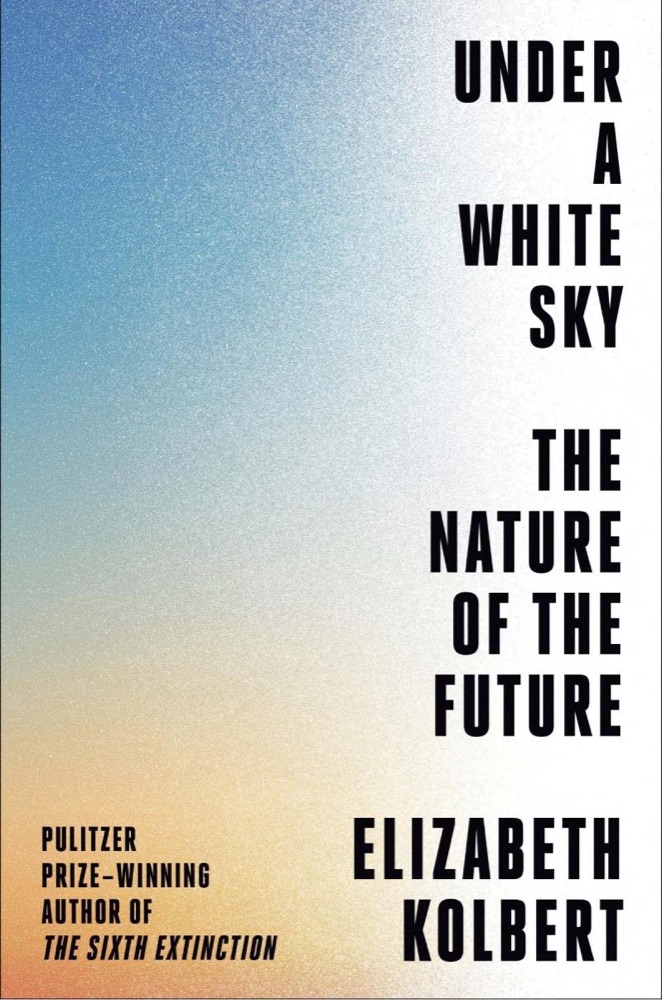 Under a White Sky: The Nature of the Future
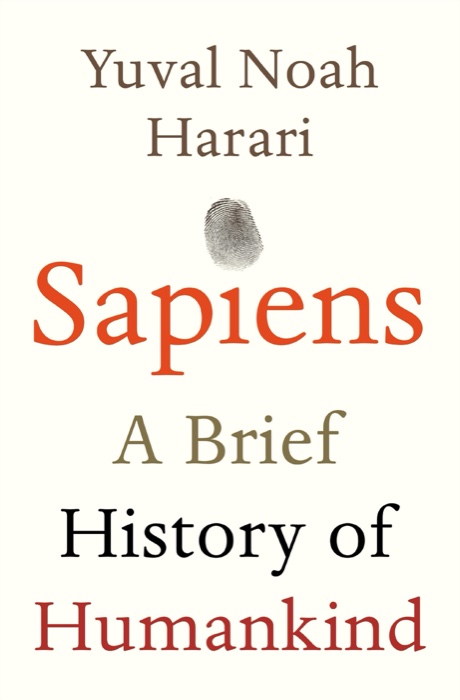 Sapiens: A Brief History of Humankind
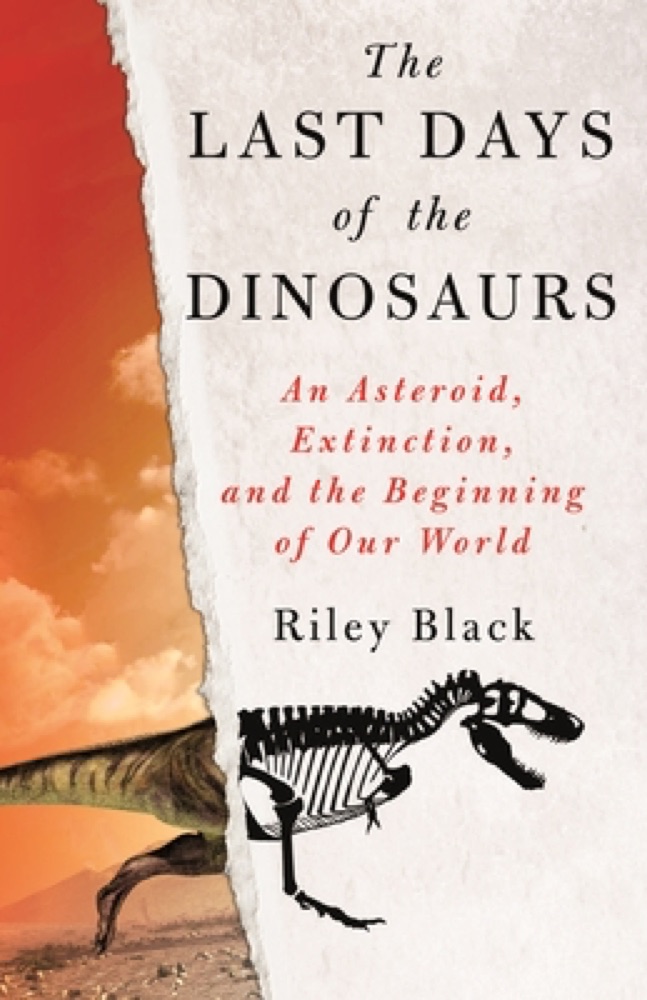 The Last Days of the Dinosaurs: An Asteroid, Extinction, and the Beginning of Our World
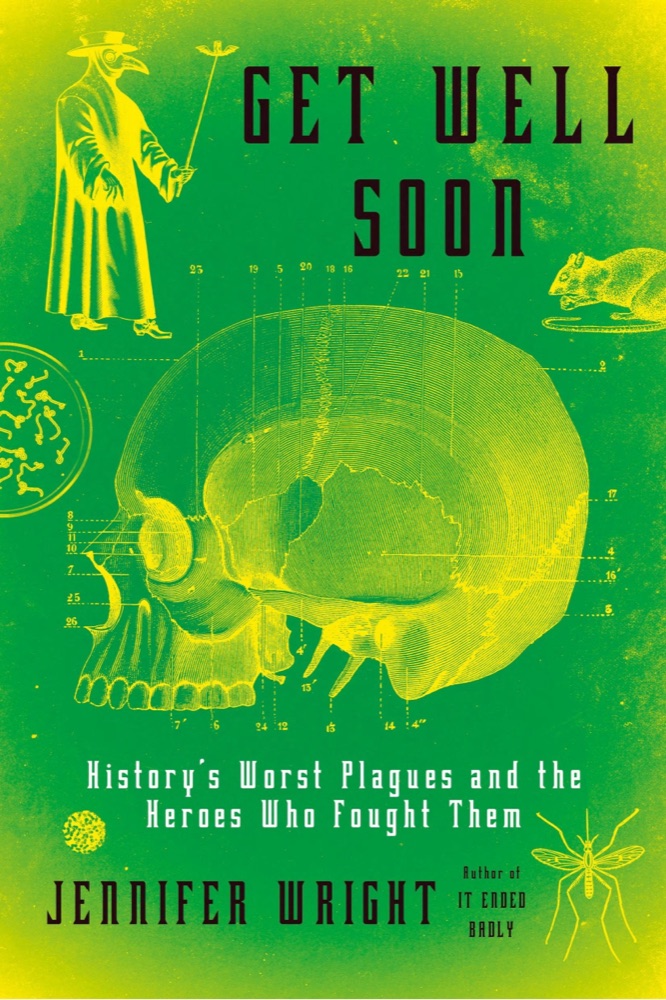 Get Well Soon: History's Worst Plagues and the Heroes Who Fought Them
 The Gene: An Intimate History
 The Nutmeg's Curse: Parables for a Planet in Crisis
 The Blind Watchmaker: Why the Evidence of Evolution Reveals a Universe Without Design
 Are We Smart Enough to Know How Smart Animals Are?
 The Forest Unseen: A Year’s Watch in Nature
 Beyond Words: What Animals Think and Feel
 Parasite Rex: Inside the Bizarre World of Nature's Most Dangerous Creatures
 Darwin's Dangerous Idea: Evolution and the Meanings of Life
 Revenge of the Tipping Point
 Some We Love, Some We Hate, Some We Eat: Why It's So Hard to Think Straight About Animals
 The World Without Us