
 Catching Fire: How Cooking Made Us Human
Quotes from the Book
In all likelihood, the most significant of these is a heightened chance of acquiring harmful parasites or diseases from a conspecific. Both parasites and pathogens are often species-specific and many of them have evolved mechanisms to defeat their host’s immune defenses. As a result, predators that consume their own kind run a greater risk of picking up a disease or a parasite than do predators that feed solely on other species.
4
There is no definitive answer as to why cannibalism provides us with such stimulation, although what is clear, and what remains extremely disturbing for me, is our increasing desensitization to violence and gore - a trait that does not bode well for the future.
4
...the idea of cannibalism had become a handy symbol for unacceptable behavior practiced by "Others"--a broad and malleable category of evildoers that included enemies, followers of non-Christian religions, and any groups determined to retain their "uncivilized" customs.
3
An even more cringeworthy behavior is exhibited by banana slugs (genus Ariolimax), which become so entwined during sex that they sometimes chew off their partner’s corkscrew-shaped penis in an effort to disengage. During this process, which is known as apophallation, penises are slurped down spaghetti-style, occasionally by their owners. Although this usually puts an end to the festivities, the fact that the penises do not grow back presents fewer problems than one would expect. The hermaphroditic slugs simply carry on the remainder of their lives as females.
3
The opposite occurs in protandry, in which individuals begin life as males and transform into females. Examples include the clownfish (Amphiprion), whose behavior could have offered an intriguing alternative resolution to the animated film Finding Nemo.
3
Until relatively recently, and with a very few exceptions, cannibalism would have been regarded as anything but normal. As a result, until the last two decades of the 20th century, few scientists spent time studying a topic thought to have little, if any, biological significance. Basically, the party line was that cannibalism, when it did occur, was either the result of starvation to the stresses related to captive conditions. It was as simple as that. Or so we thought.
3
Stannard believes that by the end of the 16th century, the Spanish had been directly or indirectly responsible for the deaths of between 60 and 80 million indigenous people in the Caribbean, Mexico, and Central America. Even if one were to discount the millions of deaths resulting from diseases, this would still make the Spanish conquest of the New World the greatest act of genocide in recorded history. These types of numbers, which are subject to considerable academic debate, are often overlooked during Columbus Day parades and related festivities.
2
Reality does not yield to wishful thinking and truth cannot be established by a political party (or any other organization for that matter).
2
T'ao Tsung-yi, a writer during the Yuan Dynasty (1271-1368), wrote that "children's meat was the best food of all in taste" followed by women and then men.
1
But rather than the decrease in reports of cannibalism one might expect to find in modern times, the opposite turns out to be true. The greatest number of cannibalism-related deaths in China came as a direct result of Mao Zedong’s “The Great Leap Forward” (1958–1961), a disastrous attempt at utopian engineering.
1
Whether various acts of culturally sanctioned cannibalism existed or not (and it seems absurd to consider that they never did), the fact remains that for the vast majority of Westerners, our feelings regarding the practice have resulted (at least in part) from our exposure to a long list of influential writers beginning with the Ancient Greeks and extending into the 21st century.
1
In his masterpiece, The Histories, the man often referred to as the Father of History wrote that the Persian king Darius asked some Greeks what it would take for them to eat their dead fathers. “No price in the world,” they cried (presumably in unison). Next, Darius summoned several Callatians, who lived in India and “who eat their dead fathers.” Darius asked them what price would make them burn their dead fathers upon a pyre, the preferred funerary method of the Greeks. “Don’t mention such horrors!” they shouted. Herodotus (writing as Darius) then demonstrated a degree of understanding that would have made modern anthropologists proud. “These are matters of settled custom,” he wrote, before paraphrasing the lyric poet Pindar, “And custom is King of all.” In other words, society defines what is right and what is wrong.
1
Essentially, then, as European adventurers, missionaries, and colonists were condemning the indigenous people they encountered for practicing cannibalism, their own rulers and countrymen in Europe were consuming human body parts to a degree and at a rate that would have made Hannibal Lecter proud.
1
Later was it revealed that an American submarine had recovered one of the nine downed fliers, thus saving him from a similar fate at the hands of the starving Japanese. The lucky man’s name was Lt. George H. W. Bush.
Baby, baby, naughty baby, Hush you squalling thing, I say. Peace this moment, peace or maybe, Bonaparte will pass this way. And he’ll beat you, beat you, beat you, And he’ll beat you all to pap, And he’ll eat you, eat you, eat you, Every morsel snap, snap, snap. — The Oxford Dictionary of Nursery Rhymes
These are matters of settled custom,” he wrote, before paraphrasing the lyric poet Pindar, “And custom is King of all.” In other words, society defines what is right and what is wrong.
In bony fishes that guard their own eggs, though, it’s usually the males who are involved, undertaking these chores at nests otherwise known as oviposition sites.
Cannibalism occurs in every class of vertebrates, from fish to mammals.
After their first molt and after the trophic eggs have been consumed, black lace-weaver spiderlings are too large for their mother to care for, though they are in dire need of additional food. In an extreme act of parental care, she calls the babies to her by drumming on their web and presses her body down into the gathering crowd. The ravenous spiderlings swarm over their mother’s body. Then they eat her alive, draining her bodily fluids and leaving behind a husklike corpse.
Here’s another example, unrelated to cannibalism. The reef-inhabiting bluehead wrasse (Thalassoma bifasciatum) is famous for its habit of removing parasites from much larger fish, even entering into their mouths. In this case, however, it’s the removal of a male wrasse from its harem of 30 to 50 females that alters their local environment. Rather than waiting for a new male to arrive, something extraordinary takes place in the harem. Within minutes, one of the females begins exhibiting male-typical behaviors. Relatively quickly, the former female transforms into a male, a form of phenotypic plasticity known in the trade as protogyny. The opposite occurs in protandry, in which individuals begin life as males and transform into females. Examples include the clownfish (Amphiprion), whose behavior could have offered an intriguing alternative resolution to the animated film Finding Nemo.
As a zoologist I was interested in determining what other mammals (besides white middle-class Americans) ate their own placentas and why they did it.
We are also, however, of a lineage that has diverged greatly during our long evolution—and the more recently added or modified sections of our genetic code have seen us evolve us away from the behavior of spiders, mantises, and fish (though less so from our fellow mammals). Part of that divergence is that humans are cultural creatures, and for some of us the very underpinnings of our Western culture, starting with our literature, dictate that unless we are placed into extreme circumstances, certain practices, like cannibalism, are forbidden. But what about cultures in which those Western taboos were never established? Would they enact similar prohibitions on such behavior?
Surprisingly—or perhaps not surprisingly given the subject matter—there is disagreement among anthropologists regarding ritual cannibalism. Some deny that it ever occurred, while others claim that the behavior did occur but was uncommon. Still others claim that cannibalism was practiced by many cultures throughout history and for a variety of reasons.
Mouthbrooding is a common form of behavior in cichlids. Typically, it refers to post-spawning behavior in which parents (usually females) hold their brood of fertilized eggs inside their mouths until they hatch and sometimes even after that. This provides the eggs and fry with a haven from predators, a point commonly portrayed in crowd-pleasing nature videos that depict young fish darting back into their parent’s mouth at the first sign of danger. Conspicuously missing from these lighthearted reports is the fact that parents holding a mouthful of eggs usually eat a considerable portion of them, and sometimes the entire brood. Also destined for the digital equivalent of the cutting room floor are shots showing male cichlids fertilizing the eggs in the females’ mouths, always a difficult topic to explain during family TV time. Mouthbrooders
Watch on YouTube
About Bill Schutt
We have collected 24 quotes from 1 book by Bill Schutt on BookQuoters.
More about the author →About the book
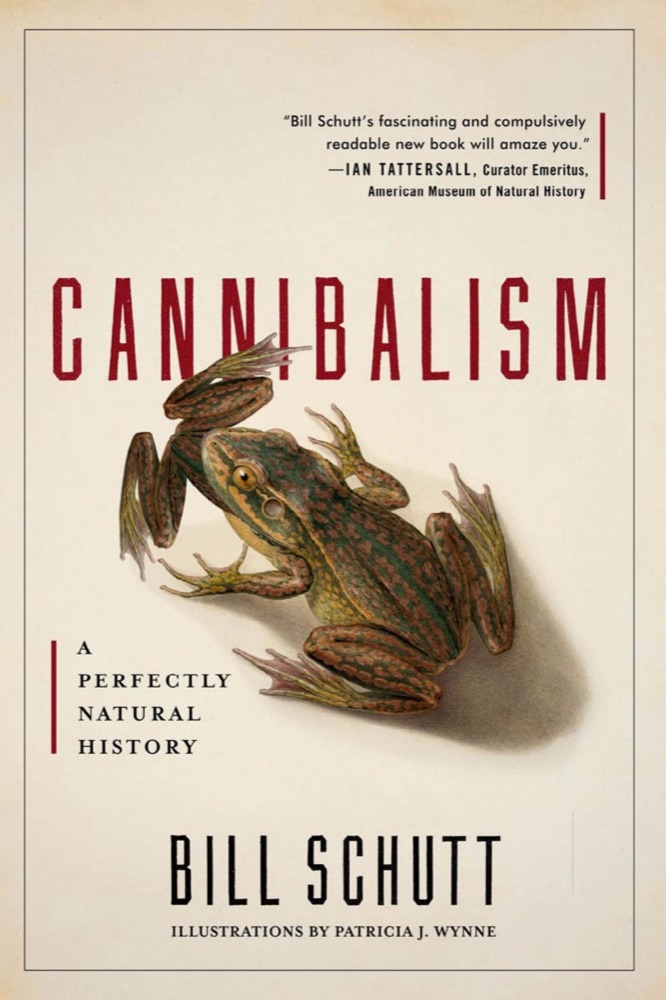
For centuries scientists have written off cannibalism as a bizarre phenomenon with little biological significance. Its presence in nature was dismissed as a desperate response to starvation or other life-threatening circumstances, and few spent time studying it. A taboo subject in our culture, the behavior was portrayed mostly through horror movies or tabloids sensationalizing the crimes of real-life flesh-eaters. But the true nature of cannibalism--the role it plays in evolution as well as human history--is even more intriguing (and more normal) than the misconceptions we've come to accept as fact. In Cannibalism: A Perfectly Natural History, zoologist Bill Schutt sets the record straight, debunking common myths and investigating our new understanding of cannibalism's role in biology, anthropology, and history in the most fascinating account yet written on this complex topic. Schutt tak
Book details
- First published
- 2017
- Author
- Bill Schutt
- Genre
- Nonfiction
- Goodreads rating
- 3.90 (8k ratings)
The buzz
- The New York TimesReview in The New York Timesprofessional review (via Book Marks)
- The Wall Street JournalReview in The Wall Street Journalprofessional review (via Book Marks)
- SlateReview in Slateprofessional review (via Book Marks)
- Washington Independent Review of BooksReview in Washington Independent Review of Booksprofessional review (via Book Marks)
- The Boston GlobeReview in The Boston Globeprofessional review (via Book Marks)
Keep reading
Catching Fire: How Cooking Made Us Human
 Eating Animals
 Sex at Dawn: The Prehistoric Origins of Modern Sexuality
 The Log from the Sea of Cortez
 Shadows of Forgotten Ancestors
 Some We Love, Some We Hate, Some We Eat: Why It's So Hard to Think Straight About Animals
 The Third Chimpanzee: The Evolution and Future of the Human Animal
 Fuzz: When Nature Breaks the Law
 The Omnivore's Dilemma: A Natural History of Four Meals
 The World Peace Diet
 The Hangman's Replacement: Sprout of Disruption
 The Violinist's Thumb: And Other Lost Tales of Love, War, and Genius, as Written by Our Genetic Code
 Sapiens: A Brief History of Humankind
 Why We Love Dogs, Eat Pigs, and Wear Cows
 The Red Queen: Sex and the Evolution of Human Nature
 The Fresco
 On Human Nature
 Gulp: Adventures on the Alimentary Canal
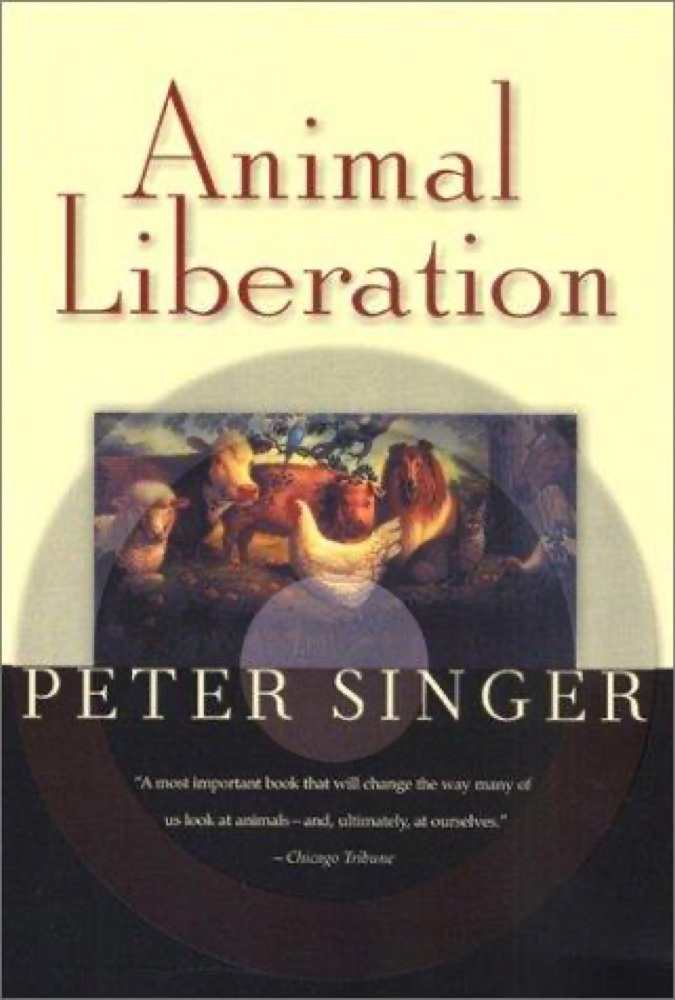 Animal Liberation
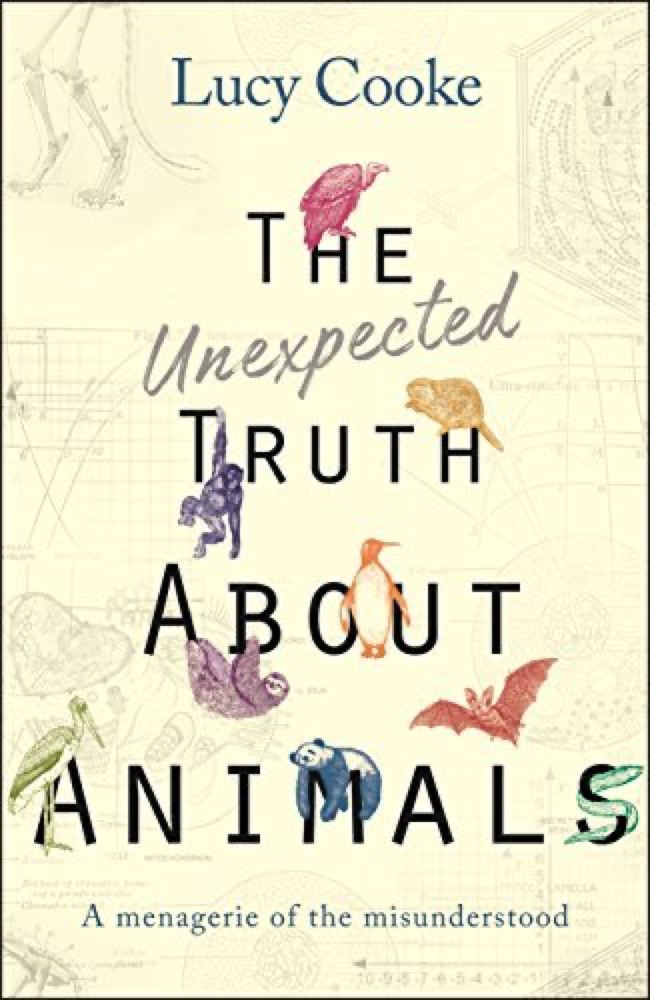 The Unexpected Truth About Animals: A Menagerie of the Misunderstood
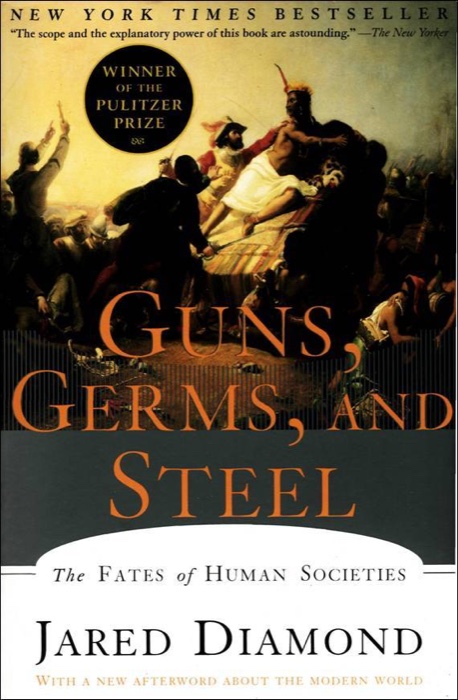 Guns, Germs, and Steel: The Fates of Human Societies
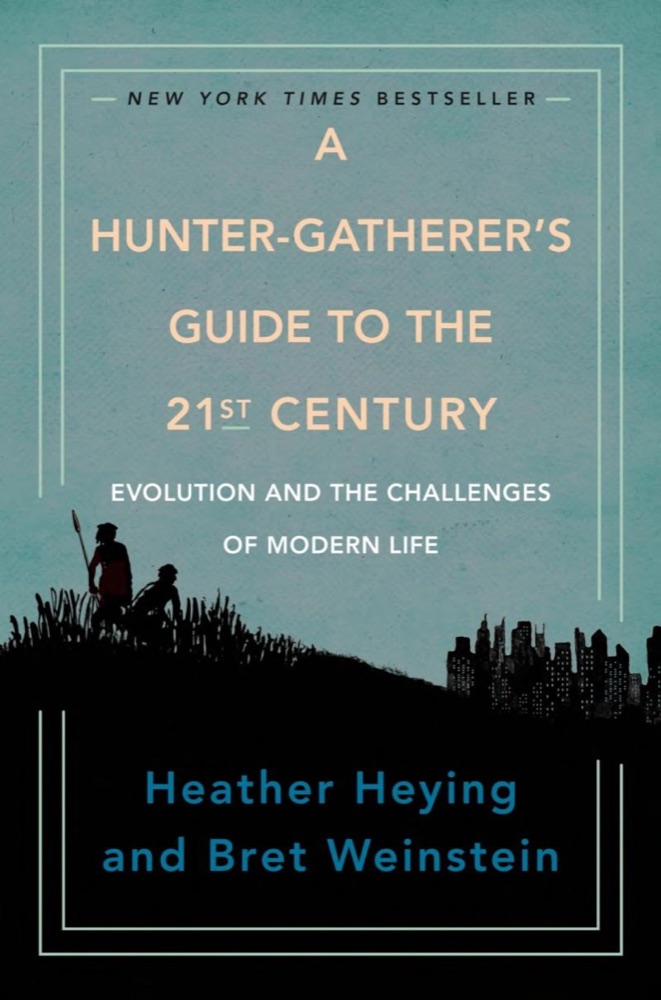 A Hunter-Gatherer's Guide to the 21st Century: Evolution and the Challenges of Modern Life
 Typee: A Peep at Polynesian Life
 Why We Get Sick: The New Science of Darwinian Medicine
 Endgame, Vol. 1: The Problem of Civilization
 A Language Older Than Words
 Vanishing Treasures: A Bestiary of Extraordinary Endangered Creatures
 Dragons of Eden: Speculations on the Evolution of Human Intelligence
 Tender Is the Flesh
 Are We Smart Enough to Know How Smart Animals Are?
 At Home: A Short History of Private Life
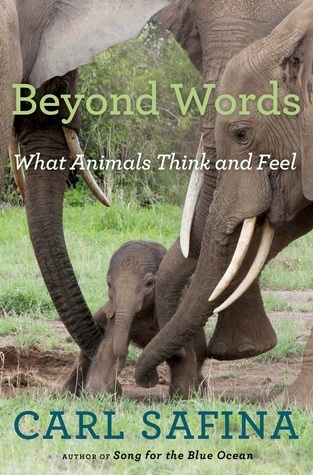 Beyond Words: What Animals Think and Feel
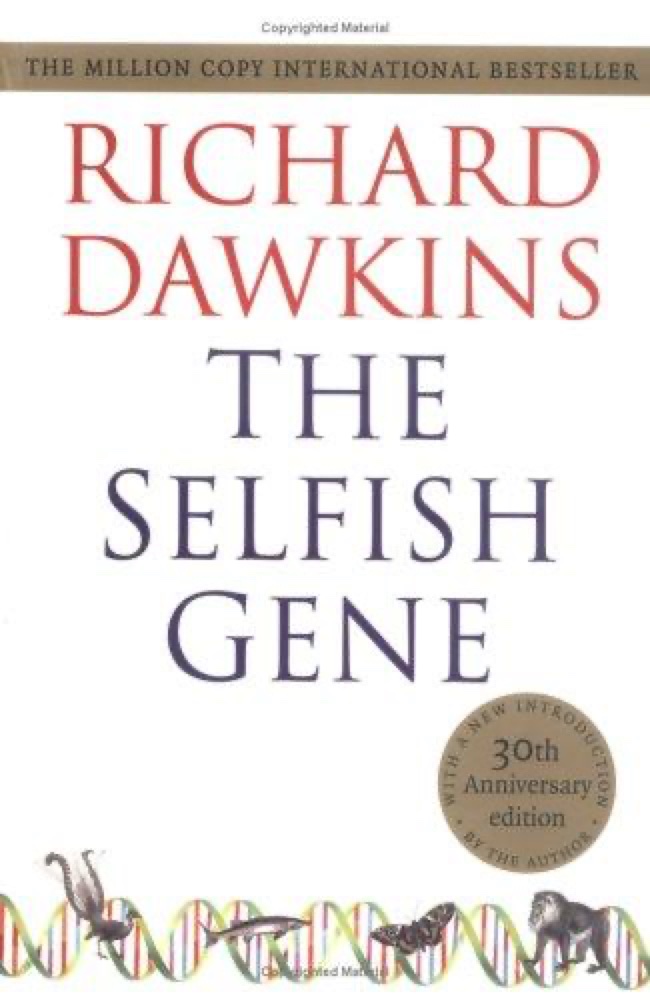 The Selfish Gene
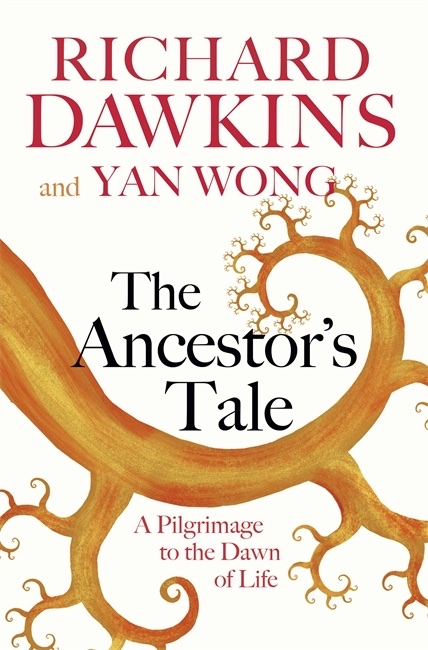 The Ancestor's Tale: A Pilgrimage to the Dawn of Evolution
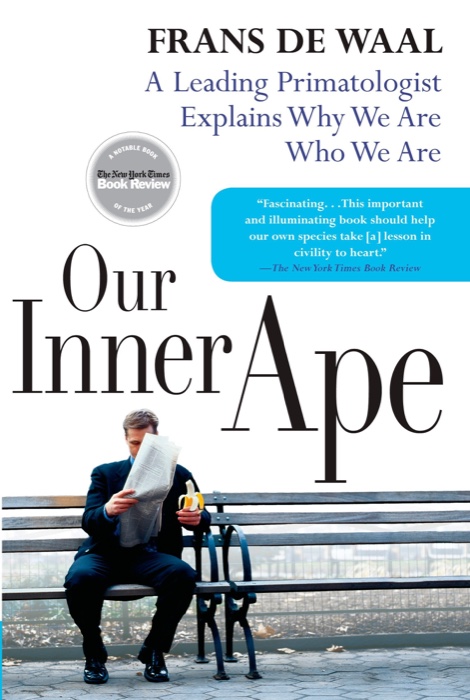 Our Inner Ape: A Leading Primatologist Explains Why We are Who We Are
 Stiff: The Curious Lives of Human Cadavers
 Undeniable: Evolution and the Science of Creation
 The Descent of Man
 Death's Acre: Inside the Legendary Forensic Lab the Body Farm Where the Dead Do Tell Tales
 This is Vegan Propaganda
 The Moral Animal: Why We Are the Way We Are - The New Science of Evolutionary Psychology
 Civilized to Death: What Was Lost on the Way to Modernity
 Animal: The Autobiography of a Female Body
 Of Wolves and Men
 The Blank Slate: The Modern Denial of Human Nature
 A History of the World in 100 Objects
 The Tale of the Dueling Neurosurgeons: The History of the Human Brain as Revealed by True Stories of Trauma, Madness, and Recovery
 The Soul of an Octopus: A Surprising Exploration into the Wonder of Consciousness
 Your Inner Fish: A Journey Into the 3.5-Billion-Year History of the Human Body
 The Better Angels of Our Nature: Why Violence Has Declined
 The Social Conquest of Earth
 Medium Raw: A Bloody Valentine to the World of Food and the People Who Cook
 A Short History of Progress
 Galápagos
 Natural Causes: An Epidemic of Wellness, the Certainty of Dying, and Killing Ourselves to Live Longer
 Food of the Gods: The Search for the Original Tree of Knowledge
 Straw Dogs: Thoughts on Humans and Other Animals
 The Botany of Desire: A Plant's-Eye View of the World
 Into the Drowning Deep
 The Etymologicon: A Circular Stroll through the Hidden Connections of the English Language