
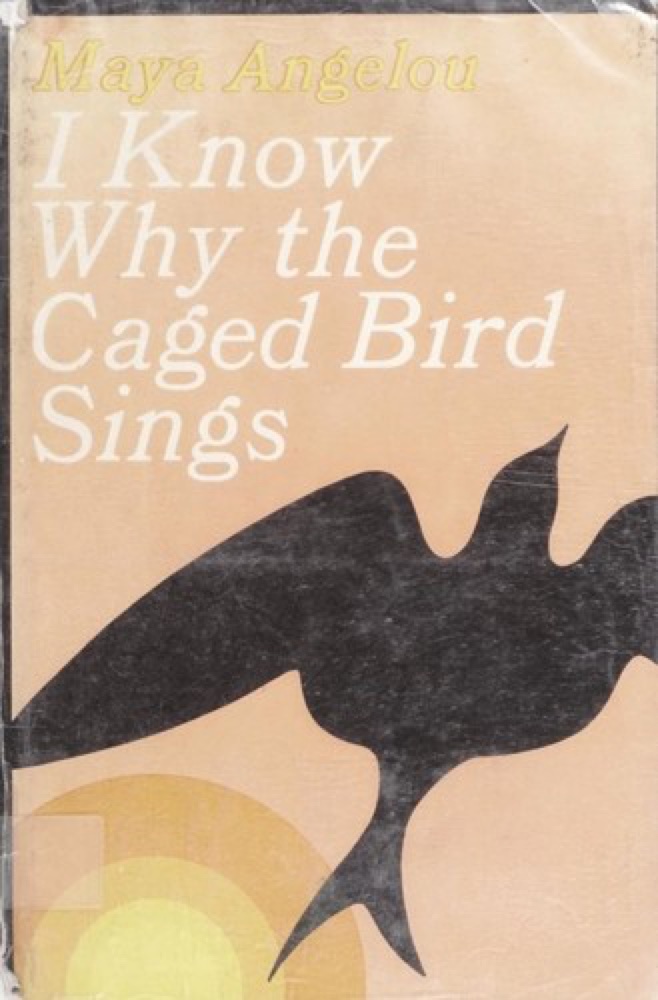
 I Know Why the Caged Bird Sings
Quotes from the Book
Believe people when they tell you who they are. They know themselves better than you.
11
Jimmy said, "We survived slavery. Think about that. Not because we were strong. The American Indians were strong, and they were on their own land. But they have not survived genocide. You know how we survived?" I said nothing. "We put surviving into our poems and into our songs. We put it into our folk tales. We danced surviving in Congo Square in New Orleans and put it in our pots when we cooked pinto beans. We wore surviving on our backs when we clothed ourselves in the colors of the rainbow. We were pulled down so low we could hardly lift our eyes, so we knew, if we wanted to survive, we had better lift our own spirits. So we laughed whenever we got the chance.
9
Black females, for the most part, know by the time they are ten years old that the world is not much concerned with the quality of their lives or even their lives at all. When politicians and salespeople start being kind to black women, seeking them out, offering them largesse, the women accept the soft voices, the simpering statements, the often idle promises, because those are likely to be the only flattering behavior directed to them that day. Behind the women's eyes, however, there is a wisdom that does not pretend to be unaware; nor does it permit gullibility.
7
She lived life as if it had been created just for her
7
For years, I had known that there is nothing idle about curiosity, despite the fact that the two words are often used in tandem. Curiosity fidgets, is hard to satisfy, looks for answers even before forming questions.
7
Death of a beloved flattens and dulls everything. Connections do not adhere so closely, and important events lose some of their glow.
5
I asked for the music, then invited it to enter my body and find the broken and sore places and restore them
5
I thought about black women and wondered how we got to be the way we were. In our country, white men were always in superior positions; after them came white women, then black men, then black women, who were historically on the bottom stratum. How did it happen that we could nurse a nation of strangers, be maids to multitudes of people who scorned us, and still walk with some majesty and stand with a degree of pride?
4
She said black women are so special. Few men of any color and even fewer white women can deal with how fabulous we are.
4
Curiosity had often lured me to the edge of ruin. For years, I had known that there is nothing idle about curiosity, despite the fact that the two words are often used in tandem. Curiosity fidgets, is hard to satisfy, looks for answers even before forming questions. Curiosity wants to behold, to comprehend, maybe even to become.
4
He was right. I would only eke out a living as a singer. The limited success I had, which Bailey recognized, stemmed from the fact that I didn't love singing. My voice was fair and interesting; my ear was not great, or even good, but my rhythm was reliable. Still, I could never become a great singer, since I would not sacrifice for it. To become wondrously successful and to sustain that success in any profession, one must be willing to relinquish many pleasures and be ready to postpone gratification. I didn't care enough for my own singing to make other people appreciate it.
4
Nothing's wrong with going to jail for something you believe in. Remember, jail was made for people. Not horses.
4
With time and a kindly librarian, any unskilled person can learn how to build a replica of the Taj Mahal.
3
Death of a beloved flattens and dulls everything. Mountains and skyscrapers and grand ideas are brought down to eye level or below. Great loves and large hates no longer cast such huge shadows or span so broad a distance. Connections do not adhere so closely, and important events lose some of their glow.
3
Baby, let me tell you what's going to happen. In a few years, there are going to be beautiful posters of Malcolm X, and his photographs will be everywhere. The same people who don't give a damn now will lie and say they always supported him.
3
I asked, "Does she think she's liberated?" Bailey said, as if he had always known it, "Some folks say they want change. They just want exchange. They only want to have what the haves have, so they won't have it anymore....
3
It's hard to make the prettiest clothes fit a miserable man.
3
Human beings are like some plants. If we pause a few seconds in our journey, we begin setting down roots, tendrils that entangle other people as we ourselves are entangled.
3
Couples rarely know how much their togetherness shuts others out, and even if they did, there would be nothing they could do, save make everyone painfully self-conscious.
3
Jimmy said, "We survived slavery.... You know how we survived?" ....We put surviving into our poems and into our songs. We put it into our folk tales. We danced surviving in Congo Square in New Orleans and put it in our bots when we cooked pinto beans. We wore surviving on our backs when we clothed ourselves in the colors of the rainbow. We were pulled down so low we could hardly lift our eyes, so we knew, if we anted to survive, we better lift our own spirits. So we laughed whenever we got the chance.
3
Rise and be prepared to move on and ever on.
2
I thought of human beings, as far back as I had read, of our deeds and didoes. According to some scientists, we were born to forever crawl in swamps, but for some not yet explained reason, we decided to stand erect and, despite gravity's pull and push, to remain standing. We, carnivorous beings, decided not to eat our brothers and sisters but to try to respect them. And further, to try to love them.
2
Although there is nothing amusing about racial discrimination, the oppressed find funny things to say about it. "The white folks are so prejudiced in my town, a colored person is not allowed to eat vanilla ice cream.
2
Jimmy Baldwin was a whirlwind who stirred everything and everybody. He lived at a dizzying pace and I loved spinning with him.
2
Who would answer all the questions, fulfill all the requests? Would anyone? Could anyone? History had taught the citizens of Watts to hope for the best and expect nothing, but be prepared for the worst.
2
He was so near the sacred and fearful grail of black manhood that any man of color who faced the threat of life with courage, and intellect, and wit, was his hero.
2
Take as much time as you need to make up your mind, but once it is made up, step out on your decision like it's something you want.
2
When I tried to explain how his generosity afforded me the opportunity to improve my writing skills, he shrugged his shoulders and said, "I manage artists who make more in one night than you have ever made in a year. Yet I know no one more talented than you." His patronage was a gift as welcome as found money bearing no type of identification.
1
Lighting: a hundred Watts Detroit, Newark and New York Screeching nerves, exploding minds lives tied to a policeman's whistle a welfare worker's doorbell finger
1
BY MAYA ANGELOU AUTOBIOGRAPHIES I Know Why the Caged Bird Sings Gather Together in My Name Singin’ and Swingin’ and Gettin’ Merry Like Christmas The Heart of a Woman All God’s Children Need Traveling Shoes A Song Flung Up to Heaven Mom & Me & Mom
About Maya Angelou
We have collected 231 quotes from 9 books by Maya Angelou on BookQuoters.
More about the author →More by Maya Angelou
I Know Why the Caged Bird Sings
 Phenomenal Woman: Four Poems Celebrating Women
 Mom & Me & Mom
 Wouldn't Take Nothing for My Journey Now
About the book
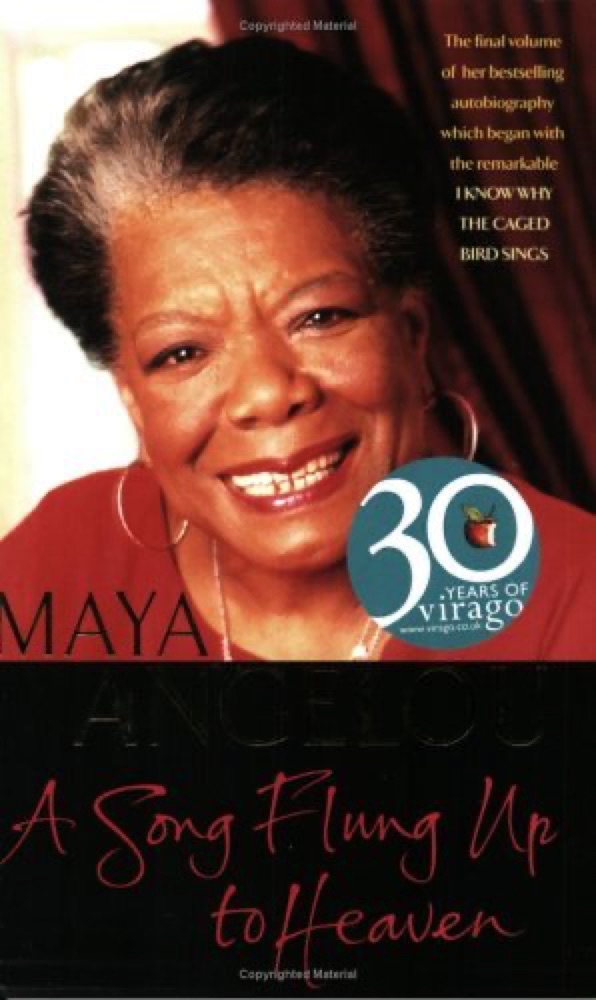
The culmination of a unique achievement in modern American the six volumes of autobiography that began more than thirty years ago with the appearance of I Know Why the Caged Bird Sings .A Song Flung Up to Heaven opens as Maya Angelou returns from Africa to the United States to work with Malcolm X. But first she has to journey to California to be reunited with her mother and brother. No sooner does she arrive there than she learns that Malcolm X has been assassinated.Devastated, she tries to put her life back together, working on the stage in local theaters and even conducting a door-to-door survey in Watts. Then Watts explodes in violence, a riot she describes firsthand.Subsequently, on a trip to New York, she meets Martin Luther King, Jr., who asks her to become his coordinator in the North, and she visits black churches all over America to help support King’s Poor People’s March.But on
Book details
- First published
- 2002
- Author
- Maya Angelou
- Genre
- Nonfiction
- Goodreads rating
- 4.26 (5k ratings)
Keep reading
 Singin' and Swingin' and Gettin' Merry Like Christmas
 The Heart of a Woman
 Americanah
 The Color of Water: A Black Man's Tribute to His White Mother
 Varina
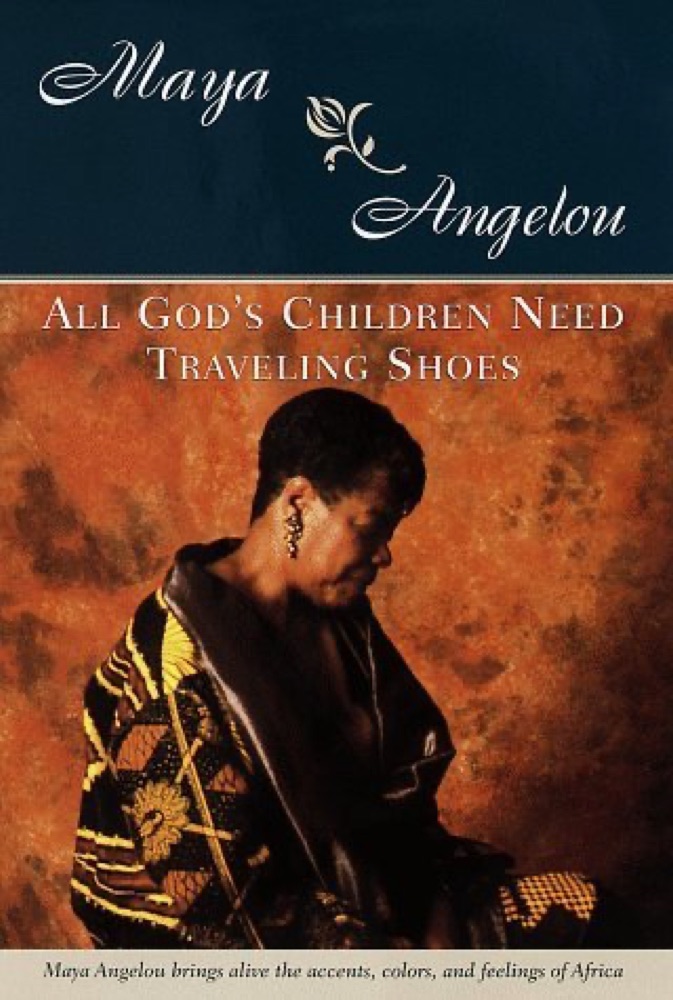 All God's Children Need Traveling Shoes
 Dream Count
 Homegoing
 The Sea Keeper's Daughters
 The Love Songs of W.E.B. Du Bois
 The House of Hidden Meanings
 Lakewood
 Dust Tracks on a Road
 Becoming
 The Final Revival of Opal & Nev
 Sky Full of Elephants
 Aftershocks
 The Book of Love
 Born to Run
 Wade in the Water
 Dreams from My Father: A Story of Race and Inheritance
 X
X
 American Sonnets for My Past and Future Assassin
 My Government Means to Kill Me
 Behold the Dreamers
 Wide Awake
 Out of Oz
 The Office of Historical Corrections
 Walking in My Joy: In These Streets
 Now Is the Time to Open Your Heart
 Just Above My Head
 The Wish Collector
 A Little Devil in America: Notes in Praise of Black Performance
 Good Dirt
 Broken Horses
 Song of Solomon
 Chances Are...
 A Promised Land
 The Fall of Babel
 Jailbird
 The Night Watchman
 Silver Sparrow
 They're Going to Love You
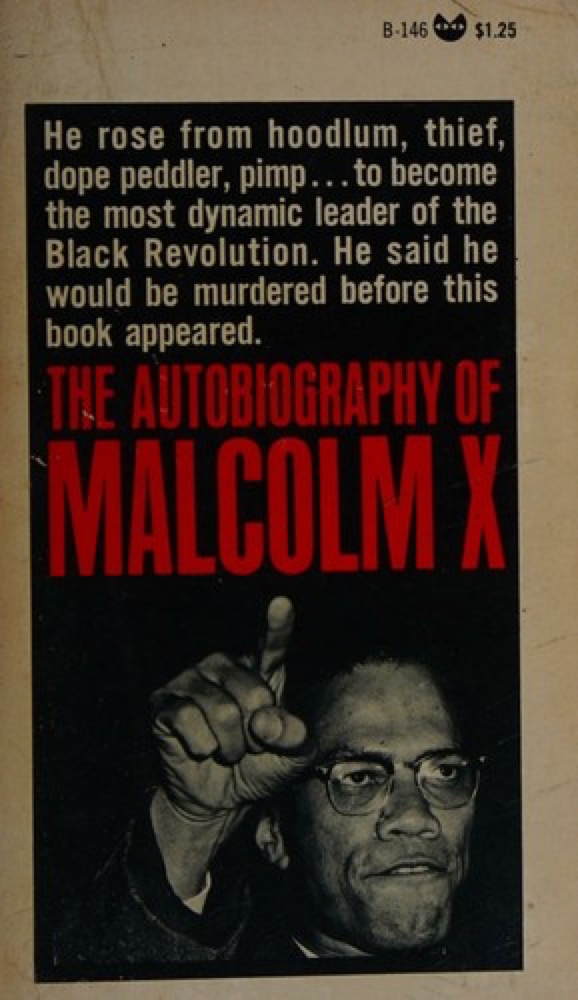 The Autobiography of Malcolm X
 Hell of a Book
 The Bassoon King: My Life in Art, Faith, and Idiocy
 The Tender Bar
 The Color Master: Stories
 Old Babes in the Wood: Stories
 Perennials
 The Harder I Fight the More I Love You: A Memoir
 My Name Is Barbra
 Open City
 Black Friend: Funny, incisive essays on navigating Blackness, tokenism, and friendship in predominantly white spaces.
 The Downstairs Girl
 State of Wonder
 Joan Is Okay
 James
James
 The Likeness
 Belong to Me