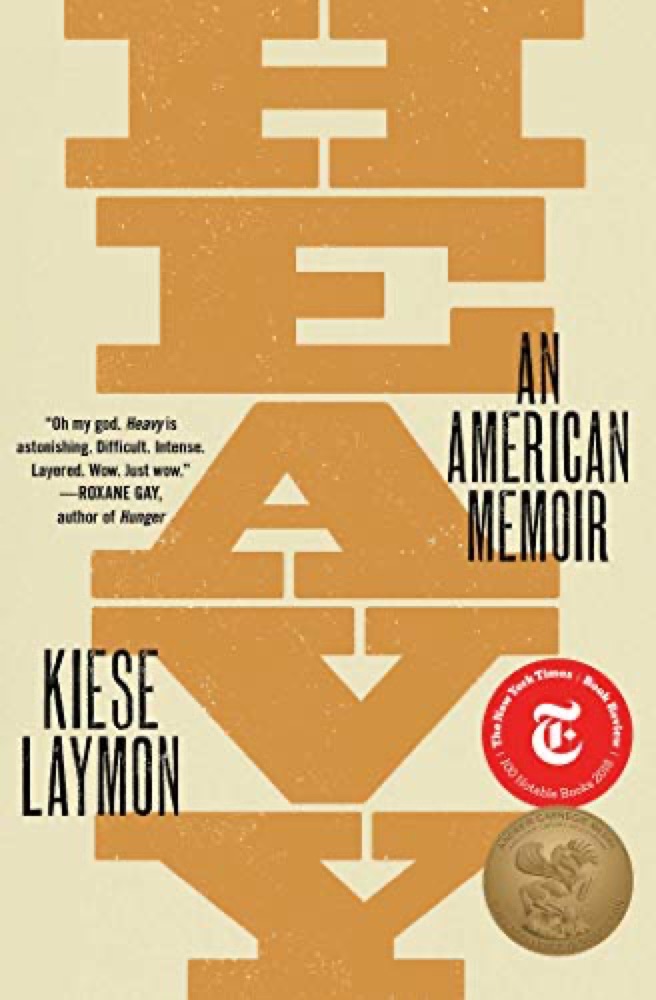
 Heavy
Heavy
Quotes from the Book
Not so deep down, we all know that safety is an illusion, that only character melds us together. That’s why most of us do everything we can (healthy and unhealthy) to ward off that real feeling of standing alone so close to the edge of the world.
29
We black Southerners, through life, love, and labor, are the generators and architects of American music, narrative, language, capital, and morality. That belongs to us. Take away all those stolen West African girls and boys forced to find an oral culture to express, resist, and signify in the South, and we have no rich American idiom.
13
I lie in a bathtub of cold water, still sweating and singing love songs to myself. I put the gun to my head and cock it. I think of my Grandma and remember that old feeling of being so in love that nothing matters except seeing and being seen by her. I drop the gun to my chest. I'm so sad and I can't really see a way out of what I'm feeling but I'm leaning on memory for help. Faster. Slower. I think I want to hurt myself more than I'm already hurting. I'm not the smartest boy in the world by a long shot, but even in my funk I know that easy remedies like eating your way out of sad, or fucking your way out of sad, or lying your way out of sad, or slanging your way out of sad, or robbing your way out of sad, or gambling your way out of sad, or shooting your way out of sad, are just slower, more acceptable ways for desperate folks, and especially paroled black boys in our country, to kill ourselves and others close to us in America.
13
The man of courage is not the man who did not face adversity. The man of courage is the man who faced adversity and spoke to it. The man of courage tells adversity, "You're trespassing and I give you no authority to steal my joy, my faith or my hope.
9
Your heart was good but you forgot to guard it. You killed yourself slowly because of this. The heart is the true measure of a man or woman. I loved you and I know that you knew I loved you. We all have addictions. Some are just more obvious to the eye. We are all dying, but we are all living.
8
If white American entitlement meant anything, it meant that no matter how patronizing, unashamed, deliberate, unintentional, poor, rich, rural, urban, ignorant, and destructive white Americans could be, black Americans were still encouraged to work for them, write to them, listen to them, talk with them, run from them, emulate them, teach them, dodge them, and ultimately thank them for not being as fucked up as they could be.
6
We are real black characters with real character, not the stars of American racist spectacle. Blackness is not probable cause.
4
We owe it to each other to love and insist on meaningful revision until the day we die.
3
Black children need waves of present, multifaceted love, not simply present fathers.
3
Really, we're fighting because she raised me to never forget I was born on parole, which means no black hoodies in wrong neighborhoods, no jogging at night, hands in plain sight at all times in public, no intimate relationships with white women, never driving over the speed limit or doing those rolling stops at stop signs, always speaking the King's English in the presence of white folks, never being outperformed in school or in public by white students, and, most importantly, always remembering that no matter what, the worst of white folks will do anything to get you.
3
I pledge to never be passive, patriotic, or grateful in the face of American abuse.
2
But i am a black man whose black mama's body and spirit were terrorized by another black man's hands and words. Sexism and patriarchy are not part of the revolution. I am a gender-maneuvering gay black man whose spirit was terrorized by other straight black men. Hetero-sexism and heteronormativity are not a part of our revolution. I am a black man who has ignored the plights of so many of my brothers. Separation because of difference and elitism based on class is not a part of the revolution.
2
Our grandmothers and great-grandmothers have paid more than their fair share, and our nation owes them and their children, and their children's children, a lifetime of healthy choices and second chances. That would be responsible.
2
Mama's antidote to being born a black boy on parole in Central Mississippi is not for us to seek freedom, but to insist on excellence at all times. Mama takes it personal when she realizes that I realize she is wrong. There ain't no antidote to life, I tell her. How free can you be if you really accept that white folks are the traffic cops of your life? Mama tells me that she is not talking about freedom. She says that she is talking about survival.
2
I think of my grandma and remember that old feeling of being so in love that nothing matters except seeing and being seen by her. I drop the gun to my chest. I’m so sad and I can’t really see a way out of what I’m feeling but I’m leaning on memory for help. Faster. Slower. I think I want to hurt myself more than I’m already hurting. I’m not the smartest boy in the world by a long shot, but even in my funk I know that easy remedies like eating your way out of sad, or fucking your way out of sad, or lying your way out of sad, or slanging your way out of sad, or robbing your way out of sad, or gambling your way out of sad, or shooting your way out of sad, are just slower, more acceptable ways for desperate folks, and especially paroled black boys in our country, to kill ourselves and others close to us in America.
2
paradigm-shifting change will remain painfully impossible in Mississippi and the nation if we insist on targeting the symbolism of the insult while neglecting and often benefiting from the ongoing violence of the injuries. American—not simply Southern or Mississippian—investment in the pilfering of Black American life, labor, and liberty is the injury on which our nation feeds. It just is.
1
Queer antagonism, like trans-antagonism, like anti-Blackness, is an addiction broken only by honest reckoning, consistent practice, and the welcoming of radical spirits.
1
You know that it’s time to stop letting your anger and hate [...] be more important than the art of being human and healthy
1
I have intimately fucked up women’s lives while congratulating myself for not being Kanye West, HaLester Myers, etc
1
If God needs to condemn anything to hell, it ought to be the idea of social death. Every day we commit an act of revolution, an act of treason, against a system that was never meant to guarantee our survival.
1
The worst of me wants credit for intending to do right by Jermaine, and has no intentions of disrupting my life for the needs of a cousin I always looked up to.
1
Your letter reminds me that any love that necessitates deception is not love. It doesn't matter if that supposed love is institutional or personal.
1
Obama will win. We will win. Then we will continue to lose. And the right questions will never be honestly asked or answered, and it's all just too much.
1
I was getting worse and worse at being human. One cold night in New York, in 2009, a friend I loved told me that I was precisely the kind of human being I claimed to despise [...] later that night, I could not sleep, and for the first time in my life, I wrote the sentence, "I've been slowly killing myself and others close to me.
This weekend, I'm going to drive down to Grandmama's house in Central Mississippi. I'm going to bring my computer. I'm going to ask her to sit next to me while I finish this essay about her artistic rituals of labor vis-á-vis OutKast. I'm going to play ATLiens and Aquemini on her couch while finishing the piece, and think of every conceivable way to thank her for her stank, and for her freshness. I'm going to tell Grandmama that because of her, I know what it's like to be loved responsibly. I'm going to tell her that her love helped me listen, remember, and imagine when I never wanted to listen, remember, or imagine again. I'm going to read the last paragraph of this piece to her, and when Grandmama hugs my neck, I'm going to tell her that when no one in the world believed I was a beautiful Southern Black boy, she believed. I'n going to tell Grandmama that her belief is the only reason I'm still alive, that belief in Black Southern love is why we work.
They bruise us. They buy us. That is why we are so tired. That is why we are awakened. We are fighting an enemy we've shown exquisite grace, an enemy we've tried to educate, coddle, and outrun, an enemy that never tires of killing itself, just so it can watch us die.
Faulkner would have known that you cannot love any child in the United States of America if you refuse to accept that this nation was born of a maniacal commitment to the death, destruction, and suffering of Black, brown, and indigenous children and a moral annihilation of white children. Faulkner would have accepted that there has never been a time in this desperate nation’s history when American grown folk have refused to humiliate, abuse, and murder children.
Let him guide you as to who is entitled to the most intimate parts of you
Like Michael, Mama was the child of two beautiful, always persistent, and often destructive parents
Sharing means that perpetual winners have to be okay losing sometimes
Watch on YouTube
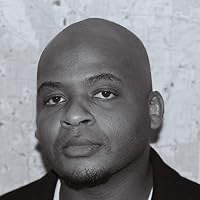
About Kiese Laymon
We have collected 59 quotes from 2 books by Kiese Laymon on BookQuoters.
More about the author →More by Kiese Laymon
Heavy
About the book
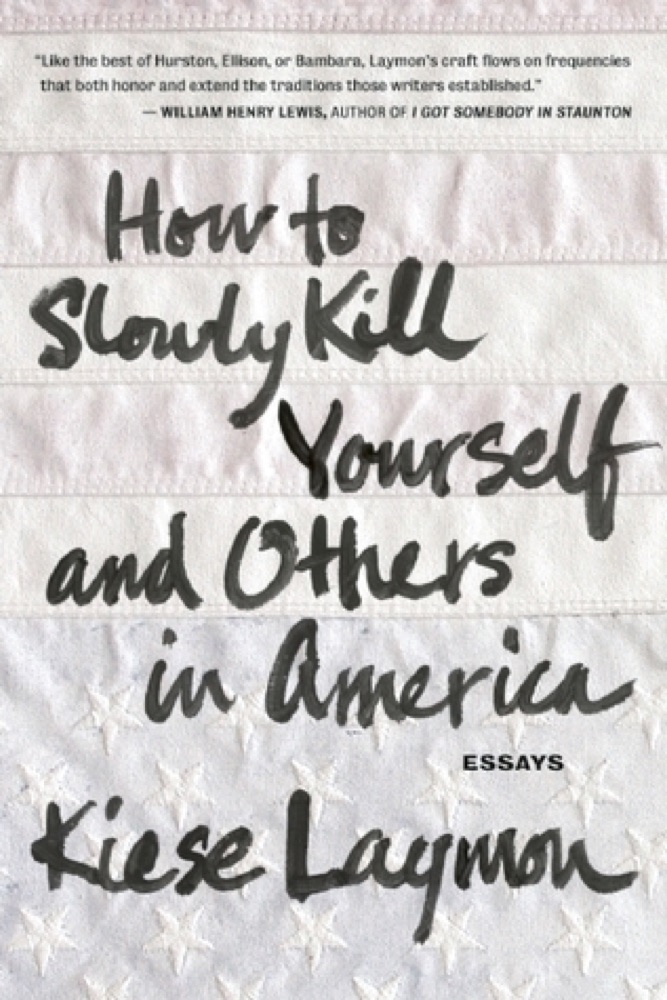
Author and essayist Kiese Laymon is one of the most unique, stirring, and powerful new voices in American writing. How to Slowly Kill Yourself and Others in America is a collection of his essays, touching on subjects ranging from family, race, violence, and celebrity to music, writing, and coming of age in Mississippi. In this collection, Laymon deals in depth with his own personal story, which is filled with trials and reflections that illuminate under-appreciated aspects of contemporary American life. New and unexpected in contemporary American writing, Laymon’s voice mixes the colloquial with the acerbic, while sharp insights and blast-furnace heat calls to mind a black 21st-century Mark Twain. Much like Twain, Laymon's writing is steeped in controversial issues both private and public. This collection introduces Laymon as a writer who balances volatile concepts on a razor's edge and
Book details
- First published
- 2013
- Author
- Kiese Laymon
- Genre
- Nonfiction
- Goodreads rating
- 4.31 (6k ratings)
Keep reading
Heavy
 When They Call You a Terrorist: A Black Lives Matter Memoir
 Between the World and Me
 Unprotected: A Memoir
 Scenes from My Life: A Memoir
 The Tradition
 A Little Devil in America: Notes in Praise of Black Performance
 A Burst of Light
 American Sonnets for My Past and Future Assassin
 Hell of a Book
 My Government Means to Kill Me
 The Hate U Give
 All God's Children Need Traveling Shoes
 The Fire This Time: A New Generation Speaks About Race
 The Heart of a Woman
 They Can't Kill Us Until They Kill Us: Essays
 The Autobiography of Martin Luther King, Jr.
 Dear Senthuran: A Black Spirit Memoir
 Sister Outsider: Essays and Speeches
 Punch Me Up to the Gods
 A Knock at Midnight: A Story of Hope, Justice, and Freedom
 Carry On, Warrior: Thoughts on Life Unarmed
 Aftershocks
 How Dare the Sun Rise: Memoirs of a War Child
 A Song Flung Up to Heaven
 Writing My Wrongs
 You Are Your Best Thing: Vulnerability, Shame Resilience, and the Black Experience
 Marrow
 We Are Not Free
 Like Streams to the Ocean: Notes on Ego, Love, and the Things That Make Us Who We Are
 Legendborn
 What Doesn't Kill You Makes You Blacker: A Memoir in Essays
 Leaving Isn't the Hardest Thing
 Lord of the Butterflies
 Seven Deadly Sins: Settling the Argument Between Born Bad and Damaged Good
 Invisible Man, Got the Whole World Watching: A Young Black Man's Education
 The Source of Self-Regard: Selected Essays, Speeches, and Meditations
 Varina
 Born to Run
 Broken Horses
 Of Mess and Moxie: Wrangling Delight Out of This Wild and Glorious Life
 Some Assembly Required: A Journal of My Son's First Son
 Riding the Elephant: A Memoir of Altercations, Humiliations, Hallucinations, and Observations
 Awake
Awake
 You Don't Have to Say You Love Me
 Black Like Me
 Take Me With You
 Untamed
 Skin: Talking About Sex, Class And Literature
 Men We Reaped
 In Search of Our Mothers' Gardens: Womanist Prose
 Life Will Be the Death of Me: . . . and you too!
 Just as I Am
 Black Friend: Funny, incisive essays on navigating Blackness, tokenism, and friendship in predominantly white spaces.
 Born a Crime: Stories From a South African Childhood
 The Autobiography of Malcolm X
 The Fire Next Time
 All My Knotted-Up Life: A Memoir
 Becoming
 All Over But the Shoutin'