

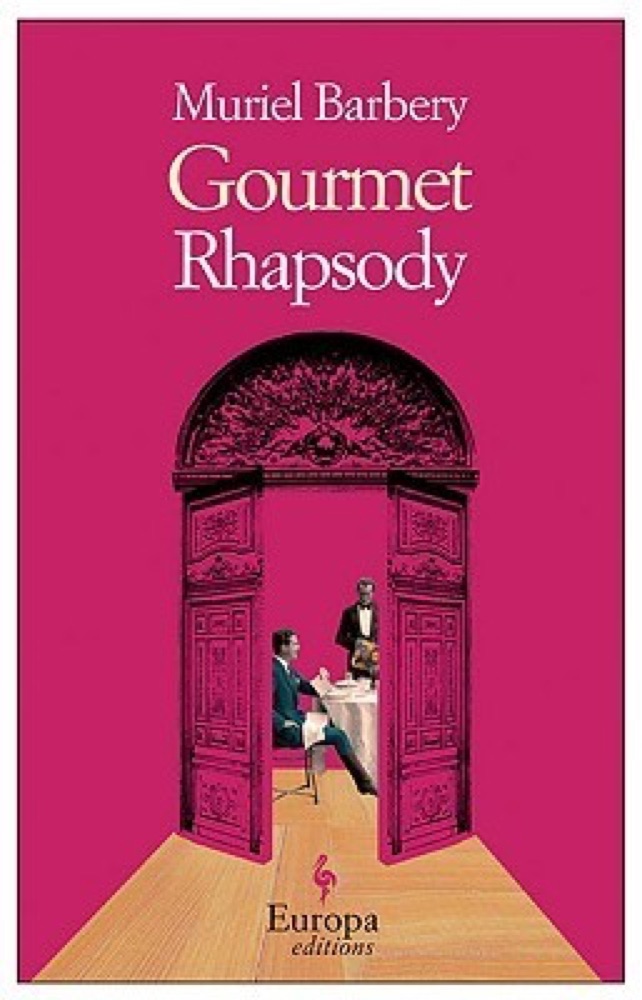
 Gourmet Rhapsody
Quotes from the Book
I thought: pity the poor in spirit who know neither the enchantment nor the beauty of language.
When tea becomes ritual, it takes its place at the heart of our ability to see greatness in small things. Where is beauty to be found? In great things that, like everything else, are doomed to die, or in small things that aspire to nothing, yet know how to set a jewel of infinity in a single moment?
People aim for the stars, and they end up like goldfish in a bowl. I wonder if it wouldn't be simpler just to teach children right from the start that life is absurd.
Personally I think that grammar is a way to attain beauty.
If you have but one friend, make sure you choose her well.
I have finally concluded, maybe that's what life is about: there's a lot of despair, but also the odd moment of beauty, where time is no longer the same. It's as if those strains of music created a sort of interlude in time, something suspended, an elsewhere that had come to us, an always within never. Yes, that's it, an always within never.
I find this a fascinating phenomenon: the ability we have to manipulate ourselves so that the foundation of our beliefs is never shaken.
Madame Michel has the elegance of the hedgehog: on the outside she is covered in quills, a real fortress, but my gut feeling is that on the inside, she has the same simple refinement as the hedgehog: a deceptively indolent little creature, fiercely solitary--and terrible elegant.
When something is bothering me, I seek refuge. No need to travel far; a trip to the realm of literary memory will suffice. For where can one find more noble distraction, more entertaining company, more delightful enchantment than in literature?
Do you know that it is in your company that I have had my finest thoughts?
I may be indigent in name, position, and in appearance, but in my own mind I am an unrivaled goddess -
The tea ritual: such a precise repetition of the same gestures and the same tastes; accession to simple, authentic and refined sensations, a license given to all, at little cost, to become aristocrats of taste, because tea is the beverage of the wealthy and the poor; the tea ritual, therefore, has the extraordinary virtue of introducing into the absurdity of our lives an aperture of serene harmony. Yes, the world may aspire to vacuousness, lost souls mourn beauty, insignificance surrounds us. Then let us drink a cup of tea. Silence descends, one hears the wind outside, autumn leaves rustle and take flight, the cat sleeps in a warm pool of light. And, with each swallow, time is sublimed.
I have read so many books. And yet, like most Autodidacts, I am never quite sure of what I have gained from them. There are days when I feel I have been able to grasp all there is to know in one single gaze, as if invisible branches suddenly spring out of no where, weaving together all the disparate strands of my reading. And then suddenly the meaning escapes, the essence evaporates and no matter how often I reread the same lines they seem to flee ever further with each subsequent reading and I see myself as some mad old fool who thinks her stomach is full because she's been reading the menu.
There's so much humanity in a love of trees, so much nostalgia for our first sense of wonder, so much power in just feeling our own insignificance when we are surrounded by nature…yes, that's it: just thinking about trees and their indifferent majesty and our love for them teaches us how ridiculous we are - vile parasites squirming on the surface of the earth - and at the same time how deserving of life we can be, when we can honor this beauty that owes us nothing.
This pause in time, within time ... When did I first experience the exquisite sense of surrender that is only possible with another person? The peace of mind one experiences on one's own, one's certainty of self in the serenity of solitude, are nothing in comparison to the release and openness and fluency one shares with another, in close companionship ...
Life has meaning and we grown-ups know what it is is the universal lie that everyone is supposed to believe. Once you become an adult and you realize that's not true, it's too late.
They didn't recognize me," I repeat. He stops in turn, my hand still on his arm. "It is because they have never seen you," he says. "I would recognize you anywhere.
When someone that you love dies..it's like fireworks suddenly burning out in the sky and everything going black.
The only purpose of cats is that they constitute mobile decorative objects.
But many intelligent people have a sort of bug: they think intelligence is an end in itself. They have one idea in mind: to be intelligent, which is really stupid. And when intelligence takes itself for its own goal, it operates very strangely: the proof that it exists is not to be found in the ingenuity or simplicity of what it produces, but in how obscurely it is expressed.
If you dread tomorrow it's because you don't know how to build the present, and when you don't know how to build the present, you tell yourself you can deal with it tomorrow, and it's a lost cause anyway because tomorrow always ends up being today don't you see ... We have to live with the certainty that we'll get old and that it won't look nice or be good or feel happy. And tell ourselves that it's now that matters: to build something now at any price using all our strength. Always remember that there's a retirement home waiting somewhere and so we have to surpass ourselves every day, make every day undying. Climb our own personal Everest and do it in such a way that every step is a little bit of eternity. That's what the future is for: to build the present with real plans made by living people.
We think we can make honey without sharing in the fate of bees, but we are in truth nothing but poor bees, destined to accomplish our task and then die.
. . . maybe that's what life's all about: there's a lof of despair, but also the odd moments of beauty, where time is no longer the same . . . [like] something suspended . . . an elsewhere . . . an always within a never. Yes, that's is, an always within a never.
It would be so much better if we could share our insecurity, if we could all venture inside ourselves and realize that green beans and vitamin C, however much they nurture us, cannot save lives, or sustain our souls.
...what I dread more than anything else in this life is noise...silence helps you to go inward..anyone who is interested in something more than just life outside actually needs silence.
... c'est peut-être ça la vie : beaucoup de désespoir mais aussi quelques moments de beauté où le temps n'est plus le même. C'est comme si les notes de musique faisaient un genre de parenthèses dans le temps, de supension, un ailleurs ici même, un toujours dans le jamais. Oui, c'est ça, un toujours dans le jamais.
In a split second of eternity, everything is changed, transfigured. A few bars of music, rising from an unfamiliar place, a touch of perfection in the flow of human dealings--I lean my head slowly to one side, reflect on the camellia on the moss on the temple, reflect on a cup of tea, while outside the wind is rustling foliage, the forward rush of life is crystalized in a brilliant jewel of a moment that knows neither projects nor future, human destiny is rescued from the pale succession of days, glows with light at last and, surpassing time, warms my tranquil heart.
There is always the easy way out, although I am loath to use it. I have no children, I do not watch television and I do not believe in God- all paths taken by mortals to make their lives easier. Children help us to defer the painful task of confronting ourselves, and grandchildren take over from them. Television distracts us from the onerous necessity of finding projects to construct in the vacuity of our frivolous lives; by beguiling our eyes, television releases our mind from the great work of making meaning. Finally, God appeases our animal fears and the unbearable prospect that someday all our pleasures will cease. Thus, as I have neither future nor progeny nor pixels to deaden the cosmic awareness of absurdity, and in the certainty of the end and the anticipation of the void, I believe I can affirm that I have not chosen the easy path.
For the first time in my life I understood the meaning of the word 'never'. And it's really awful. You say the word a hundred times a day but you don't really know what you're saying until you're faced with a real 'never again'.
Did you know?
- The novel was originally published in French in 2006 as L'Elegance du herisson by Editions Gallimard.
- The English translation by Alison Anderson was published by Europa Editions in 2008.
- The book stayed on the French bestseller list for over 100 consecutive weeks.
- It sold more than 1.2 million copies in hardback in France alone and millions more worldwide.
- Author Muriel Barbery worked as a philosophy teacher before writing the novel.
- It was adapted into the 2009 French film Le herisson, directed by Mona Achache.
About Muriel Barbery
Muriel Barbery is a French novelist and former philosophy teacher, born in 1969. The Elegance of the Hedgehog became an international bestseller, and she has also written Gourmet Rhapsody; she has lived in Kyoto, Amsterdam, and Paris.
More about the author →More by Muriel Barbery
Gourmet Rhapsody
About the book
The Elegance of the Hedgehog, first published in French as L'Elegance du herisson in 2006, unfolds inside an elegant Parisian apartment building on the rue de Grenelle. Its two narrators are Renee Michel, a fifty-four-year-old widowed concierge who hides a formidable self-taught intellect behind a deliberately dowdy, unremarkable exterior, and Paloma Josse, a brilliant and disillusioned twelve-year-old resident who has resolved to end her life on her thirteenth birthday. When a cultured Japanese businessman named Kakuro Ozu moves into the building, he sees past Renee's mask, and the three isolated souls gradually recognize one another as kindred spirits.
At its heart the novel is a meditation on beauty, philosophy, and the quiet inner lives of people the world overlooks. Barbery, herself a former philosophy teacher, laces the narrative with allusions to Kant, Tolstoy, Dutch painting, Japanese cinema, and phenomenology, using her characters' erudition to probe how art and thought can redeem an ordinary existence. Class, social hypocrisy, and the gulf between appearance and inner worth run through both narrators' journals as they search for meaning beyond materialism.
The book became a publishing phenomenon in France, remaining on the bestseller list for over a hundred consecutive weeks and selling well over a million hardback copies before going on to sell millions more worldwide in translation. Praised for its wit and philosophical ambition, it won several French readers' prizes and was adapted for film, cementing its place as one of the most widely read French novels of its era.
Key characters
- Renee MichelA widowed 54-year-old concierge who conceals her deep knowledge of philosophy, literature, and art behind a plain exterior
- Paloma JosseA precocious, disillusioned twelve-year-old resident who plans to end her life on her thirteenth birthday
- Kakuro OzuA cultured Japanese businessman and new tenant who recognizes Renee's hidden intelligence and draws her out
Book details
- First published
- 2006
- Length
- 336 pages
- Reading time
- 6 hours
- Author
- Muriel Barbery
- Genre
- Fiction
- Goodreads rating
- 3.81 (204k ratings) →
- First line
- “I have read so many books... And yet, like most autodidacts, I am never quite sure of what I have gained from them.”
Movie & TV adaptations
- IMDb
If you liked this, read…
- 1A Man Called OveAnother warm, philosophical novel about a solitary curmudgeon whose hidden depths are drawn out by unexpected relationships
- 2The Guernsey Literary and Potato Peel Pie SocietyCharacter-driven literary fiction celebrating books and quiet, unlikely connections between people
Keep reading
 The Goldfinch
 Smilla's Sense of Snow
 First Person Singular: Stories
 A Heartbreaking Work of Staggering Genius
 The Wind-Up Bird Chronicle
 Either/Or: A Fragment of Life
 Hard-Boiled Wonderland and the End of the World
 Selected Stories
 Gilead
 Doctor Zhivago
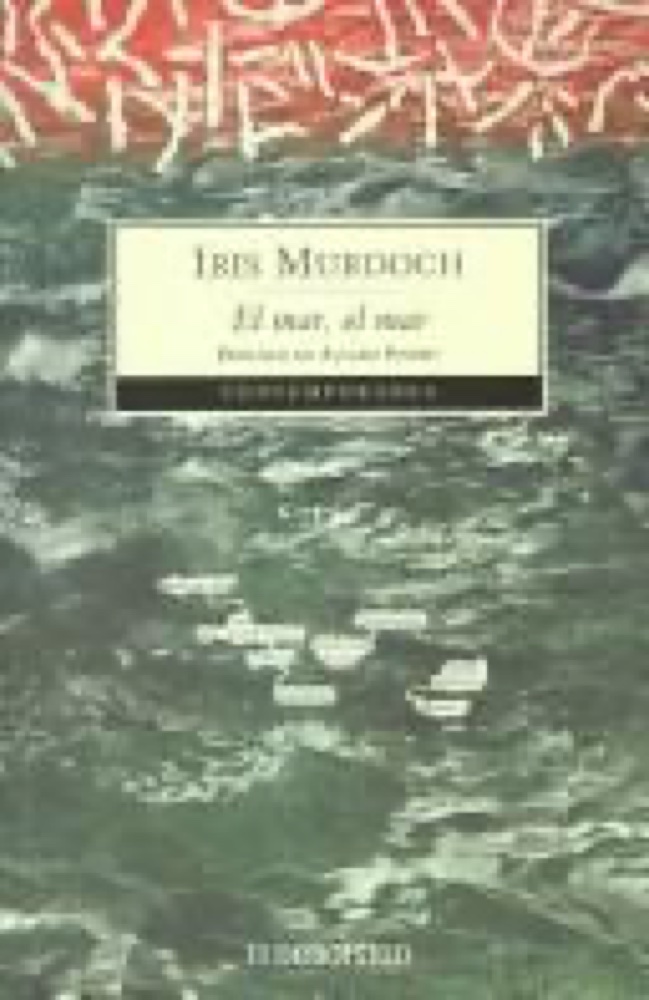 The Sea, the Sea
 Any Human Heart
 The Secret History
 Drive Your Plow Over the Bones of the Dead
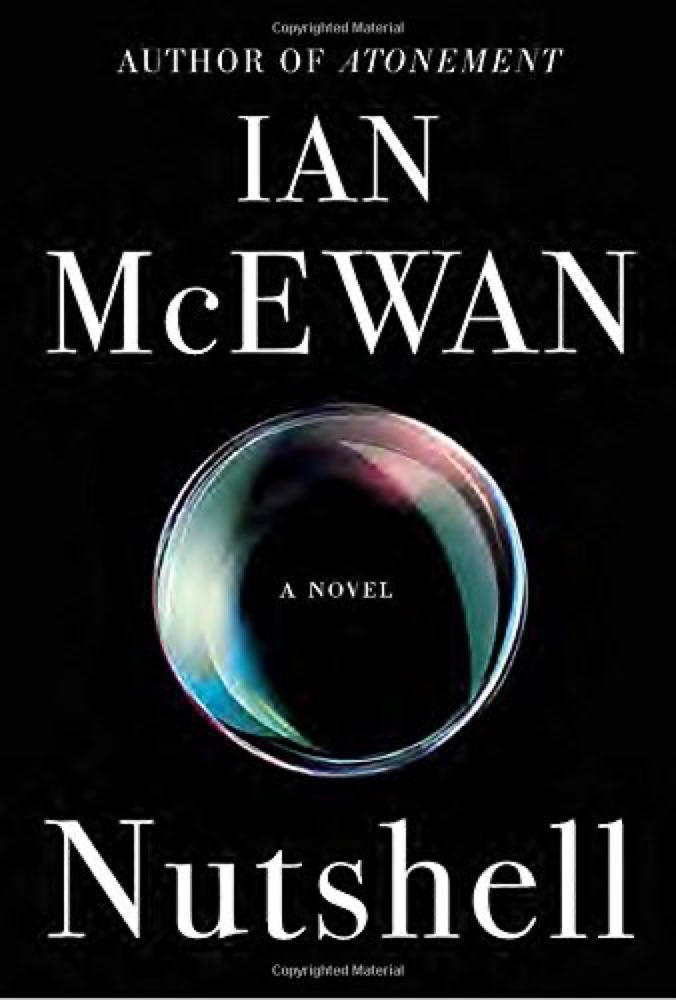 Nutshell
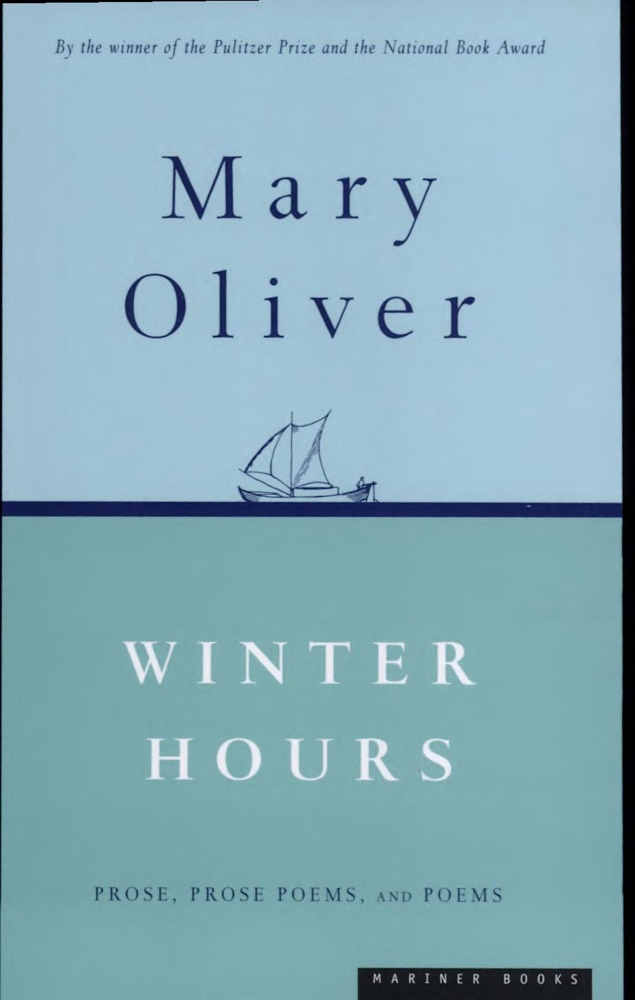 Winter Hours: Prose, Prose Poems, and Poems
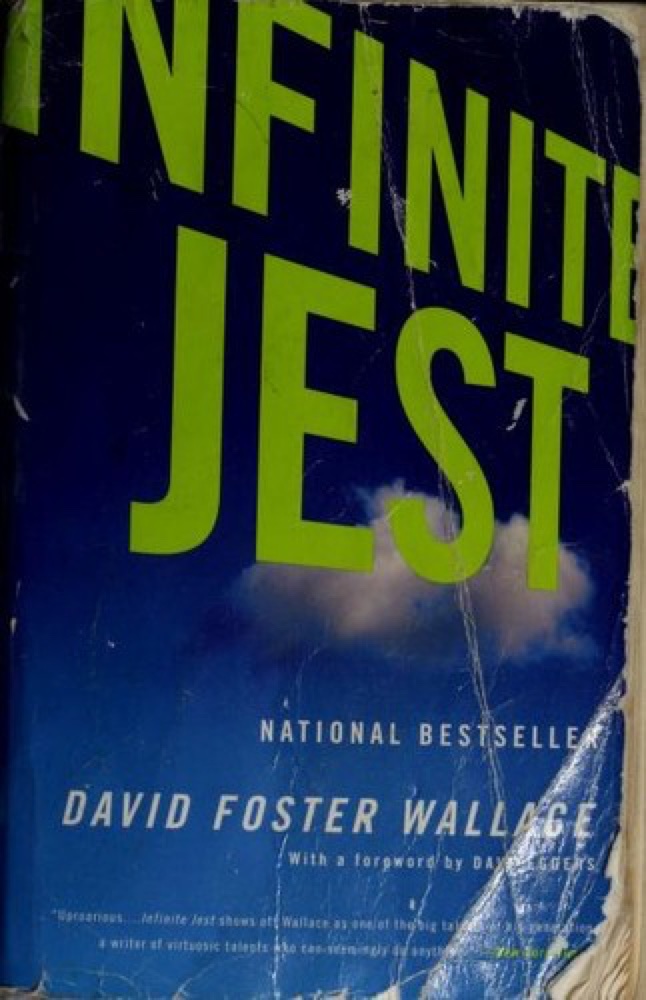 Infinite Jest
 Journal of a Solitude
 Belong to Me
 Beautiful Losers
 Stories of Your Life and Others
 The Shape of Water
 The Pale King
 The Enchanted
 Night Train to Lisbon
 Girl with Curious Hair
 Schoolgirl
 Jitterbug Perfume
 What If This Were Enough?: Essays
 A Book of Simple Living
 The Rule of Four
 Tropic of Cancer
 Diary of a Drug Fiend
 What I Loved
 A Circle of Quiet
 A Room with a View
 Light Years
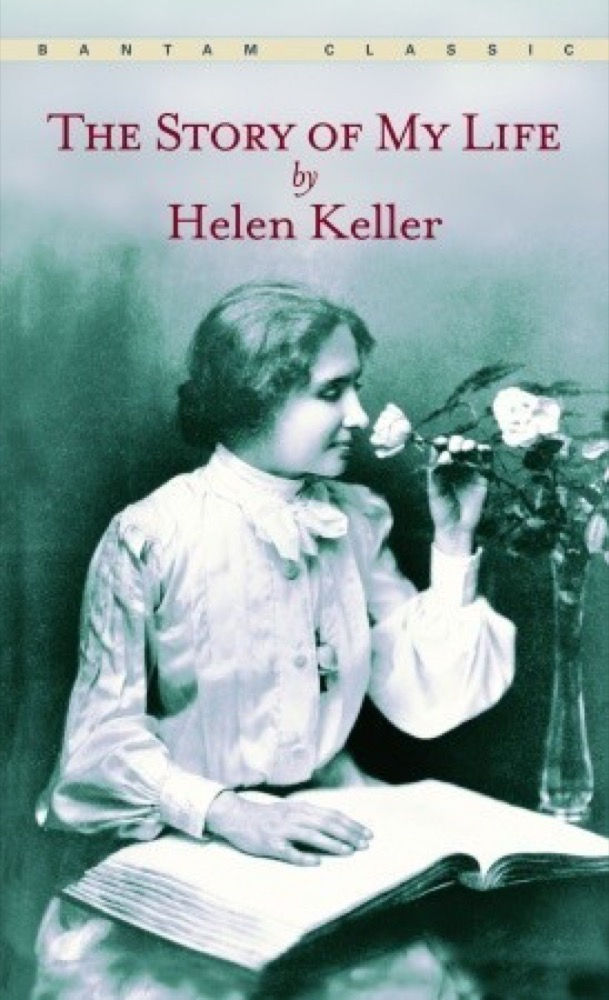 The Story of My Life
 The Magus
 Narcissus and Goldmund
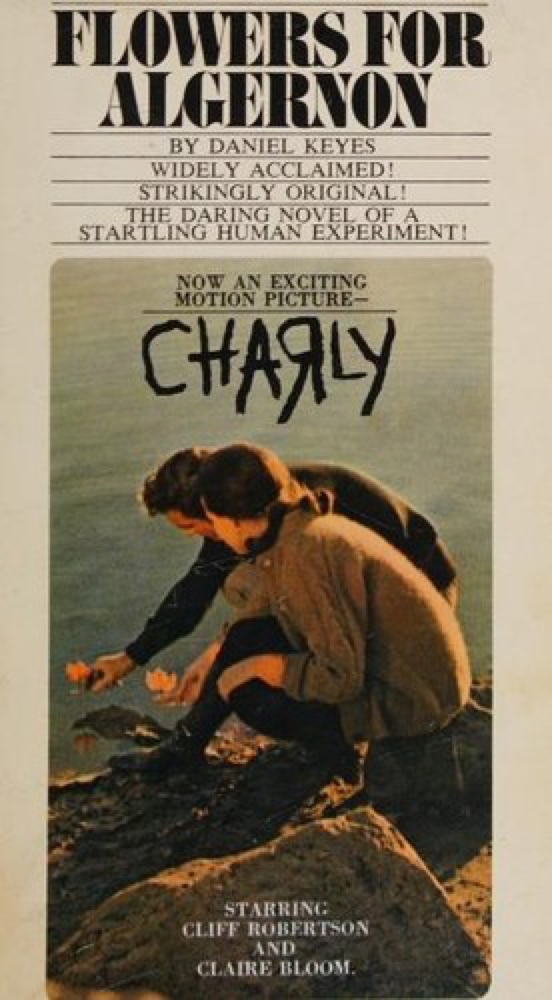 Flowers for Algernon
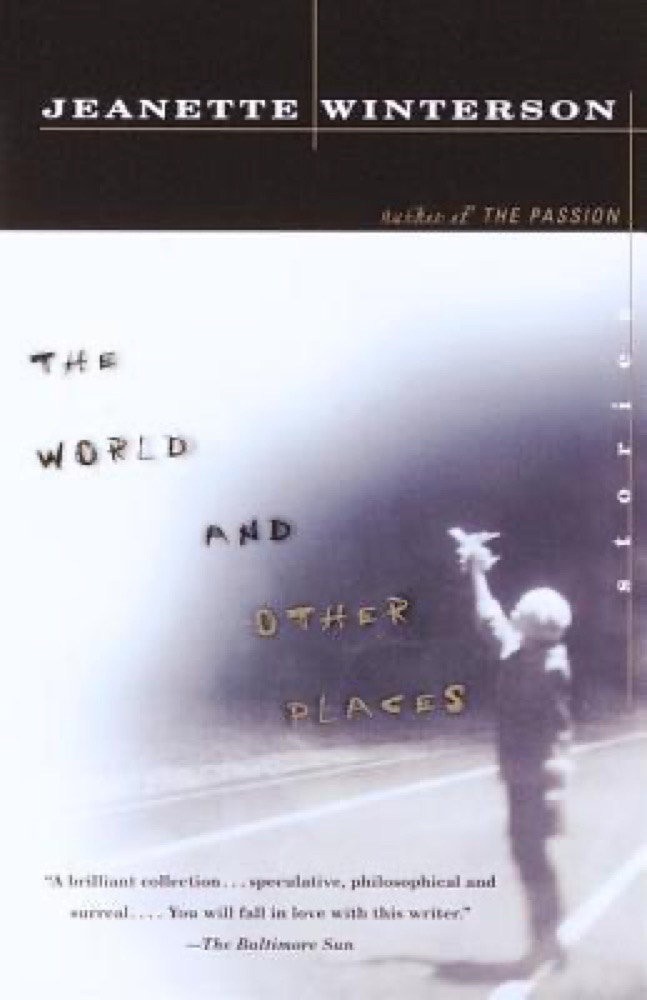 The World and Other Places: Stories
 The Tsar of Love and Techno
 The Dream of Perpetual Motion
 Swann's Way
 The Adolescent
 Life After Death
 The Notebooks of Malte Laurids Brigge
 Speak, Memory
 Flights
 The Magic Mountain
 Odd Apocalypse
 Three Comrades
 A Room Called Earth
 The Golden Notebook
 Sexing the Cherry
 Moon Palace
 The Secret Scripture
 East of Eden
 In Search of Lost Time