
 The Art Thief: A True Story of Love, Crime, and a Dangerous Obsession
Quotes from the Book
I think that most of us feel like something is missing from our lives. And I wondered then if Knight's journey was to seek it. But life isn't about searching endlessly to find what's missing. It's about learning to live with the missing parts.
47
Carl Jung said that only an introvert could see "the unfathomable stupidity of man
39
I read. That's my form of travel.
34
Modern life seems set up so that we can avoid loneliness at all costs, but maybe it’s worthwhile to face it occasionally. The further we push aloneness away, the less are we able to cope with it, and the more terrifying it gets.
29
I understand I've made an unusual lifestyle choice. But the label 'crazy' bothers me. Annoys me. Because it prevents response. When someone asks if you're crazy, Knight lamented, you can either say yes, which makes you crazy, or you can say no, which makes you sound defensive, as if you fear that you really are crazy. There's no good answer.
29
He was confounded by the idea that passing the prime of your life in a cubicle, spending hours a day at a computer, in exchange for money, was considered acceptable, but relaxing in a tent in the woods was disturbed. Observing the trees was indolent; cutting them down was enterprising. What did Knight do for a living? He lived for a living. Knight
23
That silence intimidates puzzles me. Silence is to me normal, comfortable." Later he added, "I will admit to feeling a little contempt for those who can't keep quiet.
21
One's desire to be alone, biologists have found, is partially genetic and to some degree measurable. If you have low levels of the pituitary peptide oxytocin--sometimes called the master chemical of sociability-- and high quantities of the hormone vasopressin, which may suppress your need for affection, you tend to require fewer interpersonal relationships.
18
The world is a confusing place, meaningful and meaningless at once.
16
Silence, it appears, is not the opposite of sound. It is another world altogether, literally offering a deeper level of thought, a journey to the bedrock of the self.
15
Not for a moment did he consider keeping a journal. He would never allow anyone to read his private thoughts; therefore, he did not risk writing them down. "I'd rather take it to my grave," he said. And anyway, when was a journal ever honest? "It either tells a lot of truths to cover a single lie, " he said, "or a lot of lies to cover a single truth.
15
I'm not used to seeing people's faces. There's too much information there. Aren't you aware of it? Too much, too fast.
14
Language and hearing are seated in the cerebral cortex, the folded gray matter that covers the first couple of millimeters of the outer brain like wrapping paper. When one experiences silence, absent even reading, the cerebral cortex typically rests. Meanwhile, deeper and more ancient brain structures seem to be activated--the subcortical zones. People who live busy, noisy lives are rarely granted access to these areas. Silence, it appears, is not the opposite of sound. It is another world altogether, literally offering a deeper level of thought, a journey to the bedrock of the self.
12
Solitude increased my perception. But here's the tricky thing: when I applied my increased perception to myself, I lost my identity. There was no audience, no one to perform for. There was no need to define myself. I became irrelevant. (I)solation felt more like communion...To put it romantically, I was completely free.
12
He left because the world is not made to accommodate people like him.
12
The more you realize, the more you realize there is nothing to realize,” she said. “The idea that there’s somewhere we have got to get to, and something we have to attain, is our basic delusion.
11
The word "noise" is derived from the Latin word nausea.
10
If you like solitude, you're never alone.
9
Two of life’s greatest pleasures, by my reckoning, are camping and reading—most gloriously, both at once.
9
The life inside a book always felt welcoming to Knight. It pressed no demands on him, while the world of human interactions was so complex.
9
is no measure of health to be well adjusted to a profoundly sick society.
8
It’s possible that Knight believed he was one of the few sane people left. He was confounded by the idea that passing the prime of your life in a cubicle, spending hours a day at a computer, in exchange for money, was considered acceptable, but relaxing in a tent in the woods was disturbed. Observing the trees was indolent; cutting them down was enterprising. What did Knight do for a living? He lived for a living.
8
Socrates may have concluded that his most valuable possession was his leisure. “Beware the barrenness of a busy life” is a quote commonly attributed to him.
7
He pilfered a copy of Ulysses, but it was possibly the one book he did not finish. 'What's the point of it? I suspect it was a bit of a joke by Joyce. He just kept his mouth shut as people read into it more then there was. Pseudo-intellectuals love to drop the name Ulysses as their favorite book. I refused to be intellectually bullied into finishing it.
7
And right then, I come the closest I think I ever will to understanding why Knight left. He left because the world is not made to accommodate people like him. He was never happy in his youth -- not in high school, not with a job, not being around other people. It made him feel constantly nervous. There was no place for him, and instead of suffering further, he escaped. It wasn't so much a protest as a quest; he was like a refugee from the human race. The forest offered him shelter (p 182)
6
In 1988, a cave explorer named Véronique Le Guen volunteered for an extreme experiment: to live alone in an underground cavern in southern France without a clock for one hundred and eleven days, monitored by scientists who wished to study the human body's natural rhythms in the absence of time cues. For a while, she settled into a pattern of thirty hours awake and twenty hours asleep. She described herself as being "psychologically completely out of phase, where I no longer know what my values are or what is my purpose in life." When she returned to society, her husband later noted, she seemed to have an emptiness inside her that she was unable to fully express. "While I was alone in my cave I was my own judge," she said. "You are your own most severe judge. You must never lie or all is lost. The strongest sentiment I brought out of the cave is that in my life I will never tolerate lying." A little more than a year later, Le Guen swallowed an overdose of barbiturates and lay down in her car in Paris, a suicide at age thirty-three.
6
Conversations between people can move like tennis games, swift and unpredictable. There are constant subtle visual and verbal cues, there's innuendo, sarcasm, body language, tone. Everyone occasionally fumbles an encounter, a victim of social clumsiness. It's part of being human.
6
His facial hair served not just as a calendar but also as a mask, absorbing the stares of others while allowing him a little privacy in plain sight. "I can hide behind it, I can play to stereotypes and assumptions. One of the benefits of being labeled a hermit is that it permits me strange behavior.
6
How many things there are that I do not want. —SOCRATES, CIRCA 425 B.C.
5
Watch on YouTube
About Michael Finkel
We have collected 55 quotes from 2 books by Michael Finkel on BookQuoters.
More about the author →More by Michael Finkel
The Art Thief: A True Story of Love, Crime, and a Dangerous Obsession
About the book
Many people dream of escaping modern life, but most will never act on it. This is the remarkable true story of a man who lived alone in the woods of Maine for 27 years, making this dream a reality--not out of anger at the world, but simply because he preferred to live on his own.
In 1986, a shy and intelligent twenty-year-old named Christopher Knight left his home in Massachusetts, drove to Maine, and disappeared into the forest. He would not have a conversation with another human being until nearly three decades later, when he was arrested for stealing food. Living in a tent even through brutal winters, he had survived by his wits and courage, developing ingenious ways to store edibles and water, and to avoid freezing to death. He broke into nearby cottages for food, clothing, reading material, and other provisions, taking only what he needed but terrifying a community never able to
Book details
- First published
- 2017
- Author
- Michael Finkel
- Genre
- Nonfiction
- Goodreads rating
- 3.91 (90k ratings)
Keep reading
 No One Writes Back
 Point Omega
 The Brooklyn Follies
 The Invention of Solitude
 The Wind-Up Bird Chronicle
 American Pastoral
 Drive Your Plow Over the Bones of the Dead
 Silence: In the Age of Noise
 Flights
 Night Train to Lisbon
 Open City
 The Empusium
 Anthropology of an American Girl
 The Pale King
 Whatever
 Hard-Boiled Wonderland and the End of the World
 Sexus
Sexus
 In the Miso Soup
 The Plover
 Demian
 The Man Without Qualities
 Leviathan
 Revolutionary Road
 Underground: The Tokyo Gas Attack and the Japanese Psyche
 The Professor's House
 The Dice Man
 V.
V.
 The Magus
 The Ultimate Hitchhiker's Guide
 The Candy House
 The Book of Dreams
 The Adolescent
 Villa Incognito
 Terminal Boredom: Stories
 The Complete Stories
 The Magic Mountain
 Infinite Jest
 The Complete Short Stories
 To Shake the Sleeping Self: A Journey from Oregon to Patagonia, and a Quest for a Life with No Regret
 The Gum Thief
 Journal of a Solitude
 Jailbird
 The Golden Notebook
 Under the Net
 Surprised by Joy: The Shape of My Early Life
 Close to the Knives: A Memoir of Disintegration
 Engleby
 Mister Pip
 Odd Hours
 Girl with Curious Hair
 Stories of Your Life and Others
 Eyeless in Gaza
 I. Asimov: A Memoir
 Do Androids Dream of Electric Sheep?
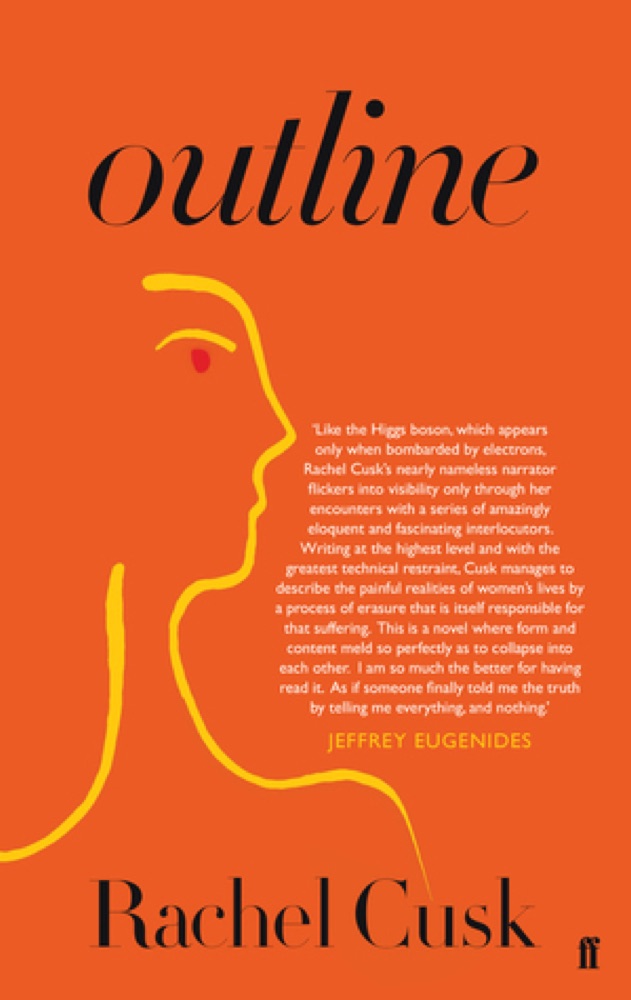 Outline
 Legion
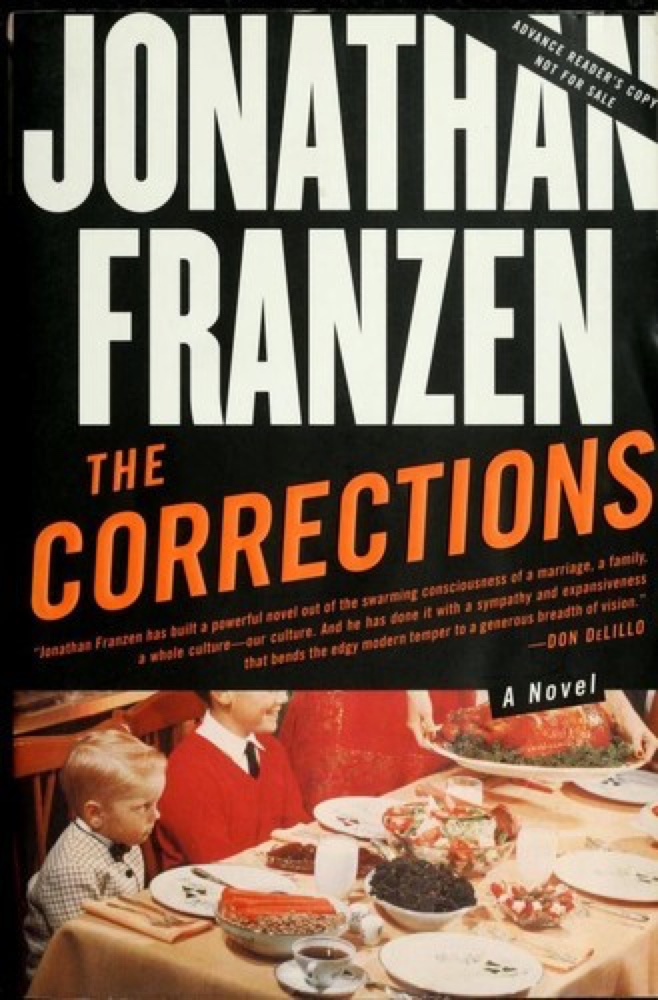 The Corrections
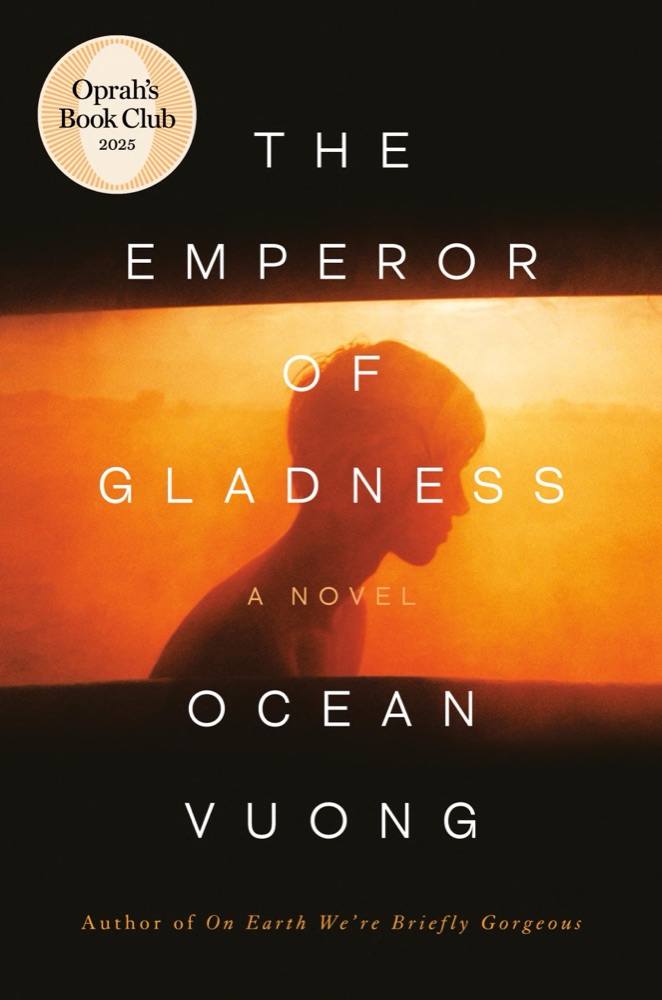 The Emperor of Gladness
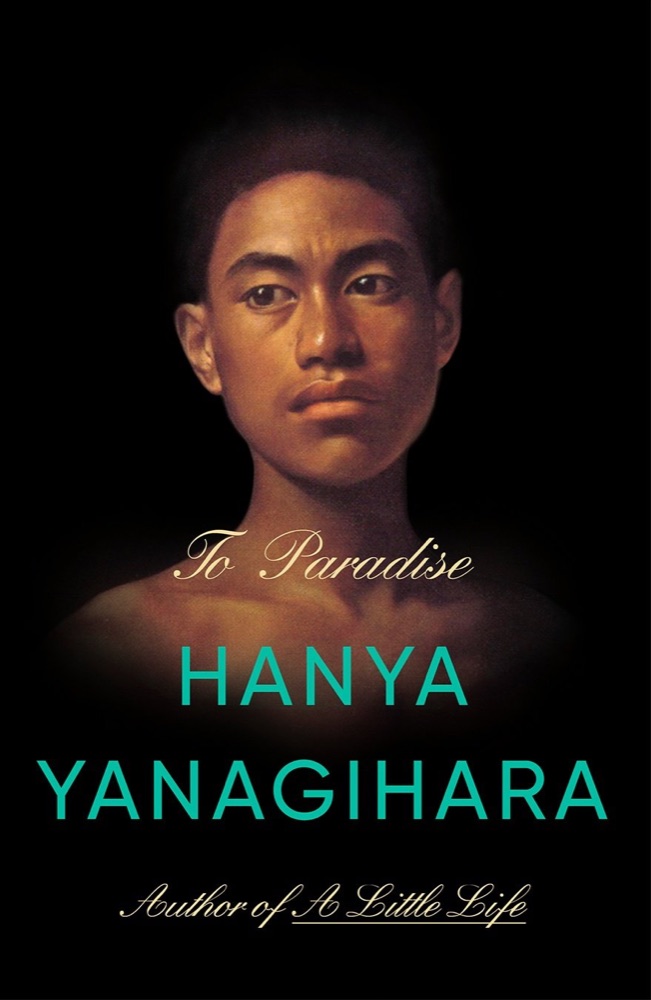 To Paradise
 The Story of the Lost Child