
 The Mosquito Coast
Quotes from the Book
There's always a way if you're not in a hurry.
17
I have a hatred of the taming of animals, especially large ones that are so contented in the wild. I abominate circus acts that involve big befooled beasts--cowed tigers or helplessly roaring lions pawing the air and teetering on small stools. I deplore zoos and anything to do with animal confinement or restraint.
6
Reading about a far-off place can be a satisfaction in itself, and you might be thankful you’re reading about the bad trip without the dust in your nose and the sun burning your head, not having to endure the unrewarding nuisance and delay of the road. But reading can also be a powerful stimulus to travel. That was the case for me from the beginning. Reading and restlessness-dissatisfaction at home, a sourness of being indoors, and a notion that the real world was elsewhere- made me a traveller. If the internet were everything it is cracked up to be, we would all stay at home and be brilliantly witty and insightful. Yet with so much contradictory information available, there is more reason to travel than ever before: to look closer, to dig deeper, to sort the authentic from the fake; to verify, to smell, to touch, to hear, and sometimes – importantly – to suffer the effects of this curiosity.
3
Someone who seems doddery is perhaps not doddery at all but only an older person absorbed in squinting concentration, as though on an ultimate trip, memorizing a scene, grateful for being alive to see it.
2
Write the story of a contemporary cured of his heartbreaks solely by long contemplation of a landscape.
1
To travel unconnected, away from anyone's gaze or reach, is a bliss.
1
Suffering has no value, but you have to suffer in order to know that. I never found it easy to travel, yet the difficulty in it made it satisfying because it seemed in that way to resemble the act of writing - groping around in the dark, wandering into the unknown, coming to understand the condition of strangeness.
1
Time is a factor in travel, one of the most crucial.
1
Fiction gives life to places in expressive ways that no history book can begin to suggest. Characters in novels admit us to intimacies—not true of scholarly chronicles, no matter how detailed. We know the people in novels better than we know our friends.
We have bestowed on Africa just enough of the disposable junk of the modern world to create in African cities a junkyard replica of the West, a mirror image of our own failures—but no better than that. Writing about it, choosing the urban landscape and urban misery as a subject, is something for an obituarist. Such a vision, or a visit, represents everything in travel I have always wished to escape.
Why would I wish to travel through blight and disorder only to report on the same ugliness and misery? The blight is not peculiar to Africa. The squalid slum in Luanda is not only identical to the squalid slum in Cape Town and Jo’burg and Nairobi; they all greatly resemble, in their desperation, their counterparts in the rest of the world. A squatter camp in California is in every detail a duplication of a squatter camp in Africa, and worthy of
What had I learned? That proctology pretty much describes the experience of traveling from one African city to another, especially the horror cities of urbanized West Africa.
The murderous, self-elected, megalomaniacal head of state with the morals of a fruit fly, with his decades in power, along with his vain, flitting shopaholic wife, his hangers-on, and his goon squad, is an obscene feature of African life that is not likely to disappear.
The earth is becoming intensely citified. “The megacity will be at the heart of twenty-first-century geography,” Robert D. Kaplan writes in The Revenge of Geography.
On November 2, 1492, in Cuba, Christopher Columbus saw an Arawak man puffing on rolled tobacco leaves, a European’s first glimpse of smoking.
The sight of bribery on the back road of any country is a clear indication that the whole place is corrupt and the regime a thieving tyranny, as Angola has been for the thirty-five years of its independence—and likely much longer, since Portuguese colonial rule was also an extortion racket.
The paradox was more likely that an excess of money was the problem—or one of them; that, and a government run by thieves. But I was just learning, and I thought, as one does in such circumstances: Maybe things will improve farther up the road.
saw that a lack of money was not the problem in this country—but it seldom is in the hellholes of the world.
Ik dacht: dit is het gelach in de schaduw van de galg, zo klinken mensen die weten dat ze ten dode zijn opgeschreven, zo ziet een stad eruit die naar de verdommenis gaat. Diezelfde hysterie tref je aan in de beschrijving die Thucydides geeft wanneer de pest uitbreekt in Athene: 'Overweldigd door de hevigheid van de rampspoed, en niet wetend wat hen te doen stond, werden de mannen onverschillig [...] en de grote losbandigheid begon.' Net als de inwoners van Athene deden de Angolezen uit de musseque alsof het einde der tijden was aangebroken: een schreeuwerige, chaotische, bandeloze samenleving die op de rand van uitsterven verkeerde. Geen wanhopige mensen, maar mensen die dansten, die de kiduru en de kizomba deden, zoals Kalunga me uitlegde toen de meisjes in de sloppenwijk in het rond stonden te draaien en soms wat danspasjes invoegden onder het lopen. Het wemelde van de prostituees in de stad, veelal vluchtelingen uit Congo, die mannen oppikten in de Pub Royal en de Zanzibar. De meeste mensen giechelden als gekken omdat ze beseften dat hun dagen geteld waren. Zo klonk dat Angolese gelach mij in de oren: als geraaskal dat getuigde van groot lijden, als versterkt doodsgereutel. Net als de inwoners van Athene hing hen rampspoed of de dood boven het hoofd en 'besloten ze te genieten van een klein deel van hun leven'. Kalunga stapte op zijn motorfiets, maar startte hem niet. Hij zat uit te kijken over de stad en zei: 'Zo zal de wereld eruitzien wanneer het einde der tijden is aangebroken.
Tijdens een van mijn avondwandelingen belandde ik bij toeval in de Rua de Almeida Garrett (een zijstraat van Avenida Ho Chi Minh). Die was genoemd naar João Baptista da Silva Leitão de Almeida Garrett, een negentiende-eeuwse Portugese schrijver en politicus, die in de Verenigde Staten weinig gekend was, en in Angola nog minder. Ik kende hem alleen van een motto in een roman van José Saramago, een uitspraak die reuze toepasselijk was in Luanda: 'Ik vraag de economen en de moralisten of ze ooit wel eens hebben berekend hoeveel individuen veroordeeld moeten worden tot lijden, zwaar werk, demoralisatie, een ellendige jeugd, volstrekte onwetendheid, overweldigende rampspoed en de opperste armoede om één rijke man voort te brengen?
The shanties of indigent newcomers to the place were scattered on one side of the crossroads, and on the other side, beyond the shops, were two stinking shebeens where drunken men squatted on the dirt floor, drooling over their home-brewed beer, while a haggard woman ladled more of it into tin cans from a plastic barrel. Outside under a tree, a man in rags, either drunk or exhausted, lay in a posture of crucifixion. Nearby were seven stalls made of rough planks. Two sold used clothes, and one sold new clothes. One offered vegetables, another milky tea and stale bread rolls for the schoolchildren. In a butcher’s shack the stallholder hacked with a machete at the black, flyblown leg of a goat. The last and most salubrious stall, labeled Real Hair, sold wigs and foot-long hair extensions. Near the shops was a shade tree under which a dozen women and about ten children sat in a friendly chatting group, some of them pounding ostrich shells into small discs, while others, using homemade tools, drilled holes in the middle, and still others threaded the punctured discs into bracelets and necklaces to sell to tourists.
Colonialism oppressed and subverted Africans and remade them as scavengers, pleaders, and servants
The idea for elephant-back safaris was initially that of the photographer, socialite, and Africa hand Peter Beard, who suggested to Moore in the 1980s that riding elephants through the bush was unprecedented and would be an incomparable safari.
The intrusion of outsiders in the day-to-day lives of Africans was the sort of thing I had always criticized.
Most people come to Africa to see large or outlandish animals in the wild, while some others — “the new gang — the gang of virtue” — make the visit to tell Africans how to improve their lives. And many people do both — animal watching in the early morning, busybodying in the afternoon.
Malmesbury, was an example, a market town in an old farming district, surrounded by wheat fields, on Hansie’s route to Springbok. This town, too, had grown.
Africa had been deliverance for me, a liberating embrace and an opportunity.
Watch on YouTube
About Paul Theroux
We have collected 168 quotes from 8 books by Paul Theroux on BookQuoters.
More about the author →More by Paul Theroux
The Mosquito Coast
 The Great Railway Bazaar
 The Old Patagonian Express: By Train Through the Americas
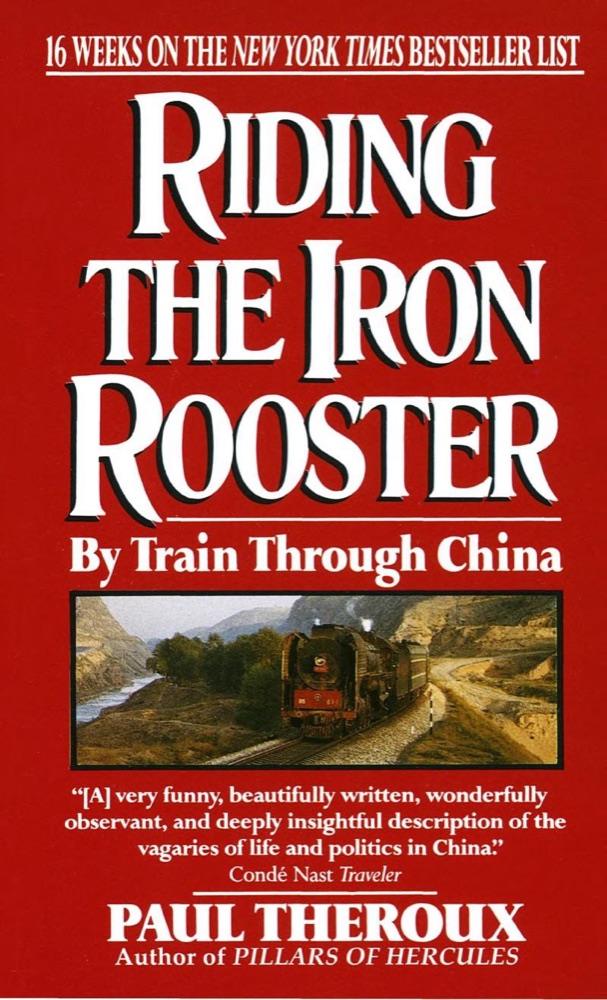 Riding the Iron Rooster: By Train Through China
About the book
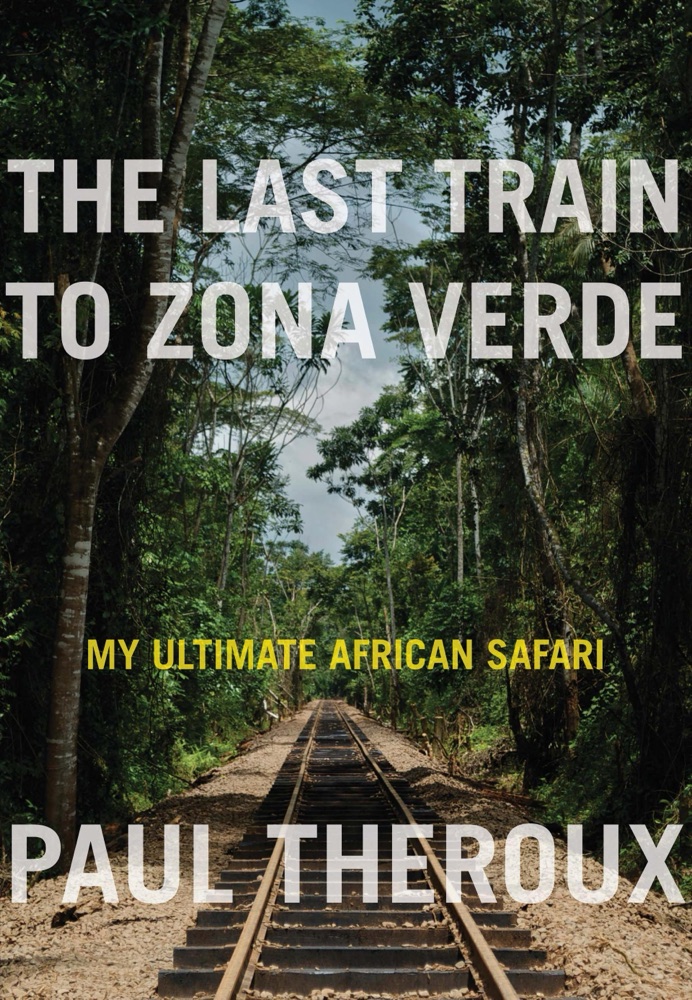
Following the success of the acclaimed Ghost Train to the Eastern Star and The Great Railway Bazaar , The Last Train to Zona Verde is an ode to the last African journey of the world's most celebrated travel writer.
“Happy again, back in the kingdom of light,” writes Paul Theroux as he sets out on a new journey through the continent he knows and loves best. Theroux first came to Africa as a twenty-two-year-old Peace Corps volunteer, and the pull of the vast land never left him. Now he returns, after fifty years on the road, to explore the little-traveled territory of western Africa and to take stock both of the place and of himself.
His odyssey takes him northward from Cape Town, through South Africa and Namibia, then on into Angola, wishing to head farther still until he reaches the end of the line. Journeying alone through the greenest continent, Theroux encounters a world increasingl
Book details
- First published
- 2012
- Author
- Paul Theroux
- Genre
- Nonfiction
- Goodreads rating
- 3.90 (4k ratings)
Keep reading
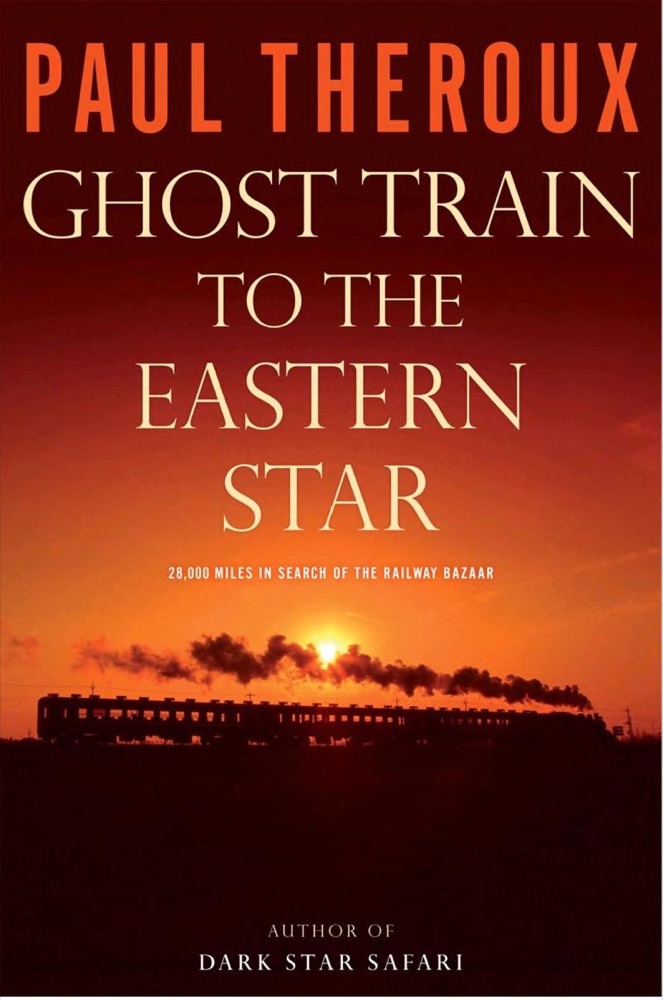 Ghost Train to the Eastern Star
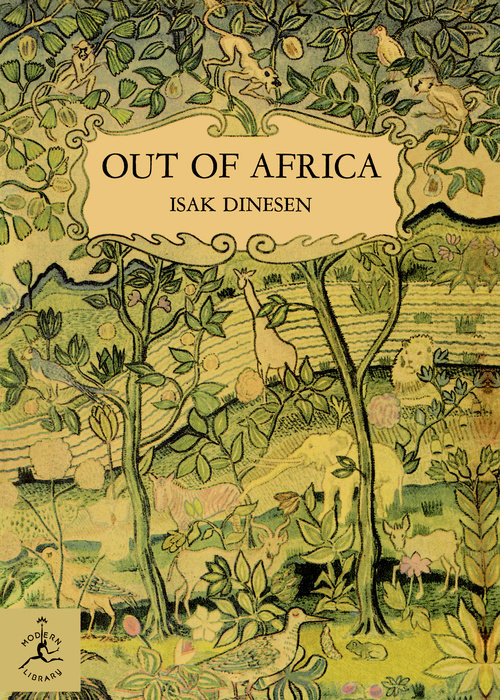 Out of Africa
The Old Patagonian Express: By Train Through the Americas
Out of Africa
The Old Patagonian Express: By Train Through the Americas
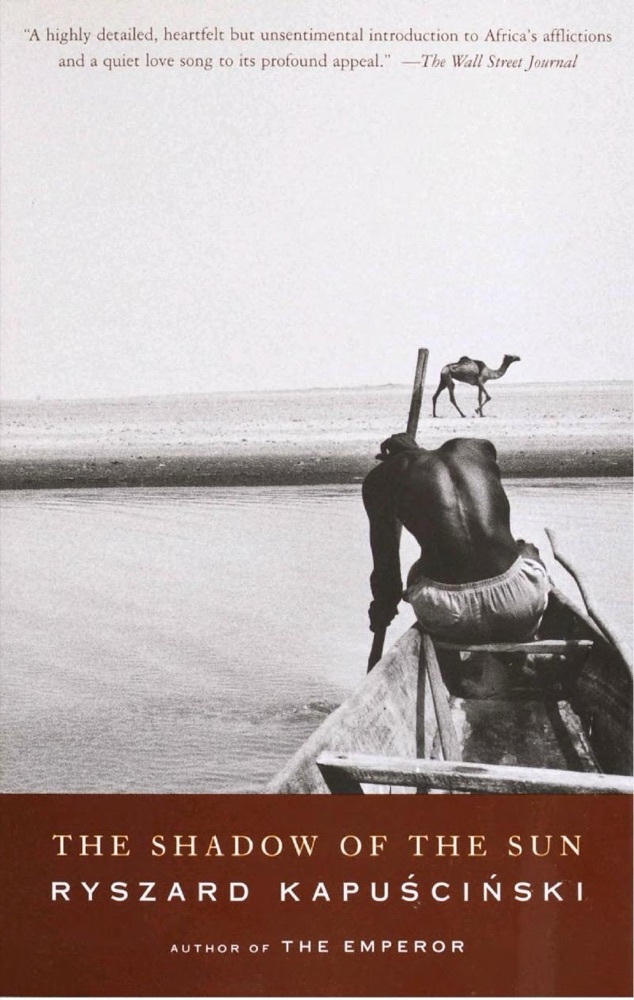 The Shadow of the Sun
The Great Railway Bazaar
The Shadow of the Sun
The Great Railway Bazaar
 Blood River: A Journey to Africa's Broken Heart
 A Bend in the River
 Travels with Myself and Another
 Petals of Blood
 Neither Here nor There: Travels in Europe
 Travels with Charley: In Search of America
 Wizard of the Crow
 The Motorcycle Diaries: Notes on a Latin American Journey
 The Way of the World
 The Innocents Abroad
 Flights
 The Sex Lives of Cannibals: Adrift in the Equatorial Pacific
 The Cat's Table
 Following the Equator: A Journey Around the World
 Jaguars Ripped My Flesh
 The Adventures of China Iron
 The Lost City of Z: A Tale of Deadly Obsession in the Amazon
 A Year in the World: Journeys of a Passionate Traveller
 In Arabian Nights: A Caravan of Moroccan Dreams
 Blue Highways
 Tears of the Giraffe
 Green Hills of Africa
 Walking
 Open City
 Another Roadside Attraction
 Don't Let's Go to the Dogs Tonight
 King Leopold's Ghost
 Where the Bluebird Sings to the Lemonade Springs: Living and Writing in the West
 West with the Night
 River of Smoke
 Gun Island
 The Journey Home: Some Words in Defense of the American West
 Barracoon: The Story of the Last "Black Cargo"
 In the Footsteps of Mr. Kurtz: Living on the Brink of Disaster in Mobutu's Congo
 The Bedlam Stacks
 In a Sunburned Country
 A House in the Sky
 House of the Tiger King: The Quest for a Lost City
 Notes from No Man's Land
 The Worst Journey in the World
 Roughing It
 Flaubert in Egypt: A Sensibility on Tour
 Another Country
 Desert Solitaire
 Sorcerer's Apprentice
 The Gone-Away World
 The Art of Travel
 The Lost Continent: Travels in Small Town America
 TransAtlantic
 Invisible Cities
 The Songlines
 Travels with Herodotus
 Destination Truth: Memoirs of a Monster Hunter
 O Pioneers!
 Voyage of the Beagle