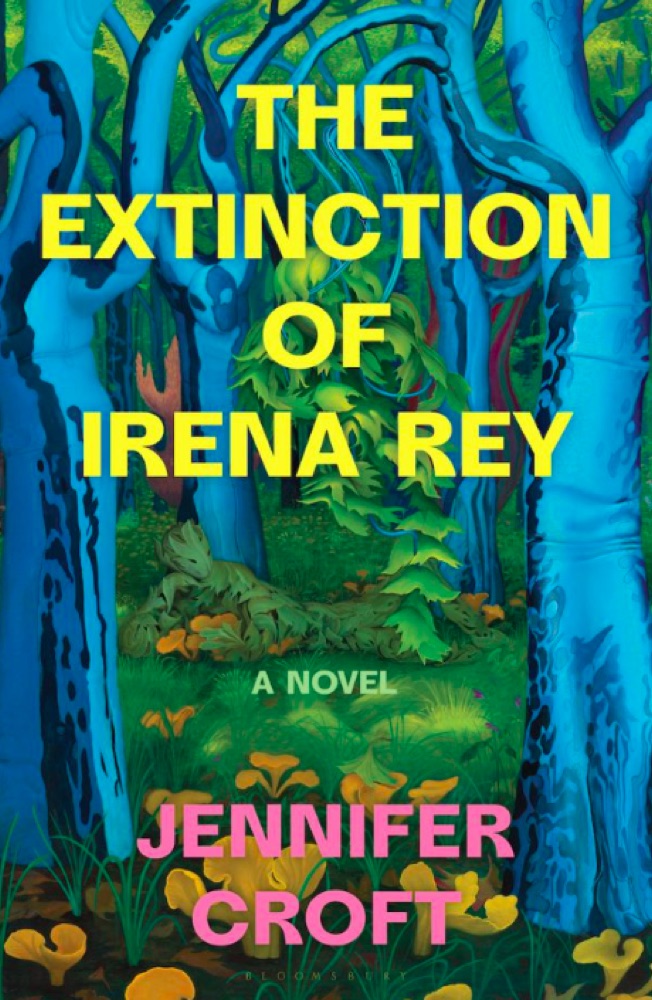

 The Adventures of China Iron
Quotes from the Book
Does it hurt?" we finally heard her whisper, and in that moment, she was achingly beautiful, beautiful almost beyond belief: She was warmth, she was moisture, she was light, she was the adamant perfection of a million billion snowflakes in a split second's descent, she was tender, she was eternal, and she was memory, and she was love.
2
But translation isn’t reading. Translation is being forced to write a book again.
We were book people. We had yet to truly concern ourselves with earth.
Sometimes we must create the community we wish to protect,
wasn’t the suffering that existed in nature unbearable as well? And wasn’t it understandable that people tried to escape an endless cycle of oblivion and pain?
Her next book, 2007’s Kernel of Light, told the story of a nonbinary scientist who tries to steer clear of corruption at a research station in Antarctica where symbiotic communities of fruticose lichens already taxed by climate change are being decimated in the interest of pharmaceutical research.
a shiver of sharks, a shadow of jaguars, a conspiracy of lemurs, a parliament of owls.
Later that morning, Irena's official Instagram posted a picture of Irena onstage, wearing a red dress, strappy heels, and an orange shawl that she spread out like wings. She was standing in front of a spotlight, and her outline glowed, and in its fineness, the image of her shawl was made up almost exclusively of light.
We collected our things from our quarters---the ones that had been assigned to us and the ones we had adopted--- and I gathered up all my notes that would slowly metamorphose into The Extinction of Irena Rey. Maybe Grey Eminence was right that writing has to be an engine of extinction. But the first to inhabit a traumatized landscape are often fungi, lichen, slime molds, and species of plants known as "ruderal," a word that derives from the Latin word for "rubble." Maybe the extinction of Irena Rey made the space for a ruderal art, like a book about what happened to her translators.
Glittering crystalline rainbows extended in every direction, while gentle gold beams swept between the softened trees that sparkled and beckoned and forbade.
To our right there was a gentle burst of sedge grass completely surrounded by nettles, backed by a row of wild bergamot. Beech-trees hovered over every earthly thing in that direction, spiking into the regathering clouds. To our left were the spruces where the firecrests and the dunnocks and the three-toed woodpeckers lived.
According to Freddie, mycelium was the network of fine hyphae (little living threads) that coursed through the soil and stitched the plants and the trees of the forest into a united and communicating whole, a fabric that featured the beavers and the mole crickets and the moose--- in short, it was the basis for the forest. Trees could share nutrients with one another through mycelium. On rare occasions, trees even poisoned plants via mycelium, if they posed some threat to them. But primarily the trees and plants received through the hyphae the minerals and water they needed from the soil, and in return, they offered the fungus the sugar that they, with their leaves, had the ability to produce through photosynthesis.
The glare of the green landscape and the air, the air that was everywhere, in us and making way for us, and we rode and were aware only of each other and ourselves for those couple of miles, and for those couple of miles I was myself, back in the neighborhood of Chacarita, where I moved with my mom after we realized my dad was never going to move out first, that we would have to leave him, and I saw on either side of me the big ugly high-rises and squat goldenrod houses and fuchsia and blue and inscrutable notes scrawled on the walls, graffiti intermingling with the shimmering, shadowing little leaves of the tipas, and as I rode I slowed at the oleander at Facultad de Medicina, those delicate pink flowers that rose over the fence in utter opulence and the lush stiff leaves that reached out through the bars that were freshly painted bright green. Then there it was: the Great Mamamushi. I slowed, and Freddie slowed. We parked our bikes. I was out of breath and all the air on Earth was in my blood, and we kissed again, and I turned around, and he put his arms around my waist, and I leaned into him, and we beheld it: a tree that was almost too much to be true, that truly was incredible, with its trunk that was almost eight meters around, a staggering circumference, glittered over by dragonflies, heavy, petite, iridescent incarnations of Irena's genius, when suddenly a flock of impossible parrots exploded out of the alders, and we looked up to see them shattering the sky. "All the oaks on this trail have their own names," I explained to Freddie. "This one is my favorite. Can you believe it's still growing?" He put his face against mine. He didn't say anything. For a while we just stood like that, together, watching the Great Mamamushi grow.
In particular about one of the verses the father read, Corinthians 15." "Which says?" Chloe prompted him. " 'Death is swallowed up in victory. Behold, I tell you a mystery: We all shall not sleep, but we shall all be changed, in a moment, in the twinkling of an eye, at the last trump: for the trumpet shall sound, dead shall be raised incorruptible, and we shall be changed.' " "What does that mean?" I asked. "Catholicism is a little more relaxed in Argentina." "It means that the faithful must resolutely accept the doctrine of life after death," Schulz told me. "In a way, what it means is this: There's no such thing as death. Nothing ends. Everything only transforms.
Along a shelf built into the wall over the head of the bed there were candles and vials. Without thinking, I picked one up and opened it. It smelled like honeysuckle, and a little bit like mint. When I set it down, I saw that my fingers were covered in dust. I looked up and saw, through a skylight, the dark barreling clouds. French and English knelt on the bed to look at the postcards, and I got in between them, my eyes traveling from hunting scenes (bare-breasted women on horseback) to Istanbul (dolphins in the Bosporus).
The protagonist of Grey Eminence was Amália, the world's first climate change artist* and the first person to exceed a billion followers on Instagram, making her a sort of global empress, unprecedented in the history of Earth. She was also Portugal's foremost performer of fado, a gold medalist in rhythmic gymnastics, excellent at baking, and capable of taming the aurochs she summoned back from extinction to revivify Lascaux. *What the author means here is that Amália was the first to view climate change itself as an art. Her oeuvre was above all a radical reinterpretation of the still life. She practiced extinction as well as large-scale action sculptures that undid or outmaneuvered natural processes such as decomposition and promoted catastrophes when opportunities--- weather-related or other--- arose.
It was barely spring in the southern hemisphere, and Buenos Aires was not yet soft, or sumptuous, or purple.* *I wasn't sure what this meant at first, but when I asked this author to explain it, she sent me a picture of a city that resembled a cross between Little Rock and Paris awash in jacaranda blooms
Over the course of its more than ten-thousand-year life-span," she proclaimed, "Białowieża Forest has offered shelter not only to Europe's sole surviving megafauna and the royals who legislated its exclusive use, but also to boreal owls, dwarf marsh violets, black storks, gray wolves, snakes (as we have witnessed), the world's only population of Agrilus pseudocyaneus, around two hundred types of moss, two hundred eighty-three kinds of lichens, and over eighteen hundred fungal species, of which nine hundred forty-three are classified as being at risk. Of which two hundred can be found nowhere else in Poland. I am saying that there are two hundred different kinds of fungi here in Białowieża that are, everywhere else, probably already extinct.
The sun was higher, a white light between the birches that arched and bared their lenticels, shimmering their leaves.
On either side of us were stinging nettles, a couple of feet deep; past that, slender trunks that bowed under the weight of their fresh foliage. Some of the older trees were fallen, spiked, half covered by mosses, lichens, slime molds in bubblegum pink and neon yellow we could just make out in the escalating light.
The Czech chandelier was made of ten little skulls and too many bones for us to count. The house was filled with storied objects: dark portraits of her ancestors in scalloped, gilded frames; a grand piano, never played; massive chests with cavernous keyholes; a Bozdoğan mace; a solid-bronze candelabra, three feet high, with nine tendriling, gravity-defying arms. Around the living room hung suits of armor that fortified our feeling that her home was our fortress, our defense against the wrongheaded world.
It was a new moon, but the stars of the northern hemisphere transformed her slim sinuous home, converting the oak strips on the convex walls into quicksilver that momentarily held the frenzied shadows of the forest, slickening their inextricable shapes, and then engulfed them.
Had I taken my title from the kingdom of fungi, I would have opted not for some unspectacular parasite, but rather the reishi, or Amanita virosa, or maybe the magnificent split gill, a mushroom found on every continent except Antarctica, where lichens reign. (For more on this please see Irena Rey's Kernel of Light, in my translation.) This is the least this author could have done. For the split gill can be 23,328 different sexes, each of which is able to mate with any of the 23,327 that it is not.
Watch on YouTube
About Jennifer Croft
We have collected 23 quotes from 1 book by Jennifer Croft on BookQuoters.
More about the author →About the book
From the International Booker Prize–winning translator and Women's Prize finalist, a propulsive, beguiling novel about eight translators and their search for a world-renowned author who goes missing in a primeval Polish forest.
Eight translators arrive at a house in a forest on the border of Belarus. It belongs to the world-renowned author Irena Rey, and they are there to translate her magnum opus, Gray Eminence. But within days of their arrival, Irena disappears without a trace.
The translators, who hail from eight different countries but share the same reverence for their beloved author, begin to investigate where she may have gone while proceeding with work on her masterpiece. They explore this ancient wooded refuge with its intoxicating slime molds and lichens, and study her exotic belongings and layered texts for clues. But doing so reveals secrets — and deceptions — of Irena
Book details
- First published
- 2024
- Author
- Jennifer Croft
- Genre
- Fiction
- Goodreads rating
- 3.18 (6k ratings)
The buzz
- The New York TimesReview in The New York Timesprofessional review (via Book Marks)
- The Washington PostReview in The Washington Postprofessional review (via Book Marks)
- The Wall Street JournalReview in The Wall Street Journalprofessional review (via Book Marks)
- The GuardianReview in The Guardianprofessional review (via Book Marks)
- The AtlanticReview in The Atlanticprofessional review (via Book Marks)
- NPRReview in NPRprofessional review (via Book Marks)
Keep reading
The Adventures of China Iron
 The Shell Collector
 The Wild Places
 Barkskins
 Poems, 1962-2012
 Weyward
 Vampires in the Lemon Grove
 House Made of Dawn
 The Witch's Kind
 We Do Not Part
 Dearly
 Pale Fire
 The Street of Crocodiles
 A Stranger in Olondria
 House of Day, House of Night
 The Taiga Syndrome
 The Atomic Weight of Love
 The Hungry Tide
 The Seven Skins of Esther Wilding
 In Patagonia
 The Snow Leopard
 Winter
 The House of Doors
 The Night Watchman
 Ammonite
 Your Blue Is Not My Blue: A Missing Person Memoir
 The Moor's Last Sigh
 The People in the Trees
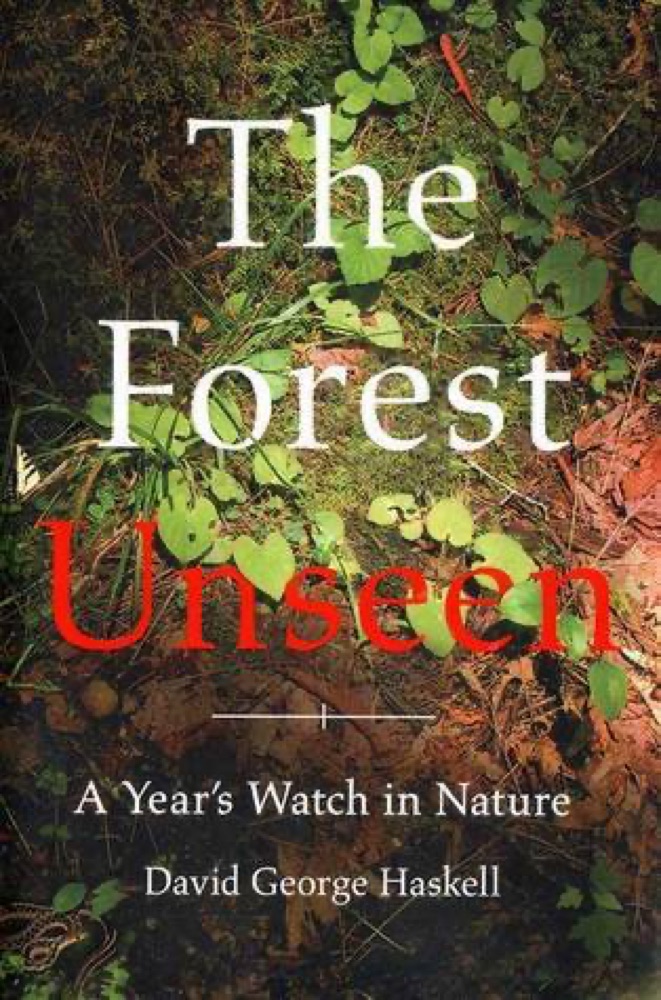 The Forest Unseen: A Year’s Watch in Nature
 Plainwater: Essays and Poetry
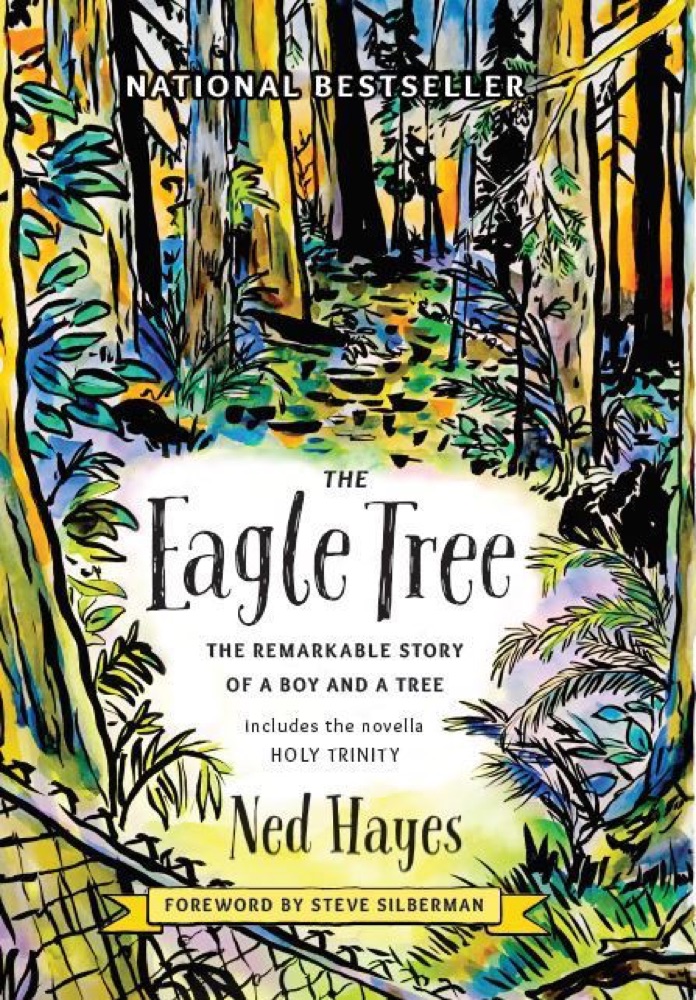 The Eagle Tree
 Gathering Moss: A Natural and Cultural History of Mosses
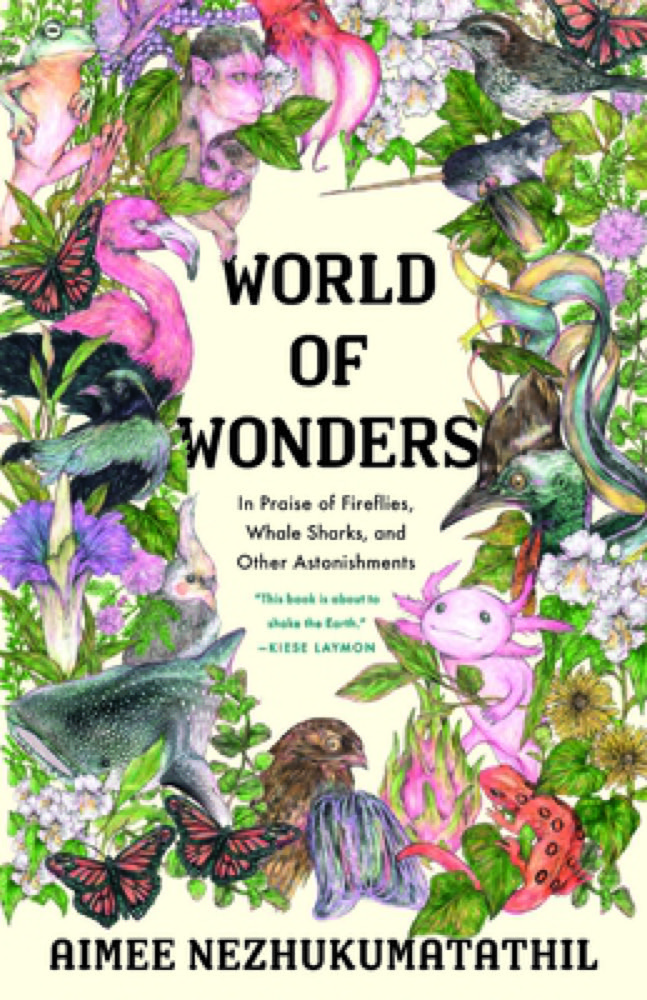 World of Wonders: In Praise of Fireflies, Whale Sharks, and Other Astonishments
 Feersum Endjinn
 The Last Report on the Miracles at Little No Horse
 Palimpsest
 Diary of a Young Naturalist
 The Family Tree
 Arctic Dreams
 Monday or Tuesday
 A Day of Fallen Night
 Gösta Berling's Saga
 Out of Oz
 One for the Blackbird, One for the Crow
 The Daughters of Temperance Hobbs
 Vesper Flights
 Four Souls
 The Ministry of Utmost Happiness
 Between the Acts
 The Return of the Native
 Primeval and Other Times
 Skinny Legs and All
 Blackbird House
 The Girl Who Drank the Moon
 The Notebooks of Malte Laurids Brigge
 The World Without Us
 Green Dolphin Street
 The Selected Works of T.S. Spivet
 Bitter Greens
 Pilgrim at Tinker Creek