
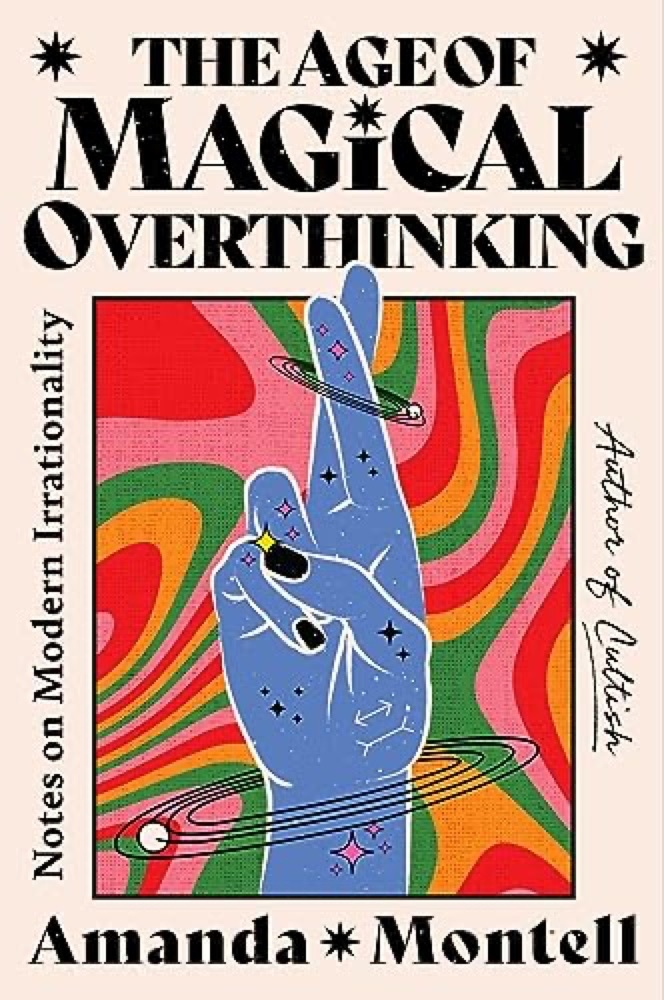
 The Age of Magical Overthinking: Notes on Modern Irrationality
Quotes from the Book
That’s because language doesn’t work to manipulate people into believing things they don’t want to believe; instead, it gives them license to believe ideas they’re already open to. Language—both literal and figurative, well-intentioned and ill-intentioned, politically correct and politically incorrect—reshapes a person’s reality only if they are in an ideological place where that reshaping is welcome.
57
It’s not that smart people aren’t capable of believing in cultish things; instead, says Shermer, it’s that smart people are better at “defending beliefs they arrived at for non-smart reasons.
44
words are the medium through which belief systems are manufactured, nurtured, and reinforced, their fanaticism fundamentally could not exist without them.
35
The biggest joke in religious studies is that cult + time = religion.
27
Roses are red Money is green The American Dream Is a pyramid scheme
23
Creating special language to influence people’s behavior and beliefs is so effective in part simply because speech is the first thing we’re willing to change about ourselves . . . and also the last thing we let go.
22
A linguistic concept called the theory of performativity says that language does not simply describe or reflect who we are, it creates who we are.
17
Modern cultish groups also feel comforting in part because they help alleviate the anxious mayhem of living in a world that presents almost too many possibilities for who to be (or at least the illusion of such). I once had a therapist tell me that flexibility without structure isn’t flexibility at all; it’s just chaos. That’s how a lot of people’s lives have been feeling. For most of America’s history, there were comparatively few directions a person’s career, hobbies, place of residence, romantic relationships, diet, aesthetic—everything—could easily go in. But the twenty-first century presents folks (those of some privilege, that is) with a Cheesecake Factory–size menu of decisions to make. The sheer quantity can be paralyzing, especially in an era of radical self-creation, when there’s such pressure to craft a strong “personal brand” at the very same time that morale and basic survival feel more precarious for young people than they have in a long time. As our generational lore goes, millennials’ parents told them they could grow up to be whatever they wanted, but then that cereal aisle of endless “what ifs” and “could bes” turned out to be so crushing, all they wanted was a guru to tell them which to pick.
17
Totalitarian leaders can’t hope to gain or maintain power without using language to till a psychological schism between their followers and everyone else.
15
flexibility without structure isn’t flexibility at all; it’s just chaos.
14
Contentious debates aside, thought-terminating clichés also pervade our everyday conversations: Expressions like “It is what it is,” “Boys will be boys,” “Everything happens for a reason,” “It’s all God’s plan,” and certainly “Don’t think about it too hard” are all common examples.
13
This makes sense, because in every corner of life, business and otherwise, when you can tell deep down that something is ethically wrong but are having trouble pinpointing why, language is a good place to look for evidence.
13
one of them has to do with a type of conditioning most of us have experienced: the conditioning to automatically trust the voices of middle-aged white men.
12
With words, we breathe reality into being.
11
What’s new is that in this internet-ruled age, when a guru can be godless, when the barrier to entry is as low as a double-tap, and when folks who hold alternative beliefs are able to find one another more easily than ever, it only makes sense that secular cults—from obsessed workout studios to start-ups that put the “cult” in “company culture”—would start sprouting like dandelions. For good or for ill, there is now a cult for everyone.
11
Language change is always reflective of social change, and over the decades, as our sources, of connections and existential purpose has shifted due to the phenomena like social media, increased globalization, and withdrawal from traditional religion we've seen the rise of more alternative subgroups-some dangerous, some not so much. "Cult" has evolved to describe them all.
10
Unlike the cults of the ‘70s, we don’t even have to leave the house for a charismatic figure to take hold of us. With contemporary cults, the barrier to entry if the simple frisson of tapping Follow.
9
The diagram of QAnon and New Agers looks more circular every day.
9
Sociologists also say that higher education and training in the scientific method generally make people less gullible. And for better or for worse, so does being in a bad mood. In several experiments, researchers found that when someone is in a good mood, they become more innocent and unsuspecting, while feeling grumpy makes one better at sensing deception. Which has to be the most curmudgeonly superpower I’ve ever heard.
8
Techniques like us-versus-them labels, loaded language, and thought-terminating clichés are absolutely crucial in getting people from open, community-minded folks to victims of cultish violence;
7
In this way, it’s not desperation or mental illness that consistently suckers people into exploitative groups—instead, it’s an overabundance of optimism
6
It’s work to think, especially about things you don’t want to think about,” confessed Diane Benscoter, an ex-member of the Unification Church (aka the Moonies, an infamous ’70s-era religious movement). “It’s a relief not to have to.
6
Across the board, gaslighting is a way of psychologically manipulating someone (or many people) such that they doubt their own reality, as a way to gain and maintain control.
6
This is what the most cunning cultish leaders do: Instead of sticking to one unchanging lexis to represent a unified doctrine, they customize their language according to the individual in front of them.
6
When language works to make you question your own perceptions, whether at work or at church, that’s a form of gaslighting. I first came across the term “gaslighting” in the context of abusive romantic partners, but it shows up in larger-scale relationships, too, like those between bosses and their employees, politicians and their supporters, spiritual leaders and their devotees. Across the board, gaslighting is a way of psychologically manipulating someone (or many people) such that they doubt their own reality, as a way to gain and maintain control.
5
Father Divine said to always establish a ‘we/they’: an ‘us,’ and an enemy on the outside,” explained Laura Johnston Kohl, our Jonestown vet. The goal is to make your people feel like they have all the answers, while the rest of the world is not just foolish, but inferior. When you convince someone that they’re above everyone else, it helps you both distance them from outsiders and also abuse them, because you can paint
4
but it’s nowhere near as spooky as yoga studios full of rich white women wearing the same overpriced athleisure, possibly embellished with a bastardized Sanskrit pun—“Om is where the heart is,” “Namaslay,” “My chakras are aligned AF”—and calling themselves a “tribe.” Commodifying the language of Eastern and Indigenous spiritual practices for an elitist white audience while erasing and shutting out their originators might not seem “culty”—it might just seem commonplace, which is exactly the problem.
4
Did you know?
- The book examines the language of groups ranging from Scientology and Jonestown to SoulCycle, CrossFit, and multilevel marketing companies.
- Montell uses the term "thought-terminating cliché" to describe stock phrases that shut down independent thinking.
- She draws on her own father's childhood experience living in the Synanon community.
- Cultish was named one of NPR's best books of 2021.
- Topic Studios acquired rights in 2022 to develop a documentary series based on the book.
- Montell is also the author of Wordslut, a feminist exploration of the English language.
About Amanda Montell
Amanda Montell is an American author, linguist, and podcaster known for accessible books on language and culture, including Wordslut and The Age of Magical Overthinking.
More about the author →More by Amanda Montell
The Age of Magical Overthinking: Notes on Modern Irrationality
About the book
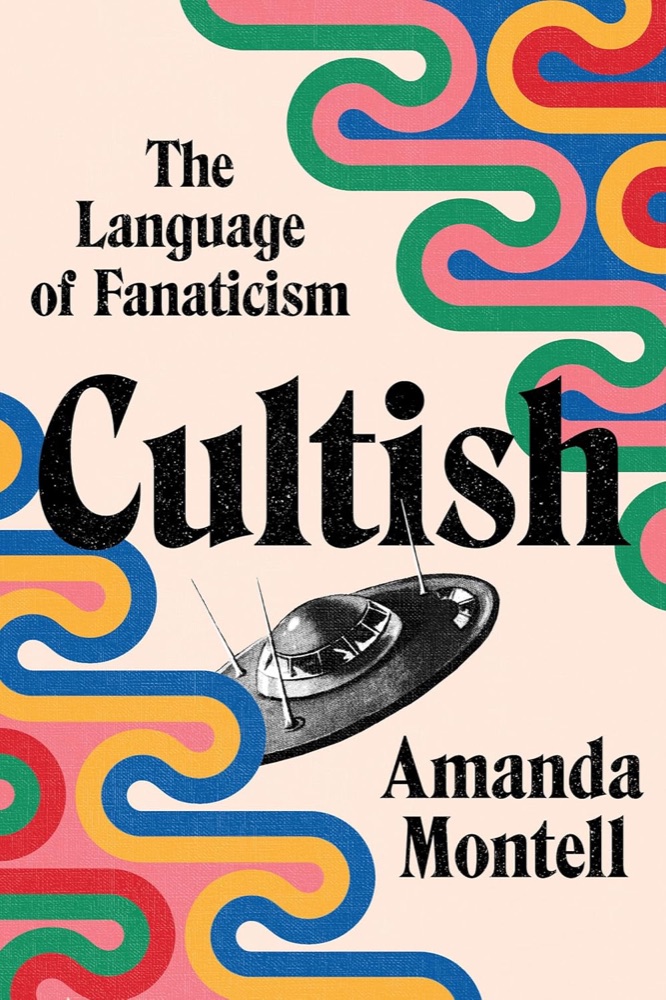
"Cultish: The Language of Fanaticism" is a 2021 nonfiction book by linguist Amanda Montell that argues cults and cult-like groups can be identified less by what they believe than by how they talk. Montell examines the specialized vocabulary, redefined words, loaded clichés, euphemisms, and thought-terminating phrases that bind members together and set them apart from outsiders, drawing on examples ranging from notorious groups like Scientology, Heaven's Gate, Jonestown, Synanon, and NXIVM to everyday communities such as multilevel marketing companies, fitness brands like SoulCycle and CrossFit, and online movements like QAnon.
At its core the book is about belonging and persuasion: how language manufactures intimacy, signals in-group status, and can gradually reshape how people think. Montell coins the umbrella term "Cultish" for this kind of speech and resists treating it as purely sinister, instead showing that the same linguistic tools operate on a spectrum from harmless to dangerous. She blends linguistics, social psychology, and reporting with personal anecdotes, including her father's childhood experience in the Synanon community.
Cultish was a New York Times bestseller and was named a best book of 2021 by NPR, and it earned a starred review from Booklist. Reviewers praised its accessible, conversational style and its timely application of cult dynamics to mainstream consumer and internet culture, though some critics felt the personal digressions occasionally pulled focus from the larger analysis. In November 2022, Topic Studios acquired the rights to develop a documentary series based on the book with Montell's involvement.
Book details
- First published
- 2021
- Length
- 320 pages
- Reading time
- 6 hours
- Author
- Amanda Montell
- Genre
- Nonfiction
- Goodreads rating
- 3.79 (124k ratings)
Critical reception
- Became a New York Times bestseller.
- Named a best book of 2021 by NPR.
- Received a starred review from Booklist.
- Critics praised its accessible prose but some noted personal digressions occasionally distracted from the central argument.
Keep reading
The Age of Magical Overthinking: Notes on Modern Irrationality
 What's Our Problem?: A Self-Help Book for Societies
 The True Believer: Thoughts on the Nature of Mass Movements
 A Language Older Than Words
 Bright-Sided: How the Relentless Promotion of Positive Thinking Has Undermined America
 Creation Lake
 The Sign
 An Absolutely Remarkable Thing
 The Braindead Megaphone
 The Lucifer Effect: Understanding How Good People Turn Evil
 The Art of Seduction
 The Biggest Secret: The Book That Will Change the World
 Doppelganger: A Trip into the Mirror World
 Villa Incognito
 The Witches Are Coming
 You Are Now Less Dumb: How to Conquer Mob Mentality, How to Buy Happiness, and All the Other Ways to Outsmart Yourself
 Living with a Wild God: A Nonbeliever's Search for the Truth about Everything
 Letters to a Young Contrarian
 12 Rules for Life: An Antidote to Chaos
 Revolution
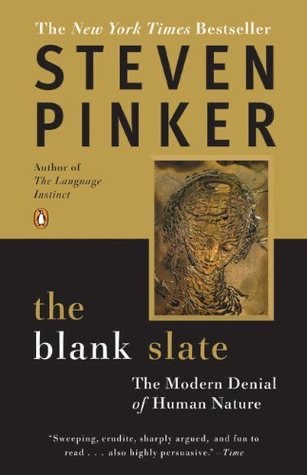 The Blank Slate: The Modern Denial of Human Nature
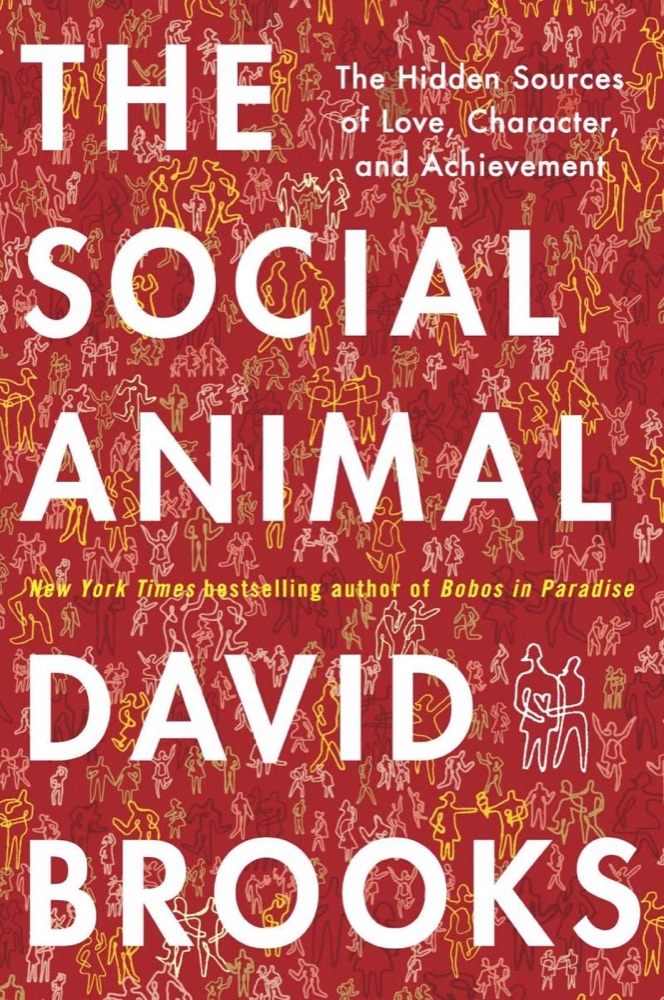 The Social Animal: The Hidden Sources of Love, Character, and Achievement
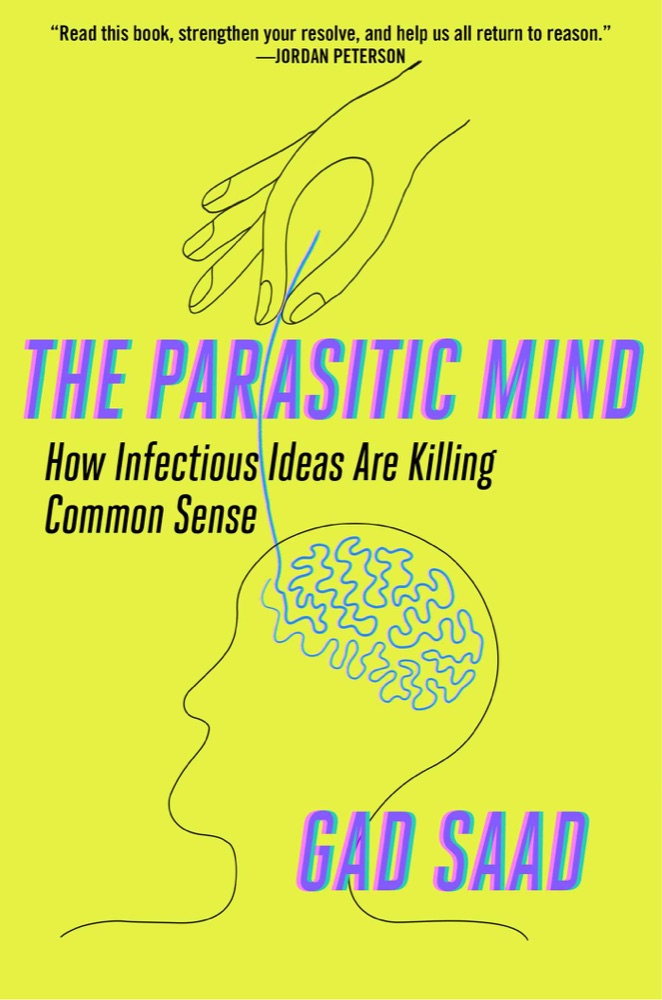 Parasitic Mind: How Infectious Ideas Are Killing Common Sense
 Arguably: Selected Essays
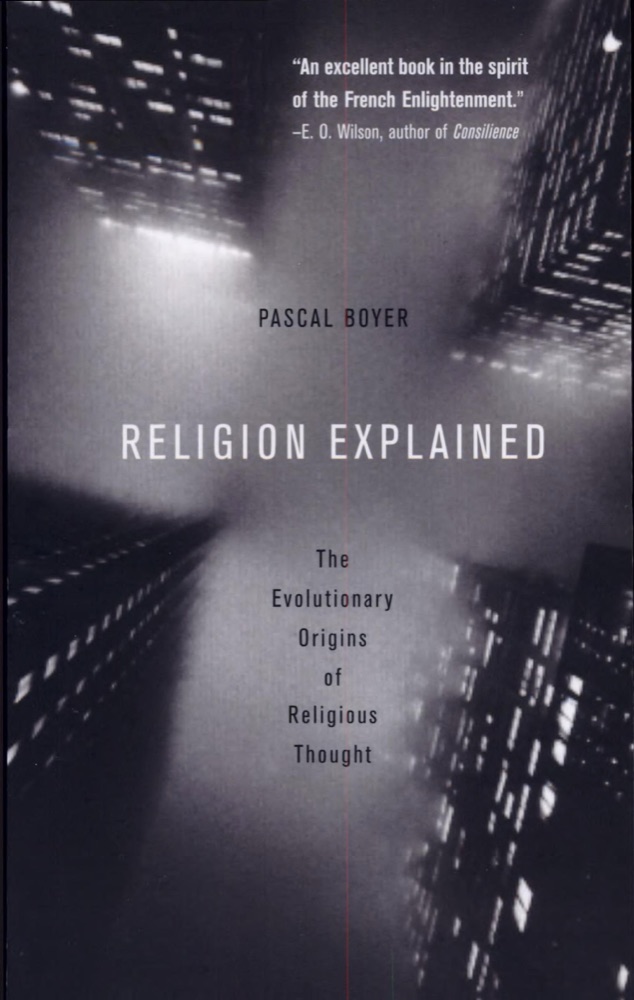 Religion Explained: The Evolutionary Origins of Religious Thought
 Lila: An Inquiry Into Morals
 Eating the Dinosaur
 Trick Mirror: Reflections on Self-Delusion
 White
White
 Even Cowgirls Get the Blues
 Maps of Meaning: The Architecture of Belief
 Endgame, Vol. 1: The Problem of Civilization
 Infinite Jest
 The Tenth Insight: Holding the Vision
 When I Was a Child I Read Books
 The Future
 Shadow of the Hegemon
 Going Clear: Scientology, Hollywood, and the Prison of Belief
 Please Understand Me II: Temperament, Character, Intelligence
 Mistakes Were Made (But Not by Me): Why We Justify Foolish Beliefs, Bad Decisions, and Hurtful Acts
 Lexicon
 Fall; or, Dodge in Hell
 Selfie: How the West Became Self-Obsessed
 Food of the Gods: The Search for the Original Tree of Knowledge
 The Coddling of the American Mind: How Good Intentions and Bad Ideas Are Setting up a Generation for Failure
 You Are Not a Gadget
 Breaking the Spell: Religion as a Natural Phenomenon
 Echopraxia
 Children of Dune
 Myths to Live By
 The Varieties of Religious Experience
 The Laws of Human Nature
 Empire of Illusion: The End of Literacy and the Triumph of Spectacle
 Consider the Lobster and Other Essays
 The Celestine Prophecy
 Humankind: A Hopeful History
 My Life on the Road
 Psych: The Story of the Human Mind
 You Are Not So Smart