
 Cooked: A Natural History of Transformation
Quotes from the Book
I believe the transformative moment that gave rise to the genus Homo, one of the great transitions in the history of life, stemmed from the control of fire and the advent of cooked meals.
4
The weight of our guts is estimated at about 60 percent of what is expected for a primate of our size: the human digestive system as a whole is much smaller than would be predicted on the basis of size relations in primates. Our small mouths, teeth, and guts fit well with the softness, high caloric density, low fiber content, and high digestibility of cooked food.
4
Hundreds of different hunter-gatherer cultures have been described, and all obtained a substantial proportion of their diet from meat, often half their calories or more.
4
Women in these societies often dislike marriage specifically because as wives they are obliged to produce food for men, and they have to work harder than they would as unmarried women.
3
Food historian Felipe Fernandez-Armesto proposed that cooking created mealtimes and thereby organized people into a community. For culinary historian Michael Symons, cooking promoted cooperation through sharing, because the cook always distributes food. Cooking, he wrote, is “the starting-place of trades.
3
compared to that of great apes, the reduction in human gut size saves humans at least 10 percent of daily energy expenditure: the more gut tissue in the body, the more energy must be spent on its metabolism.
3
Cooking was a great discovery not merely because it gave us better food, or even because it made us physically human. It did something even more important: it helped make our brains uniquely large, providing a dull human body with a brilliant human mind.
2
Imagine going to a sporting event with sixty thousand seats around the stadium. You arrive early with your grandmother, and the two of you take the first seats. Next to your grandmother sits her grandmother, your great-great-grandmother. Next to her is your great-great-great-great-grandmother. The stadium fills with the ghosts of preceding grandmothers. An hour later the seat next to you is occupied by the last to sit down, the ancestor of you all. She nudges your elbow, and you turn to find a strange nonhuman face. Beneath a low forehead and big brow-ridge, bright dark eyes surmount a massive jaw. Her long, muscular arms and short legs intimate her gymnastic climbing ability. She is your ancestor and an australopithecine, hardly a companion your grandmother can be expected to enjoy.
2
When we eat, our metabolic rate rises, the maximum increase averaging 25 percent. The corresponding figures for fish (136 percent) and for snakes (687 percent) are vastly higher, showing that humans pay less for digestion than other species, presumably due partly to our food being cooked. But the cost of digestion is still significant for humans and can be reduced or raised depending on the food type.
2
Another version of the same formula applied to many Tiwi marriages. In this highly polygynous culture, old men took most of the young wives, so more than 90 percent of men’s first marriages were to widows much older than themselves, sometimes as old as sixty. The old wives might have been past child-bearing age and physically unattractive, but young men delighted in the marriages because they were then fed.
2
Men need their personal cooks because the guarantee of an evening meal frees them to spend the day doing what they want, and allows them to entertain other men. They can find opportunities for sexual interactions more easily than they can find a food provider.
2
In addition to having a small gape, our mouths have a relatively small volume—about the same size as chimpanzee mouths, even though we weigh some 50 percent more than they do. Zoologists often try to capture the essence of our species with such phrases as the naked, bipedal, or big-brained ape. They could equally well call us the small-mouthed ape.
2
Are we just an ordinary animal that happens to enjoy the tastes and securities of cooked food without in any way depending on them? Or are we a new kind of species tied to the use of fire by our biological needs, relying on cooked food to supply enough energy to our bodies?
2
Brillat-Savarin and Symons were right to say that we have tamed nature with fire. We should indeed pin our humanity on cooks.
2
So the question of our origins concerns the forces that sprung Homo erectus from their australopithecine past. Anthropologists have an answer. According to the most popular view since the 1950s there was a single supposed impetus: the eating of meat.
2
Although the breakthrough of using fire at all would have been the biggest culinary leap, the subsequent discovery of better ways to prepare the food would have led to continual increases in digestive efficiency, leaving more energy for brain growth. The improvements would have been especially important for brain growth after birth, since easily digested weaning foods would have been critical contributors to a child’s energy supply. Advances in food preparation may thus have contributed to the extraordinary continuing rise in brain size through two million years of human evolution—a
2
Among the Bonerif, husbands disapproved of their wives having sex with bachelors, but the bachelors did it anyway. Husbands were relatively tolerant of their wives having sex with other husbands, perhaps because promiscuous sex involved less threat of losing her economic services than did promiscuous feeding. As in many other hunter-gatherer communities, Bonerif attitudes toward premarital sex are particularly open-minded. One girl had sex with every unmarried male in the community except her brother. But when a woman feeds a man, she is immediately recognized as being married to him. Western society is not alone in thinking that the way to a man’s heart is through his stomach.
1
A wife who cooks badly might be beaten, shouted at, chased, or have her possessions broken, but she can respond to abuse by refusing to cook or threatening to leave. Such disputes seem to be characteristic mostly of new marriages.
1
However, among people who eat cooked diets, there is no difference in body weight between vegetarians and meat eaters: when our food is cooked we get as many calories from a vegetarian diet as from a typical American meat-rich diet. It is only when eating raw that we suffer poor weight gain.
1
the implication is clear: there is something odd about us. We are not like other animals. In most circumstances, we need cooked food.
1
In 1995 Leslie Aiello and Peter Wheeler proposed that the reason some animals have evolved big brains is that they have small guts, and small guts are made possible by a high-quality diet. Aiello and Wheeler’s head-spinning idea came from the realization that brains are exceptionally greedy for glucose—in other words, for energy. For an inactive person, every fifth meal is eaten solely to power the brain.
1
An animal slaughtered without being stressed retains more glycogen in its muscles. After death the glycogen converts to lactic acid, which promotes denaturation and therefore a more tender meat.
1
Because the maximum safe level of protein intake for humans is around 50 percent of total calories, the rest must come from fat, such as blubber, or carbohydrates, such as in fruits and roots. Fat is an excellent source of calories in high-latitude sites like the Arctic or Tierra del Fuego, where sea mammals have evolved thick layers of blubber to protect themselves from the cold. However, fat levels are much lower in the meat of tropical mammals, averaging around 4 percent, and high-fat tissues like marrow and brain are always in limited supply. The critical extra calories for our equatorial ancestors therefore must have come from plants, which are vital for all tropical hunter-gatherers.
1
Gathering can be just as critical as hunting because men sometimes return with nothing, in which case the family must rely entirely on gathered foods.
The sexual division of labor refers to women and men making different and complementary contributions to the household economy. Though the specific activities of each sex vary by culture, the gendered division of labor is a human universal. It is therefore assumed to have appeared well before modern humans started spreading across the globe sixty thousand to seventy thousand years ago.
Animals need food, water and shelter. We humans need all those things, but we need fire too.
O cozimento deu início a um compromisso dietético que atualmente move uma indústria. Os alimentos populares cozidos em fábricas gigantescas são muitas vezes desprezados, por serem supostamente desprovidos de micronutrientes, tendo excesso de gordura, sal e açúcar e muito poucos sabores interessantes, mas essas são as iguarias que evoluímos para desejar. O resultado é o excesso. Na virada do século XXI, 61% dos americanos estavam "com excesso de peso suficiente para começar a experimentar problemas de saúde como resultado direto".
Embora guardas de alimentos sejam relativamente comuns entre animais, há apenas uma espécie em que fêmeas foram vistas provendo machos: um pequenino percevejo d'água australiano chamado Zeus. Os percevejos machos são menores que as fêmeas e montam nas costas de suas parceiras como jóqueis. As fêmeas secretam um material ceroso em suas costas e este é comido pelo macho, não tendo nenhuma finalidade exceto alimentá-lo. Machos impedidos de comer as secreções das fêmeas tornaram-se competitivos: roubam a presa fresca da fêmea. Os pesquisadores que descobriram esta estranha relação formularam a hipótese de que é mais vantajoso para as fêmeas alimentar os machos que as montam do que perder suas presas para eles, talvez porque o material ceroso contenha nutrientes de que elas não precisam. Esse sistema se desenvolveu aparentemente para impedir que os machos interferissem na alimentação das fêmeas. Em outras palavras, elas os alimentam para recompensá-los por se comportarem bem. Isso está próximo do sistema encontrado em humanos.
But in support of the primary importance of food in determining mating arrangements, in animal species the mating system is adapted to the feeding system, rather than the other way around. A female chimpanzee needs the support of all the males in her community to aid her in defending a large feeding territory, so she does not bond with any particular male. A female gorilla, however, has no need for a defended food territory, so she is free to become a mate for a specific male. Many such examples suggest that the mating system is constrained by the way species are socially adapted to their food supply.
Watch on YouTube
About Richard W. Wrangham
We have collected 29 quotes from 1 book by Richard W. Wrangham on BookQuoters.
More about the author →About the book
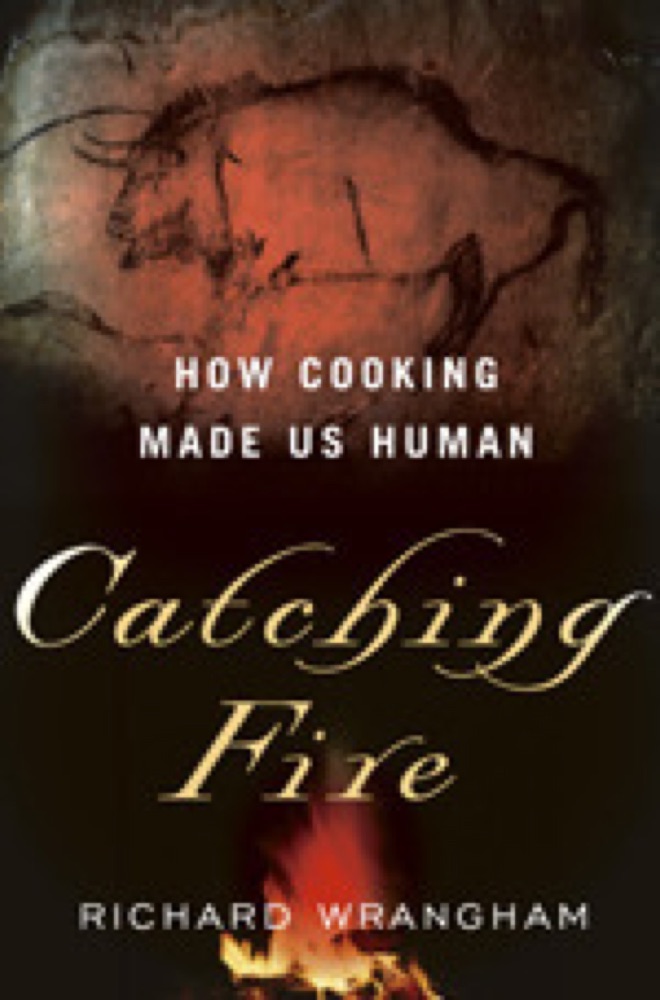
Ever since Darwin and The Descent of Man, the existence of humans has been attributed to our intelligence and adaptability. But in Catching Fire, renowned primatologist Richard Wrangham presents a startling alternative: our evolutionary success is the result of cooking. In a groundbreaking theory of our origins, Wrangham shows that the shift from raw to cooked foods was the key factor in human evolution. when our ancestors adapted to using fire, humanity began.
Once our hominid ancestors began cooking their food, the human digestive tract shrank and the brain grew. Time once spent chewing tough raw food could be used instead to hunt and to tend camp. Cooking became the basis for pair bonding and marriage, created the household, and even led to a sexual division of labor.
Tracing the contemporary implications of our ancestors' diets, Catching Fire sheds new light on how we came to b
Book details
- First published
- 2009
- Author
- Richard W. Wrangham
- Genre
- Nonfiction
- Goodreads rating
- 3.88 (4k ratings)
Keep reading
Cooked: A Natural History of Transformation
 The Omnivore's Dilemma: A Natural History of Four Meals
 Cannibalism: A Perfectly Natural History
 The World Peace Diet
 The Story of the Human Body: Evolution, Health, and Disease
 A Hunter-Gatherer's Guide to the 21st Century: Evolution and the Challenges of Modern Life
 The 80/10/10 Diet: Balancing Your Health, Your Weight, and Your Life, One Luscious Bite at a Time
 Gut: The Inside Story of Our Body's Most Underrated Organ
 Why We Get Sick: The New Science of Darwinian Medicine
 In Defense of Food: An Eater's Manifesto
 The Third Chimpanzee: The Evolution and Future of the Human Animal
 An Everlasting Meal: Cooking with Economy and Grace
 Sex at Dawn: The Prehistoric Origins of Modern Sexuality
 Your Inner Fish: A Journey Into the 3.5-Billion-Year History of the Human Body
 Eating Animals
 Sapiens: A Brief History of Humankind
 Shadows of Forgotten Ancestors
 Animal, Vegetable, Miracle: A Year of Food Life
 Some We Love, Some We Hate, Some We Eat: Why It's So Hard to Think Straight About Animals
 Whole: Rethinking the Science of Nutrition
 Drunk: How We Sipped, Danced, and Stumbled Our Way to Civilization
 At Home: A Short History of Private Life
 Gulp: Adventures on the Alimentary Canal
 The Third Plate: Field Notes on the Future of Food
 The China Study: The Most Comprehensive Study of Nutrition Ever Conducted and the Startling Implications for Diet, Weight Loss, and Long-term Health
 The Mating Mind: How Sexual Choice Shaped the Evolution of Human Nature
 Dragons of Eden: Speculations on the Evolution of Human Intelligence
 First Bite: How We Learn to Eat
 The Log from the Sea of Cortez
 The Social Conquest of Earth
 The 4-Hour Body: An Uncommon Guide to Rapid Fat-Loss, Incredible Sex, and Becoming Superhuman
 The Violinist's Thumb: And Other Lost Tales of Love, War, and Genius, as Written by Our Genetic Code
 Behave: The Biology of Humans at Our Best and Worst
 Survival of the Sickest: A Medical Maverick Discovers Why We Need Disease
 Why We Love Dogs, Eat Pigs, and Wear Cows
 The Red Queen: Sex and the Evolution of Human Nature
 The One-Straw Revolution
 Eat to Live: The Revolutionary Formula for Fast and Sustained Weight Loss
 Are We Smart Enough to Know How Smart Animals Are?
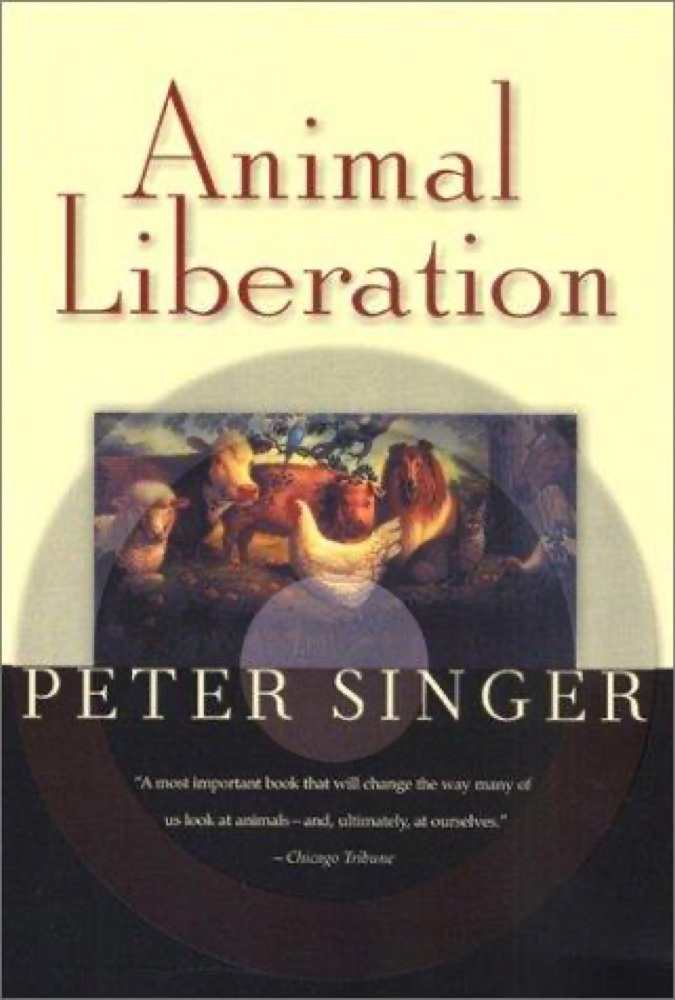 Animal Liberation
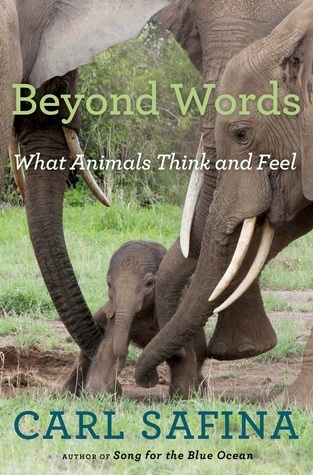 Beyond Words: What Animals Think and Feel
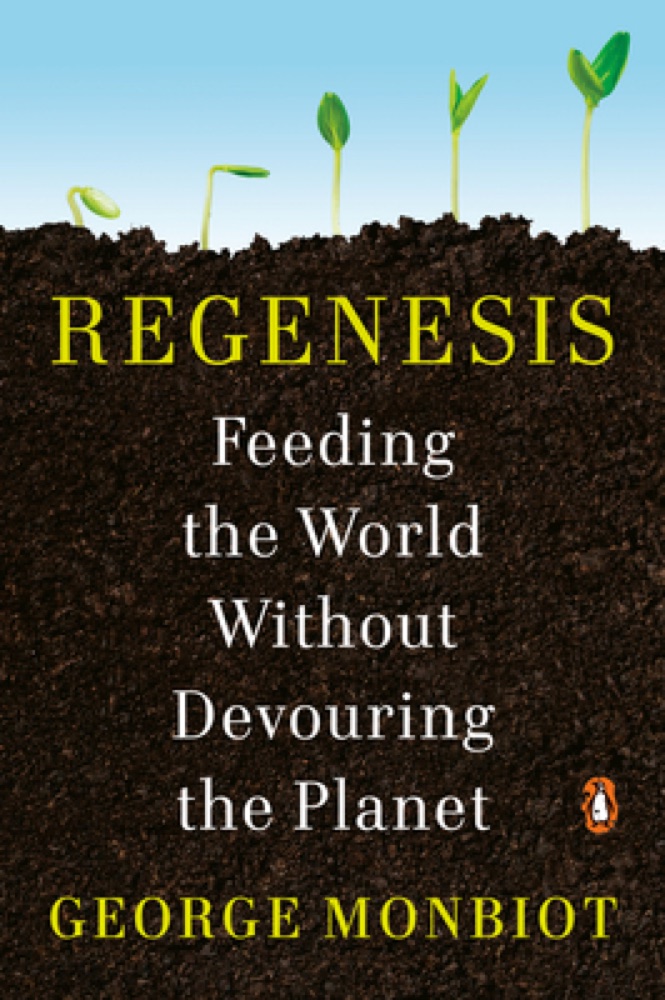 Regenesis: Feeding the World Without Devouring the Planet
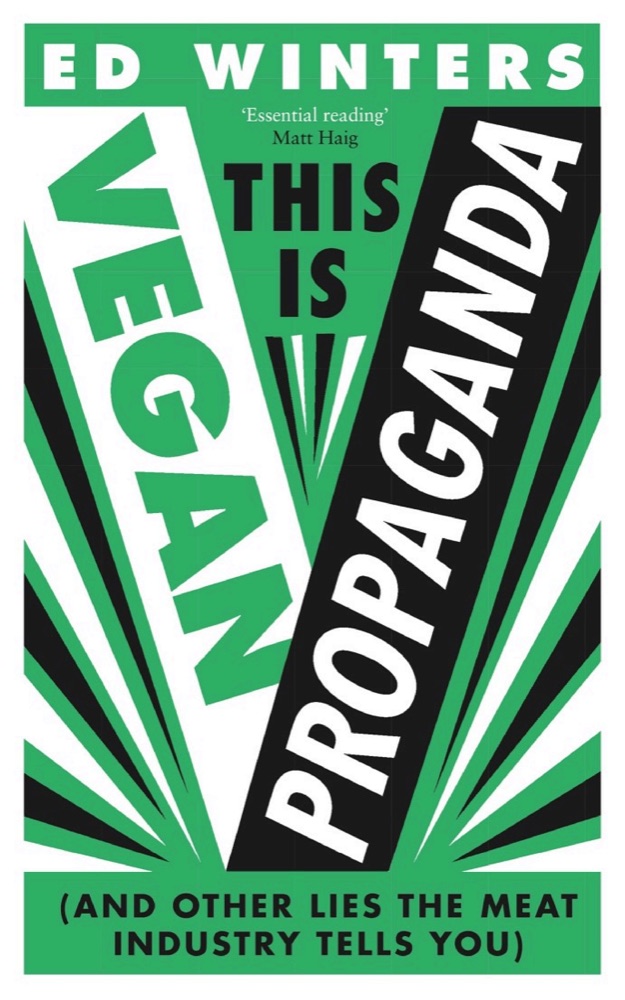 This is Vegan Propaganda
 The Tale of the Dueling Neurosurgeons: The History of the Human Brain as Revealed by True Stories of Trauma, Madness, and Recovery
 What Doesn't Kill Us: How Freezing Water, Extreme Altitude, and Environmental Conditioning Will Renew Our Lost Evolutionary Strength
 On Human Nature
 Good Reasons for Bad Feelings: Insights from the Frontier of Evolutionary Psychiatry
 Guns, Germs, and Steel: The Fates of Human Societies
 Animal: The Autobiography of a Female Body
 Undeniable: Evolution and the Science of Creation
 Folks, This Ain't Normal: A Farmer's Advice for Happier Hens, Healthier People, and a Better World
 The Future of Humanity: Terraforming Mars, Interstellar Travel, Immortality and Our Destiny Beyond Earth
 Why We Run: A Natural History
 Bringing it to the Table: On Farming and Food
 Mama's Last Hug: Animal Emotions and What They Tell Us about Ourselves
 The Vegetarian Myth: Food, Justice, and Sustainability
 Our Inner Ape: A Leading Primatologist Explains Why We are Who We Are
 Vanishing Treasures: A Bestiary of Extraordinary Endangered Creatures
 The Rational Optimist: How Prosperity Evolves
 A Short History of Progress