
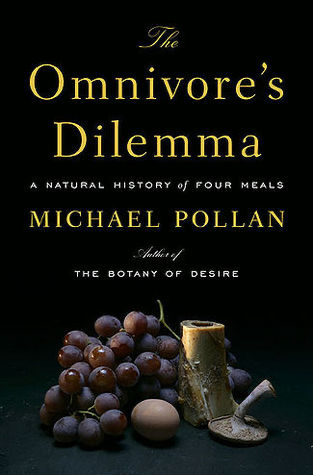
 The Omnivore's Dilemma: A Natural History of Four Meals
Quotes from the Book
For is there any practice less selfish, any labor less alienated, any time less wasted, than preparing something delicious and nourishing for people you love?
60
The shared meal is no small thing. It is a foundation of family life, the place where our children learn the art of conversation and acquire the habits of civilization: sharing, listening, taking turns, navigating differences, arguing without offending. What have been called the “cultural contradictions of capitalism”—its tendency to undermine the stabilizing social forms it depends on—are on vivid display today at the modern American dinner table, along with all the brightly colored packages that the food industry has managed to plant there.
34
Well, in a world where so few of us are obliged to cook at all anymore, to choose to do so is to lodge a protest against specialization—against the total rationalization of life. Against the infiltration of commercial interests into every last cranny of our lives. To cook for the pleasure of it, to devote a portion of our leisure to it, is to declare our independence from the corporations seeking to organize our every waking moment into yet another occasion for consumption. (Come to think of it, our nonwaking moments as well: Ambien, anyone?) It is to reject the debilitating notion that, at least while we’re at home, production is work best done by someone else, and the only legitimate form of leisure is consumption. This dependence marketers call “freedom.
24
Our society assigns us a tiny number of roles: We're producers of one thing at work, consumers of a great many things all the rest of the time, and then, once a year or so, we take on the temporary role of citizen and cast a vote. Virtually all our needs and desires we delegate to specialists of one kind or another - our meals to the food industry, our health to the medical profession, entertainment to Hollywood and the media, mental health to the therapist or the drug company, caring for nature to the environmentalist, political action to the politician, and on and on it goes. Before long it becomes hard to imagine doing much of anything for ourselves - anything, that is, except the work we do "to make a living." For everything else, we feel like we've lost the skills, or that there's someone who can do it better... it seems as though we can no longer imagine anyone but a professional or an institution or a product supplying our daily needs or solving our problems.
17
I found that, much like gardening, most cooking manages to be agreeably absorbing without being too demanding intellectually. It leaves plenty of mental space for daydreaming and reflection.
12
A French poet famously referred to the aroma of certain cheeses as the ‘pieds de Dieu’—the feet of god. Just to be clear: foot odor of a particularly exalted quality, but still—foot odor.
12
Great cooking is all about the three 'p's: patience, presence, and practice.
11
To ferment your own food is to lodge a small but eloquent protest - on behalf of the senses and the microbes - against the homogenization of flavors and food experiences now rolling like a great, undifferentiated lawn across the globe. It is also a declaration of independence from an economy that would much prefer we remain passive consumers of its standardized commodities, rather than creators of idiosyncratic products expressive of ourselves and of the places where we live, because your pale ale or sourdough bread or kimchi is going to taste nothing like mine or anyone else's.
10
Cooking, I found, gives us the opportunity, so rare in modern life, to work directly in our own support, and in the support of the people we feed. If this is not “making a living,” I don’t know what is. In the calculus of economics, doing so may not always be the most efficient use of an amateur cook’s time, but in the calculus of human emotion, it is beautiful even so. For is there any practice less selfish, any labor less alienated, any time less wasted, than preparing something delicious and nourishing for people you love?
9
It seems to me that one of the great luxuries of life at this point is to be able to do one thing at a time, one thing to which you give yourself wholeheartedly. Unitasking.
9
Cooking is all about connection, I've learned, between us and other species, other times, other cultures (human and microbial both), but, most important, other people. Cooking is one of the more beautiful forms that human generosity takes; that much I sort of knew. But the very best cooking, I discovered, is also a form of intimacy.
9
Every cuisine has its characteristic 'flavor principle,' Rozin contends, whether it is tomato-lemon-oregano in Greece; lime-chili in Mexico; onion-lard-paprika in Hungary, or, in Samin's Moroccan dish, cumin-coriander-cinnamon-ginger-onion-fruit. (And in America? Well, we do have Heinz ketchup, a flavor principle in a bottle that kids, or their parents, use to domesticate every imaginable kind of food. We also now have the familiar salty-umami taste of fast food, which I would guess is based on salt, soy oil, and MSG.
9
We moderns are great compartmentalizers, perhaps never more so than when hungry.
9
If the omnivore’s dilemma is to determine what is good and safe to eat amid the myriad and occasionally risky choices nature puts before us, then familiar flavor profiles can serve as a useful guide, a sensory signal of the tried and true. To an extent, these familiar blends of flavor take the place of the hardwired taste preferences that guide most other species in their food choices. They have instincts to steer them; we have cuisines.
8
If you stand in a wheat field at this time of year, a few weeks from harvest, it's not hard to imagine you're looking at something out of mythology: all this golden sunlight brought down to earth, captured in kernels of gold, and rendered fit for mortals to eat. But of course this is no myth at all, just the plain miraculous fact.
7
By now you will not be surprised to learn that Gaston Bachelard had a few things to say about the element of air. In a book called "Air and Dreams". he points out that we categorize many of our emotions by their relative weight; they make us feel heavier or lighter. Perhaps because uprightness is the human quality, we imagine human emotions arranged on a vertical scale from ground to sky. So sadness is weighed down and earthbound. joy is aerial, and the sensation of freedom defies the bonds of gravity. "Air," Bachelard writes, "is the very substance of our freedom, the substance of superhuman joy." Elation, effervescence, elevation, levity, inspiration: air words all, alveolated with vowels, leavening the dough of everyday life.
7
If we address frankly what is evoked by cheese, I think it becomes clear why so little is said. So what does cheese evoke? Damp dark cellars, molds, mildews and mushrooms galore, dirty laundry and high school locker rooms, digestive processes and visceral fermentations, he-goats which do not remind of Chanel … In sum, cheese reminds of dubious, even unsavory places, both in nature and in our own organisms. And yet we love it.
7
In ancient Greece, the word for "cook," "butcher," and "priest" was the same -- mageiros -- and the word shares an etymological root with "magic.
6
The bread was so powerfully aromatic that, had I been alone, I would have been tempted to push my face into it.
6
The transformation which occurs in the cauldron is quintessential and wondrous, subtle and delicate. The mouth cannot express it in words.
6
To cook for the pleasure of it, to devote a portion of our leisure to it, is to declare our independence from the corporations seeking to organize our every waking moment into yet another occasion for consumption. (Come to think of it, our nonwaking moments as well: Ambien, anyone?) It is to reject the debilitating notion that, at least while we’re at home, production is work best done by someone else, and the only legitimate form of leisure is consumption. This dependence marketers call “freedom.” Cooking
5
Cooking—of whatever kind, everyday or extreme—situates us in the world in a very special place, facing the natural world on one side and the social world on the other. The cook stands squarely between nature and culture, conducting a process of translation and negotiation. Both nature and culture are transformed by the work. And in the process, I discovered, so is the cook.
5
The ads have also helped manufacture a sense of panic about time, depicting families so rushed and harried in the morning that there is no time to make breakfast, not even to pour some milk over a bowl of cereal. No, the only hope is to munch on a cereal bar (iced with synthetic “milk” frosting) in the bus or car. (Tell me: Why can’t these hassled families set their alarm clocks, like, ten minutes earlier?!)
5
Easy. You want Americans to eat less? I have the diet for you. Cook it yourself. Eat anything you want—just as long as you’re willing to cook it yourself.
5
Okay, but what about microbial disease? “To declare war on ninety-nine percent of bacteria when less than one percent of them threaten our health makes no sense. Many of the bacteria we’re killing are our protectors.” In fact, the twentieth-century war on bacteria—with its profligate use of antibiotics, and routine sterilization of food—has undermined our health by wrecking the ecology of our gut. “For the first time in human history, it has become important to consciously replenish our microflora.” Hence the urgency of cultural revival. And
5
There's nothing really quite like that first soft spring breeze of intoxication. Keep drinking all you want, but you will never get it back.
5
It may also be that, quite apart from any specific references one food makes to another, it is the very allusiveness of cooked food that appeals to us, as indeed that same quality does in poetry or music or art. We gravitate towards complexity and metaphor, it seems, and putting fire to meat or fermenting fruit and grain, gives us both: more sheer sensory information and, specifically, sensory information that, like metaphor, points away from the here and now. This sensory metaphor - this stands for that - is one of the most important transformations of nature wrought by cooking. And so a piece of crisped pig skin becomes a densely allusive poem of flavors: coffee and chocolate, smoke and Scotch and overripe fruit and, too, the sweet-salty-woodsy taste of maple syrup on bacon I loved as a child. As with so many other things, we humans seem to like our food overdetermined.
5
Watch on YouTube
About Michael Pollan
We have collected 182 quotes from 7 books by Michael Pollan on BookQuoters.
More about the author →More by Michael Pollan
The Omnivore's Dilemma: A Natural History of Four Meals
 The Botany of Desire: A Plant's-Eye View of the World
 In Defense of Food: An Eater's Manifesto
 Second Nature: A Gardener's Education
About the book
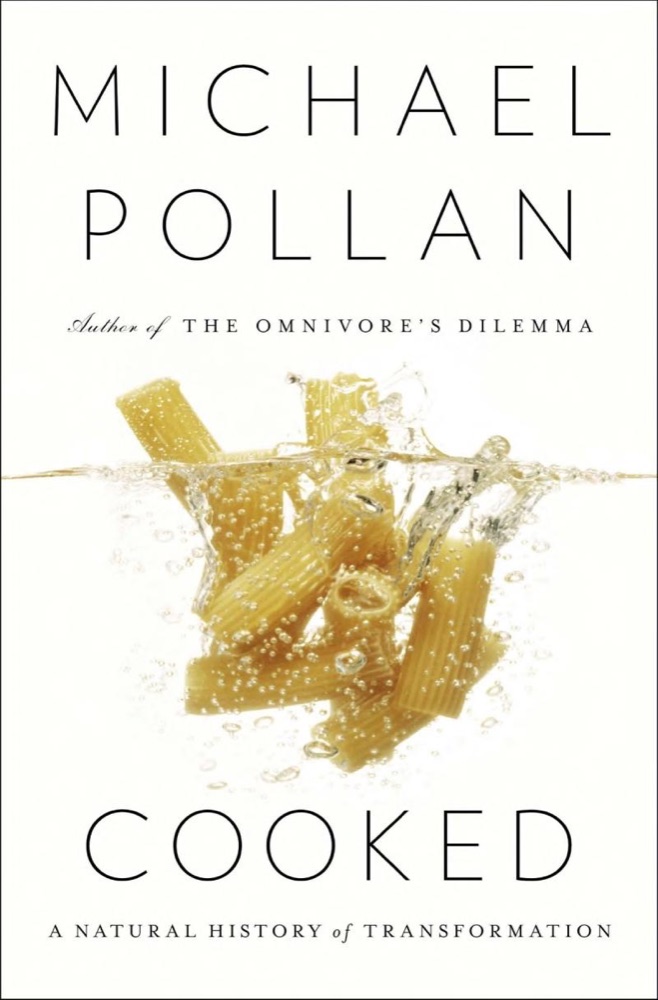
In Cooked, Michael Pollan explores the previously uncharted territory of his own kitchen. Here, he discovers the enduring power of the four classical elements - fire, water, air, and earth - to transform the stuff of nature into delicious things to eat and drink. Apprenticing himself to a succession of culinary masters, Pollan learns how to grill with fire, cook with liquid, bake bread, and ferment everything from cheese to beer. In the course of his journey, he discovers that the cook occupies a special place in the world, standing squarely between nature and culture. Both realms are transformed by cooking, and so, in the process, is the cook.
Each section of Cooked tracks Pollan's effort to master a single classic recipe using one of the four elements. A North Carolina barbecue pit master tutors him in the primal magic of fire; a Chez Panisse-trained cook schools him in the art of b
Book details
- First published
- 2013
- Author
- Michael Pollan
- Genre
- Nonfiction
- Goodreads rating
- 4.08 (26k ratings)
Keep reading
 An Everlasting Meal: Cooking with Economy and Grace
 Animal, Vegetable, Miracle: A Year of Food Life
The Omnivore's Dilemma: A Natural History of Four Meals
Animal, Vegetable, Miracle: A Year of Food Life
The Omnivore's Dilemma: A Natural History of Four Meals
 The Supper of the Lamb: A Culinary Reflection
 The Art of Eating
In Defense of Food: An Eater's Manifesto
The Art of Eating
In Defense of Food: An Eater's Manifesto
 First Bite: How We Learn to Eat
 The Third Plate: Field Notes on the Future of Food
 A Cook's Tour: Global Adventures in Extreme Cuisines
 Buttermilk Graffiti: A Chef’s Journey to Discover America’s New Melting-Pot Cuisine
 Kitchen Confidential: Adventures in the Culinary Underbelly
 Medium Raw: A Bloody Valentine to the World of Food and the People Who Cook
 The School of Essential Ingredients
 Midnight Chicken: & Other Recipes Worth Living For
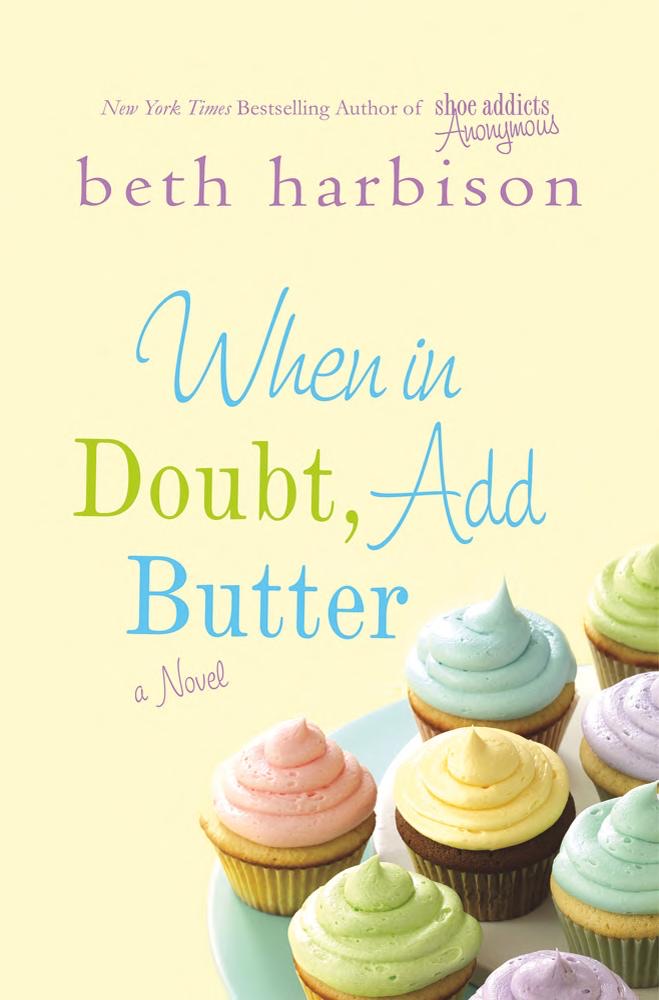 When in Doubt, Add Butter
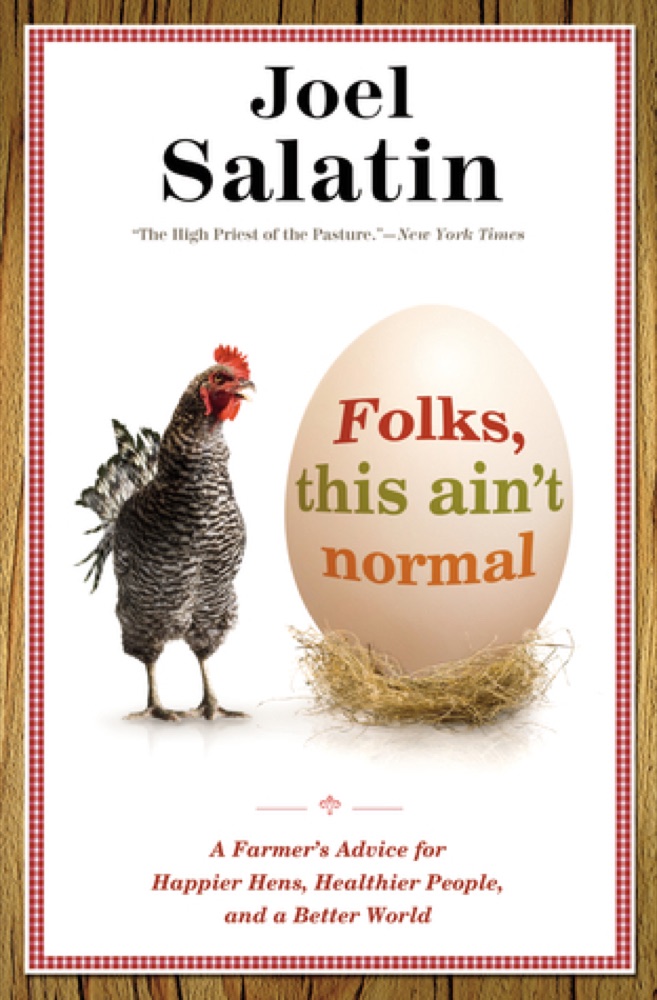 Folks, This Ain't Normal: A Farmer's Advice for Happier Hens, Healthier People, and a Better World
 Land of Milk and Honey
 Catching Fire: How Cooking Made Us Human
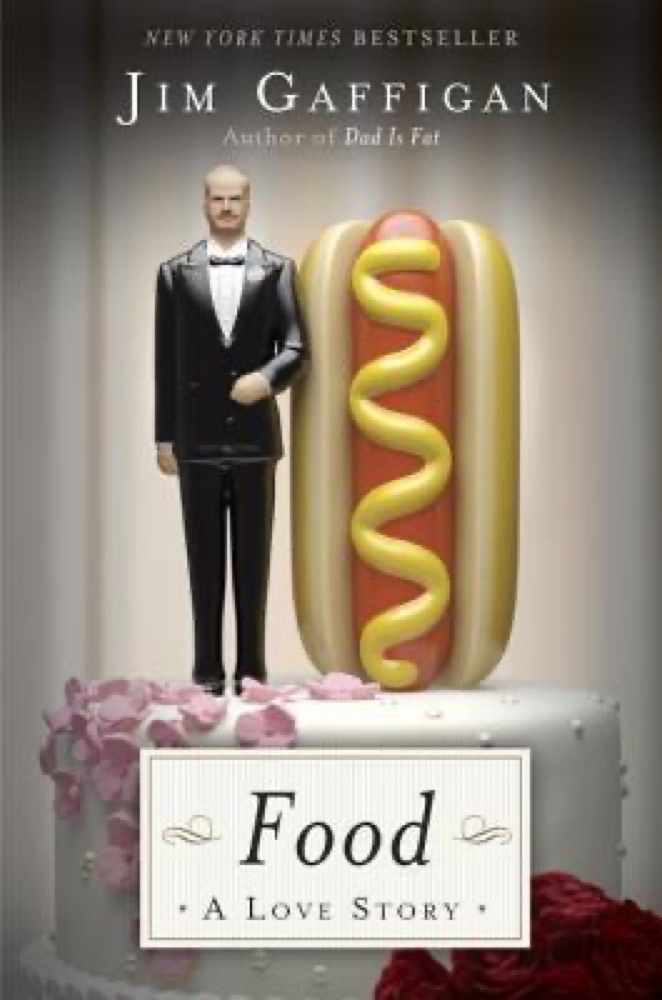 Food: A Love Story
 The 4-Hour Chef: The Simple Path to Cooking Like a Pro, Learning Anything, and Living the Good Life
 The 80/10/10 Diet: Balancing Your Health, Your Weight, and Your Life, One Luscious Bite at a Time
 The World Peace Diet
 Blood, Bones, and Butter: The Inadvertent Education of a Reluctant Chef
 The One-Straw Revolution
 Eating Animals
 Cinnamon and Gunpowder
 The Devil in the Kitchen: Sex, Pain, Madness and the Making of a Great Chef
 Bringing it to the Table: On Farming and Food
 If You Can't Take the Heat: Tales of Food, Feminism, and Fury
 Gourmet Rhapsody
 Gulp: Adventures on the Alimentary Canal
 The Book of Unholy Mischief
 Woman, Eating
 My Life in France
 Women, Food and God: An Unexpected Path to Almost Everything
 At Home: A Short History of Private Life
 The Sharper Your Knife, the Less You Cry: Love, Laughter, and Tears at the World's Most Famous Cooking School
 The Book of Delights: Essays
 Paddle Your Own Canoe: One Man's Fundamentals for Delicious Living
 Small Wonder
 A Language Older Than Words
 The Art of the Commonplace: The Agrarian Essays
 Whole: Rethinking the Science of Nutrition
 Recipes for Love and Murder
 Wild Ducks Flying Backward
The Botany of Desire: A Plant's-Eye View of the World
Wild Ducks Flying Backward
The Botany of Desire: A Plant's-Eye View of the World
 One Man's Meat
 Julie and Julia: 365 Days, 524 Recipes, 1 Tiny Apartment Kitchen: How One Girl Risked Her Marriage, Her Job, and Her Sanity to Master the Art of Living
 Villa Incognito
 French Women Don't Get Fat: The Secret of Eating for Pleasure
 Tibetan Peach Pie
 A Natural History of the Senses
 The Telling Room: A Tale of Love, Betrayal, Revenge, and the World's Greatest Piece of Cheese
 The Abundance
 Gut: The Inside Story of Our Body's Most Underrated Organ
 The Futurological Congress: From the Memoirs of Ijon Tichy
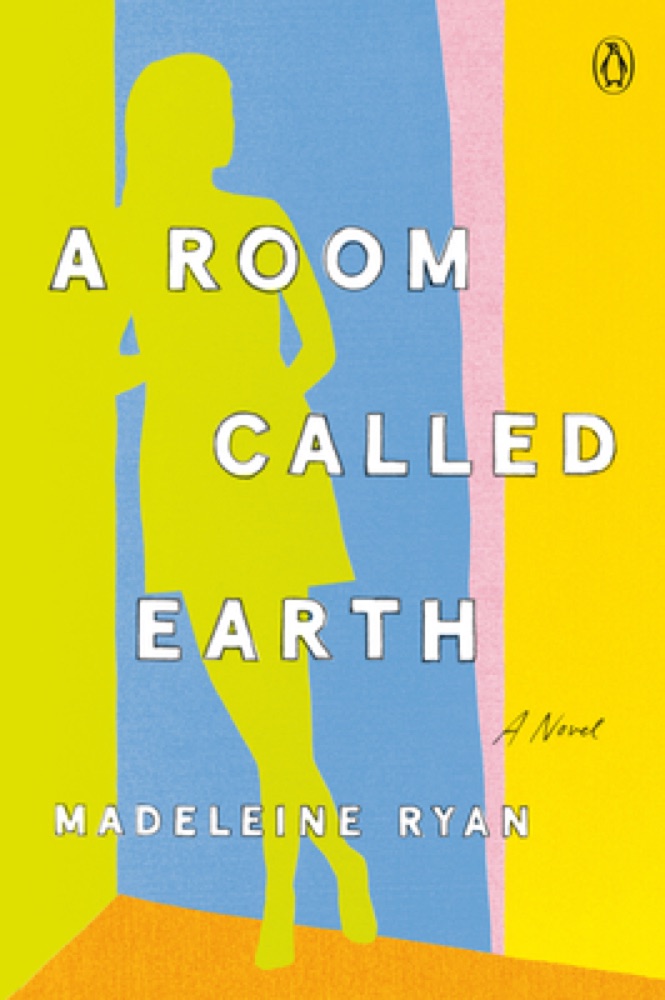 A Room Called Earth
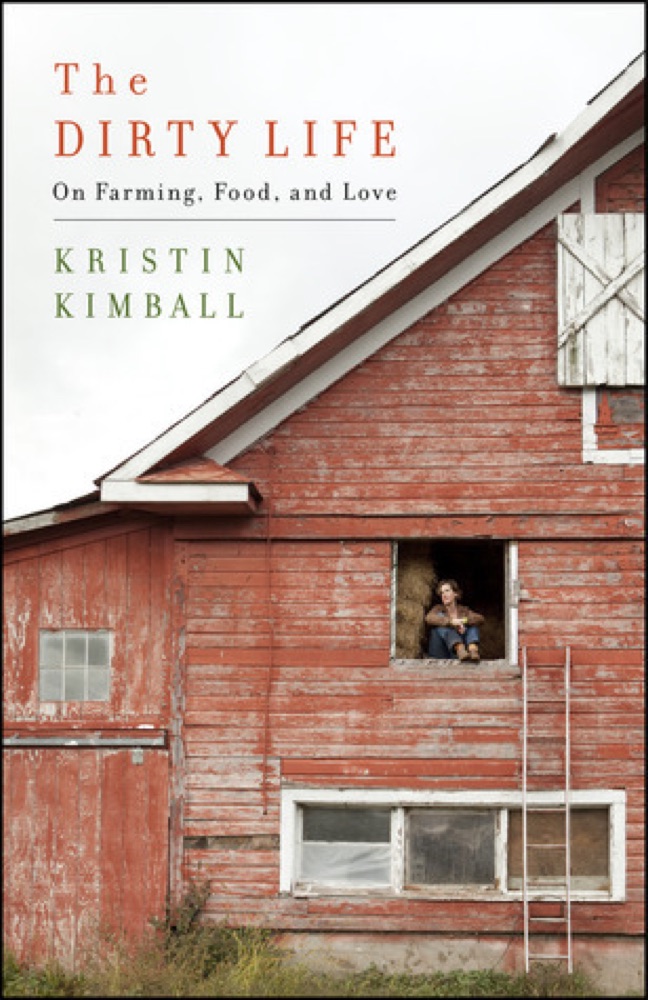 The Dirty Life: On Farming, Food, and Love
 The 4-Hour Body: An Uncommon Guide to Rapid Fat-Loss, Incredible Sex, and Becoming Superhuman
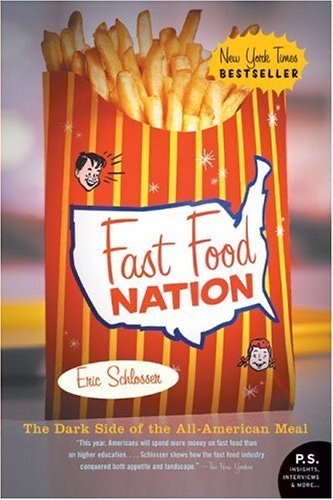 Fast Food Nation: The Dark Side of the All-American Meal