
 The Greatest Show on Earth: The Evidence for Evolution
Quotes from the Book
...supernatural explanations always mean the end of inquiry: that’s the way God wants it, end of story. Science, on the other hand, is never satisfied: our studies of the universe will continue until humans go extinct.
31
These mysteries about how we evolved should not distract us from the indisputable fact that we did evolve.
30
Now, science cannot completely exclude the possibility of supernatural explanation. It is possible - though very unlikely - that our whole world is controlled by elves.
25
Natural selection is not a master engineer, but a tinkerer. It doesn't produce the absolute perfection achievable by a designer starting from scratch, but merely the best it can do with what is has to work with.
14
If the entire course of evolution were compressed into a single year, the earliest bacteria would appear at the end of March, but we wouldn't see the first human ancestors until 6 a.m. on December 31st. The golden age of Greece, about 500 BCE, would occur just thirty seconds before midnight.
10
Life on earth evolved gradually beginning with one primitive life form – perhaps a self-replicating molecule – that lived more than 3.5 billion years ago; it then branched out over time, throwing off many new and diverse species; and the mechanism for most (but not all) of evolutionary change is natural selection.
8
We are the one creature to whom natural selection has bequeathed a brain complex enough to comprehend the laws that govern the universe. And we should be proud that we are the only species that has figured how we came to be.
8
Every day, hundreds of observations and experiments pour into the hopper of the scientific literature. Many of them don't have much to do with evolution - they're observations about the details of physiology, biochemistry, development, and so on - but many of them do. And every fact that has something to do with evolution confirms its truth. Every fossil that we find, every DNA molecule that we sequence, every organ system that we dissect, supports the idea that species evolved from common ancestors. Despite innumerable possible observations that could prove evolution untrue, we don't have a single one. We don't find mammals in Precambrian rocks, humans in the same layers as dinosaurs, or any other fossils out of evolutionary order. DNA sequencing supports the evolutionary relationships of species originally deduced from the fossil record. And, as natural selection predicts, we find no species with adaptations that only benefit a different species. We do find dead genes and vestigial organs, incomprehensible under the idea of special creation. Despite a million chances to be wrong, evolution always comes up right. That is as close as we can get to a scientific truth.
7
As Darwin noted, “It is certain that with almost all animals there is a struggle between the males for the possession of the female.” When males of a species battle it out directly, be it through the clashing antlers of deer, the stabbing horns of the stag beetle, the head butting of stalk-eyed flies, or the bloody battles of massive elephant seals, they win access to females by driving off competitors. Selection will favor any trait that promotes such victories so long as the increased chance of getting mates more than offsets any reduced survival. This kind of selection produces armaments: stronger weapons, larger body size, or anything that helps a male win physical contests.
5
You can find religions without creationism, but you never find creationism without religion.
5
Many people require more than just evidence before they’ll accept evolution. To these folks, evolution raises such profound questions of purpose, morality, and meaning that they just can’t accept it no matter how much evidence they see. It’s not that we evolved from apes that bothers them so much; it’s [[the emotional consequences of facing that fact.]] And unless we address those concerns, we won’t progress in making evolution a universally acknowledged truth.
5
IDers argue that such traits, involving many parts that must cooperate for that trait to function at all, defy Darwinian explanation. Therefore, by default, they must have been designed by a supernatural agent. This is commonly called the "God of the gaps" argument, and it is an argument from ignorance. What it really says is that if we don't understand everything about how natural selection built a train, that lack of understanding itself is evidence for super-natural creation.
5
Selection is both revolutionary and disturbing for the same reason: it explains apparent design in nature by a purely materialistic process that doesn't require creation or guidance by supernatural forces.
5
To many, evolution gnaws at their sense of self. If evolution offers a lesson, it seems to be that we’re not only related to other creatures but, like them, are also the product of blind and impersonal evolutionary forces. If humans are just one of many outcomes of natural selection, maybe we aren’t so special after all. You can understand why this doesn’t sit well with many people who think that we came into being differently from other species, as the special goal of a divine intention.
3
How can you derive meaning, purpose, or ethics from evolution? You can’t. Evolution is simply a theory about the process and patterns of life’s diversification, not a grand philosophical scheme about the meaning of life. It can’t tell us what to do, or how we should behave. And this is the big problem for many believers, who want to find in the story of our origins a reason for our existence, and a sense of how to behave.
1
There is an increasing (and disturbing) tendency of psychologists, biologists, and philosophers to Darwinize every aspect of human behavior, turning its study into a scientific parlor game. But imaginative reconstructions of how things might have evolved are not science; they are stories. Stephen Jay Gould satirized them as ‘Just-So Stories,’ after Kipling’s eponymous book that gave delightful but fanciful explanations for various traits of animals (‘How the Leopard Got His Spots,’ and so on).
1
And evolution gets bumped down even further when it comes to deciding not whether it’s true, but whether it should be taught in the public schools. Nearly two-thirds of Americans feel that if evolution is taught in the science classroom, creationism should be as well. Only 12 percent—one in eight people—think that evolution should be taught without mentioning a creationist alternative. Perhaps the “teach all sides” argument appeals to the American sense of fair play, but to an educator it’s truly disheartening. Why teach a discredited, religiously based theory, even one widely believed, alongside a theory so obviously true? It’s like asking that shamanism be taught in medical school alongside Western medicine, or astrology be presented in psychology class as an alternative theory of human behavior.
1
Everywhere we look in nature, we see animals that seem beautifully designed to fit their environment, whether that environment be the physical circumstances of life, like temperature and humidity, or the other organisms—competitors, predators, and prey—that every species must deal with. It is no surprise that early naturalists believed that animals were the product of celestial design, created by God to do their jobs. Darwin dispelled this notion in The Origin. In a single chapter, he completely replaced centuries of certainty about divine design with the notion of a mindless, materialistic process—natural selection—that could accomplish the same result. It is hard to overestimate the effect that this insight had not only on biology, but on people’s worldview. Many have not yet recovered from the shock, and the idea of natural selection still arouses fierce and irrational opposition.
1
Each species is a masterpiece of evolution that humanity could not possibly duplicate even if we somehow accomplish the creation of new organisms by genetic engineering. —E. O. Wilson
1
When natural selection is strong, as when an animal or plant colonizes a new environment, evolutionary change can be fast. Once a species becomes well adapted to a stable habitat, evolution often slows down.
1
Initially, his theory was inspired by the observation that the shapes of continents like South America and Africa could be fitted together like pieces of a jigsaw puzzle. Continental drift then became more certain as fossils accumulated and paleontologists found that the distribution of ancient species suggested that the continents were once joined. Later, “plate tectonics” was suggested as a mechanism for continental movement, just as natural selection was suggested as the mechanism for evolution:
1
Because a theory is accepted as “true” only when its assertions and predictions are tested over and over again, and confirmed repeatedly, there is no one moment when a scientific theory suddenly becomes a scientific fact. A theory becomes a fact (or a “truth”) when so much evidence has accumulated in its favor—and there is no decisive evidence against it—that virtually all reasonable people will accept it. This does not mean that a “true” theory will never be falsified. All scientific truth is provisional, subject to modification in light of new evidence. There is no alarm bell that goes off to tell scientists that they’ve finally hit on the ultimate, unchangeable truths about nature.
1
Here’s a simple example. The wooly mammoth inhabited the northern parts of Eurasia and North America, and was adapted to the cold by bearing a thick coat of hair (entire frozen specimens have been found buried in the tundra).3 It probably descended from mammoth ancestors that had little hair—like modern elephants. Mutations in the ancestral species led to some individual mammoths-like some modern humans—being hairier than others. When the climate became cold, or the species spread into more northerly regions, the hirsute individuals were better able to tolerate their frigid surroundings, and left more offspring than their balder counterparts. This enriched the population in genes for hairiness. In the next generation, the average mammoth would be a bit hairier than before. Let this process continue over some thousands of generations, and your smooth mammoth gets replaced by a shaggy one.
1
This tells us that every species goes back to a single common ancestor, an ancestor who had those common traits and passed them on to its descendants. But if evolution meant only gradual genetic change within a species, we’d have only one species today—a single highly evolved descendant of the first species. Yet we have many: well over ten million species inhabit our planet today,
1
There is grandeur in this view of life, with its several powers, having been originally breathed into a few forms or into one; and that, whilst this planet has gone cycling on according to the fixed law of gravity, from so simple a beginning endless forms most beautiful and most wonderful have been, and are being, evolved.
1
Watch on YouTube
About Jerry A. Coyne
We have collected 25 quotes from 1 book by Jerry A. Coyne on BookQuoters.
More about the author →About the book
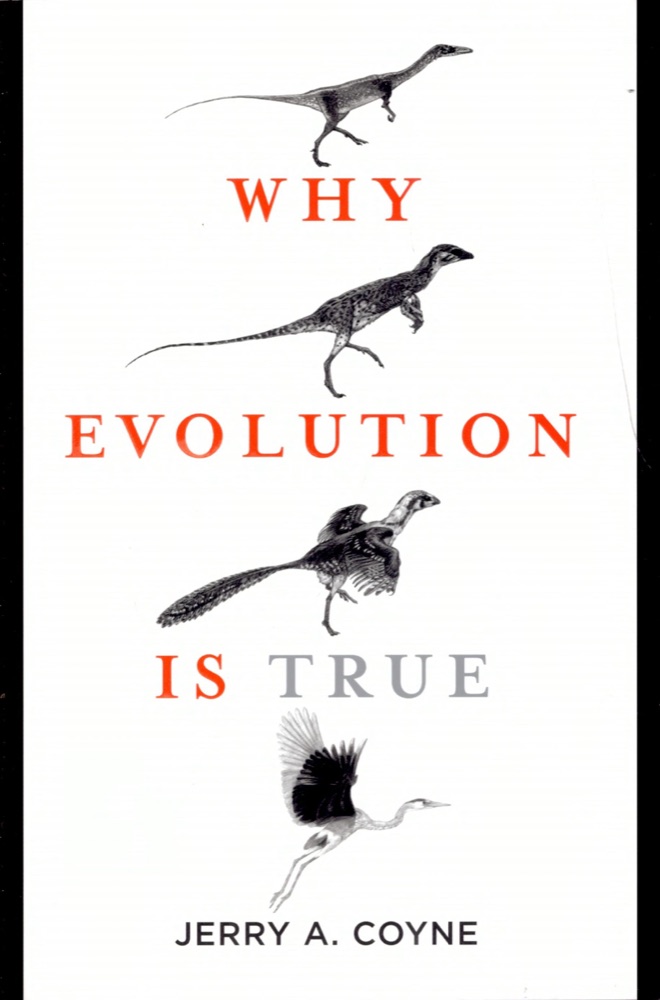
Why evolution is more than just a theory: it is a fact.
In all the current highly publicized debates about creationism and its descendant "intelligent design," there is an element of the controversy that is rarely mentioned—the "evidence," the empirical truth of evolution by natural selection. Even Richard Dawkins and Stephen Jay Gould, while extolling the beauty of evolution and examining case studies, have not focused on the evidence itself. Yet the proof is vast, varied, and magnificent, drawn from many different fields of science. Scientists are observing species splitting into two and are finding more and more fossils capturing change in the past—dinosaurs that have sprouted feathers, fish that have grown limbs.
Why Evolution Is True weaves together the many threads of modern work in genetics, paleontology, geology, molecular biology, and anatomy that demonstrate the "indeli
Book details
- First published
- 2008
- Author
- Jerry A. Coyne
- Genre
- Nonfiction
- Goodreads rating
- 4.19 (26k ratings)
Keep reading
The Greatest Show on Earth: The Evidence for Evolution
 Undeniable: Evolution and the Science of Creation
 Darwin's Dangerous Idea: Evolution and the Meanings of Life
 The Blind Watchmaker: Why the Evidence of Evolution Reveals a Universe Without Design
 The Ancestor's Tale: A Pilgrimage to the Dawn of Evolution
 Darwin's Black Box: The Biochemical Challenge to Evolution
 The Origin of Species
 Endless Forms Most Beautiful: The New Science of Evo Devo
 The Social Conquest of Earth
 The Case for a Creator: A Journalist Investigates Scientific Evidence That Points Toward God
 The Gene: An Intimate History
 Consilience: The Unity of Knowledge
 The Varieties of Scientific Experience: A Personal View of the Search for God
 The Language of God: A Scientist Presents Evidence for Belief
 From Bacteria to Bach and Back: The Evolution of Minds
 Shadows of Forgotten Ancestors
 On Human Nature
 The Code Breaker: Jennifer Doudna, Gene Editing, and the Future of the Human Race
 The Lost World
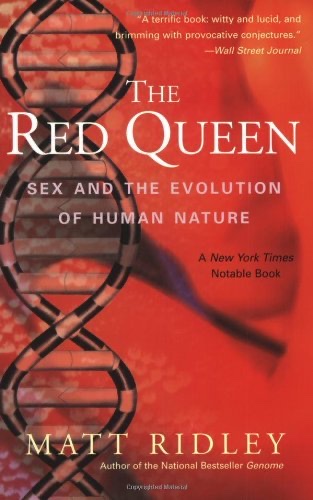 The Red Queen: Sex and the Evolution of Human Nature
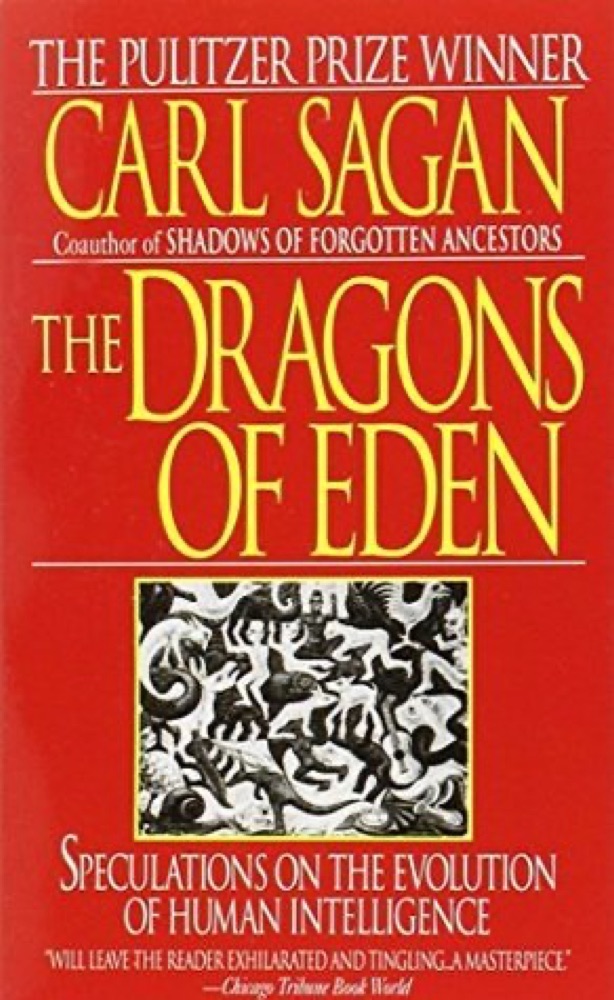 Dragons of Eden: Speculations on the Evolution of Human Intelligence
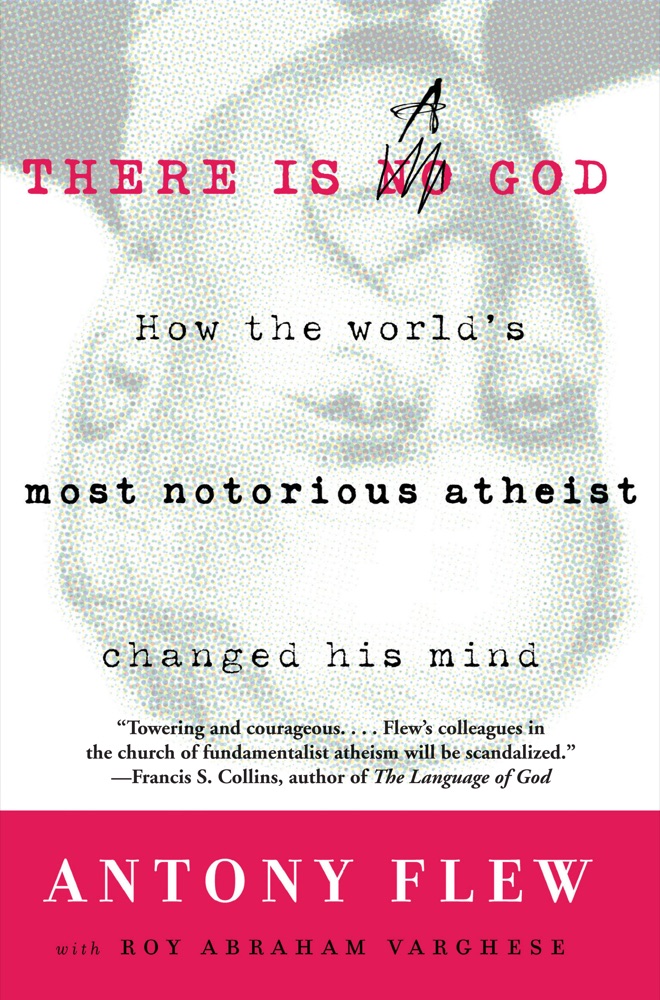 There Is a God: How the World's Most Notorious Atheist Changed His Mind
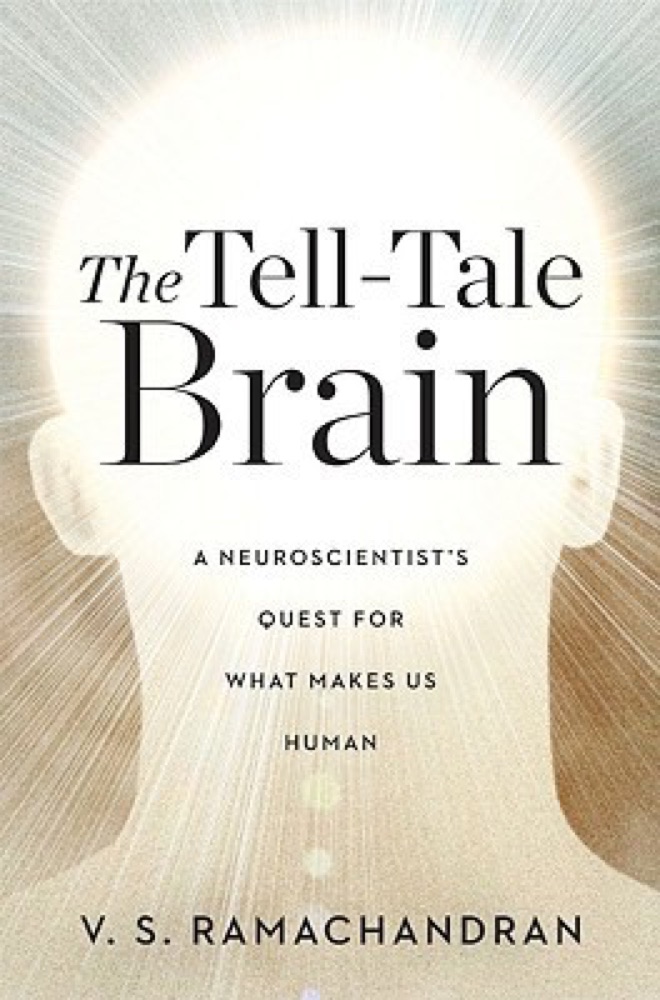 The Tell-Tale Brain: A Neuroscientist's Quest for What Makes Us Human
 How the Mind Works
 The Story of the Human Body: Evolution, Health, and Disease
 The Grand Design
 Straw Dogs: Thoughts on Humans and Other Animals
 The Case Against Reality: Why Evolution Hid the Truth from Our Eyes
 The Ascent of Man
 Genome
 The Big Picture: On the Origins of Life, Meaning, and the Universe Itself
 A Hunter-Gatherer's Guide to the 21st Century: Evolution and the Challenges of Modern Life
 The Last Days of the Dinosaurs: An Asteroid, Extinction, and the Beginning of Our World
 The Third Chimpanzee: The Evolution and Future of the Human Animal
 Your Inner Fish: A Journey Into the 3.5-Billion-Year History of the Human Body
 The Accidental Universe: The World You Thought You Knew
 Sapiens: A Brief History of Humankind
 The Lost World of Genesis One: Ancient Cosmology and the Origins Debate (Volume 2)
 The Light Eaters: How the Unseen World of Plant Intelligence Offers a New Understanding of Life on Earth
 The Moral Animal: Why We Are the Way We Are - The New Science of Evolutionary Psychology
 Genome: the Autobiography of a Species in 23 Chapters
 The Violinist's Thumb: And Other Lost Tales of Love, War, and Genius, as Written by Our Genetic Code
 Echopraxia
 A Universe from Nothing: Why There Is Something Rather Than Nothing
 Jurassic Park
 The Lives of a Cell: Notes of a Biology Watcher
 The Mating Mind: How Sexual Choice Shaped the Evolution of Human Nature
 Wonderful Life: The Burgess Shale and the Nature of History
 The Gospel of the Flying Spaghetti Monster
 Freedom Evolves
 The Story of B: An Adventure of the Mind and Spirit
 Origins: Fourteen Billion Years of Cosmic Evolution
 Death by Black Hole: And Other Cosmic Quandaries
 Religion Explained: The Evolutionary Origins of Religious Thought
 The Sixth Extinction: An Unnatural History
 Other Minds
 The Song of the Cell: An Exploration of Medicine and the New Human
 Space Chronicles: Facing the Ultimate Frontier
 Why We Get Sick: The New Science of Darwinian Medicine
 A Brief History of Time