 The Soul of an Octopus: A Surprising Exploration into the Wonder of Consciousness
Quotes from the Book
When you dive into the sea, you are diving into the origin of us all.
17
Cephalopods are an island of mental complexity in the sea of invertebrate animals. Because our most recent common ancestor was so simple and lies so far back, cephalopods are an independent experiment in the evolution of large brains and complex behavior. If we can make contact with cephalopods as sentient beings, it is not because of a shared history, not because of kinship, but because evolution built minds twice over.
17
If we want to understand other minds, the minds of cephalopods are the most other of all.
9
The chemistry of life is an aquatic chemistry. We can get by on land only by carrying a huge amount of salt water around with us.
8
Mischief and craft are plainly seen to be characteristics of this creature. —Claudius Aelianus, third century A.D., writing about the octopus
8
What is the point of building a large nervous system if your life is over in a year or two? The machinery of intelligence is expensive, both to build and to run.
6
octopuses, far more than rats and pigeons, have their own ideas:
6
This is probably the closest we will come to meeting an intelligent alien.
6
Cephalopods are evolution’s only experiment in big brains outside of the vertebrates.
5
Why don’t we all live for a longer time? On mountainsides in California and Nevada there are pine trees that were alive when Julius Caesar was wandering around Rome. Why do some organisms live for dozens, hundreds, or thousands of years while others, in the natural course of events, do not see even a single year pass? Death from accident or infectious disease is no puzzle; the puzzle is death from “old age.” Why, after living for a time, do we fall apart? This question is always lurking as the birthdays pass, but the short lives of the cephalopods make it vivid. Why do we age?
5
Cambridge, through a long series of studies, have shown that birds can store food of different kinds in hundreds of distinct places to retrieve later, and can remember not only where they have put food but what was put in each place, so the more perishable items can be retrieved before the longer-lasting ones.
4
They are curious, embracing novelty, protean in behavior as well as in body
4
Sentience is brought into being somehow from the evolution of sensing and acting; it involves being a living system with a point of view on the world around it
3
Consciousness surely did not, James said, suddenly irrupt into the universe fully formed. The history of life is a history of intermediates, shadings-off, and gray areas. Much about the mind lends itself to a treatment in those terms. Perception, action, memory—all those things creep into existence from precursors and partial cases. Suppose someone asks: Do bacteria really perceive their environment? Do bees really remember what has happened? These are not questions that have good yes-or-no answers. There’s a smooth transition from minimal kinds of sensitivity to the world to more elaborate kinds, and no reason to think in terms of sharp divides.
3
The mind evolved in the sea.
3
Inner speech seems to be an important part of System 2 thinking.
3
if you focus on the large fossils, you miss most of the life that is present
3
What does it feel like to be an octopus? To be a jellyfish? Does it feel like anything at all? Which were the first animals whose lives felt like something to them?
3
All living things affect their environment by making and transforming chemicals, and
3
What does it feel like to be a frog perceiving the world
2
Each sucker on an octopus’s arm may have 10,000 neurons to handle taste and touch. Even an arm that has been surgically removed can perform various basic motions, like reaching and grasping. How does an octopus’s brain relate to its arms? Early work, looking at both behavior and anatomy, gave the impression that the arms enjoyed considerable independence. The channel of nerves that leads from each arm back to the central brain seemed pretty slim. Some behavioral studies gave the impression that octopuses did not even track where their own arms might be. As Roger Hanlon and John Messenger put it in their book Cephalopod Behaviour, the arms seemed “curiously divorced” from the brain, at least in the control of basic motions.
2
(William) Hamilton recast the central ideas (of the evolutionary theory of aging) in mathematical form. Though this work tells us a good deal about why human lives take the course they do, Hamilton was a biologist whose great love was insects and their relatives, especially insects which make both our lives and an octopus’s life seem rather humdrum. Hamilton found mites in which the females hang suspended in the air with their swollen bodies packed with newly hatched young, and the males in the brood search out and copulate with their sisters there inside the mother. He found tiny beetles in which the males produce “and manhandle sperm cells longer than their whole bodies. Hamilton died in 2000, after catching malaria on a trip to Africa to investigate the origins of HIV. About a decade before his death, he wrote about how he would like his own burial to go. He wanted his body carried to the forests of Brazil and laid out to be eaten from the inside by an enormous winged Coprophanaeus beetle using his body to nurture its young, who would emerge from him and fly off. 'No worm for me nor sordid fly, I will buzz in the dusk like a huge bumble bee. I will be many, buzz even as a swarm of motorbikes, be borne, body by flying body out into the Brazilian wilderness beneath the stars, lofted under those beautiful and un-fused elytra [wing covers] which we will all hold over our “backs. So finally I too will shine like a violet ground beetle under a stone.
2
Doing philosophy is largely a matter of trying to put things together, trying to get the pieces of very large puzzles to make some sense
2
You sense what's going on and do something in response. But doing something, if you are made of many cells, is not a trivial matter, not something that can simply be assumed. It takes a great deal of coordination between your parts. This is not a big deal if you are a bacterium, but if you're a larger organism, things are different. Then you face the task of generating a coherent whole-organism action from the many tiny outputs--the tiny contractions, contortions, and twitches--of your parts. A multitude of micro-actions must be shaped into a macro-action.
2
mammals and birds can live longer, if they don’t get eaten
2
System 2 thinking tries to follow proper rules of reasoning,
2
For an octopus, its arms are partly self
2
seems plausible that an animal might feel pain or thirst without having an “inner model” of the world,
2
Octopuses in at least two aquariums have learned to turn off the lights
2
Watch on YouTube
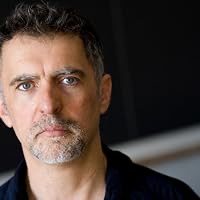
About Peter Godfrey-Smith
We have collected 29 quotes from 1 book by Peter Godfrey-Smith on BookQuoters.
More about the author →About the book
Although mammals and birds are widely regarded as the smartest creatures on earth, it has lately become clear that a very distant branch of the tree of life has also sprouted higher intelligence: the cephalopods, consisting of the squid, the cuttlefish, and above all the octopus. In captivity, octopuses have been known to identify individual human keepers, raid neighboring tanks for food, turn off lightbulbs by spouting jets of water, plug drains, and make daring escapes. How is it that a creature with such gifts evolved through an evolutionary lineage so radically distant from our own? What does it mean that evolution built minds not once but at least twice? The octopus is the closest we will come to meeting an intelligent alien. What can we learn from the encounter?
In Other Minds, Peter Godfrey-Smith, a distinguished philosopher of science and a skilled scuba diver, tells a bold ne
Book details
- First published
- 2016
- Author
- Peter Godfrey-Smith
- Genre
- Nonfiction
- Goodreads rating
- 3.88 (29k ratings)
Keep reading
The Soul of an Octopus: A Surprising Exploration into the Wonder of Consciousness
 Are We Smart Enough to Know How Smart Animals Are?
 The Mountain in the Sea
 Shadows of Forgotten Ancestors
 Beyond Words: What Animals Think and Feel
 Your Inner Fish: A Journey Into the 3.5-Billion-Year History of the Human Body
 The Blind Watchmaker: Why the Evidence of Evolution Reveals a Universe Without Design
 The Lives of a Cell: Notes of a Biology Watcher
 Dragons of Eden: Speculations on the Evolution of Human Intelligence
 How the Mind Works
 The Genius of Birds
 The Light Eaters: How the Unseen World of Plant Intelligence Offers a New Understanding of Life on Earth
 The Tell-Tale Brain: A Neuroscientist's Quest for What Makes Us Human
 From Bacteria to Bach and Back: The Evolution of Minds
 Echopraxia
 An Immense World: How Animal Senses Reveal the Hidden Realms Around Us
 Why Fish Don’t Exist: A Story of Loss, Love, and the Hidden Order of Life
 Vanishing Treasures: A Bestiary of Extraordinary Endangered Creatures
 The Last Days of the Dinosaurs: An Asteroid, Extinction, and the Beginning of Our World
 Undeniable: Evolution and the Science of Creation
 The Fifth Science
 Darwin's Dangerous Idea: Evolution and the Meanings of Life
 The Case Against Reality: Why Evolution Hid the Truth from Our Eyes
 The Ancestor's Tale: A Pilgrimage to the Dawn of Evolution
 The Future of the Mind: The Scientific Quest to Understand, Enhance, and Empower the Mind
 The Lost World
 The Greatest Show on Earth: The Evidence for Evolution
 The Swarm
 The Log from the Sea of Cortez
 The Big Picture: On the Origins of Life, Meaning, and the Universe Itself
 Martin Marten
 The Biology of Belief: Unleashing the Power of Consciousness, Matter and Miracles
 The Song of the Cell: An Exploration of Medicine and the New Human
 A Short History of Nearly Everything
 Entangled Life: How Fungi Make Our Worlds, Change Our Minds & Shape Our Futures
 A Thousand Brains: A New Theory of Intelligence
 The Future of Humanity: Terraforming Mars, Interstellar Travel, Immortality and Our Destiny Beyond Earth
 Gathering Moss: A Natural and Cultural History of Mosses
 A Hunter-Gatherer's Guide to the 21st Century: Evolution and the Challenges of Modern Life
 Genome
 How Far the Light Reaches: A Life in Ten Sea Creatures
 The Gene: An Intimate History
 Blindsight
 Blue Remembered Earth
 The Grand Design
 The Origin of Species
 Ways of Being: Animals, Plants, Machines: The Search for a Planetary Intelligence
 Last Chance to See
 Inside of a Dog: What Dogs See, Smell, and Know
 The Social Conquest of Earth
 The Immense Journey
 On Human Nature
 Mama's Last Hug: Animal Emotions and What They Tell Us about Ourselves
 On the Steel Breeze
 Fiasco
 The Earth Moved: On the Remarkable Achievements of Earthworms
 The Third Chimpanzee: The Evolution and Future of the Human Animal
 The Cosmic Serpent: DNA and the Origins of Knowledge
 The Philosopher and the Wolf
 The Ascent of Man