 The 5000 Year Leap: A Miracle That Changed the World
Quotes from the Book
As the nation divided into Federalists and Republicans, each group called the other the worst name possible: "party". Most Americans feared the idea of party; believing that a society should unite to achieve the public good, they denounced parties as groups of ambitious men selfishly competing for power. Worse, parties were danger signals for a republic; if parties dominated a republic's politics, its days were numbered.
10
Jefferson feared that Hamilton had plans radically at odds with the Constitution. As he saw it, Hamilton wanted to warp the federal government out of constitutional shape, converting it into a copy of the British government, built on debt, corruption, and influence. Hamilton's goal, Jefferson charged, was to ally the rich and well born with the government at the people's expense, creating a corrupt aristocracy leagued with the government against the people and destroying the virtue that was the basis of republican government. Only a republic could preserve liberty, Jefferson insisted, and only virtue among the people could preserve a republic.
9
When we seek to understand liberty, equality, progress, constitutional governance, separation of church and state, and the meaning of the American Revolution, we do so in contexts framed by Jefferson's writings and arguments. Whatever we think of Jefferson as a person or as a politician, we can never take away from him his remarkable gift as a writer or his ultimate claims to fame. He achieved his intention to express 'the American mind' and became the leading spokesman for the revolution of ideas that changed, and that continues to change, the face of America and the world. His words mean not only what he might have intended them to mean, but also what succeeding generations of Americans have read into them. Thus, whether he would even comprehend the United States in the first years of the twenty-first century, Jefferson's shadow looms large over us, thanks to the conflicting influences of his thinking, doing, and -- most important -- his writing. That truth alone requires each generation to reacquaint itself with the life and work of Thomas Jefferson, and to grapple with his ambiguous legacies.
2
Some men look at constitutions with sanctimonious reverence, and deem them like the arc of the covenant, too sacred to be touched. They ascribe to the men of the preceding age a wisdom more than human, and suppose what they did to be beyond amendment. I knew that age well; I belonged to it, and labored with it. It deserved well of its country. It was very like the present, but without the experience of the present; and forty years of experience in government is worth a century of book-reading; and this they would say themselves, were they to rise from the dead.
1
difference of opinion is not a difference of principle. We have called by different names brethren of the same principle. We are all republicans, we are all federalists. If there be any among us who would wish to dissolve this Union or to change its republican form, let them stand undisturbed as monuments of the safety with which error of opinion may be tolerated where reason is left free to combat it. I know, indeed, that some honest men fear that a republican government can not be strong, that this government is not strong enough; but would the honest patriot, in the full tide of successful experiment, abandon a government which has so far kept us free and firm on the theoretic and visionary fear that this government, the world’s best hope, may by possibility want energy to preserve itself? I trust not. I believe this, on the contrary, the strongest government on earth. I believe it the only one where every man, at the call of the law, would fly to the standard of the law, and would meet invasions of the public order as his own personal concern. Sometimes it is said that man can not be trusted with the government of himself. Can he then be trusted with the government of others? Or have we found angels in the forms of kings to govern him? Let history answer this question.213 Jefferson stressed that liberty—in particular, the people’s liberty to criticize their government—helped to make the government of the United States “the strongest on earth.” He also insisted that “we are all republicans, we are all federalists,” by which he meant that all Americans rejected monarchy and embraced republican government, and that all Americans agreed that the powers of government were well divided between the federal government and the states. Finally, he reaffirmed his commitment to “a wise and frugal government” that would have friendly relations with all nations but “entangling alliances with none.” With these statements, he declared his purpose to interpret the Constitution narrowly and strictly, to rein in the powers of the general government, and to avoid the dangers of being pulled into European wars.
Sometimes it is said that man can not be trusted with the government of himself. Can he then be trusted with the government of others? Or have we found angels in the forms of kings to govern him? Let history answer this question.
Watch on YouTube
About R.B. Bernstein
About the book
Thomas Jefferson designed his own tombstone, describing himself simply as "Author of the Declaration of Independence and of the Virginia Statute for Religious Freedom, and Father of the University of Virginia." It is in this simple epitaph that R.B. Bernstein finds the key to this enigmatic Founder--not as a great political figure, but as leader of "a revolution of ideas that would make the world over again." In Thomas Jefferson, Bernstein offers the definitive short biography of this revered American--the first concise life in six decades. Bernstein deftly synthesizes the massive scholarship on his subject into a swift, insightful, evenhanded account. Here are all of Jefferson's triumphs, contradictions, and failings, from his luxurious (and debt-burdened) life as a Virginia gentleman to his passionate belief in democracy, from his tortured defense of slavery to his relationship with Sa
Book details
- First published
- 2003
- Author
- R.B. Bernstein
- Genre
- Biography
- Goodreads rating
- 4.03 (5k ratings)
Keep reading
The 5000 Year Leap: A Miracle That Changed the World
 These Truths: A History of the United States
 The Radicalism of the American Revolution
 Founding Brothers: The Revolutionary Generation
 A People's History of the United States
 Glenn Beck's Common Sense: The Case Against an Out-of-Control Government, Inspired by Thomas Paine
 Reflections on the Revolution in France
 The American Spirit: Who We Are and What We Stand For
 Ameritopia: The Unmaking of America
 The Soul of America: The Battle for Our Better Angels
 The Spirit of the Laws
 Profiles in Courage
 The Federalist Papers
 John Adams
 One Nation: What We Can All Do to Save America's Future
 Liberty Defined: 50 Essential Issues That Affect Our Freedom
 Democracy in America
 The Discourses
 Alexander Hamilton
 American Lion: Andrew Jackson in the White House
 The Machiavellians: Defenders of Freedom
 Conspirators' Hierarchy: The Story of the Committee of 300
 Burr
Burr
 What Unites Us: Reflections on Patriotism
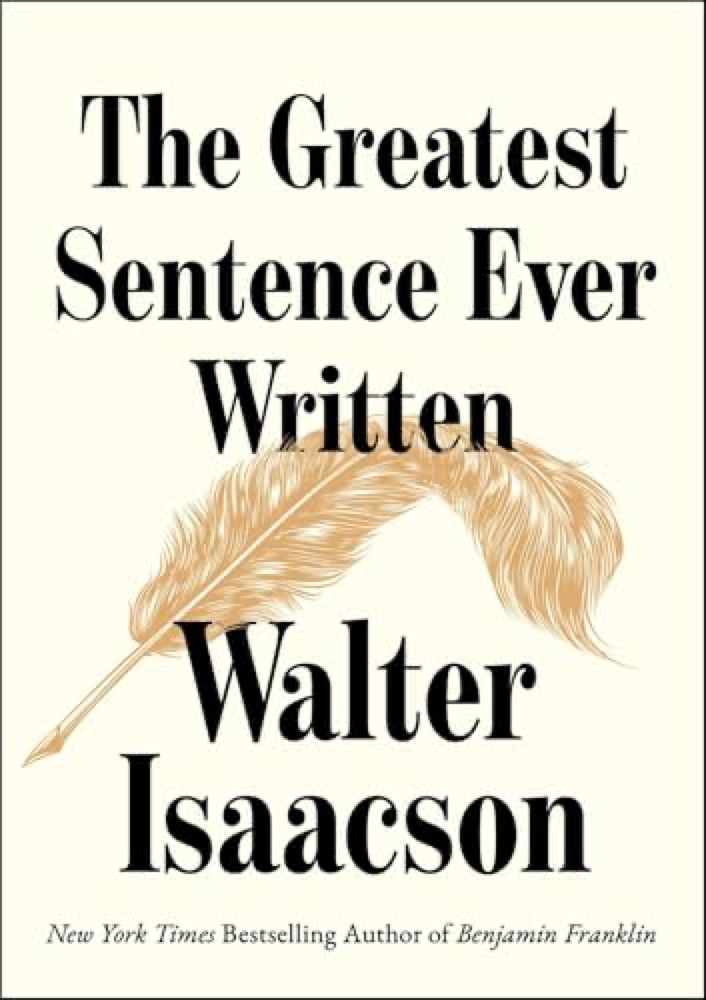 The Greatest Sentence Ever Written
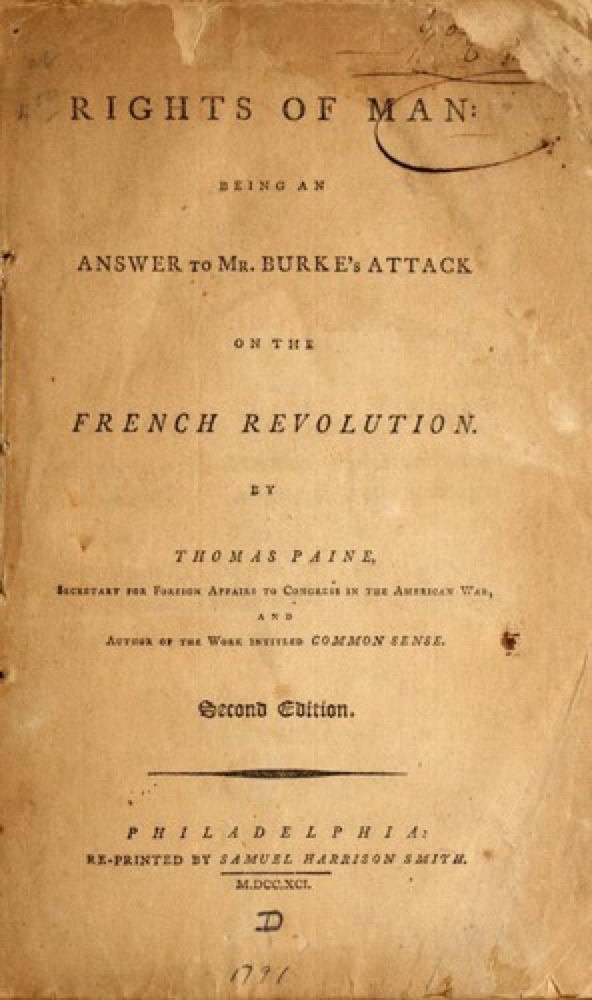 Rights of Man
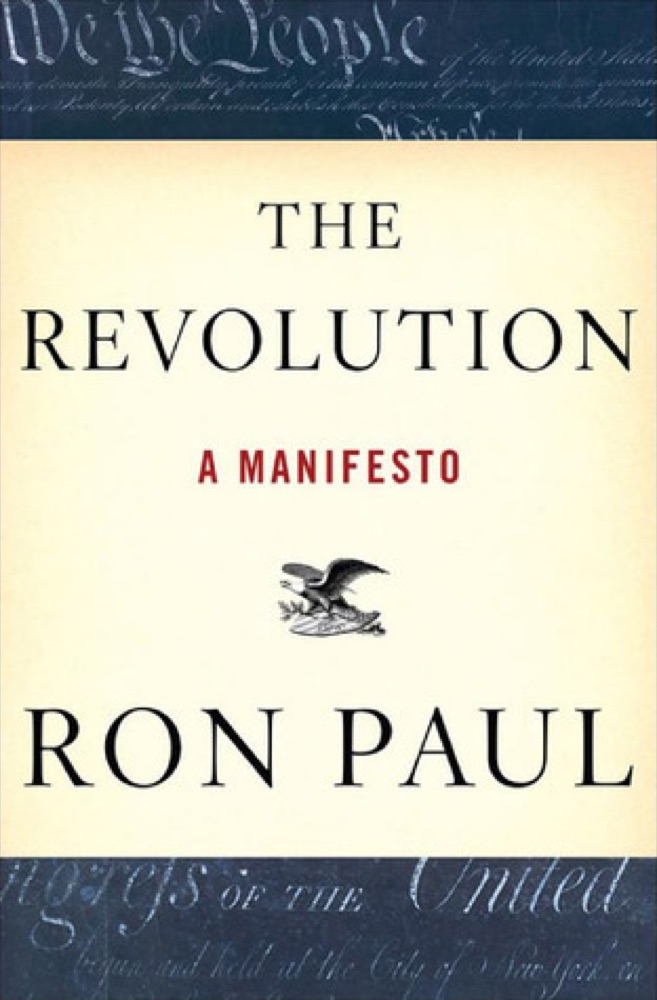 The Revolution: A Manifesto
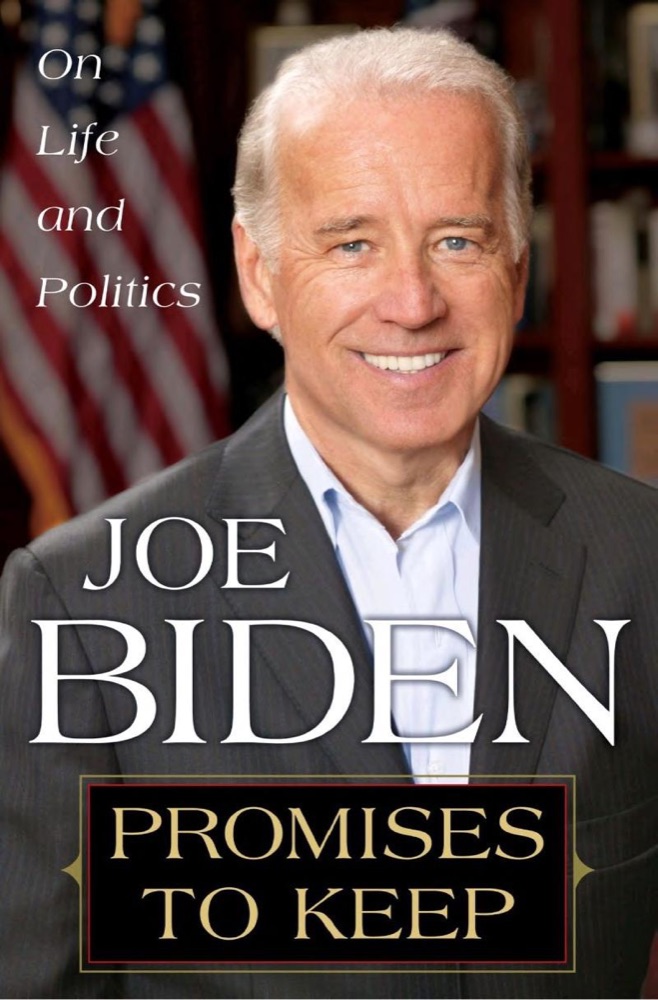 Promises to Keep: On Life and Politics
 Civil Disobedience
 The Reactionary Mind: Conservatism from Edmund Burke to Sarah Palin
 Revolutionary Summer: The Birth of American Independence
 The Old Regime and the French Revolution
 The Constitution of Liberty
 The Hemingses of Monticello: An American Family
 America (The Book): A Citizen's Guide to Democracy Inaction
 Witness
 Power Systems: Conversations on Global Democratic Uprisings and the New Challenges to U.S. Empire
 The Iron Heel
 Radio Free Albemuth
 Black Reconstruction in America 1860-1880
 On Tyranny: Twenty Lessons from the Twentieth Century
 The Invisible Bridge: The Fall of Nixon and the Rise of Reagan
 Dictator
 The End of the Myth: From the Frontier to the Border Wall in the Mind of America
 De la Démocratie en Amérique, tome II
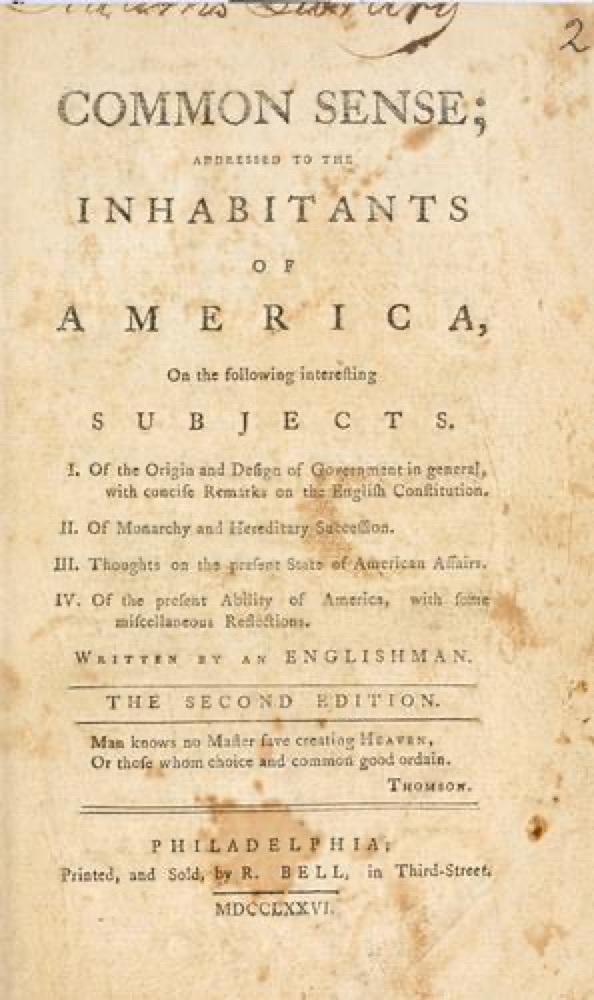 Common Sense
 Civil Disobedience and Other Essays
 Liberty and Tyranny: A Conservative Manifesto
 Second Treatise of Government
 Anarchy, State, and Utopia
 Political Theology: Four Chapters on the Concept of Sovereignty
 The Small and the Mighty: Twelve Unsung Americans Who Changed the Course of History, from the Founding to the Civil Rights Movement
 The American Political Tradition and the Men Who Made It
 The Open Society and Its Enemies - Volume One: The Spell of Plato
 Destiny of the Republic: A Tale of Madness, Medicine and the Murder of a President
 Fascism: A Warning
 Undaunted Courage: The Pioneering First Mission to Explore America's Wild Frontier
 Chomsky On Anarchism
 The Best and the Brightest
 The First Salute : View of the American Revolution