 End the Fed
Quotes from the Book
Ideas are very important to the shaping of society. In fact, they are more powerful than bombings or armies or guns. And this is because ideas are capable of spreading without limit. They are behind all the choices we make. They can transform the world in a way that governments and armies cannot. Fighting for liberty with ideas makes more sense to me than fighting with guns or politics or political power. With ideas, we can make real change that lasts.
39
Today’s events are reminiscent of the Old Testament story of how the Israelites demanded a king over God’s objection. They believed that a king would give them peace and security. The results proved otherwise.
34
And yet even among the friends of liberty, many people are deceived into believing that government can make them safe from all harm, provide fairly distributed economic security, and improve individual moral behavior. If the government is granted a monopoly on the use of force to achieve these goals, history shows that power is always abused. Every single time.
33
If two parties with two sets of bad ideas cooperate, the result is not good policy, but policy that is extremely bad. What we really need are correct economic and politcal ideas, regardless of the party that pushes them.
28
It’s amazing that people don’t understand that the more the market is involved and the smaller the government, the lower the price, the better the distribution, and the higher the quality.
20
When the goal of political action is no longer the defense of liberty, no word other than demagoguery can describe the despicable nature of politics.
13
A citizen walking through the airport today is bombarded with 1984-style propaganda messages that are designed to make us fear some amorphous threat and also be suspicious of others. The government designs these messages to make us feel dependent and heavily lorded over in every aspect of our lives. These messages are becoming ever more pervasive, hitting us even in grocery stores when we are shopping.
12
H. L. Mencken said, “The urge to save humanity is almost always a false front for the urge to rule.
6
Years ago, a member of Congress slipped a laminated quote into my hand that he must have thought I would find meaningful. I paid little attention at first and unfortunately I don’t recall just who gave me the quote. I placed it next to my voting card and have carried it ever since. The quote came from Elie Wiesel’s book One Generation After. The quote was entitled “Why I Protest.” Author Elie Wiesel tells the story of the one righteous man of Sodom, who walked the streets protesting against the injustice of this city. People made fun of him, derided him. Finally, a young person asked: “Why do you continue your protest against evil; can’t you see no one is paying attention to you?” He answered, “I’ll tell you why I continue. In the beginning, I thought I would change people. Today, I know I cannot. Yet, if I continue my protest, at least I will prevent others from changing me.” I’m not that pessimistic that we can’t change people’s beliefs or that people will not respond to the message of liberty and peace. But we must always be on guard not to let others change us once we gain the confidence that we are on the right track in the search for truth.
5
Patriotism never demands obedience to the state but rather obedience to the principles of liberty.
4
Liberty built civilization. It can rebuild civilization. And when the tides turn and the culture again celebrates what it means to be free, our battle will be won. It could happen in our time. It might happen after we are gone from this earth. But it will happen. Our job in this generation is to prepare the way.
3
People tolerate taxes for a while because they have previously accumulated wealth. As the tax burden grows and productivity falls, tax revenue falls and the only answer seems to be higher taxes. If the people can no longer tolerate higher taxes, government merely borrows and creates new money, and then the inflation tax is paid with higher prices. The whole process destabilizes the political system and eventually becomes a threat to civilized progress.
3
In the end, there is no substitute for clear thinking, logic, and common sense.... A better path to enlightenment involves reading and thinking for yourself.
1
Ideas are very important for the shaping of society. In fact, they are far more powerful than bombs or armies or guns. And this is because ideas are capable of spreading without limit. They are behind all the choices we make. They can transform the world in a way that governments and armies cannot. Fighting for liberty with ideas makes much more sense to me than fighting with guns or politics or political power. With ideas, we can make real change that lasts.
1
only liberty can truly ward off tyranny, the great and eternal foe of mankind.
1
There is one argument against evolution that deserves consideration. If man is evolving and progressing, why is man’s involvement in mass killings of one another getting worse and the struggle for peace more difficult? Government wars and exterminations in the twentieth century reached 262 million people killed by their own governments and 44 million people killed in wars. I fear that doesn’t say much for the evolutionary process.
1
Moderates are somehow convinced that they are the saviors of the country, rescuing us all from the effects of philosophical differences. In fact, philosophical differences are healthy because they lead to the clarification of principles. Genuine progress is going to require more confrontation, partisanship, and serious and honest discussion of the truth about government, the economy, and every sector of American life.
Watch on YouTube
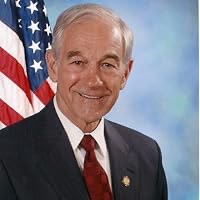
About Ron Paul
We have collected 33 quotes from 3 books by Ron Paul on BookQuoters.
More about the author →More by Ron Paul
End the Fed
 The Revolution: A Manifesto
About the book
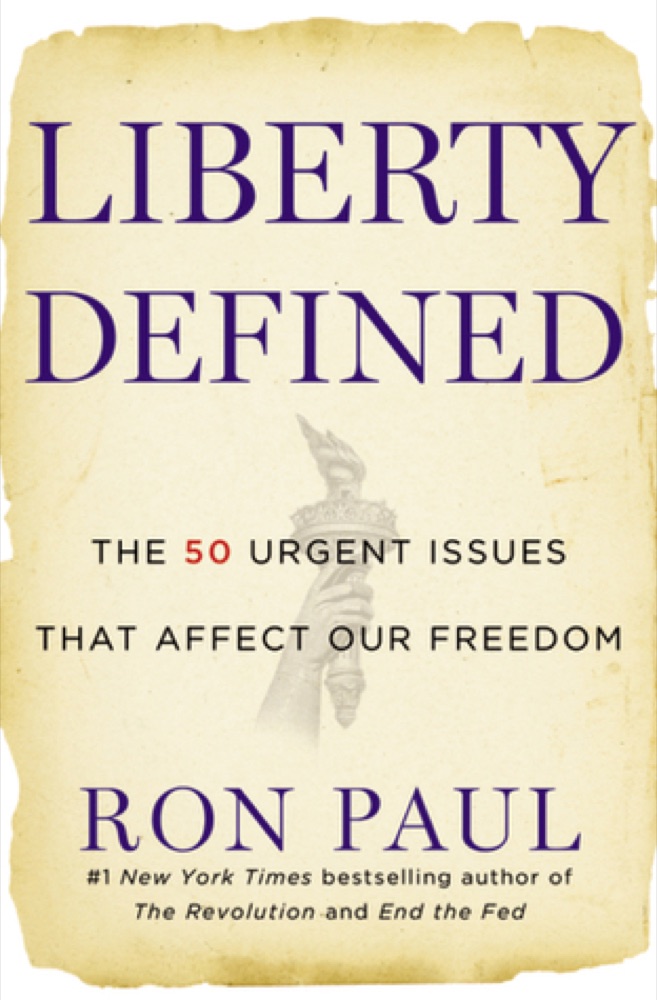
In Liberty Defined, congressman and #1 New York Times bestselling author Ron Paul returns with his most provocative, comprehensive, and compelling arguments for personal freedom to date. The term "Liberty" is so commonly used in our country that it has become a mere cliché. But do we know what it means? What it promises? How it factors into our daily lives? And most importantly, can we recognize tyranny when it is sold to us disguised as a form of liberty? Dr. Paul writes that to believe in liberty is not to believe in any particular social and economic outcome. It is to trust in the spontaneous order that emerges when the state does not intervene in human volition and human cooperation. It permits people to work out their problems for themselves, build lives for themselves, take risks and accept responsibility for the results, and make their own decisions. It is the seed of America. Thi
Book details
- First published
- 2011
- Author
- Ron Paul
- Genre
- Nonfiction
- Goodreads rating
- 4.22 (3k ratings)
Keep reading
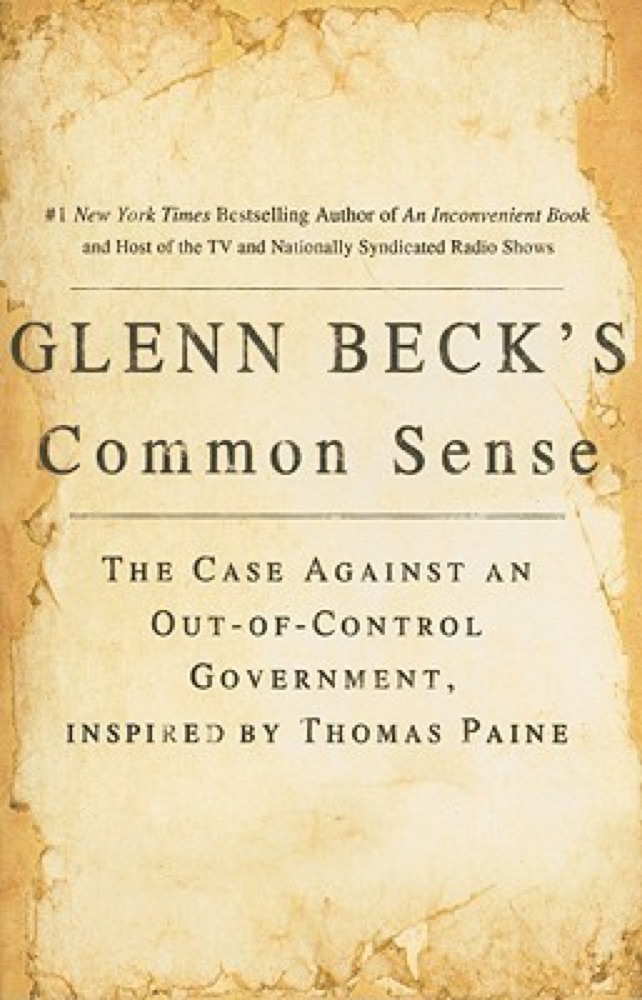 Glenn Beck's Common Sense: The Case Against an Out-of-Control Government, Inspired by Thomas Paine
 The Constitution of Liberty
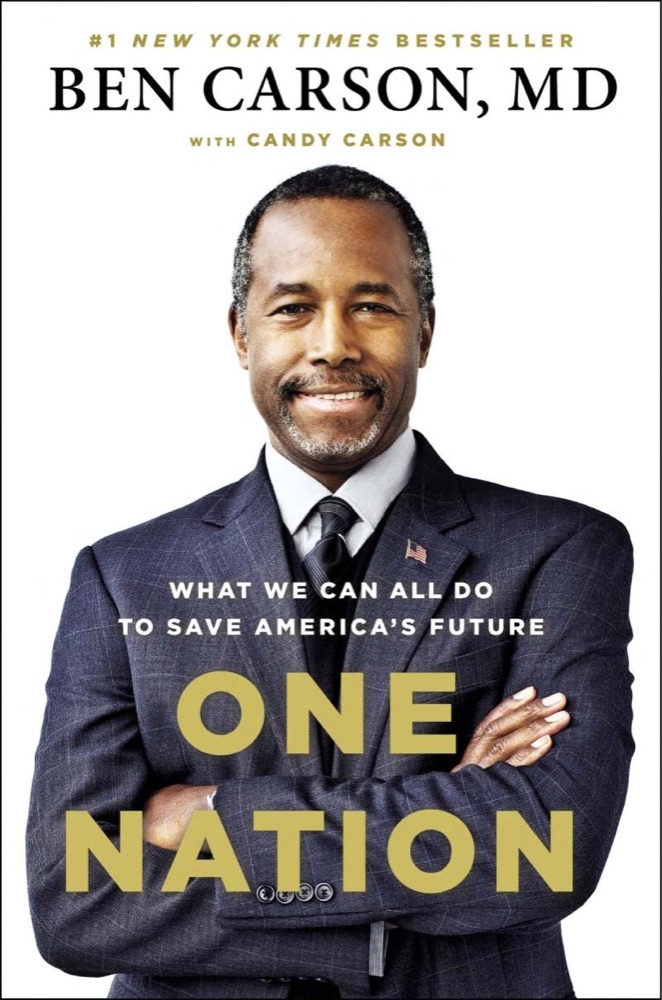 One Nation: What We Can All Do to Save America's Future
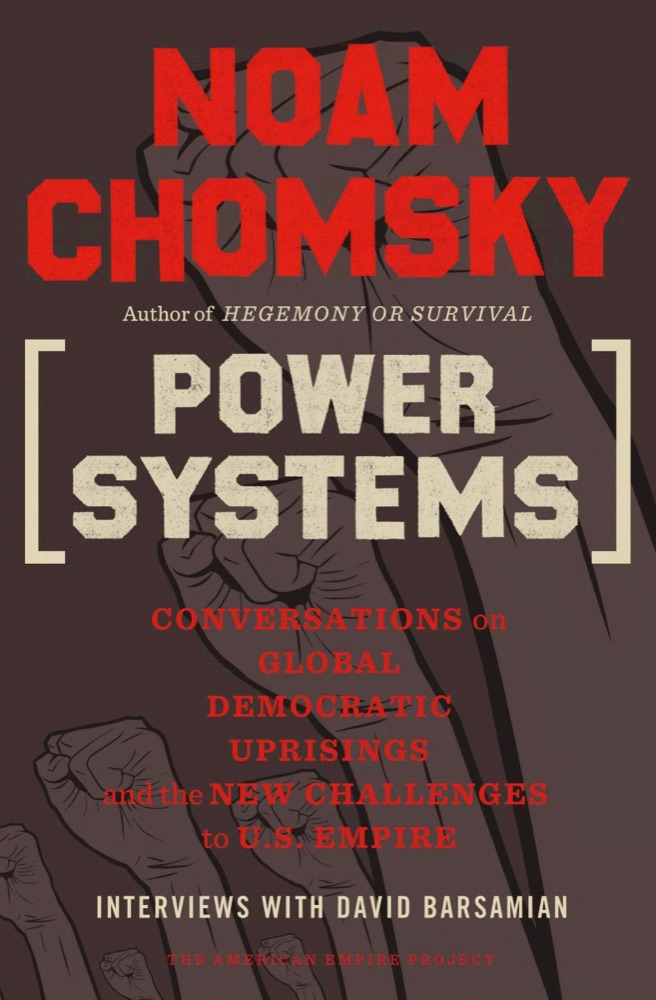 Power Systems: Conversations on Global Democratic Uprisings and the New Challenges to U.S. Empire
 On Tyranny: Twenty Lessons from the Twentieth Century
The Revolution: A Manifesto
On Tyranny: Twenty Lessons from the Twentieth Century
The Revolution: A Manifesto
 Understanding Power: The Indispensable Chomsky
 Behold a Pale Horse
 On Freedom
 Chomsky On Anarchism
 Reflections on the Revolution in France
 A People's History of the United States
 Freedom
 The Road to Serfdom
 Walden Two
 Democracy in America
 Capitalism: The Unknown Ideal
 Rules for Radicals: A Pragmatic Primer for Realistic Radicals
 You Can't Be Neutral on a Moving Train: A Personal History of Our Times
 The 5000 Year Leap: A Miracle That Changed the World
 What Unites Us: Reflections on Patriotism
 Liberalism: The Classical Tradition
 Assata: An Autobiography
 Ameritopia: The Unmaking of America
 Twilight of Democracy: The Seductive Lure of Authoritarianism
 Rights of Man
 Civil Disobedience
 Parliament of Whores: A Lone Humorist Attempts to Explain the Entire U.S. Government
 Revolution
 Human Action: A Treatise on Economics
 Freedom™
 Across That Bridge: A Vision for Change and the Future of America
 What's Our Problem?: A Self-Help Book for Societies
 Humankind: A Hopeful History
 First As Tragedy, Then As Farce
 Ill Fares the Land
 Brave New World Revisited
 Conspirators' Hierarchy: The Story of the Committee of 300
 The Iron Heel
 Death of the Liberal Class
 The Machiavellians: Defenders of Freedom
 The Evolution of Everything: How New Ideas Emerge
 Empire
 The Small and the Mighty: Twelve Unsung Americans Who Changed the Course of History, from the Founding to the Civil Rights Movement
 Endgame, Vol. 1: The Problem of Civilization
 On Liberty
 Capitalism and Freedom
 The Audacity of Hope: Thoughts on Reclaiming the American Dream
 Fascism: A Warning
 The Next Decade: Where We've Been . . . and Where We're Going
 United: Thoughts on Finding Common Ground and Advancing the Common Good
 America (The Book): A Citizen's Guide to Democracy Inaction
 Free to Choose: A Personal Statement
 Anarchy, State, and Utopia
 Promises to Keep: On Life and Politics
 America Alone: The End of the World As We Know It
 America: The Farewell Tour
 Civil Disobedience and Other Essays
 God Emperor of Dune
 The Federalist Papers