
 A Kind of Spark
Quotes from the Book
For me, showing someone where they’re wrong feels like keeping them safe from the consequences of their mistake. It’s a collaborative pursuit of truth, not a power move.
9
There are billions of us -- humans everywhere, with access to our own minds and no one else's, tossing one another songs and sentences to bridge the gap.
7
However, my favorite way to think of autism is this: I miss what others catch, and I catch what others miss.
4
No matter how I appear on the outside, I will always be autistic on the inside.
4
I’ve noticed a communication pattern among autistics, myself included—we often try to express solidarity through similarity. “I’ve been through something like that” is the most natural way for me to tell someone that I support and sympathize with them. Unfortunately, this pattern contributes to the false stereotype that autistic people lack empathy, because it can make people feel like we’re minimizing their struggles by turning the focus on ourselves. For me, though, sharing an analogous story is an expression of empathy—a tangible proof to back up my claim that I can understand how someone feels. It’s also an invitation for them to compare and contrast, telling me how their experience differs, so that I can understand them better.
3
To honestly describe how I’m doing, I have to list each fact that’s hovering in my thoughts, and then say how that fact makes me feel. Essentially, I’m pretending that the question isn’t, “How are you?” but rather, “What’s taking up space in your brain?” A few friends have even started phrasing the question that way, which helps me to know when they want a thorough answer.
3
By default, everything is intense, which has been called “Intense World Theory.
2
A turning point came in college, when I read Cold Tangerines by Shauna Niequist, who wrote: “I have been surprised to find that I am given more life, more hope, more moments of buoyancy and redemption, the more I give up… The more I let people be who they are, instead of trying to cram them into what I need from them, the more surprised I am by their beauty and depth.
2
I wish that I could be in water without water being on me.
2
What does that look like in practice? It means approaching others with respect and curiosity, trusting that their actions have reasons, no matter how mysterious they seem at first glance—similar to how you might act in a new country, with different customs and ways of communicating.
2
Most of my housemates had ADHD, PTSD, bipolar, autism, or some combination of those. I might have been the only one who didn’t realize I was neurodivergent—that is, not neurotypical. In that house, for the first time since childhood, I didn’t feel like an introvert. I got energy from being around people, because I didn’t feel the need to play a role—I could just be. Stimming was common and accepted. People dressed however they liked. Meltdowns were an occasional part of life, not a big and scary event.
2
Masking' is a word for the performative effort required to get it right, which makes it tiring for me to socialize.
2
• Cognitive overload: Ask yourself, “What new information did I encounter right before the meltdown?” Whatever it was, you may not have been able to process it quickly or thoroughly enough to maintain a feeling of control. Some examples include multitasking, changes of plan, holding multiple steps in memory, quick transitions, and surprises. It also takes mental effort to convert information from one form to another, like if your brain needs to turn verbal directions into a visual map. Something as simple as a question can cause cognitive overload if other ingredients are present. And if every ingredient is small, they can still add up.
1
It’s a collaborative pursuit of truth, not a power move. When autistic people ignore the power games that others play, we sometimes unintentionally threaten their power structures. This explains why bullies of all ages tend to pick on autistic people of all ages.
1
Here is how it feels to need a hug, and then to get one: • My self spills out of my body in every direction, like a punctured barrel. A hug plugs up the holes, keeping me intact.
1
What looks like defiance is often just dysregulation in disguise. It indicates that someone is having trouble with self-regulation, and the best way to support them in that moment is through co-regulation.
1
I was always pointing out everyone’s mistakes, including any words that teachers spelled wrong on the whiteboard.
1
There are many people who like me, and many people who don’t. For most of my life, I figured that one group was wrong, but I could never be certain which one. Either I was likable, and some people just didn’t know me well enough to see it, or I was unlikable, and some people were just patient with me.
1
In grocery stores, it takes all of my attention to successfully navigate my cart without running into people, while also making decisions and dealing with all the audio and visual information. It’s hard to do all that and also make eye contact and smile at people, so my default demeanor could easily be perceived as rude.
1
was always pointing out everyone’s mistakes, including any words that teachers spelled wrong on the whiteboard.
1
this pattern contributes to the false stereotype that autistic people lack empathy, because it can make people feel like we’re minimizing their struggles by turning the focus on ourselves. For me, though, sharing an analogous story is an expression of empathy—a tangible proof to back up my claim that I can understand how someone feels. It’s also an invitation for them to compare and contrast, telling me how their experience differs, so that I can understand them better.
Beauty is only in the eye of the beholder—and so is cringe.
like I was born for cozy fires with friends, and I’m not living my destiny.
Yeah,” I try to say aloud. It takes strength to spit out that one syllable, and I usually get it out on the second or third attempt. I may not be fully okay at that point, but I know I will be soon.
But when you ask if I’m okay, all you really want to know is if I’ll be okay without help.
He said that people tend to feel awkward when they don’t know what’s expected of them. If a non-autistic person like him sees an autistic person like me break the script of what they’re used to, they may not know how to react.
On average, the autistic people I’ve met have seemed more androgynous than the neurotypical people I’ve met. This applies to both men and women, as well as some who reject gender entirely, or identify as nonbinary. I identify as female, and I want to feel feminine—I just don’t want it to feel like a performance
I can look and listen at the same time when needed, but I spent most of my life not realizing that comes at a cost.
Co-regulation is when someone helps you feel the way you want to feel, by feeling that way themselves, nearby. They pull you into their calm if calm is what you need, or pump you up to get going if going is what you need.
In my mid-twenties, I met a new group of friends who understood me in ways that no one else did. They seemed to ignore societal expectations of how a person should sit, talk, move, dress, and act, freeing me to do the same. They also actively appreciated parts of my personality that others found annoying, such as my drive to clarify precisely what I mean.
Watch on YouTube
About Annie Kotowicz
We have collected 30 quotes from 1 book by Annie Kotowicz on BookQuoters.
More about the author →About the book
In this intimate and insightful mix of memoir and manifesto, Annie Kotowicz invites you inside the mind of an autistic woman, sharing the trials and triumphs of a life before and after diagnosis.
How might it feel to be autistic? Why are autistic and non-autistic people so puzzling to one another? How does neuroscience explain the spectrum of autistic traits? And what could you discover about your own mind—neurotypical or neurodivergent—through learning about another?
Drawing on popular stories from her blog Neurobeautiful—along with memories never shared before—Annie Kotowicz has created a nuanced analysis of her autistic thinking, an engaging guide to autistic thriving, and a beautiful celebration of autistic brains.
What I Mean When I Say I’m Autistic will inspire autistic people and those who love them, offering help and hope to anyone seeking a deeper understanding of th
Book details
- First published
- 2022
- Author
- Annie Kotowicz
- Genre
- Nonfiction
- Goodreads rating
- 4.34 (2k ratings)
Keep reading
A Kind of Spark
 Why Can't I Just Enjoy Things?: A Comedian's Guide to Autism
 The Reason I Jump: The Inner Voice of a Thirteen-Year-Old Boy with Autism
 Strong Female Character
 Almond
 The Electricity of Every Living Thing
 Symptoms of Being Human
 Under Rose-Tainted Skies
 Fall Down 7 Times Get Up 8: A Young Man's Voice from the Silence of Autism
![[Don't] Call Me Crazy](/i/book/g/b2/dont-call-me-crazy.jpg) [Don't] Call Me Crazy
[Don't] Call Me Crazy
 Cassandra in Reverse
 Look Me in the Eye
 Ten Steps to Nanette
 Unmasking Autism: Discovering the New Faces of Neurodiversity
 Different, Not Less: A Neurodivergent's Guide to Embracing Your True Self and Finding Your Happily Ever After
 Atlas of the Heart: Mapping Meaningful Connection and the Language of Human Experience
 Encyclopedia of an Ordinary Life
 That's a Great Question, I'd Love to Tell You
 We Can Do Hard Things: Answers to Life's 20 Questions
 Tell Me More: Stories About the 12 Hardest Things I'm Learning to Say
 The Folded Clock: A Diary
 Convenience Store Woman
 I'm Fine...And Other Lies
 Mockingbird
 It's Not Like It's a Secret
 On Connection
 Tell Me Three Things
 On the Edge of Gone
 Conversations with Friends
 A Room Called Earth
![It's Not OK to Feel Blue [and other lies]](/i/book/g/ed/its-not-ok-to-feel-blue-and-other-lies.jpg) It's Not OK to Feel Blue [and other lies]
It's Not OK to Feel Blue [and other lies]
 The Collected Stories of Lydia Davis
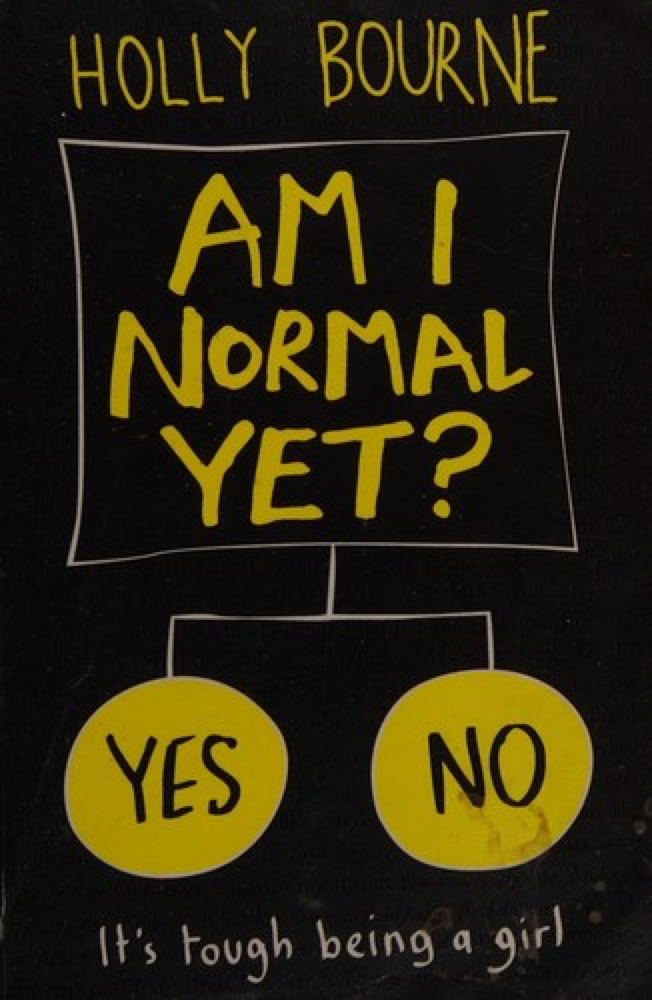 Am I Normal Yet?
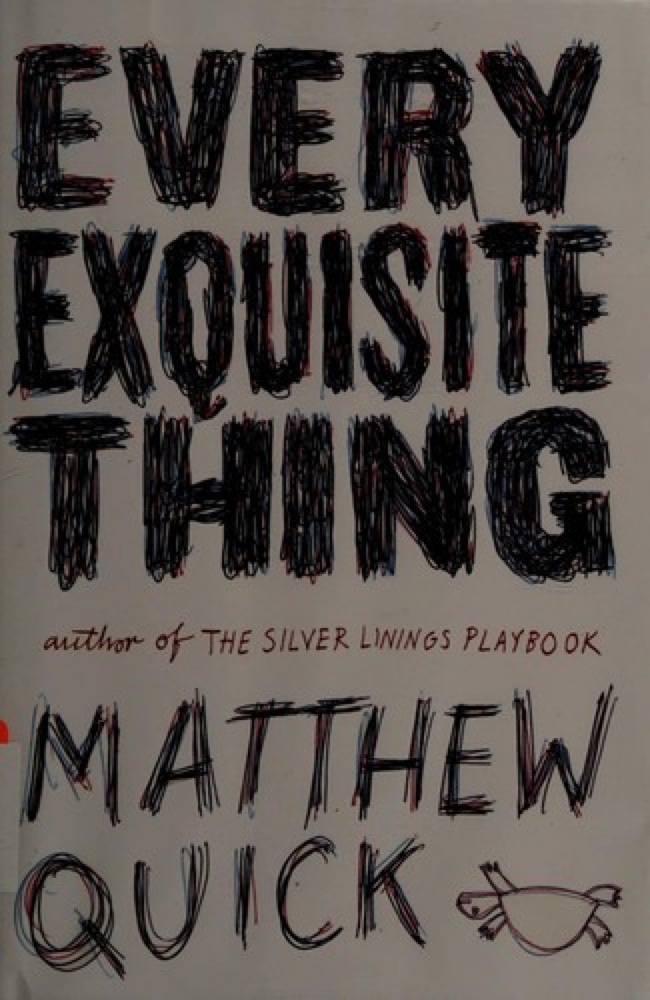 Every Exquisite Thing
 I Wish You All the Best
 Life Will Be the Death of Me: . . . and you too!
 I Miss You When I Blink: Essays
 Attempting Normal
 More, Now, Again: A Memoir of Addiction
 Words on Bathroom Walls
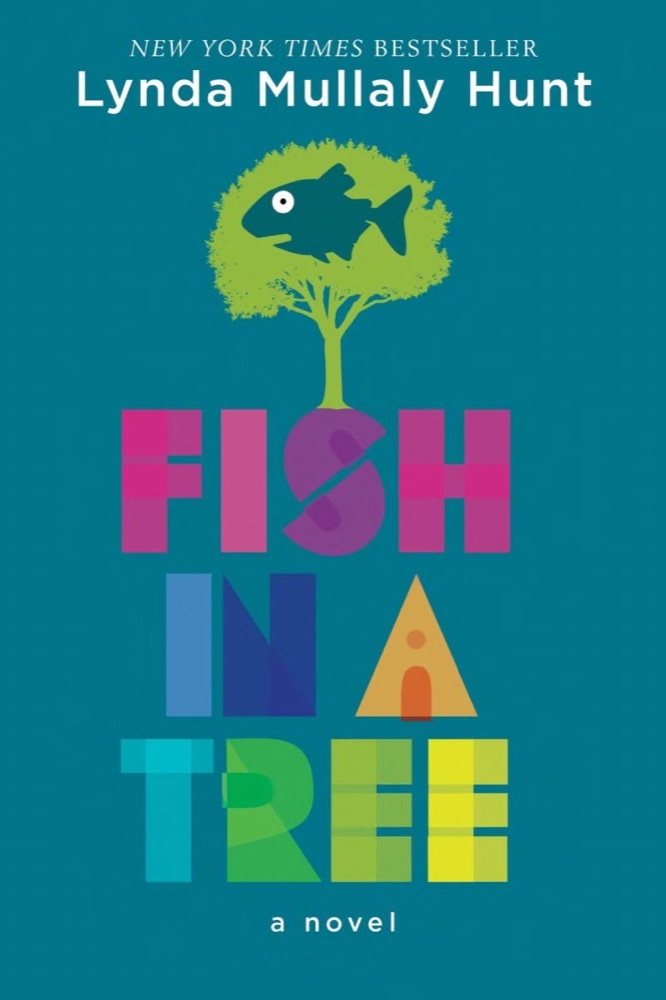 Fish in a Tree
 Buffering: Unshared Tales of a Life Fully Loaded
 Finding Audrey
 House Rules
 Interesting Facts about Space
 Last Call at the Local
 Permanent Record
 I'll Have What She's Having
 Solutions and Other Problems
 The Rosie Project
 Kissing Galileo
 Lakelore
 The Taking of Jake Livingston
 I Really Didn't Think This Through: Tales from My So-Called Adult Life
 Anthropology of an American Girl
 Honestly Ben
 Broken
 Prep
Prep
 No One Asked for This: Essays
 Hijab Butch Blues