
 Contact
Quotes from the Book
Look again at that dot. That's here. That's home. That's us. On it everyone you love, everyone you know, everyone you ever heard of, every human being who ever was, lived out their lives. The aggregate of our joy and suffering, thousands of confident religions, ideologies, and economic doctrines, every hunter and forager, every hero and coward, every creator and destroyer of civilization, every king and peasant, every young couple in love, every mother and father, hopeful child, inventor and explorer, every teacher of morals, every corrupt politician, every "superstar," every "supreme leader," every saint and sinner in the history of our species lived there-on a mote of dust suspended in a sunbeam. The Earth is a very small stage in a vast cosmic arena. Think of the endless cruelties visited by the inhabitants of one corner of this pixel on the scarcely distinguishable inhabitants of some other corner, how frequent their misunderstandings, how eager they are to kill one another, how fervent their hatreds. Think of the rivers of blood spilled by all those generals and emperors so that, in glory and triumph, they could become the momentary masters of a fraction of a dot. Our posturings, our imagined self-importance, the delusion that we have some privileged position in the Universe, are challenged by this point of pale light. Our planet is a lonely speck in the great enveloping cosmic dark. In our obscurity, in all this vastness, there is no hint that help will come from elsewhere to save us from ourselves. The Earth is the only world known so far to harbor life. There is nowhere else, at least in the near future, to which our species could migrate. Visit, yes. Settle, not yet. Like it or not, for the moment the Earth is where we make our stand. It has been said that astronomy is a humbling and character-building experience. There is perhaps no better demonstration of the folly of human conceits than this distant image of our tiny world. To me, it underscores our responsibility to deal more kindly with one another, and to preserve and cherish the pale blue dot, the only home we've ever known.
Look again at that dot. That's here. That's home. That's us. On it everyone you love, everyone you know, everyone you ever heard of, every human being who ever was, lived out their lives. The aggregate of our joy and suffering, thousands of confident religions, ideologies, and economic doctrines, every hunter and forager, every hero and coward, every creator and destroyer of civilization, every king and peasant, every young couple in love, every mother and father, hopeful child, inventor and explorer, every teacher of morals, every corrupt politician, every "superstar," every "supreme leader," every saint and sinner in the history of our species lived there--on a mote of dust suspended in a sunbeam.
It is sometimes said that scientists are unromantic, that their passion to figure out robs the world of beauty and mystery. But is it not stirring to understand how the world actually works — that white light is made of colors, that color is the way we perceive the wavelengths of light, that transparent air reflects light, that in so doing it discriminates among the waves, and that the sky is blue for the same reason that the sunset is red? It does no harm to the romance of the sunset to know a little bit about it.
Before we invented civilization our ancestors lived mainly in the open out under the sky. Before we devised artificial lights and atmospheric pollution and modern forms of nocturnal entertainment we watched the stars. There were practical calendar reasons of course but there was more to it than that. Even today the most jaded city dweller can be unexpectedly moved upon encountering a clear night sky studded with thousands of twinkling stars. When it happens to me after all these years it still takes my breath away.
From this distant vantage point, the Earth might not seem of particular interest. But for us, it's different. Consider again that dot. That's here, that's home, that's us. On it everyone you love, everyone you know, everyone you ever heard of, every human being who ever was, lived out their lives. The aggregate of our joy and suffering, thousands of confident religions, ideologies, and economic doctrines, every hunter and forager, every hero and coward, every creator and destroyer of civilization, every king and peasant, every young couple in love, every mother and father, hopeful child, inventor and explorer, every teacher of morals, every corrupt politician, every "superstar," every "supreme leader," every saint and sinner in the history of our species lived there – on a mote of dust suspended in a sunbeam. The Earth is a very small stage in a vast cosmic arena. Think of the rivers of blood spilled by all those generals and emperors so that, in glory and triumph, they could become the momentary masters of a fraction of a dot. Think of the endless cruelties visited by the inhabitants of one corner of this pixel on the scarcely distinguishable inhabitants of some other corner, how frequent their misunderstandings, how eager they are to kill one another, how fervent their hatreds. Our posturings, our imagined self-importance, the delusion that we have some privileged position in the Universe, are challenged by this point of pale light. Our planet is a lonely speck in the great enveloping cosmic dark. In our obscurity, in all this vastness, there is no hint that help will come from elsewhere to save us from ourselves. The Earth is the only world known so far to harbor life. There is nowhere else, at least in the near future, to which our species could migrate. Visit, yes. Settle, not yet. Like it or not, for the moment the Earth is where we make our stand. It has been said that astronomy is a humbling and character-building experience. There is perhaps no better demonstration of the folly of human conceits than this distant image of our tiny world. To me, it underscores our responsibility to deal more kindly with one another, and to preserve and cherish the pale blue dot, the only home we've ever known.
A blade of grass is a commonplace on Earth; it would be a miracle on Mars. Our descendants on Mars will know the value of a patch of green. And if a blade of grass is priceless, what is the value of a human being?
Our planet is a lonely speck in the great enveloping cosmic dark. In our obscurity, in all this vastness, there is no hint that help will come from elsewhere to save us from ourselves.
Sailors on a becalmed sea, we sense the stirring of a breeze.
The Cosmos extends, for all practical purposes, forever. After a brief sedentary hiatus, we are resuming our ancient nomadic way of life. Our remote descendants, safely arrayed on many worlds throughout the Solar System and beyond, will be unified by their common heritage, by their regard for their home planet, and by the knowledge that, whatever other life may be, the only humans in all the Universe come from Earth. They will gaze up and strain to find the blue dot in their skies. They will love it no less for its obscurity and fragility. They will marvel at how vulnerable the repository of all our potential once was, how perilous our infancy, how humble our beginnings, how many rivers we had to cross before we found our way.
.. Think of the rivers of blood spilled by all those generals and emperors so that in glory and in triumph they could become the 'Momentary' masters of a 'Fraction' of a 'Dot'
The visions we offer our children shape the future. It _matters_ what those visions are. Often they become self-fulfilling prophecies. Dreams are maps.
Consider again that dot [Earth]. That's here. That's home. That's us. On it everyone you love, everyone you know, everyone you ever heard of, every human being who ever was, lived out their lives. The aggregate of our joy and suffering, thousands of confident religions, ideologies, and economic doctrines, every hunter and forager, every hero and coward, every creator and destroyer of civilization, every king and peasant, every young couple in love, every mother and father, hopeful child, inventor and explorer, every teacher of morals, every corrupt politician, every "superstar," every "supreme leader," every saint and sinner in the history of our species lived there - on a mote of dust suspended in a sunbeam.
If we continue to accumulate only power and not wisdom, we will surely destroy ourselves. Our very existence in that distant time requires that we will have changed our institutions and ourselves. How can I dare to guess about humans in the far future? It is, I think, only a matter of natural selection. If we become even slightly more violent, shortsighted, ignorant, and selfish than we are now, almost certainly we will have no future.
Or consider a story in the Jewish Talmud left out of the Book of Genesis. (It is in doubtful accord with the account of the apple, the Tree of Knowledge, the Fall, and the expulsion from Eden.) In The Garden, God tells Eve and Adam that He has intentionally left the Universe unfinished. It is the responsibility of humans, over countless generations, to participate with God in a "glorious" experiment - the "completing of the Creation." The burden of such a responsibility is heavy, especially on so weak and imperfect a species as ours, one with so unhappy a history. Nothing remotely like "completion" can be attempted without vastly more knowledge than we have today. But, perhaps, if our very existence is at stake, we will find ourselves able to rise to this supreme challenge.
The immense distances to the stars and the galaxies mean that we see everything ins pace int he past, some as they were before the Earth came to be. Telescopes are time machines.
The vast distances that separate the stars are providential. Beings and worlds are quarantined from one another. The quarantine is lifted only for those with sufficient self-knowledge and judgment to have safely traveled from star to star.
Once we lose our fear of being tiny, we find ourselves on the threshold of a vast and awesome Universe which dwarfs -- in time, in space, and in potential -- the tidy anthropocentric proscenium of our ancestors.
If we are to send people, it must be for a very good reason - and with a realistic understanding that almost certainly we will lose lives. Astronauts and Cosmonauts have always understood this. Nevertheless, there has been and will be no shortage of volunteers.
We’re Johnny-come-latelies. We live in the cosmic boondocks. We emerged from microbes and muck. Apes are our cousins. Our thoughts and feelings are not fully under our own control. There may be much smarter and very different beings elsewhere. And on top of all this, we’re making a mess of our planet and becoming a danger to ourselves.
The Earth is the only world known so far to harbour life. There is nowhere else, at least in the near future, to which our species could migrate. Visit? Yes. Settle? Not yet. Like it or not, for the moment, the Earth is where we make our stand. It has been said that astronomy is a humbling and character-building experience. ... To me, it underscores our responsibility to deal more kindly with one another and to preserve, and cherish, the pale blue dot; the only home we've ever known.
We tend to hear much more about the splendors returned than the ships that brought them or the shipwrights. It has always been that way. Even those history books enamored of the voyages of Christopher Columbus do not tell much about the builders of the Nina the Pinta and the Santa Maria or about the principle of the caravel. These spacecraft their designers builders navigators and controllers are examples of what science and engineering set free for well-defined peaceful purposes can accomplish. Those scientists and engineers should be role models for an America seeking excellence and international competitiveness. They should be on our stamps.
Science cuts two ways, of course; its products can be used for both good and evil. But there's no turning back from science. The early warnings about technological dangers also come from science.
A religion, old or new, that stressed the magnificence of the Universe as revealed by modern science might be able to draw forth reserves of reverence and awe hardly tapped by the conventional faiths.
Planetary exploration satisfies our inclination for great enterprises and wanderings and quests that has been with us since our days as hunters and gatherers on the East African savannahs a million years ago. By chance—it is possible, I say, to imagine many skeins of historical causality in which this would not have transpired—in our age we are able to begin again. Exploring other worlds employs precisely the same qualities of daring, planning, cooperative enterprise, and valor that mark the finest in military tradition. Never mind the night launch of an Apollo spacecraft bound for another world. That makes the conclusion foregone. Witness mere F-14s taking off from adjacent flight decks, gracefully canting left and right, afterburners flaming, and there’s something that sweeps you away—or at least it does me. And no amount of knowledge of the potential abuses of carrier task forces can affect the depth of that feeling. It simply speaks to another part of me. It doesn’t want recriminations or politics. It just wants to fly.
These days there seems to be nowhere left to explore, at least on the land area of the Earth. Victims of their very success, the explorers now pretty much stay home.
The symbolism seemed so apt. The same technology that can propel apocalyptic weapons from continent to continent would enable the first human voyage to another planet. It was a choice of fitting mythic power: to embrace the planet named after, rather than the madness ascribed to, the god of war.
Watch on YouTube
About Carl Sagan
We have collected 219 quotes from 9 books by Carl Sagan on BookQuoters.
More about the author →
Book details
- Author
- Carl Sagan
- Genre
- Philosophy
- Goodreads rating
- 4.33 (40k ratings) →
Keep reading
 Space Chronicles: Facing the Ultimate Frontier
 Orbital
 Death by Black Hole: And Other Cosmic Quandaries
 Astrophysics for People in a Hurry
 Death's End
 Until the End of Time: Mind, Matter, and Our Search for Meaning in an Evolving Universe
 Solaris
 The Fifth Science
 Cosmos
 Bewilderment
 Billions & Billions: Thoughts on Life and Death at the Brink of the Millennium
 To Be Taught, If Fortunate
 Unweaving the Rainbow: Science, Delusion and the Appetite for Wonder
 Chariots of The Gods
 The Future of Humanity: Terraforming Mars, Interstellar Travel, Immortality and Our Destiny Beyond Earth
 A Short History of Nearly Everything
 2312
2312
 The Wandering Earth
 Blue Remembered Earth
 The Mountain in the Sea
 The Grand Design
 Re: Colonised Planet 5, Shikasta
 Brief Answers to the Big Questions
 The Varieties of Scientific Experience: A Personal View of the Search for God
 The Accidental Universe: The World You Thought You Knew
 The Three-Body Problem
 The Stone Gods
 Packing for Mars: The Curious Science of Life in the Void
 In Ascension
 The Social Conquest of Earth
 Ishmael: An Adventure of the Mind and Spirit
 Arctic Dreams
 Jurassic Park
 The Convoluted Universe, Book 1
 Invisible Planets: Contemporary Chinese Science Fiction in Translation
 The Lost World
 A Brief History of Time
 Delta-v
 A City on Mars: Can We Settle Space, Should We Settle Space, and Have We Really Thought This Through?
 A Deepness in the Sky
 Diaspora
 A Universe from Nothing: Why There Is Something Rather Than Nothing
 The Lives of a Cell: Notes of a Biology Watcher
 The Big Picture: On the Origins of Life, Meaning, and the Universe Itself
 Last and First Men
 Songs of Distant Earth
 Earth
Earth
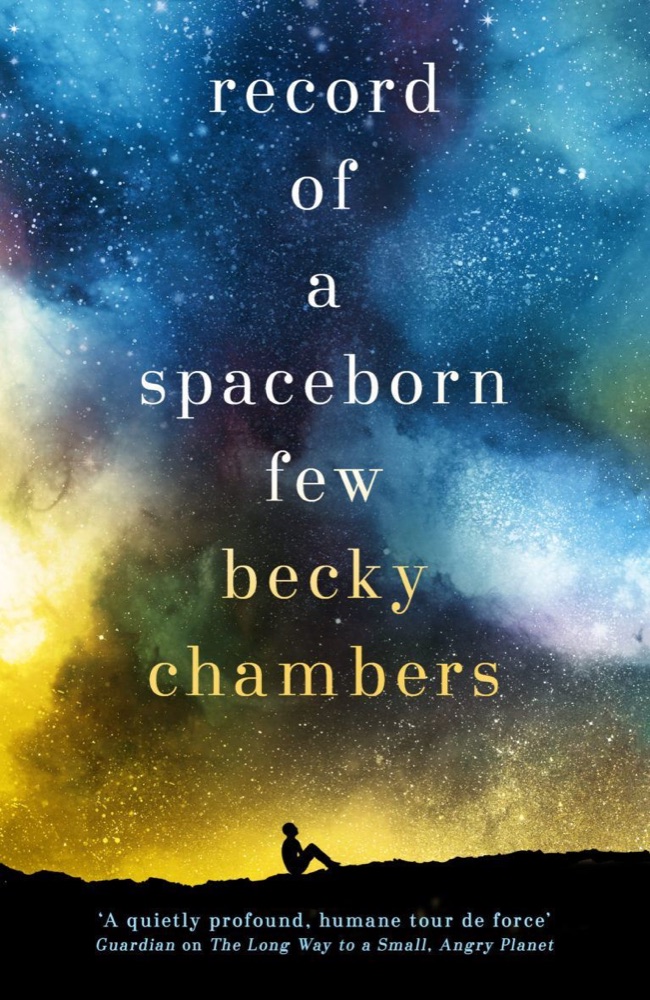 Record of a Spaceborn Few
 A Life on Our Planet: My Witness Statement and a Vision for the Future
 The State of the Art
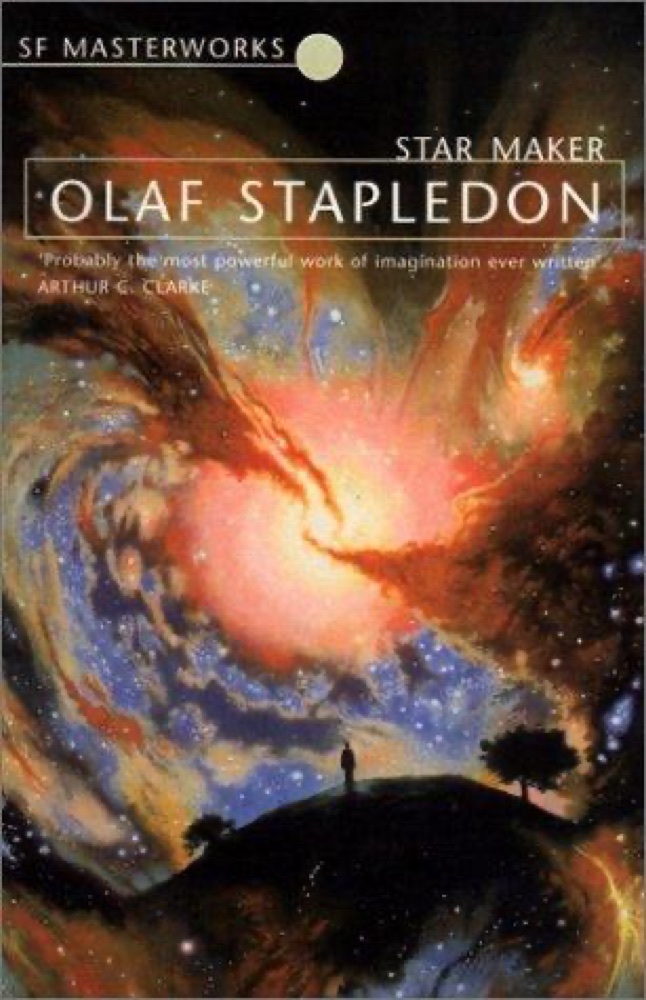 Star Maker
 Black Holes and Baby Universes and Other Essays
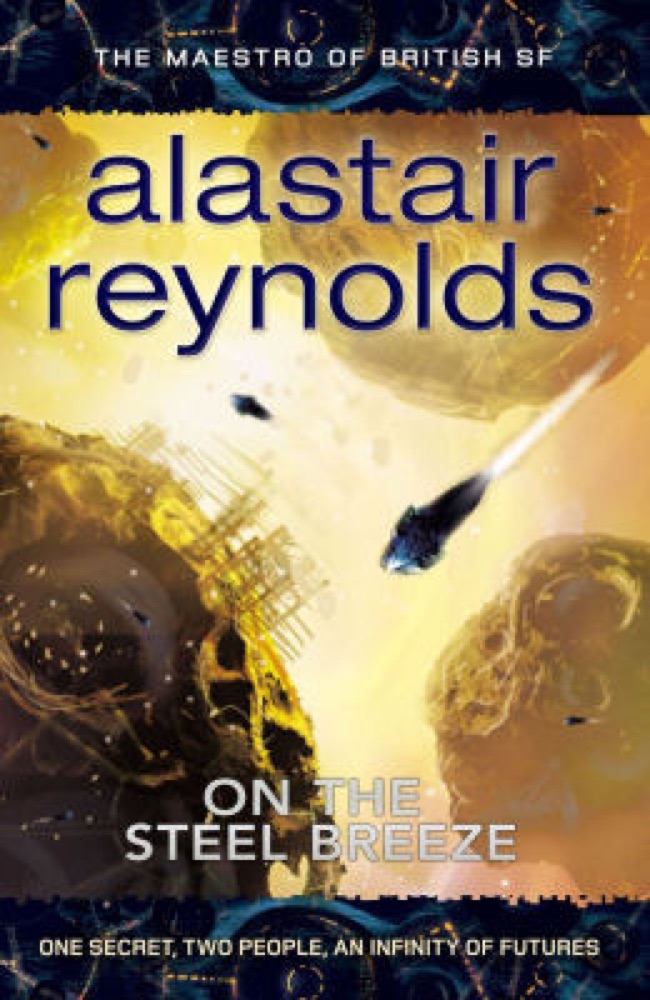 On the Steel Breeze
 The End of Everything
 Seven Surrenders
 The Martian Chronicles
 Genome
 Perhaps the Stars
 Exhalation
 The Book of Joan