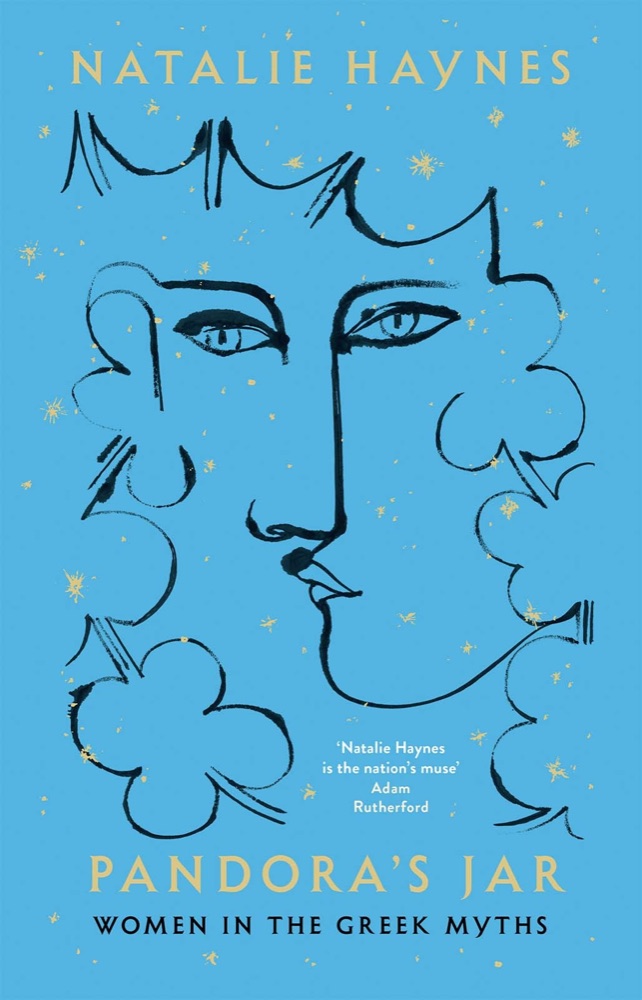

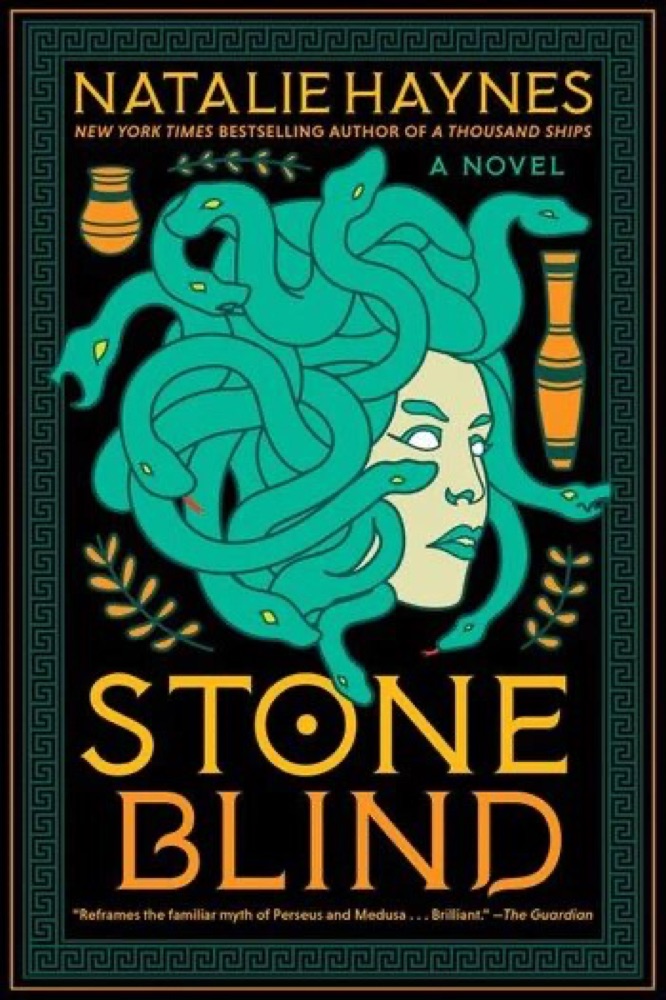
 Stone Blind
Quotes from the Book
When women take up space, there is less available for men. But it means we get a whole story instead of half of one.
46
There’s comfort in stories which don’t change, even the sad ones.
39
And if history has taught us anything, it is that women making a noise – whether speaking or shouting – tend to be viewed as intrinsically disruptive.
34
Every myth contains multiple timelines within itself: the time in which it is set, the time it is first told, and every retelling afterwards. Myths may be the home of the miraculous, but they are also mirrors of us. Which version of a story we choose to tell, which characters we place in the foreground, which ones we allow to fade into the shadows: these reflect both the teller and the reader, as much as they show the characters of the myth. We have made space in our storytelling to rediscover women who have been lost or forgotten. They are not villains, victims, wives and monsters: they are people.
25
For my mum, who has always thought that a woman with an axe was more interesting than a princess
18
But these myths are full of violence and we should at least ask why it is the violence against women that is removed in order to make our heroes uncomplicated adventurers.
17
Their stories should be read, seen, heard in all their difficult, messy, murderous detail. They aren’t simple, because nothing interesting is simple.
12
A name can be in lots of places at once, she replies. A person can’t.
11
Medusa wasn't always a monster, Helen of Troy wasn't always an adulterer, Pandora wasn't ever a villain.
10
A beautiful woman whom men find all the more alluring because she is essentially mute? I know, I always think the shock will kill me too.
10
But the verb in Pandora’s name is active, not passive: literally she is all-giving rather than all-gifted.
10
These artists tend to show her in the act of opening either a jar or a box, or being about to do so, or in the immediate aftermath of having done so. Their focus is almost always on the destruction which Pandora has wreaked or will imminently wreak, which is surely a consequence of the mingling of the Pandora and Eve narratives. The emphasis in Pandora’s story for centuries has been her single-handed role in the fall of man. Just as Adam and the snake dodge so much of the blame in Eve’s story, so Zeus, Hermes and Epimetheus have been exonerated in almost every later version of Pandora’s. The guiding principle when searching for the cause of everything wrong in the world has been, all too often: cherchez la femme.
9
The message is simple: women are stronger together than apart, even ones with superpowers.
8
Amazons – even when one is exceptional – are a team, a tribe, a gang, and it is this which Buffy captured so perfectly: an ensemble of women fighting to save us all.
8
Pandora’s role as the ancestor of all women was far more important than her disputed role in opening the world to incessant evil. Even if, for Hesiod, these two amount to much the same thing.
7
Hope is intrinsically positive in English, but in Greek (and the same with the Latin equivalent, spes) it is not. Since it really means the anticipation of something good or bad, a more accurate translation would probably be ‘expectation’. Before we can worry about whether it’s advantageous to us that it remains in the jar, we first have to decide if it is intrinsically good or bad. This is a genuinely complex linguistic and philosophical puzzle. No wonder it’s easier to just blame Pandora.
7
There is even an opposing theory to the Gaia thesis: that instead of a Mother Earth which nourishes and cherishes us, we instead inhabit a planet that is determined to extinguish us. It is called the Medea hypothesis.
7
When people ask why tell the stories that we know best from the Odyssey from Penelope’s perspective, or Circe’s perspective, they presuppose that the story ‘should’ be told from Odysseus’ point of view. Which means the answer to this question should always be: because she’s in the damn story. Why wouldn’t we want to hear from her?
6
If you hurt her, she will make you regret it. Her revenge will exceed your original wrong and no one will ever be able to say of her that she let her enemies get away with something.
6
When the question arises – why retell greek myths with women at their core? – it is loaded with a strange assumption. The underpinning belief is that women are and always have been on the margins of these stories. That the myths have always focused on men and that women have only ever been minor figures. This involves ignoring the fact that there is no ‘real’ or ‘true’ version of any myth, because they arise from multiple authors across multiple locations over a long period.
6
Still, Hermes says, 'But here's the thing/To know how it ends/And still begin to sing it again/As if it might turn out this time.' There's comfort in the stories which don't change, even the sad ones.
5
The failure of his mission is assured from the moment he undertakes it. There is something cripplingly true about this, isn’t there? That we are so often the authors of our own misfortunes because of the same qualities which makes us brave, or hopeful, or loving in the first place. This Orpheus hasn’t been gripped by madness, he has been afflicted by fear. And because the fear eventually overwhelms him, the thing he feared comes true.
5
Indeed, we’re hard-pushed to find an asexual depiction of Medusa in contemporary culture, although The Lego Movie manages it beautifully, if briefly.45 Her Lego snake hair is particularly good.
5
While we might say that we have fallen in love or developed a crush on someone unsuitable, the Greeks tended to externalize the causes of such experiences. We fall in love, they were struck by an arrow shot by the god Eros, for example. A sophisticated language of psychology simply didn’t exist at the time that Euripides was writing, so things which are internalized for us were often launched upon a Greek from without.
5
There are two things to note about this: the first is that in every version of her story, Jocasta becomes a more complex, more rounded character with every word she says. In Oedipus Tyrannos, we get a fairly slender portrait of a woman whose life is entirely dictated by the decisions of men. In The Phoenician Women, we finally hear her talk about what that means and how it feels. And here, in the earlier fragment of the Lille Stesichorus, we have a strong political leader, negotiating with warring parties who happen to be her sons.
5
Euripides was an astonishing writer of women. He wrote more and better female roles than almost any other male playwright who has ever lived.
5
Yet, in my heart of hearts, I know I have never in my life wanted to eat anything so much as a sachet of silica gel, on which someone has stamped the words ‘Do Not Eat’.
5
This poem throbs with rage, as though Eurydice has waited a couple of millennia to get all this off her chest. But it does not end in anger; it ends with a declaration: 'hell must break before I am lost,' she says, in the final stanza. Eurydice may be dead, but she is still triumphantly herself.
4
It is the ultimate story about the power of music to change hearts and minds.
4
It seems that Clytemnestra seals her own fate when she values her daughter’s life equally to the life of a king.
4
Watch on YouTube
About Natalie Haynes
We have collected 119 quotes from 4 books by Natalie Haynes on BookQuoters.
More about the author →More by Natalie Haynes
About the book
The Greek myths are one of the most important cultural foundation-stones of the modern world.
Stories of gods and monsters are the mainstay of epic poetry and Greek tragedy, from Homer to Virgil to from Aeschylus to Sophocles and Euripides. And still, today, a wealth of novels, plays and films draw their inspiration from stories first told almost three thousand years ago. But modern tellers of Greek myth have usually been men, and have routinely shown little interest in telling women’s stories.
Now, in Pandora’s Jar, Natalie Haynes – broadcaster, writer and passionate classicist – redresses this imbalance. Taking Greek creation myths as her starting point and then retelling the four great mythic sagas: the Trojan War, the Royal House of Thebes, Jason and the Argonauts, Heracles, she puts the female characters on equal footing with their menfolk. The result is a vivid and powerful a
Book details
- First published
- 2020
- Author
- Natalie Haynes
- Genre
- Nonfiction
- Goodreads rating
- 4.21 (28k ratings)
The buzz
- The GuardianReview in The Guardianprofessional review (via Book Marks)
- The TimesReview in The Timesprofessional review (via Book Marks)
- Kirkus ReviewsReview in Kirkus Reviewsprofessional review (via Book Marks)
- Publishers WeeklyReview in Publishers Weeklyprofessional review (via Book Marks)
- BooklistReview in Booklistprofessional review (via Book Marks)
- PopmattersReview in Popmattersprofessional review (via Book Marks)
Keep reading
 Divine Might - Goddesses in Greek Myth
 A Thousand Ships
 Medusa's Sisters
 The Penelopiad
 Cassandra Speaks: When Women Are the Storytellers, the Human Story Changes
 Women and Other Monsters: Building a New Mythology
 Great Goddesses - Life Lessons from Myths and Monsters
 Clytemnestra
 By Any Other Name
Stone Blind
By Any Other Name
Stone Blind
 The Lost Sisterhood
 Mythos - The Greek Myths Retold
 The Last Song of Penelope
 Babylonia
 Dead Blondes and Bad Mothers
 The Mother of All Questions
 Lavinia
 Mythology
 Elizabeth Finch
 Tress of the Emerald Sea
 Gods of Jade and Shadow
 Muse of Nightmares
 After Sappho
 The Silence of the Girls
 The Crane Wife
 The Summer Without Men
 The Robber Bride
 Percy Jackson's Greek Heroes
 Because You Love to Hate Me: 13 Tales of Villainy
 When Women Were Dragons
 Lilith
 The Atlas Six
 Native Tongue
 Elizabeth Costello
 The Geek Feminist Revolution
 The Ruin of Angels
 The Book That Broke the World
 Her Majesty's Royal Coven
 The Secret Book of Flora Lea
 Sunbringer
 Medea
Medea
 The Change
 The Monster Baru Cormorant
 City of Stairs
 Men Explain Things to Me
 Thrust
 The Soul of a Woman
 A Tale of Love and Darkness
 When We Lost Our Heads
 The Queen of the Night
 Conviction
 A Woman Is No Man
 Arm of the Sphinx
 The Library of the Unwritten
 Styxx
Styxx
 A Woman's Worth
 Medusa: The Girl Behind the Myth
 The Argonauts
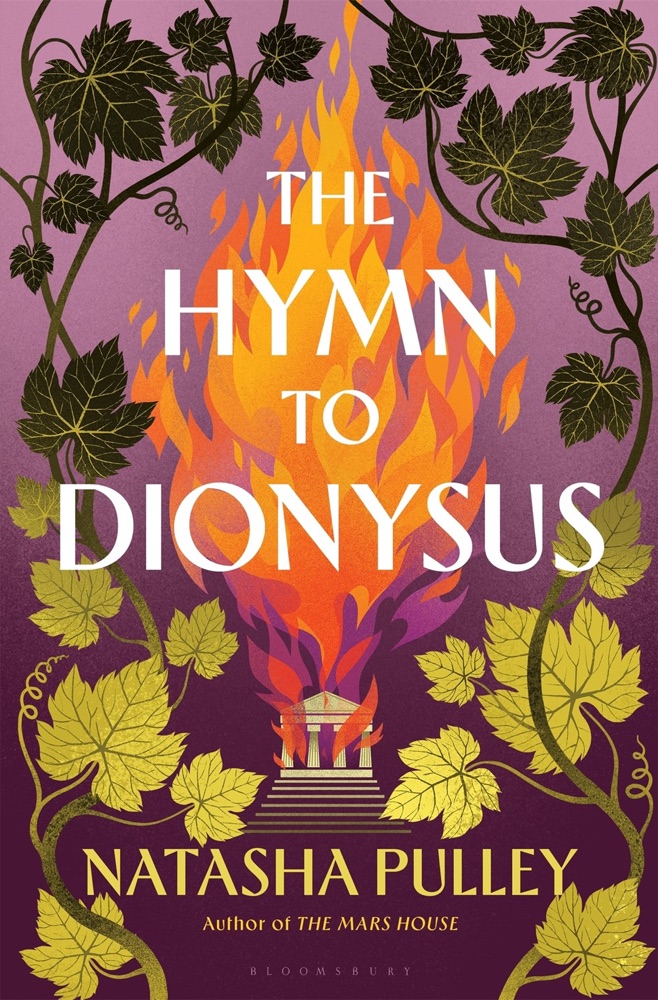 The Hymn to Dionysus
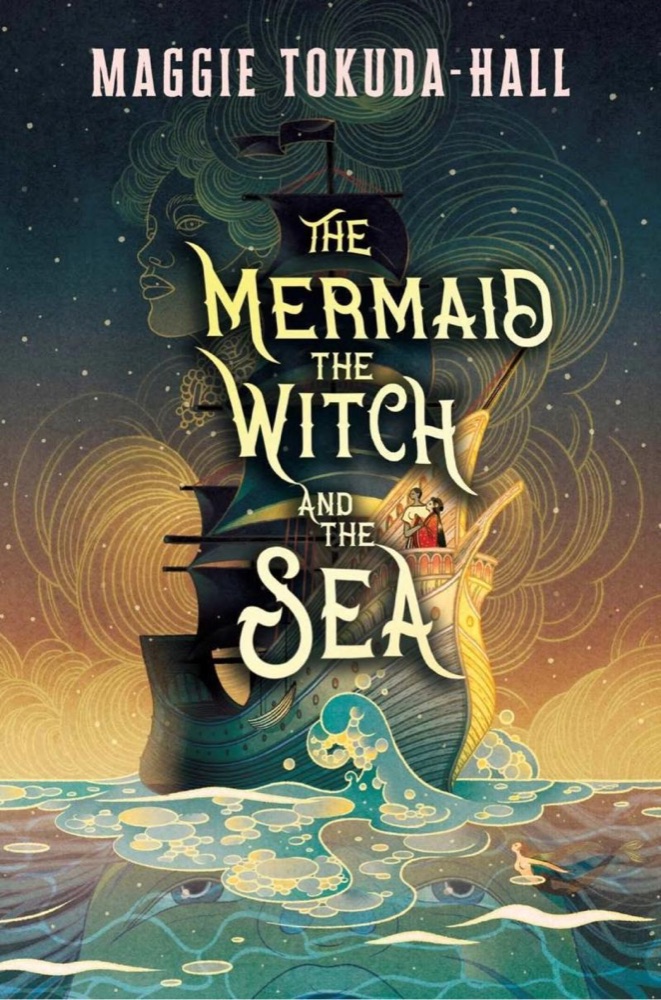 The Mermaid, the Witch, and the Sea