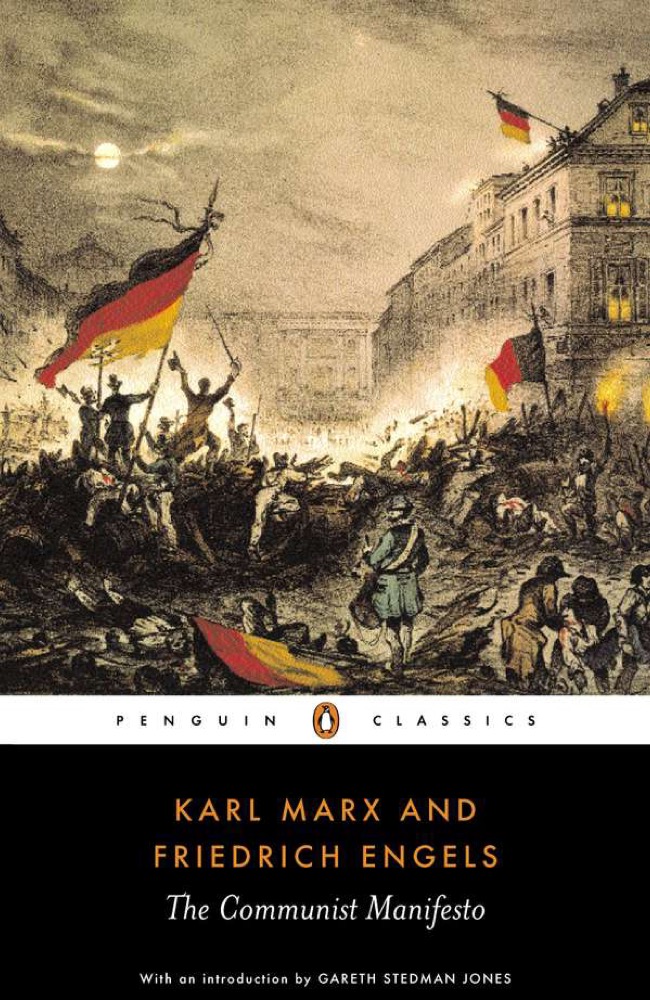
 The Communist Manifesto
Quotes from the Book
The less you eat, drink, buy books, go to the theatre or to balls, or to the pub, and the less you think, love, theorize, sing, paint, fence, etc., the more you will be able to save and the greater will become your treasure which neither moth nor rust will corrupt—your capital. The less you are, the less you express your life, the more you have, the greater is your alienated life and the greater is the saving of your alienated being.
486
If money is the bond binding me to human life, binding society to me, connecting me with nature and man, is not money the bond of all bonds? Can it not dissolve and bind all ties? Is it not, therefore, also the universal agent of separation?
124
Communism is the riddle of history solved, and it knows itself to be this solution.
84
The increase in value of the world of things is directly proportional to the decrease in value of the human world.
54
If you love without evoking love in return - if through the vital expression of yourself as a loving person you fail to become a loved person, then your love is impotent, it is a misfortune.
54
Christ represents originally: 1) men before God; 2) God for men; 3) men to man. Similarly, money represents originally, in accordance with the idea of money: 1) private property for private property; 2) society for private property; 3) private property for society. But Christ is alienated God and alienated man. God has value only insofar as he represents Christ, and man has value only insofar as he represents Christ. It is the same with money.
22
If you love without evoking love in return—that is, if your loving as loving does not produce reciprocal love; if through a living expression of yourself as a loving person you do not make yourself a loved person, then your love is impotent— a misfortune.
20
First, the fact that labor is external to the worker, i.e., it does not belong to his intrinsic nature; that in his work, therefore, he does not affirm himself but denies himself, does not feel content but unhappy, does not develop freely his physical and mental energy but mortifies his body and ruins his mind. The worker therefore only feels himself outside his work, and in his work feels outside himself. He feels at home when he is not working, and when he is working he does not feel at home. His labor is therefore not voluntary, but coerced; it is forced labor. It is therefore not the satisfaction of a need; it is merely a means to satisfy needs external to it. Its alien character emerges clearly in the fact that as soon as no physical or other compulsion exists, labor is shunned like the plague. External labor, labor in which man alienates himself, is a labor of self-sacrifice, of mortification. Lastly, the external character of labor for the worker appears in the fact that it is not his own, but someone else’s, that it does not belong to him, that in it he belongs, not to himself, but to another. Just as in religion the spontaneous activity of the human imagination, of the human brain and the human heart, operates on the individual independently of him – that is, operates as an alien, divine or diabolical activity – so is the worker’s activity not his spontaneous activity. It belongs to another; it is the loss of his self.
10
In fact, the proposition that man’s species nature is estranged from him means that one man is estranged from the other, as each of them is from man’s essential nature.
10
Wages are a direct consequence of estranged labor, and estranged labor is the direct cause of private property.
8
Thus political economy — despite its worldly and voluptuous appearance — is a true moral science, the most moral of all the sciences. Self-renunciation, the renunciation of life and of all human needs, is its principal thesis. The less you eat, drink and buy books; the less you go to the theater, the dance hall, the public house, the less you think, love, theorize, sing, paint, fence, etc., the more you save — the greater becomes your treasure which neither moths nor rust will devour — your capital. The less you are, the less you express your own life, the more you have, i.e., the greater is your alienated life, the greater is the store of your estranged being. Everything which the political economist takes from you in life and in humanity, he replaces for you in money and in wealth; and all the things which you cannot do, your money can do. It can eat and drink, go to the dance hall and the theater; it can travel, it can appropriate art, learning, the treasures of the past, political power — all this it can appropriate for you — it can buy all this: it is true endowment. Yet being all this, it wants to do nothing but create itself, buy itself; for everything else is after all its servant, and when I have the master I have the servant and do not need his servant. All passions and all activity must therefore be submerged in avarice. The worker may only have enough for him to want to live, and may only want to live in order to have that.
7
We also understand, therefore, that wages and private property are identical. Indeed, where the product, as the object of labor, pays for labor itself, there the wage is but a necessary consequence of labor’s estrangement. Likewise, in the wage of labor, labor does not appear as an end in itself but as the servant of the wage... An enforced increase of wages (disregarding all other difficulties, including the fact that it would only be by force, too, that such an increase, being an anomaly, could be maintained) would therefore be nothing but better payment for the slave, and would not win either for the worker or for labor their human status and dignity. Indeed, even the equality of wages, as demanded by Proudhon, only transforms the relationship of the present-day worker to his labor into the relationship of all men to labor. Society would then be conceived as an abstract capitalist. Wages are a direct consequence of estranged labor, and estranged labor is the direct cause of private property. The downfall of the one must therefore involve the downfall of the other.
6
The extremity of this bondage is that it is only as a worker that he continues to maintain himself as a physical subject, and that it is only as a physical subject that he is a worker.
6
The raising of wages excites in the worker the capitalist's mania to get rich, which he, however, can only satisfy by the sacrifice of his mind and body.
4
Communism as the positive transcendence of private property as human self-estrangement, and therefore as the real appropriation of the human essence by and for man; communism therefore as the complete return of man to himself as a social (i.e., human) being — a return accomplished consciously and embracing the entire wealth of previous development. This communism, as fully developed naturalism, equals humanism, and as fully developed humanism equals naturalism; it is the genuine resolution of the conflict between man and nature and between man and man — the true resolution of the strife between existence and essence, between objectification and self-confirmation, between freedom and necessity, between the individual and the species. Communism is the riddle of history solved, and it knows itself to be this solution.
3
[T]he more the worker spends himself, the more powerful becomes the alien world of objects which he creates over and against himself, the poorer he himself — his inner world — becomes, the less belongs to him as his own. It is the same in religion. The more man puts into God, the less he retains in himself. The worker puts his life into the object; but now his life no longer belongs to him but to the object. Hence, the greater this activity, the more the worker lacks objects. Whatever the product of his labor is, he is not. Therefore, the greater the product, the less is he himself. The alienation of the worker in his product means not only that his labor becomes an object, an external existence, but that it exists outside him, independently, as something alien to him, and that it becomes a power on its own confronting him. It means that the life which he has conferred on the object confronts him as something hostile and alien.
2
The devaluation of the world of men is in direct proportion to the increasing value of the world of things.
2
[T]he emancipation of the workers contains universal human emancipation — and it contains this because the whole of human servitude is involved in the relation of the worker to production, and all relations of servitude are but modifications and consequences of this relation.
1
Political economy starts with the fact of private property; it does not explain it to us. It expresses in general, abstract formulas the material process through which private property actually passes, and these formulas it then takes for laws. It does not comprehend these laws — i.e., it does not demonstrate how they arise from the very nature of private property.
1
The medieval proverb nulle terre sans seigneur [There is no land without its lord. — Ed.] is thereby replaced by that other proverb, l'argent n'a pas de maître [Money knows no master. — Ed.], wherein is expressed the complete domination of dead matter over man.
1
This class has always to sacrifice a part of itself in order not to be wholly destroyed.
1
Shakespeare excellently depicts the real nature of money. To understand him, let us begin, first of all, by expounding the passage from Goethe. That which is for me through the medium of money – that for which I can pay (i.e., which money can buy) – that am I myself, the possessor of the money. The extent of the power of money is the extent of my power. Money’s properties are my – the possessor’s – properties and essential powers. Thus, what I am and am capable of is by no means determined by my individuality. I am ugly, but I can buy for myself the most beautiful of women. Therefore I am not ugly, for the effect of ugliness – its deterrent power – is nullified by money. I, according to my individual characteristics, am lame, but money furnishes me with twenty-four feet. Therefore I am not lame. I am bad, dishonest, unscrupulous, stupid; but money is honoured, and hence its possessor. Money is the supreme good, therefore its possessor is good. Money, besides, saves me the trouble of being dishonest: I am therefore presumed honest. I am brainless, but money is the real brain of all things and how then should its possessor be brainless? Besides, he can buy clever people for himself, and is he who has [In the manuscript: ‘is’. – Ed.] power over the clever not more clever than the clever? Do not I, who thanks to money am capable of all that the human heart longs for, possess all human capacities? Does not my money, therefore, transform all my incapacities into their contrary?
The proletariat have nothing to lose but their chains.
The more man puts into God, the less he retains in himself.
Watch on YouTube
About Karl Marx
We have collected 168 quotes from 7 books by Karl Marx on BookQuoters.
More about the author →More by Karl Marx
All books by Karl Marx →
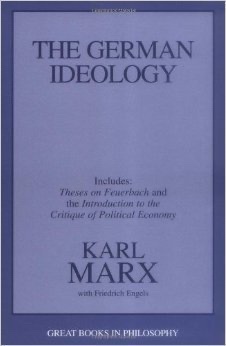
About the book
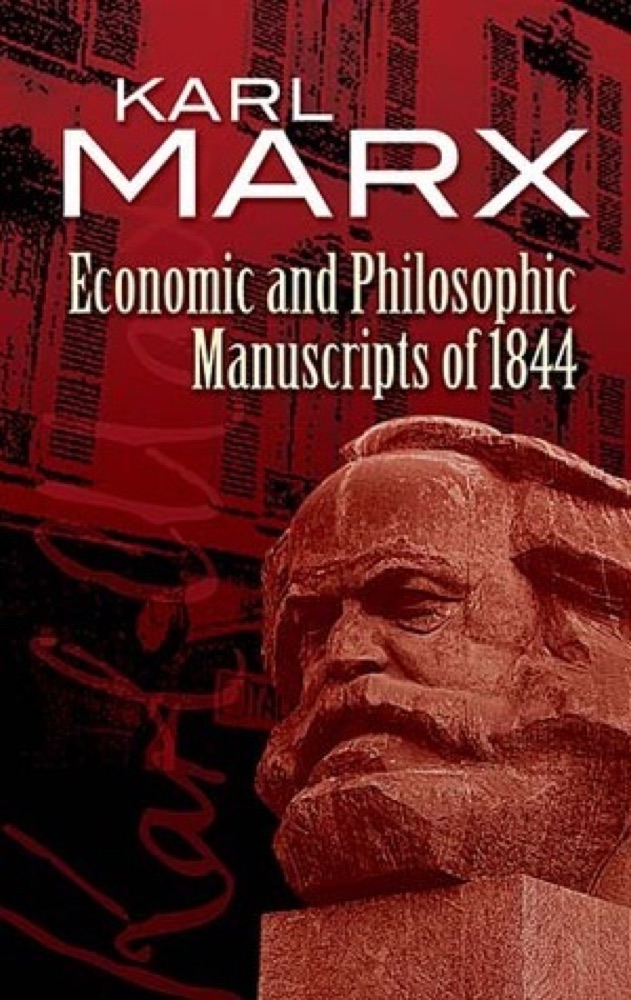
Communism as a political movement attained global importance after the Bolsheviks toppled the Russian Czar in 1917. After that time the works of Karl Marx and Frederick Engels, especially the influential Communist Manifesto (1848), enjoyed an international audience. The world was to learn a new political vocabulary peppered with "socialism", "capitalism", "the working class", "the bourgeoisie", "labour theory of value", "alienation", "economic determinism", "dialectical materialism", and "historical materialism". Marx's economic analysis of history has been a powerful legacy, the effects of which continue to be felt world-wide.Serving as the foundation for Marx's indictment of capitalism is his extraordinary work titled "Economic and Philosophic Manuscripts", written in 1844 but published nearly a century later. Here Marx offers his theory of human nature and an analysis of emerging capi
Book details
- First published
- 1844
- Author
- Karl Marx
- Genre
- Philosophy
- Goodreads rating
- 4.16 (5k ratings)
Keep reading
 Capital
 Marx: A Very Short Introduction
 The Accursed Share: An Essay on General Economy, Volume I: Consumption
 An Inquiry into the Nature and Causes of the Wealth of Nations
 The Soul of Man Under Socialism
The Communist Manifesto
The Soul of Man Under Socialism
The Communist Manifesto
 Discourse on the Origin of Inequality
 Marx for Beginners
 Socialism: Utopian and Scientific
 Human Action: A Treatise on Economics
 The Iron Heel
 The Sane Society
 Capitalism: The Unknown Ideal
 The Human Condition
 The Protestant Ethic and the Spirit of Capitalism
 Talking to My Daughter About the Economy: or, How Capitalism Works—and How It Fails
 The Dispossessed
 Why Marx Was Right
 Wage-Labour and Capital & Value, Price and Profit
 The Will to Power
 Sacred Economics: Money, Gift, and Society in the Age of Transition
 Capitalism, Socialism and Democracy
 The Right to Be Lazy
 Small Is Beautiful: Economics as if People Mattered
 Debt: The First 5,000 Years
 The Great Transformation: The Political and Economic Origins of Our Time
 The Ego and Its Own
 Socialism: An Economic and Sociological Analysis
 Minima Moralia: Reflections on a Damaged Life
 One-Dimensional Man: Studies in the Ideology of Advanced Industrial Society
 In Praise of Idleness and Other Essays
 The Constitution of Liberty
 Dialectic of Enlightenment: Philosophical Fragments
 Liberalism: The Classical Tradition
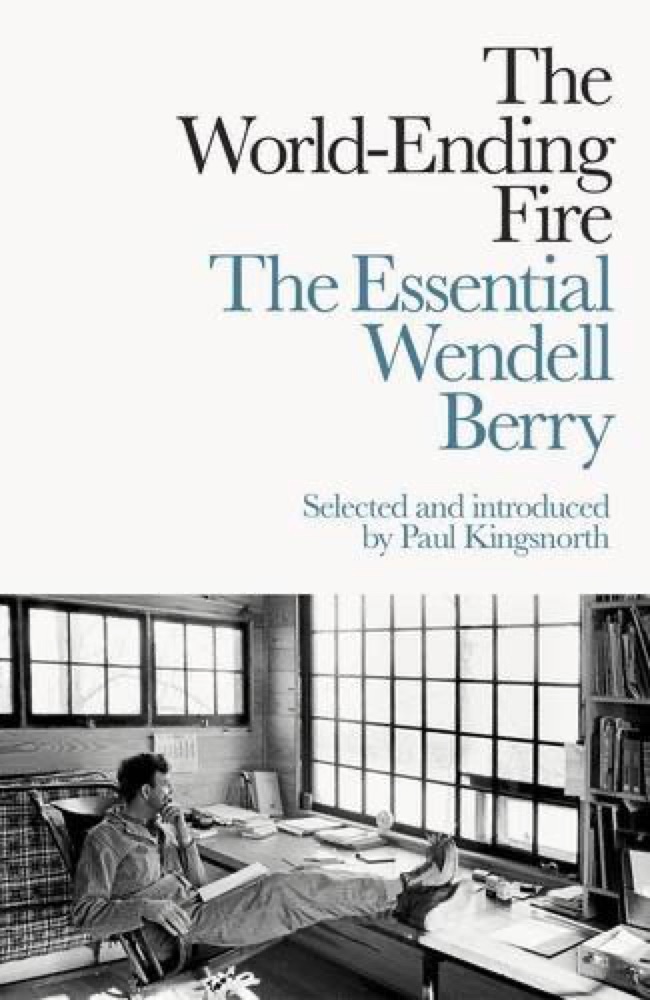 The World-Ending Fire: The Essential Wendell Berry
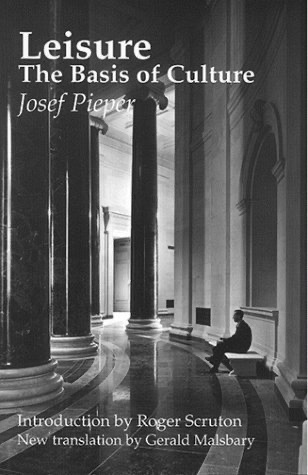 Leisure: The Basis of Culture
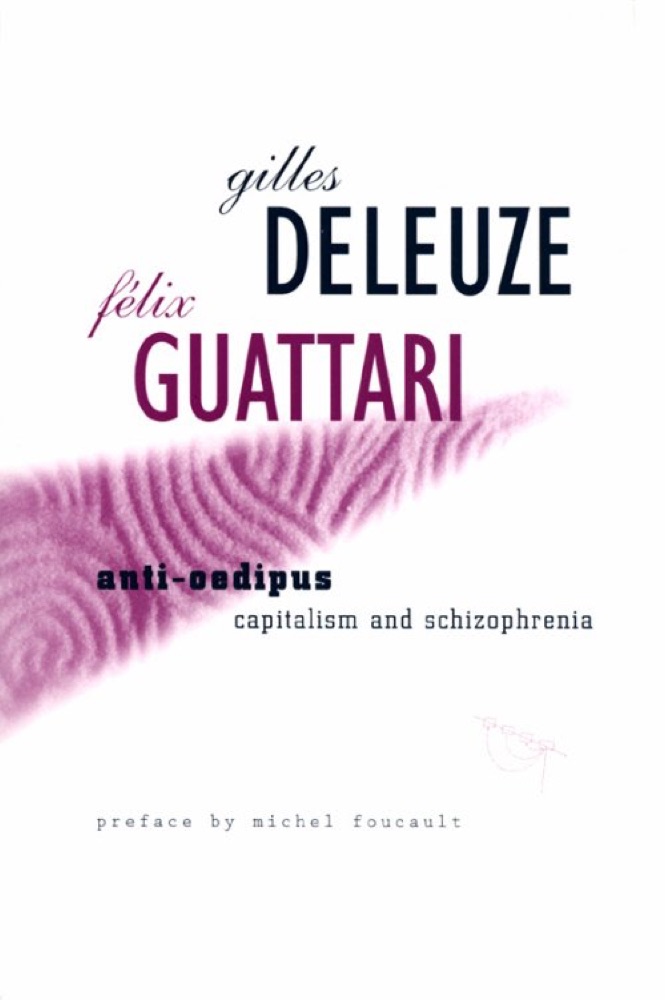 Anti-Oedipus: Capitalism and Schizophrenia
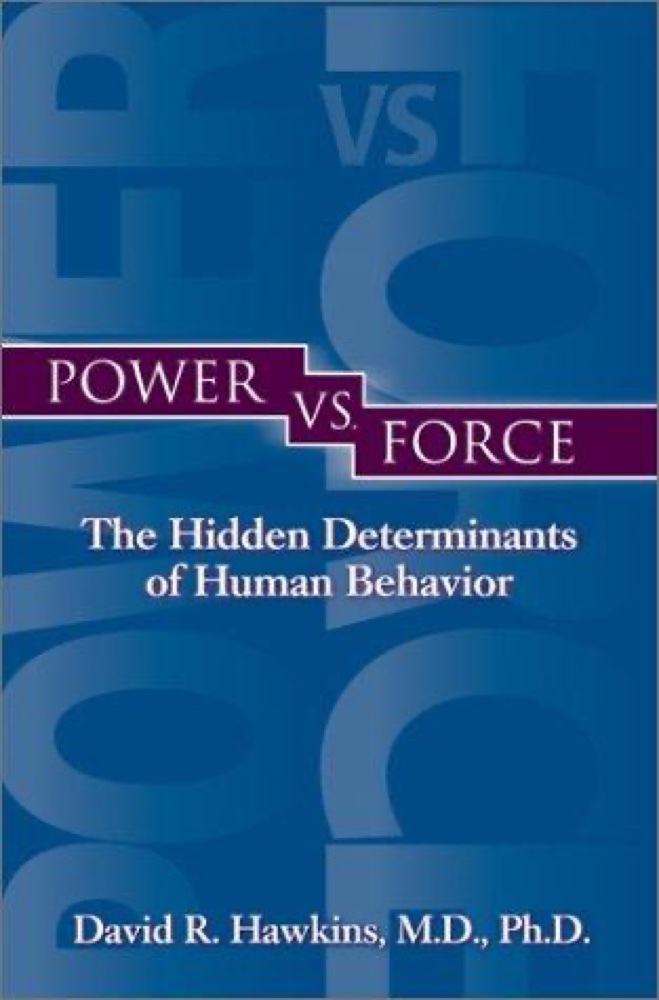 Power vs. Force
 Four Futures: Life After Capitalism
 The Rebel: An Essay on Man in Revolt
 Elements of the Philosophy of Right
 The Ethics of Ambiguity
 The Road to Serfdom
 The Coming Insurrection
 The End of History and the Last Man
 The World As I See It
 First As Tragedy, Then As Farce
 The Social Contract
 Sex, Economy, Freedom, and Community: Eight Essays
 Reflections on the Revolution in France
 The People of the Abyss
 Rights of Man
 The Fatal Conceit: The Errors of Socialism
 Blue Mars
 Life Without Principle
 Untimely Meditations
 Civilization and Its Discontents
 The World as Will and Representation, Vol 1
 The Enneads
 The Revolt of the Masses