 The Girl Who Smiled Beads: A Story of War and What Comes After
Quotes from the Book
The person who hurt you--who raped you or killed your family--is also here. If you are still angry at that person, if you haven't been able to forgive, you are chained to him. Everyone could feel the emotional truth of that: When someone offends you and you haven't let go, every time you see him, you grow breathless or your heart skips a beat. If the trauma was really severe, you dream of revenge. Above you, is the Mountain of Peace and Prosperity where we all want to go. But when you try to climb that hill, the person you haven't forgiven weighs you down. It's a personal choice whether or not to let go. No one can tell you how long to mourn a death or rage over a rape. But you can't move forward until you break that chain.
93
Organizations like the UN do a lot of good, but there are certain basic realities they never seem to grasp ...Maybe the most important truth that eludes these organizations is that it's insulting when outsiders come in and tell a traumatized people what it will take for them to heal. You cannot go to another country and make a plan for it. The cultural context is so different from what you know that you will not understand much of what you see. I would never come to the US and claim to understand what's going on, even in the African American culture. People who have lived through a terrible conflict may be hungry and desperate, but they are not stupid. They often have very good ideas about how peace can evolve, and they need to be asked. That includes women. Most especially women ... To outsiders like the UN, these soldiers were a problem to be managed. But they were our children.
22
You can tell people of the need to struggle, but when the powerless start to see that they really can make a difference, nothing can quench the fire.
20
When you're depressed, you get trapped inside yourself and lose the energy to take the actions that might make you feel better. You hate yourself for that. You see the suffering of others but feel incapable of helping them, and that makes you hate yourself, too. The hate makes you sadder, the sadness makes you more helpless, the helplessness fills you with more self-hate... Working . . . broke that cycle for me. I wasn't sitting home thinking endlessly about what a failure I was; I was doing something, something that actually helped people. The more I did, the more I could do, the more I wanted to do, the more I saw needed to be done.
11
You can't cure trauma when violence is ongoing, so the primary effort must be working for peace. You can't negotiate a lasting peace without bringing women into the effort, but women can't become peacemakers without releasing the pain that keeps them from feeling their own strength.
6
When you move so quickly from innocence to a world of fear, pain and loss, it's as if the flesh of your heart and mind gets cut away, piece by piece, like slices taken off a ham. Finally, there is nothing left but bone.
6
Don't stop, echoes the older Liberian lady's voice. Don't ever stop. My answer to her: I never will.
6
...because of women like us, I believe that in the end, tyranny will never succeed, and goodness will always vanquish evil. Although I may not see it in my lifetime, peace will overcome. I believe, I know, that if you have unshakable faith in yourself, in your sisters and in the possibility of change, you can do almost anything. The work is hard. The immensity of what needs to be done is discouraging. But you look at communities that are struggling on a daily basis. They keep on---and in the eyes of the people there, you are a symbol of hope. And so you, too, must keep on. You are not at liberty to give up. Don't stop, echoes the older Liberian lady's voice. Don't ever stop. My answer to her: I never will.
3
Most of the institutions that come in to offer help after disaster don't have the resources to provide concrete help. . . . Donor communities invest billions funding peace talks and disarmament. Then they stop. The most important part of postwar help is missing: providing basic social services to people. Not having those resources might have been a reason men went to war in the first place; they crossed a border and joined an armed group because they didn't have jobs. In Liberia right now, there are hundreds of thousands of unemployed young people, and they're ready-made mercenaries for wars in West Africa. You'd think the international community would be sensible enough to know they should work to change this. But they aren't.
2
what happens to women during conflict reflects how they’re treated during peacetime, and vice versa. If in peace you have a military for whom abuse is common and normal, what happens when that military goes to war? The abuse rises to an unimaginable level.
1
You can tell the people of the need to struggle, but when the powerless start to see that they really can make a difference, nothing can quench the fire.
1
Gather the women to pray for peace!
1
Every conflict has a face, many faces. Every problem touches your heart.
Dozens of international laws and pieces of policy call for women’s inclusion in the work of running the world, but everybody wants it to simply happen, not to have to spend money laying the groundwork to make it happen. Women’s work gets the funding dregs.
Everywhere we went, we let political leaders and the community know: We are watching you. Avert violence. Work for peace.
welcoming spirit that actually reminded me of Liberia, where no one’s a stranger for more than a night.
I did the work I did because I wanted a stable Liberia for my kids, not because I was after power and glory.
We asked various communities to each give us a plot of land where we could build a “peace hut” to fill that need.
Village women who wanted to participate in political life faced a key challenge: the men around them tended to suffer from terrible amnesia about what they did during the war.
What we accomplished in Liberia is possible everywhere.
In village tradition, if you killed someone, you had to compensate for his absence. If you were a farmer harvesting one crop a year, you did the work of the man you killed, and brought in two. Restorative justice was that tradition applied on a larger scale,
To outsiders like the UN, these soldiers were a problem to be managed. But they were our children.
Think of how intimately women know their homes. If the lights are out, we can walk through rooms without bumping into anything. If a stranger has been there, we sense it. That’s how well we know our communities. We know who belongs, and who is a potentially threatening stranger. We know the history. We know the people.
People who have lived through a terrible conflict may be hungry and desperate, but they’re not stupid. They often have very good ideas about how peace can evolve, and they need to be asked.
On the fifteenth, the first international aid ship docked at the port. Women crying and singing gospel songs rushed over the bridge, which was covered in bullet casings, and began a desperate search for food.
none of them talked to me, unless it was to ask, “Would you like to have a drink?” “I don’t drink with killers,” I said.
I had felt I was waiting for my life to resume. Now it was moving, but like a train that had lost its direction, and I saw no way forward.
How can I explain the way confidence and strength can disappear? It wasn’t about the war; it was what happens during a relationship that involves domestic violence.
The signs of trouble were there. Again, some people allowed themselves not to see. More, like me, simply didn’t have the energy to respond.
Watch on YouTube
About Leymah Gbowee
About the book
In a time of death and terror, Leymah Gbowee brought Liberia's women together--and together they led a nation to peace. As a young woman, Gbowee was broken by the Liberian civil war, a brutal conflict that tore apart her life and claimed the lives of countless relatives and friends. As a young mother trapped in a nightmare of domestic abuse, she found the courage to turn her bitterness into action, propelled by her realization that it is women who suffer most during conflicts--and that the power of women working together can create an unstoppable force. In 2003, the passionate and charismatic Gbowee helped organize and then led the Liberian Mass Action for Peace, a coalition of Christian and Muslim women who sat in public protest, confronting Liberia's ruthless president and rebel warlords, and even held a sex strike. With an army of women, Gbowee helped lead her nation to peace.--From p
Book details
- First published
- 2011
- Author
- Leymah Gbowee
- Genre
- Nonfiction
- Goodreads rating
- 4.16 (4k ratings)
Keep reading
The Girl Who Smiled Beads: A Story of War and What Comes After
 Emergency Sex (And Other Desperate Measures): True Stories from a War Zone
 A Knock at Midnight: A Story of Hope, Justice, and Freedom
 How Dare the Sun Rise: Memoirs of a War Child
 Daughters of Smoke and Fire
 The Dragons, the Giant, the Women: A Memoir
 Aftershocks
 The Heart and the Fist: The Education of a Humanitarian, the Making of a Navy SEAL
 Men We Reaped
 How Beautiful We Were
 American War
 Women Talking
 The No. 1 Ladies' Detective Agency
 How Long 'til Black Future Month?
 All God's Children Need Traveling Shoes
 I Am Malala: The Story of the Girl Who Stood Up for Education and Was Shot by the Taliban
 Left to Tell: Discovering God Amidst the Rwandan Holocaust
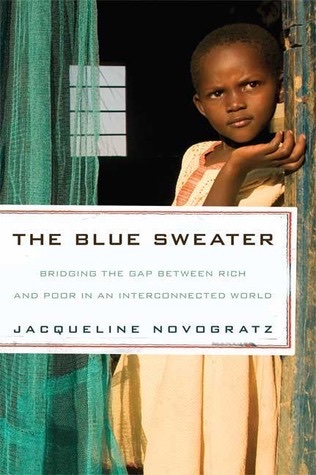 The Blue Sweater: Bridging the Gap Between Rich and Poor in an Interconnected World
 Petals of Blood
 Patron Saints of Nothing
 Across That Bridge: A Vision for Change and the Future of America
 The Power
 When They Call You a Terrorist: A Black Lives Matter Memoir
 A Promised Land
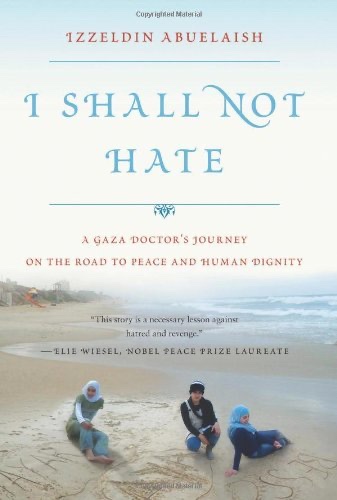 I Shall Not Hate: A Gaza Doctor's Journey on the Road to Peace and Human Dignity
 Shadows of the Workhouse
 United: Thoughts on Finding Common Ground and Advancing the Common Good
 Heavy
Heavy
 World War Z: An Oral History of the Zombie War
 Last First Snow
 Good Dirt
 Now Is the Time to Open Your Heart
 A Woman in Berlin: Eight Weeks in the Conquered City: A Diary
 A Girl Is a Body of Water
 Becoming
 The Woman Who Walked in Sunshine
 The Autobiography of Martin Luther King, Jr.
 A Thousand Sisters: My Journey into the Worst Place on Earth to Be a Woman
 The Joy and Light Bus Company
 The Soul of a Woman
 Homegoing
 Of Women and Salt
 Heavenly Tyrant
 Dead Stop
 My Life on the Road
 The Shadowed Sun
 Honor
Honor
 A Song Flung Up to Heaven
 Shake Hands with the Devil: The Failure of Humanity in Rwanda
 Behold the Dreamers
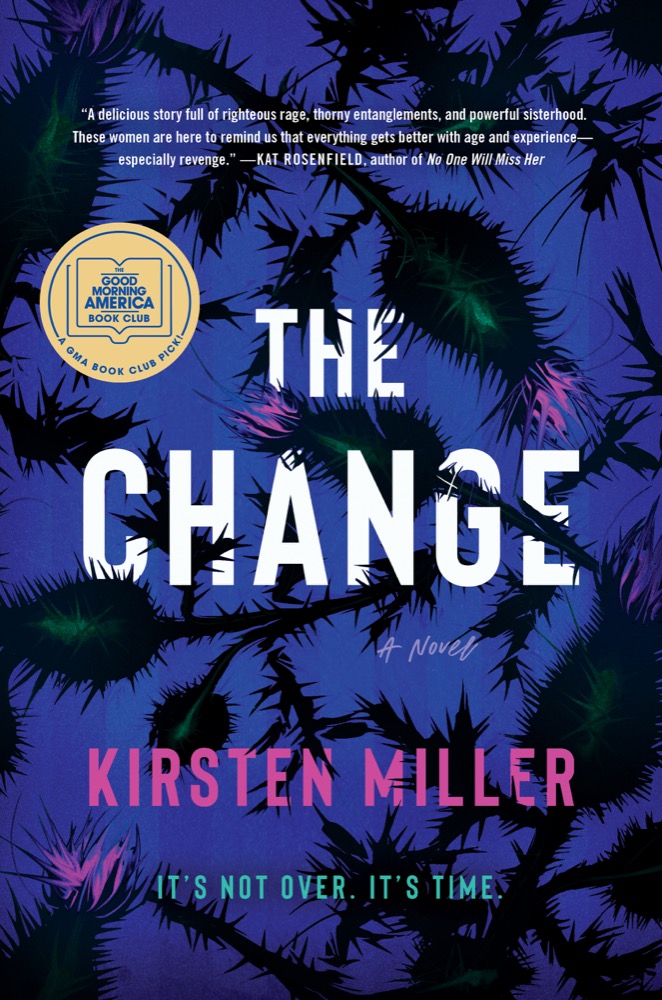 The Change
 This Bridge Called My Back: Writings by Radical Women of Color
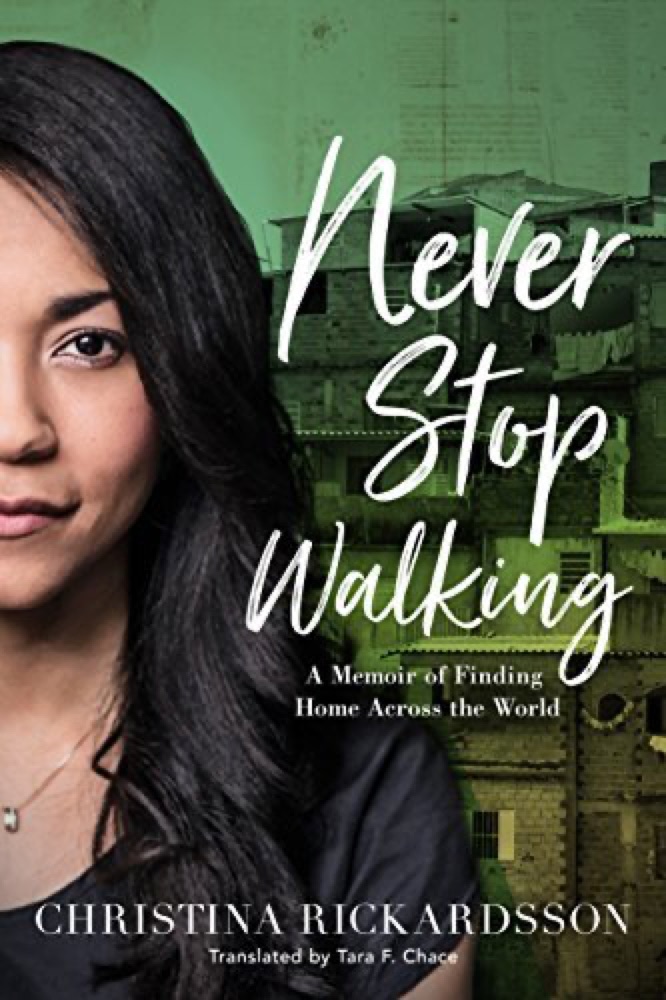 Never Stop Walking: A Memoir of Finding Home Across the World
 On the Other Side of Freedom: The Case for Hope
 Skyhunter
 The Women's Room
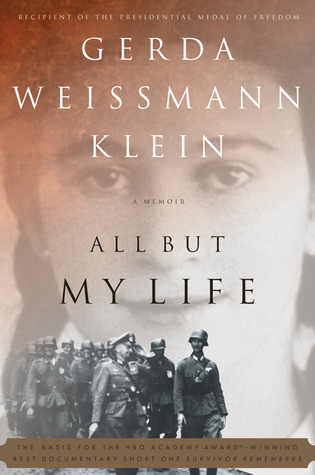 All But My Life: A Memoir
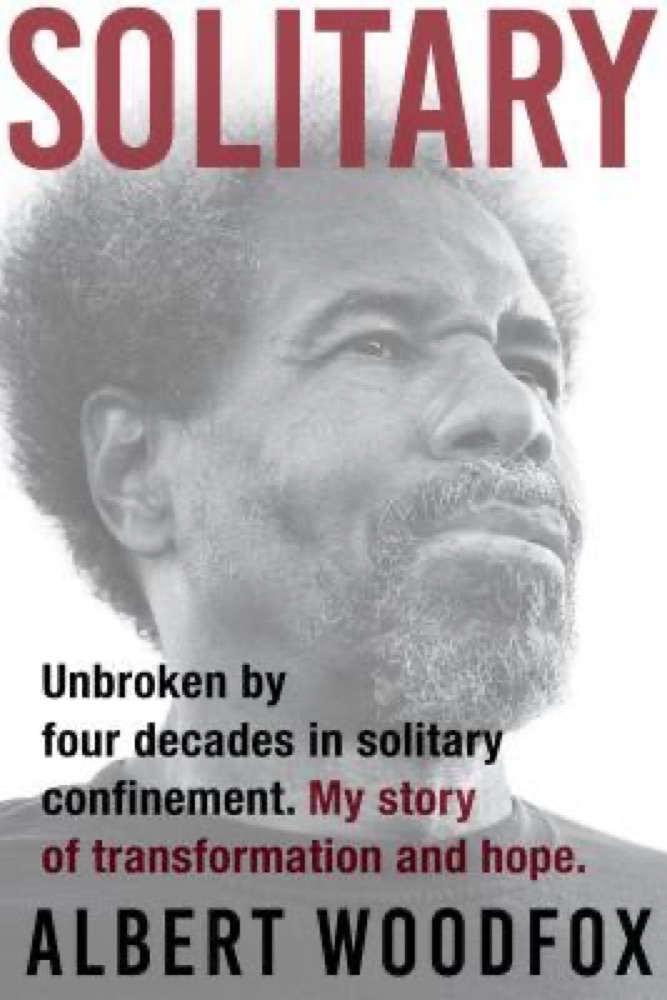 Solitary: Unbroken by Four Decades in Solitary Confinement
 Zinky Boys: Soviet Voices from the Afghanistan War
 Dust & Decay