
 Hackers & Painters: Big Ideas from the Computer Age
Quotes from the Book
A lot of people believe in working long days and doing double, triple, or even quadruple shifts. I'm not one of them. Neither Transmeta nor Linux has ever gotten in the way of a good night's sleep. In fact, if you want to know the honest truth, I'm a firm believer in sleep. Some people think that's just being lazy, but I want to throw my pillow at them. I have a perfectly good excuse, and I'm standing by it: You may lose a few hours of your productive daytime if you sleep, oh, say, ten hours a day, but those few hours when you are awake you're alert, and your brain functions on all six cylinders. Or four, or whatever.
11
I did learn fairly early that the best and most effective way to lead is by letting people do things because they want to do them, not because you want them to. The best leaders also know when they are wrong, and are capable of pulling themselves out. And the best leaders enable others to make decisions for them. Let me rephrase that. Much ofLinux's success can be attributed to my own personality flaws: 1) I'm lazy; and 2) I like to get credit for the work of others.
7
An ugly system is one in which there are special interfaces for everything you want to do. Unix is the opposite. It gives you the building blocks that are sufficient for doing everything. That's what having a clean design is all about.
4
For high school graduation in Finland, you wear a fluffy white hat with a black band. There's a ceremony in which they hand out diplomas, and when you come home all your relatives are there with lots of champagne, flowers, and cake. And there's also a party for the entire class at a local restaurant. We did all that, and I guess I had fun, but I don't remember anything special about it. But ask me about the specs on my 68008-chip machine and I can rattle them off with total recall.
4
The theory behind open source is simple. In the case of an operating system, the source code-the programming instructions underlying the system-is free. Anyone can improve it, change it, exploit it. But those improvements, changes, and exploitations have to be made freely available. Think Zen. The project belongs to no one and to everyone. When a project is opened up, there is rapid and continual improvement. With teams of contributors working in parallel, the results can happen far more speedily and success fully than if the work were being conducted behind closed doors.
3
I want to decide for myself. I'm very much against unnecessary rules imposed by society. I'm a big believer that you should be able to do whatever you want in the privacy of your own home as long as you don't hurt anybody else. Any law saying otherwise is a very, very broken law. And there are laws that say otherwise. I find some scary rules, especially some that are imposed on schools and children. Imagine even thinking of imposing rules about teaching evolution, and taking that into the wrong direction. That I find scary. This is social conscience rearing its ugly head in places it really has nothing at all to do with.
2
I did learn fairly early that the best and the most effective way to lead is by letting people do things because they want to do them, not because you want them to.
1
They are the motivational factors for everything in your life-for any thing that you do or any living thing does: The first is survival, the second is social order, and the third is entertainment. Everything in life progresses in that order. Everything is moving in the same direction, but not at the same time. So basically sex has reached entertainment, war is close to it, technology is pretty much there. The new things are things that are just survival. Like, hopefully, space travel will at some point be an issue of survival, then it will be social, then entertainment. Look at civilization as a cult. I mean, that also follows the same pattern. Civilization starts as survival. You get together to survive better and you build up your social structure. Then eventually civilization exists purely for entertainment. Okay, well, not purely. And it doesn't have to be bad entertainment. The ancient Greeks are known for having had a very strong social order, and they also had a lot of entertainment. They're known for having had the best philosophers of their time. So what this builds up to is that in the end we're all here to have fun. We might as well sit down and relax, and enjoy the ride.
1
Benevolent dictator? No, I'm just lazy. I try to manage by not making decisions and letting things occur naturally. That's when you get the best results.
1
There are three things that have meaning for life. They are the motivational factors for everything in your life––for anything that you do or any living thing does: The first is survival, the second is social order, and the third is entertainment. Everything in life progresses in that order.
This probably also means that if and when we ever meet another intelligent life form in this universe, their first words are not likely to be "Take me to our leader." They're more likely to say "Party on, dude!
Humans are destined to be party animals, and technology will follow.
Watch on YouTube
About Linus Torvalds
We have collected 12 quotes from 1 book by Linus Torvalds on BookQuoters.
More about the author →About the book
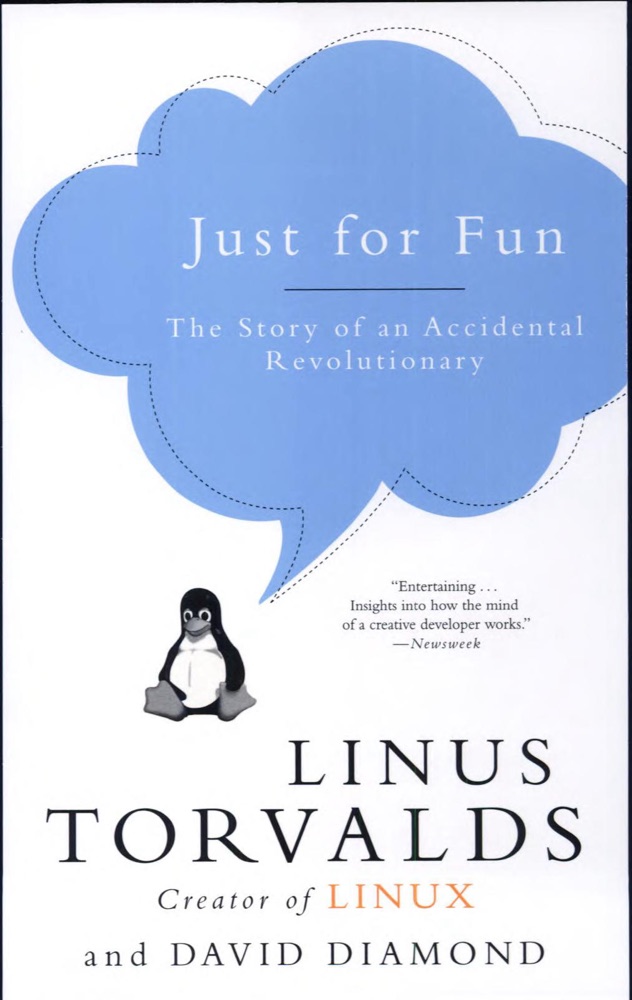
Once upon a time Linus Torvalds was a skinny unknown, just another nerdy Helsinki techie who had been fooling around with computers since childhood. Then he wrote a groundbreaking operating system and distributed it via the Internet -- for free. Today Torvalds is an international folk hero. And his creation LINUX is used by over 12 million people as well as by companies such as IBM. Now, in a narrative that zips along with the speed of e-mail, Torvalds gives a history of his renegade software while candidly revealing the quirky mind of a genius. The result is an engrossing portrayal of a man with a revolutionary vision, who challenges our values and may change our world.
Book details
- First published
- 2001
- Author
- Linus Torvalds
- Genre
- Biography
- Goodreads rating
- 3.96 (5k ratings)
Keep reading
Hackers & Painters: Big Ideas from the Computer Age
 In the Beginning...Was the Command Line
 The Elephant in the Brain: Hidden Motives in Everyday Life
 Barking Up the Wrong Tree: The Surprising Science Behind Why Everything You Know About Success Is (Mostly) Wrong
 Steve Jobs
 You Are Not a Gadget
 Founders at Work: Stories of Startups' Early Days
 Walden Two
 The World Is Flat: A Brief History of the Twenty-first Century
 Paddle Your Own Canoe: One Man's Fundamentals for Delicious Living
 Walkaway
 Heaven's River
 Drive: The Surprising Truth About What Motivates Us
 The Art of Thinking Clearly
 Managing Humans: Biting and Humorous Tales of a Software Engineering Manager
 Chaos Monkeys: Obscene Fortune and Random Failure in Silicon Valley
 The Last Lecture
 Unscripted: Life, Liberty, and the Pursuit of Entrepreneurship
 Machine Man
 Believe Me: A Memoir of Love, Death, and Jazz Chickens
 How to Fail at Almost Everything and Still Win Big: Kind of the Story of My Life
 Life 3.0: Being Human in the Age of Artificial Intelligence
 Things a Little Bird Told Me: Confessions of the Creative Mind
 Antifragile: Things That Gain from Disorder
 Ancestral Night
 Homo Deus: A History of Tomorrow
 The Salmon of Doubt
 The Futurological Congress: From the Memoirs of Ijon Tichy
 The Most Human Human: What Talking with Computers Teaches Us About What It Means to Be Alive
 Friday
 The Lost World
 We Make the Road by Walking: Conversations on Education and Social Change
 Only Human
 Microserfs
 Rework
 The E-myth Revisited
 Tribes: We Need You to Lead Us
 I, Steve: Steve Jobs In His Own Words
 Sex, Drugs, and Cocoa Puffs: A Low Culture Manifesto
 Zen and the Art of Motorcycle Maintenance
 Little Brother
 Makers
 Venus Plus X
 Think Like a Freak
 Endgame, Vol. 1: The Problem of Civilization
 What's Our Problem?: A Self-Help Book for Societies
 Ishmael: An Adventure of the Mind and Spirit
 When Will Jesus Bring the Pork Chops?
 The Fry Chronicles
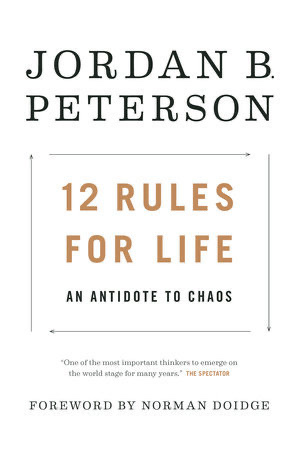 12 Rules for Life: An Antidote to Chaos
 An Astronaut's Guide to Life on Earth
 The Game
 A Language Older Than Words
 Amped
Amped
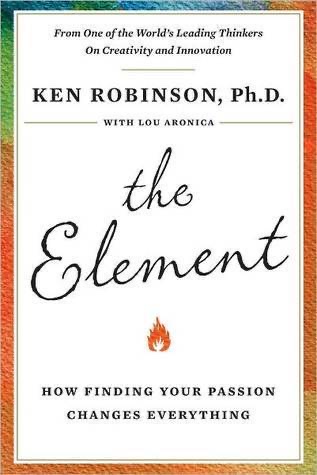 The Element: How Finding Your Passion Changes Everything
 Freedom Evolves
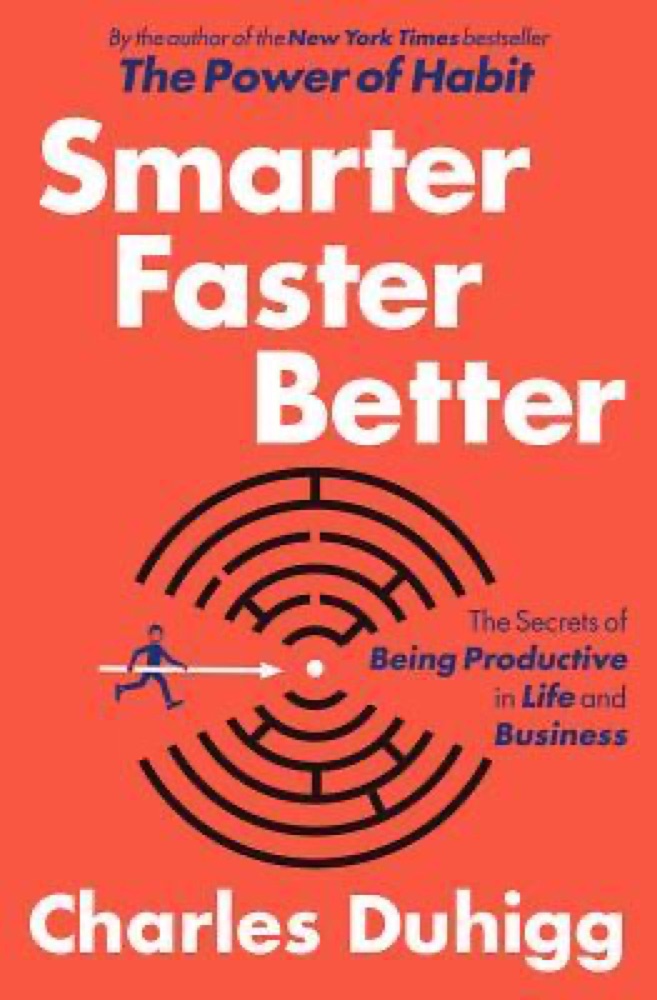 Smarter Faster Better: The Secrets of Being Productive in Life and Business
 Cryptonomicon
 Hocus Pocus
 You Are Not So Smart